

Growing Ranunculus in Santa Cruz County: Spring's Most Elegant Cut Flower
A few of the product links in this guide are affiliate links. If you buy through one, Ambitious Harvest may earn a small commission at no extra cost to you, which helps keep these guides free. We only point to gear we would use in our own Santa Cruz garden. As an Amazon Associate, we earn from Read our full disclosure.
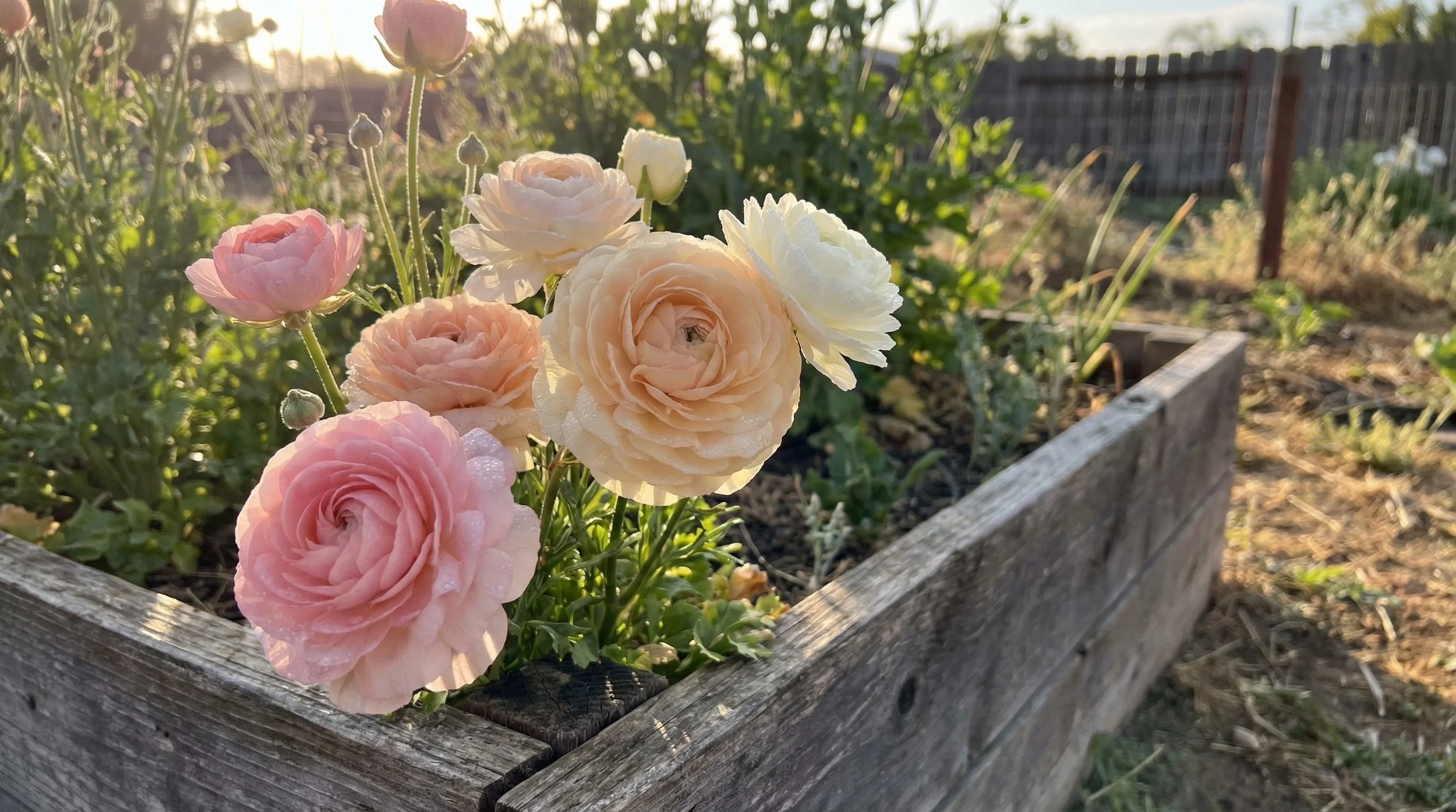
With layer upon layer of tissue-thin petals swirling into rose-like blooms, ranunculus are among the most coveted flowers for spring bouquets. These Mediterranean natives produce some of the most elegant cut flowers you can grow, and our Santa Cruz County climate is ideally suited to their particular needs.
While ranunculus have a reputation for being finicky, the "trick" is simply understanding their temperature requirements. They need cool conditions to thrive, making our foggy springs perfect for growing these spectacular flowers. With proper timing and pre-sprouting techniques, you can grow ranunculus that rival those from professional flower farms.
This guide covers everything you need to know to grow beautiful ranunculus in Santa Cruz County, from corm selection through harvest.
Why Ranunculus Love Santa Cruz County
Ranunculus (Ranunculus asiaticus) originate from the Mediterranean region, where winters are mild and springs are cool and damp before summer heat arrives. Sound familiar? Our climate closely mirrors these conditions.
Our climate advantages include:
Cool springs. Ranunculus thrive when temperatures stay between 45-65°F. They stop growing and go dormant when temperatures consistently exceed 70-75°F. Our fog-cooled springs provide an extended window of ideal growing conditions.
Mild winters. Most Santa Cruz County locations are warm enough for fall planting, allowing corms to establish roots before spring growth. In coastal areas, ranunculus can be planted as early as October.
Mediterranean pattern. Our wet winters and dry summers match the natural cycle ranunculus evolved in: grow during cool, wet periods, bloom in spring, and go dormant during summer heat.
Reduced disease pressure. The fungal diseases that plague ranunculus in humid climates are less common in our Mediterranean conditions. Good drainage and moderate humidity keep plants healthy.
Commercial flower farms in similar Central Coast climates (Lompoc, Carpinteria) have long specialized in ranunculus for good reason. Our conditions are excellent for these flowers.
Understanding Ranunculus Corms
Ranunculus grow from corms (sometimes incorrectly called bulbs). These dried, claw-like structures look like miniature octopuses and need special handling for best results.
Corm sizes:
Jumbo (6+ cm): Produce the most and largest flowers; best for cutting gardens
Large (5-6 cm): Excellent production; good balance of cost and performance
Medium (4-5 cm): Fewer flowers; good for landscaping
Small (3-4 cm): Entry-level; smaller flowers, fewer stems
For serious cut flower production, invest in jumbo or large corms from reputable suppliers. Johnny's Selected Seeds and specialty bulb suppliers offer quality corms in size-graded lots.
Corm storage: Corms arrive dried and need to be kept dry until pre-sprouting. Store in a cool, dry place (not the refrigerator, which is too humid). Plant within a few months of purchase for best results.
Pre-Sprouting: The Key to Success
Pre-sprouting (also called pre-soaking or pre-germination) dramatically improves ranunculus success rates. This controlled rehydration process gives corms the moisture they need to wake up before planting.
Why pre-sprout?
Dried corms planted directly into wet soil often rot before they establish roots. Pre-sprouting in a controlled environment:
Allows you to see which corms are viable before planting
Gives roots a head start in ideal conditions
Reduces rot by controlling moisture precisely
Increases first-year flower production
Pre-sprouting method:
Prepare the medium. Fill a tray with barely damp seed-starting mix, perlite, or coco coir. The medium should be moist but not wet (squeeze a handful; a few drops of water should come out, not a stream).
Place corms. Set corms claw-side down (points facing down) on top of the medium. Space them so they don't touch.
Cover lightly. Add a thin layer of medium over the corms (just barely covering them).
Chill. Place the tray in a cool location: 50-55°F is ideal. A cool garage, shed, or the floor of an unheated room often works. Some gardeners use a refrigerator, but watch humidity levels.
Wait 10-14 days. Check moisture periodically (medium should stay barely damp, not wet). Corms will swell and begin sending out white roots.
Plant when rooted. Once you see 1-2 inch roots and perhaps tiny green shoots, corms are ready to plant. Handle gently to avoid breaking roots.
Troubleshooting pre-sprouting:
Corms not swelling: Medium may be too dry; mist lightly
Corms mushy/rotting: Too wet; improve drainage and ventilation
Corms not rooting after 3 weeks: May be non-viable; discard
Timing. The goal is to plant when soil temperatures are 50-55°F and falling (not rising). In Santa Cruz County:
Coastal areas: Plant October through December
Inland valleys: Plant November through January
Warmest areas: Plant December through February
Avoid planting when soil temperatures are warming toward spring. Ranunculus need several months of cool weather to establish and bloom.
Site selection. Choose a spot with:
Full sun (6+ hours; more is better)
Excellent drainage (ranunculus rot in wet soil)
Protection from heavy rain (consider raised beds or hoop houses)
Good air circulation
Soil preparation:
Work in compost to improve drainage and fertility
Aim for pH 6.0-7.0
Ensure soil drains well (amend clay with plenty of organic matter)
Raised beds are ideal for drainage control
Planting depth and spacing:
Plant pre-sprouted corms 2-3 inches deep
Space 6-9 inches apart (closer spacing produces more but smaller flowers)
Plant claw-side down (points facing down into the soil)
Cover with soil and water gently
Protection. In areas with heavy winter rains, consider:
Covering beds with a low hoop house or row cover
Planting in raised beds with excellent drainage
Adding a layer of sand around corms to improve drainage
Caring for Ranunculus
Watering. Ranunculus need consistent moisture but excellent drainage:
Keep soil evenly moist (not soggy) during active growth
Reduce watering as plants approach dormancy in late spring
Avoid overhead watering, which promotes fungal disease
Drip irrigation or soaker hoses work well
Feeding. Ranunculus are moderate feeders:
Work balanced fertilizer into soil at planting
Side-dress with low-nitrogen fertilizer (5-10-10) when active growth begins
Stop fertilizing once buds form
Mulching. A light mulch helps:
Regulate soil temperature
Conserve moisture
Keep soil from splashing onto foliage (reducing disease)
Avoid heavy mulch that holds too much moisture against corms.
Support. Ranunculus stems are delicate and may need support:
Use grow-through plant supports or horizontal netting
Install support at planting time before plants grow through
Harvesting Ranunculus
Proper harvesting extends vase life significantly and encourages continued production.
Vase Life Tips
Harvest in morning when stems are hydrated. Cut stems at an angle, strip lower leaves, and place in cool water immediately. Ranunculus can last 7-10 days in the vase when harvested at the "marshmallow" stage!
When to harvest:
Cut when buds show full color but petals are still tight (like a soft marshmallow when gently squeezed)
Tight buds will continue opening in the vase
Fully open flowers don't last as long
How to harvest:
Cut in early morning when flowers are fully hydrated
Use clean, sharp scissors
Cut stems as long as possible, following them back to the base
Place immediately in cool water
Vase life. With proper handling, ranunculus last 7-10 days:
Re-cut stems at an angle
Use clean vase with fresh water and floral preservative
Keep away from heat and direct sun
Change water every 2-3 days
Continued harvest. Ranunculus produce multiple flushes of flowers:
First stems emerge from the center of the plant
Side shoots follow for several more weeks
Keep cutting to encourage production
Production continues until heat triggers dormancy
Coastal fog belt (Westside Santa Cruz, Live Oak, Aptos, Capitola)
This is premier ranunculus territory. Expect:
Longest bloom season (February through May in ideal years)
Largest flowers due to extended cool period
Excellent success rates
Can plant as early as October
Recommendations: This microclimate allows you to grow ranunculus like the professionals. Invest in jumbo corms and give plants excellent drainage.
San Lorenzo Valley and sunny inland areas (Boulder Creek, Scotts Valley)
Good ranunculus territory with some adjustments:
Shorter bloom period (March through April)
Plant in the coolest spot available
Earlier dormancy as spring warms
Recommendations: Choose early-blooming varieties if available. Provide afternoon shade if possible to extend bloom.
Under the redwoods (Felton, Ben Lomond canyons)
Mixed conditions:
Cool temperatures are ideal
Shade and humidity may promote fungal disease
Poor drainage can cause rot
Recommendations: Only plant if you have a sunny clearing with excellent drainage. The cool temperatures are good, but disease pressure may be challenging.
Pajaro Valley / Watsonville
Warmer conditions require strategy:
Plant later (December-January) when soil has cooled
Expect shorter bloom period
Early dormancy as temperatures warm
Recommendations: Ranunculus are still possible but require careful timing. Plant in the coolest part of your garden and enjoy a shorter but beautiful season.
Companion Planting with Ranunculus
Ranunculus combine beautifully with other cool-season flowers:
Great companions:
Anemones (similar culture, complementary colors)
Sweet peas (vertical interest, different bloom shapes)
Snapdragons (texture contrast)
Stock (fragrance, filler flowers)
Iceland poppies (similar timing)
Planting together: Anemones have nearly identical cultural requirements and make perfect companions. Plant anemone corms at the same time as ranunculus for a mixed spring cutting garden.
Saving and Storing Corms
In Santa Cruz County, you can often leave ranunculus corms in the ground through summer if your soil stays dry. However, lifting and storing increases success rates:
Lifting corms:
After foliage yellows naturally (don't cut green foliage), stop watering
Let soil dry for 1-2 weeks
Carefully dig corms
Brush off soil but don't wash
Let dry in a shaded, airy location for several days
Storing:
Store in paper bags or mesh bags (not plastic)
Keep in a cool, dry location (50-70°F)
Check periodically for rot or extreme drying
Replant the following fall
Division: Large corms may have multiplied. Carefully separate corm clusters, ensuring each piece has growth points. This increases your stock for future years.
Frequently Asked Questions
Why didn't my ranunculus corms sprout? Most common causes: planting too deep, soil too wet (rot), corms were non-viable (dried out or moldy), or temperatures too warm. Pre-sprouting helps identify viable corms before planting.
Can I grow ranunculus from seed? Yes, but it's challenging. Seeds need cold stratification and take 2-3 years to produce blooming plants. Most gardeners find corms far more practical.
How many flowers will each corm produce? A jumbo corm can produce 20-35 stems over the bloom season. Large corms produce 10-20 stems. Production depends on corm size, growing conditions, and how well you keep flowers picked.
Why are my ranunculus flowers small? Small corms produce smaller flowers. Warm temperatures also reduce flower size. For the largest blooms, start with jumbo corms and grow in the coolest conditions possible.
Do ranunculus come back every year? They can, but performance often declines after the first year. Many gardeners treat them as annuals, buying fresh corms each fall. If you save corms, replant the largest ones and compost small or damaged ones.
Can I grow ranunculus in containers? Yes. Use a deep container (at least 8 inches) with excellent drainage. Keep pots in a cool location and water carefully. Container ranunculus may produce fewer flowers than in-ground plants.
When do ranunculus bloom in Santa Cruz County? With fall planting, expect blooms from late February through May in coastal areas, March through April inland. Exact timing depends on planting date, microclimate, and weather patterns.
Free Resources
Download these guides to support your ranunculus growing:
Seasonal Planting Calendar: Month-by-month timing for Santa Cruz County
Seed Starting Guide: Tips for starting from seed
Visit our Garden Toolkit for more downloadable resources.
Related Articles
Growing a Cut Flower Garden in Santa Cruz County: A Complete Guide
Growing Sweet Peas in Santa Cruz County
Cool-Season Cut Flowers for Santa Cruz County
What to Plant in Santa Cruz & the Bay Area in November
