

Are All Butterflies and Moths Good for Gardens?
This article may contain affiliate links. If you buy through one, Ambitious Harvest may earn a commission at no extra cost to you. As an Amazon Associate, we earn from qualifying purchases. Read our full disclosure.
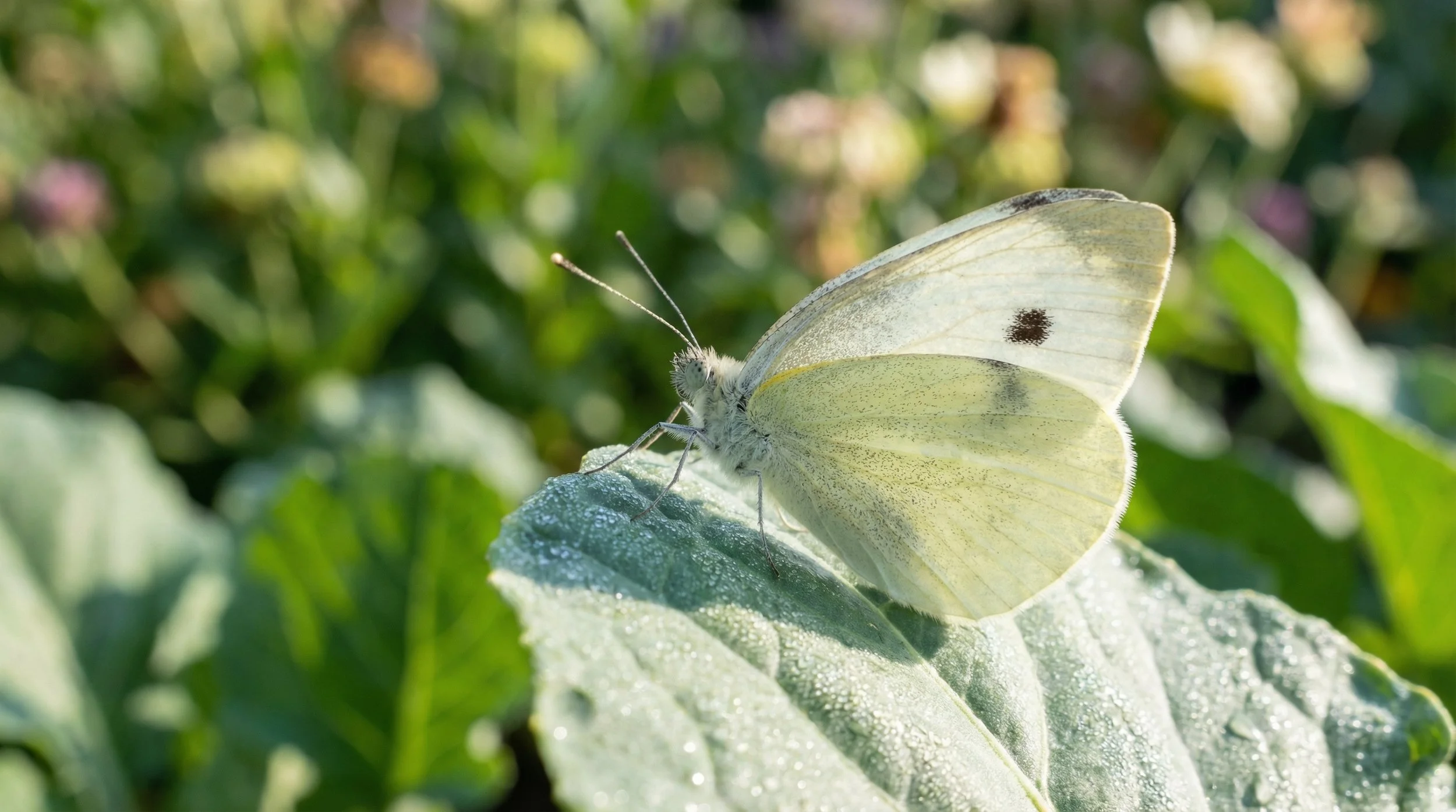
A butterfly passing over the kale is a welcome sight. Finding chewed leaves a few days later can feel less welcome. Both reactions make sense: a garden can provide habitat and produce dinner, and sometimes those goals need a little negotiating.
The verdict: butterflies and moths have different roles at different stages of life. Some caterpillars damage crops; others are the very insects you planted a habitat garden to support. Before taking action, find out what is eating the plant and whether the damage needs attention.
Look beyond the wings
Adult butterflies visiting flowers are the part of the life cycle we notice most easily. Their caterpillars need food, too. A butterfly garden with flowers but no suitable larval host plants offers only part of what they need. Xerces recommends choosing both nectar plants and caterpillar host plants, with local conditions in mind.
That does not mean every caterpillar belongs on your vegetables. A hornworm feeding on a tomato and a caterpillar feeding on a plant you set aside for habitat call for different decisions. Nor does being a moth automatically make an insect a pest. The species, the plant, and your purpose for growing it matter more than a blanket “good bug” or “bad bug” label.
Decide whether the plant needs help
Turn over a few damaged leaves and look for the feeder, droppings, or rolled foliage. Photograph anything unfamiliar before removing it. Egg color alone is not a reliable reason to destroy what you find.
A few holes on an established perennial may be tolerable; substantial feeding on a small vegetable transplant deserves closer attention. Watch whether new damage is accumulating and whether the plant is still growing well. In a Santa Cruz garden, make that check on the plants in front of you rather than assuming every season brings the same caterpillars.
UC IPM guidance explains that predators, parasites, and diseases often limit caterpillars naturally. A caterpillar with parasite cocoons attached is also evidence that another insect is already at work. Avoid spraying simply because you have spotted a caterpillar.
Protect the crop with a focused response
When a correctly identified caterpillar is causing damage you cannot accept, hand-picking may be enough. For suitable crops, physical exclusion can help prevent the next round. Plan a row cover around the crop's need for pollination and watch for heat buildup; it is not a cover to install and forget. Check underneath, too.
If nonchemical measures have failed and you are considering an insecticide, identify the pest first. Btk, Bacillus thuringiensis subspecies kurstaki, works when susceptible caterpillars eat treated foliage and is most effective against young larvae. It can also kill the caterpillars you want to raise. Do not treat butterfly host plants, and prevent spray from reaching nearby habitat plants.
Choose only a product labeled for the particular crop and pest. Follow its directions for application, protective equipment, reentry, and time before harvest. EPA’s introduction to pesticide labels explains why those instructions govern its use. “Biological” does not mean a product belongs on every leaf in the garden.
Make room for the next generation
You can protect vegetables while growing habitat plants elsewhere in the garden. Choose host plants for butterflies and moths that occur locally, suited to your coastal or inland conditions. Expect some feeding on those plants: leaves being eaten can be part of the reason you planted them. Habitat planting does not guarantee that crop pests will leave the vegetable beds alone.
This week: inspect one affected crop, identify the likely feeder, and decide whether to observe, exclude, or hand-pick. Leave unfamiliar eggs alone while you identify them. For planning resources, visit Your Garden Toolkit, or continue with our guide to attracting beneficial insects.
Frequently asked questions
Are all caterpillars garden pests?
No. A caterpillar's importance as wildlife and its potential to damage a crop can overlap. Focus on the species, the plant it is eating, and the amount of damage rather than treating the whole group alike.
Can a row cover solve the problem on brassicas?
It can help exclude egg-laying adults when installed before they reach the crop. Existing eggs or larvae can remain underneath. Inspect first, secure the cover appropriately, and account for heat and any need for pollination.
Can I support butterflies and still harvest vegetables?
Yes. Give local species suitable habitat plants, accept feeding there, and use focused crop protection where needed. Supporting butterflies includes making room for their caterpillars.
