

Do I Need a Pond for Backyard Ducks?
Do I Need a Pond for Backyard Ducks?
No, backyard ducks do not need a pond, but they do need water deep enough to fully submerge their heads. Cornell University's Duck Research Laboratory sets the standard at a waterer with a drinking area at least 4 cm wide, so a duck can submerge its bill. Without this, ducks are prone to eye infections and sinus problems.
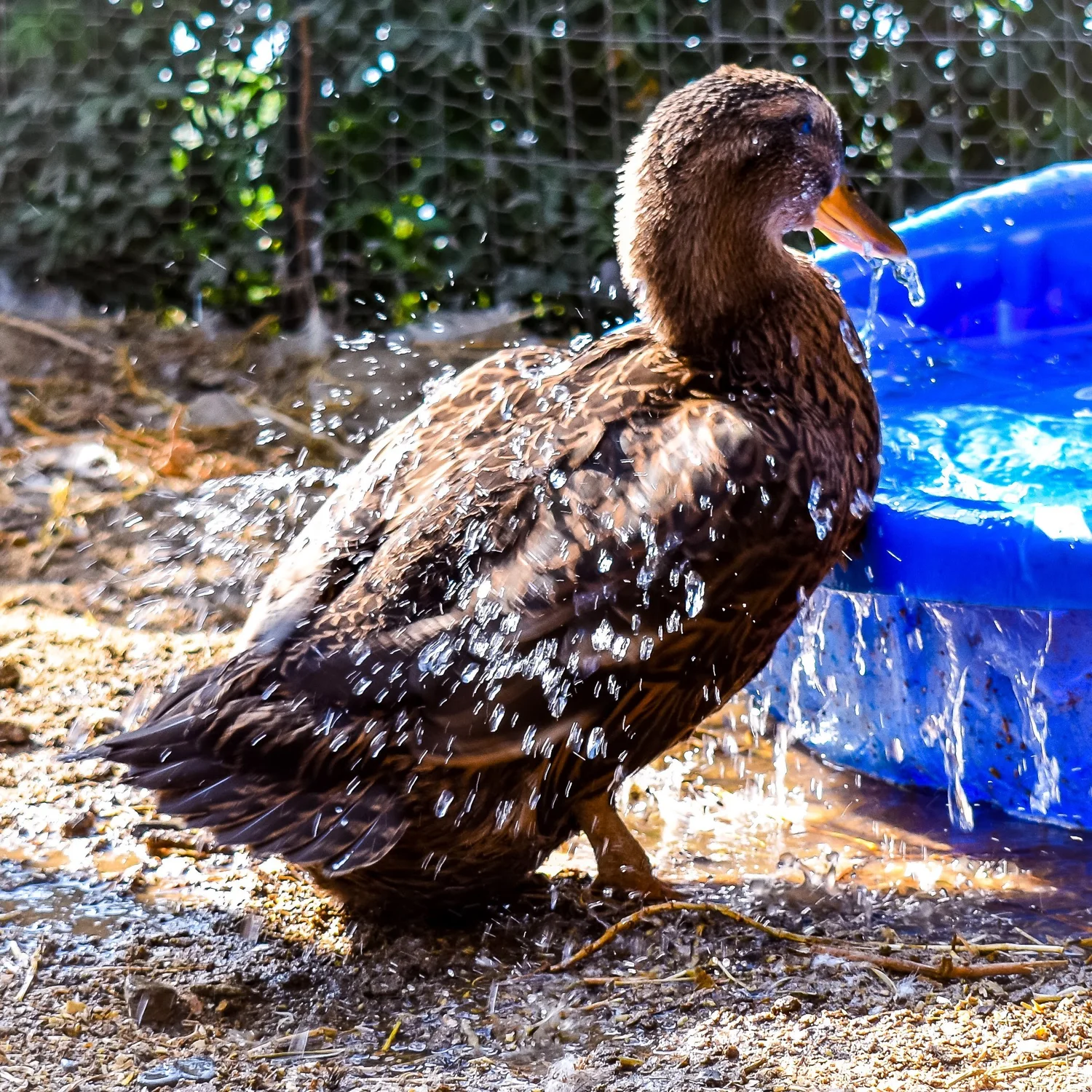
The minimum requirement is simple: a container deep enough for head dunking. A rubber livestock bucket, a concrete mixing tub, or even a deep dish will work. Ducks will splash, dabble, and wash themselves in whatever water you give them. They do not need to swim to stay healthy, though they clearly enjoy it. Watching a duck that has been given a kiddie pool for the first time will remove any doubt about that.
In my Boulder Creek run, I use a preformed plastic pond (about 4 feet across and 18 inches deep) that I drain and refill every couple of days. My Mallard and Black Runner duck spend hours in it daily, and my Toulouse goose uses it too. It is not a necessity for their health, but it keeps them occupied and visibly happier. The tradeoff is maintenance. Duck water gets filthy fast. They eat in the water, poop in the water, and track mud through the water. In summer, standing water also attracts mosquitoes, which is a real concern in Santa Cruz County where West Nile virus has been documented by the CDFA.
If you decide to provide a larger water source, keep a few things in mind. Place it away from the coop to keep bedding dry. Make sure ducks can get in and out easily (a ramp or gradually sloped edge prevents drowning, especially for younger birds). Drain and refill regularly rather than letting water go stagnant. And consider where the dirty water will go. I drain mine into garden beds, where the nutrient-rich duck water is essentially free liquid fertilizer. Tomatoes and squash love it.
During our dry Santa Cruz summers, water conservation matters. A small kiddie pool uses 15 to 20 gallons per fill. If you are refilling every other day, that adds up. Some duck keepers use a simple bucket-and-drain system: a deep rubber tub that gets dumped onto the garden each morning and refilled. It gives ducks their head-dunking water without the volume of a full pond.
This week: If you are considering ducks, set up a deep rubber tub (at least 8 inches deep) in the spot where your run will be. Fill it, check the drainage path, and see how the area handles the water before committing to a permanent setup.
Keep Reading
- Keeping Ducks in Your California Garden
- Designing a Predator-Proof Run for Your Garden Flock
- Can Ducks and Chickens Share the Same Coop?
Frequently Asked Questions
Do backyard ducks really need a pond?
No formal pond is needed. What ducks must have is water deep enough to fully submerge their heads, which keeps their eyes, nostrils, and mucous membranes clean and free of infection. They do not need to swim to stay healthy, though they clearly enjoy it.
What can I use instead of a pond?
Simple options work well, such as a rubber livestock bucket, a concrete mixing tub, or a deep dish for basic head-dunking, plus a kiddie pool or deep tub for bathing. Make sure there are ramps or sloped edges for safe entry and exit.
How do I keep duck water clean?
Drain and refill regularly rather than letting water go stagnant, since ducks eat, mess, and track mud through it quickly. In warm weather stagnant water can attract mosquitoes, and the soiled water makes good nutrient-rich irrigation for garden beds.
