

Can Ducks and Chickens Share the Same Coop?
A few of the product links in this guide are affiliate links. If you buy through one, Ambitious Harvest may earn a small commission at no extra cost to you, which helps keep these guides free. We only point to gear we would use in our own Santa Cruz garden. As an Amazon Associate, we earn from qualifying purchases. Read our full disclosure.
Can Ducks and Chickens Share the Same Coop?
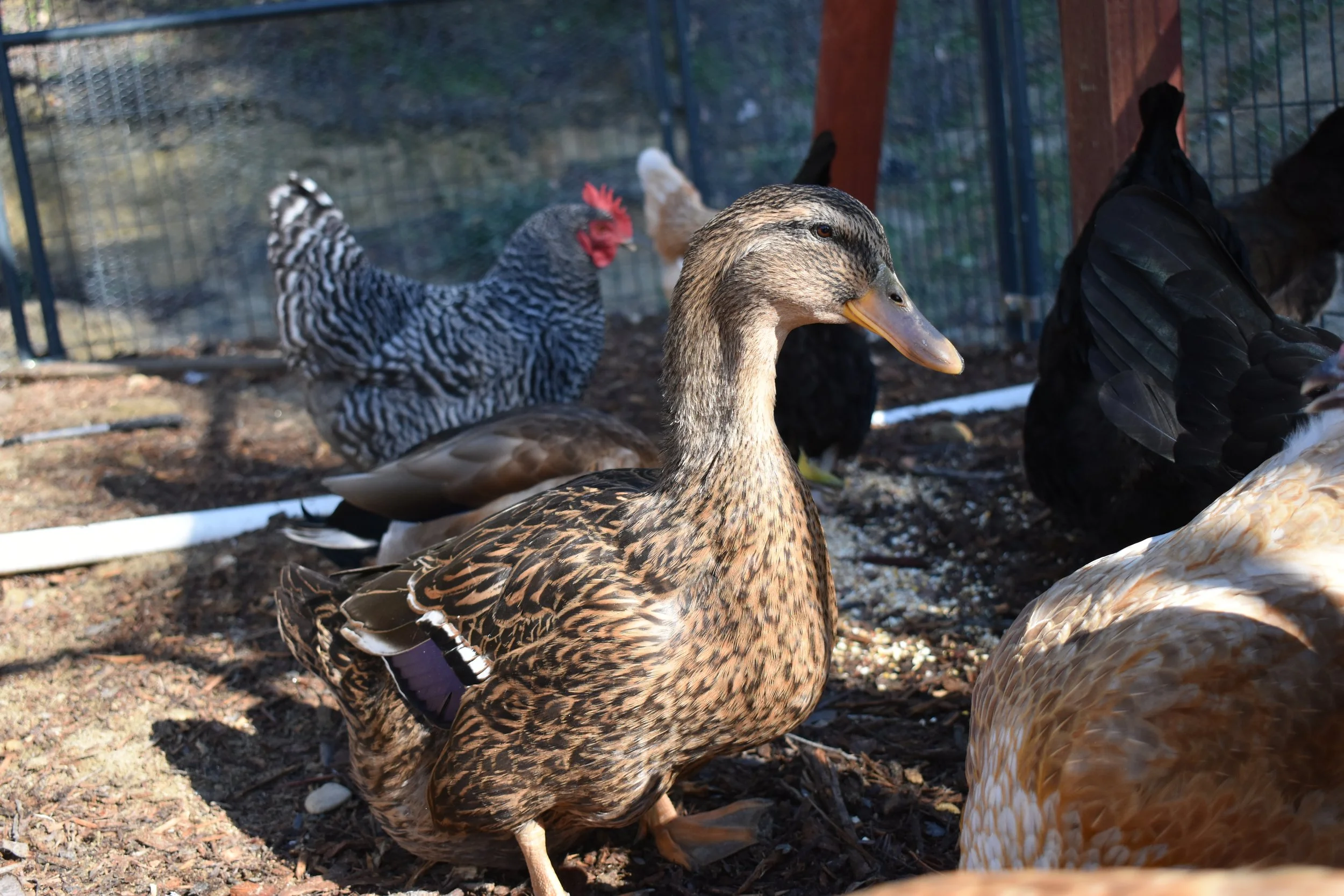
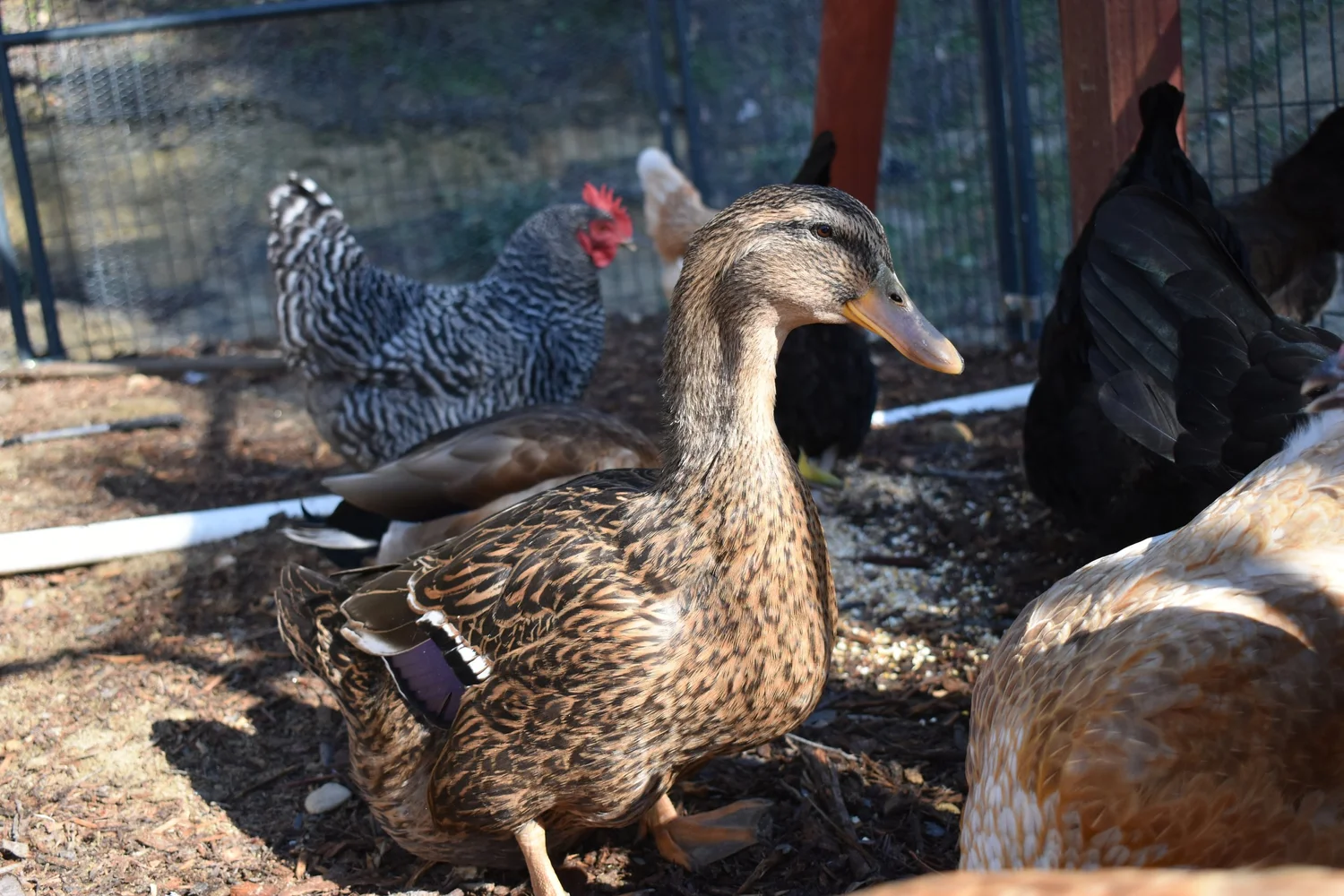
Yes, ducks and chickens can share shelter when the setup meets each species' needs. UC ANR's poultry guide says chickens need an enclosed coop with roosting and nesting accommodations, while ducks need shelter and bedding changed regularly but do not need roosts or nest boxes. In a mixed setup, provide both types of resting space and keep the bedding changed regularly.
The biggest challenge is water. Ducks are messy drinkers. They submerge their bills and splash water everywhere, which turns bedding into a soggy mess within hours. Here in Boulder Creek, I keep my mixed flock's water stations outside the coop entirely. The ducks get their drinking and dabbling time in the run during the day, and the coop stays dry overnight. Wet bedding in an enclosed space leads to ammonia buildup and respiratory problems for chickens, which are more sensitive to poor air quality than ducks.
Roosting is another difference. UC ANR notes that chickens need roosts while ducks do not. The Merck Veterinary Manual gives approximate indoor ranges of 1.5 to 2 square feet for laying hens and larger chickens and 3 to 6 square feet for ducks and geese, while noting that housing should also reflect bird size and activity. Treat those figures as starting points and provide more room if crowding or wet-litter problems appear.
Nesting boxes work differently too. Chickens like elevated, enclosed boxes. Ducks, especially my Black Runner, tend to lay their eggs on the ground in a corner they have chosen themselves. I keep a low, open nesting area on the coop floor with extra straw, and the ducks use it consistently. Trying to force ducks into chicken-style nesting boxes usually just means you are hunting for eggs in unexpected places.
Ventilation matters more in a mixed coop. Ducks bring moisture in from their feathers and their general messiness, so you need more airflow than a chicken-only coop requires. Hardware cloth vents near the roofline, positioned to avoid direct drafts on roosting birds, keep air moving without chilling anyone. In our Santa Cruz coastal climate, where temperatures rarely drop below freezing, generous ventilation works year-round.
One caution: drake behavior. Male ducks can injure or kill hens if they attempt to mate with them. If you keep drakes, watch for this behavior and separate if needed.
This week: Check your coop's floor space, resting areas, litter, and ventilation. If you are planning to add ducks to an existing chicken setup, provide ground-level sleeping space, keep drinkers from soaking the bedding, and watch for crowding.
Keep Reading
Frequently Asked Questions
What is the hardest part of housing ducks and chickens together?
Water is the main challenge, since ducks splash constantly and soak the bedding. Placing water stations outside the coop keeps the nighttime sleeping area dry and prevents the ammonia buildup that harms chickens.
How much space do I need for a mixed flock?
The Merck Veterinary Manual gives approximate indoor ranges of 1.5 to 2 square feet for laying hens and larger chickens and 3 to 6 square feet for ducks and geese. UC ANR also notes that chickens need roosts and nest boxes while ducks do not. A mixed setup therefore needs species-appropriate resting areas as well as enough room to avoid crowding.
Do the two species need separate sleeping and nesting areas?
Their natural habits work in your favor, since chickens roost on elevated bars while ducks sleep and lay on the ground. Add a low, open nesting area with extra straw on the floor for the ducks, and watch drakes closely because they can injure hens.
