

Straw Mulch vs. Wood Chips: Which Breaks Down Better?
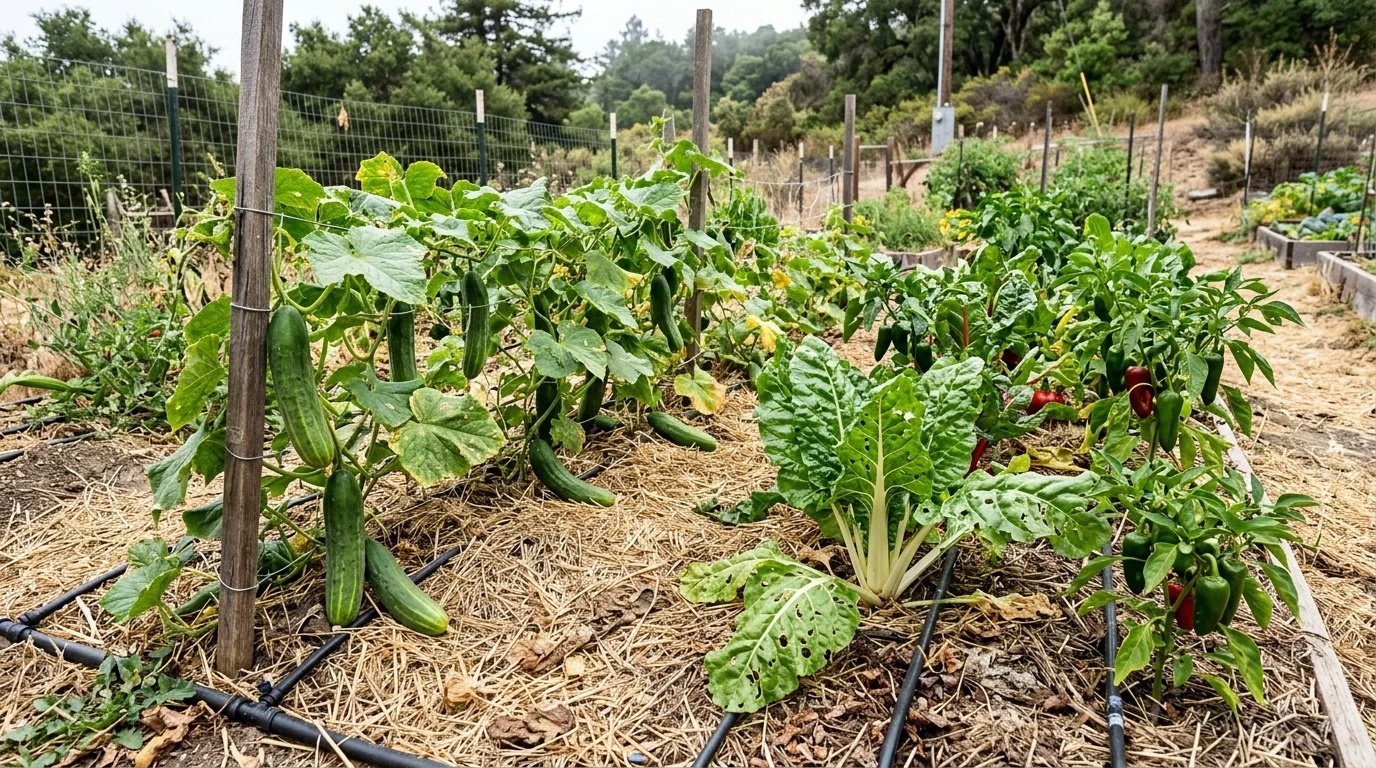
Straw mulch breaks down significantly faster than wood chips, which makes it the better choice for vegetable beds where you want organic matter incorporated into the soil quickly. Washington State University Extension reports that straw can decompose quickly enough to need replenishing a couple of times in one growing season, while arborist wood chips are slow decomposers whose tissues are rich in lignin, suberin, and tannins. That speed difference is an advantage in annual vegetable gardens but a drawback in permanent landscape areas where you want long-lasting coverage.
When to Choose Straw Mulch
Straw mulch is the better choice for annual vegetable gardens, where you want mulch that breaks down into the soil between seasons rather than lingering. A 4-inch layer of straw around tomatoes, peppers, and squash keeps the soil cool and moist through Santa Cruz's dry summer, then decomposes into the bed by the following spring. That decomposition adds organic matter and feeds earthworms and soil microbes.
Straw is also the classic mulch for strawberries (hence the name) and works well around any low-growing crop where you want to keep fruit clean and off the soil. Buy straw, not hay. Straw is the dry stems left after grain harvest and contains very few weed seeds. Hay is dried grass that is loaded with weed seeds and will create more problems than it solves. Look for rice straw or wheat straw at local feed stores or farm supply shops. One bale covers about 50 square feet at a 4-inch depth.
When to Choose Wood Chip Mulch
Wood chips are the superior mulch for any permanent area: around fruit trees, along pathways, in perennial beds, and in ornamental landscapes. Their slow decomposition rate is a feature, not a bug, in these settings. A 4-inch layer of wood chips will suppress weeds and retain moisture for 2-3 years before needing a top-up.
In Santa Cruz, free arborist wood chips are one of the best deals in gardening. Sign up with ChipDrop or contact local tree services directly, and you can get a truckload (usually 6-10 cubic yards) delivered to your driveway for free. That is enough to mulch a significant portion of your yard. Fresh wood chips are fine to use as a surface mulch. The concern about nitrogen tie-up applies mainly when wood chips are tilled into the soil, which you should not do. Spread them on top and let them break down naturally.
The Bottom Line for Santa Cruz Gardeners
Use straw in your vegetable beds and wood chips everywhere else. This two-mulch approach matches each material to its strength. Straw feeds your veggie beds with quick-decomposing organic matter each season, while wood chips provide long-lasting weed control and moisture retention in permanent landscape areas. In practice, most Santa Cruz gardens benefit from keeping a few bales of straw in the garage for the veggie beds and requesting a free load of arborist chips once a year for everything else.
This week: Inventory your garden and decide which areas need straw (annual vegetable beds) and which need wood chips (paths, perennials, tree rings). If you do not already have a ChipDrop request active, sign up today for a free delivery of arborist wood chips.
For more on building healthy soil and reducing garden maintenance, check out our free Seasonal Planting Guide at [/your-garden-toolkit].
Frequently Asked Questions
Does straw mulch or wood chip mulch break down faster?
Straw breaks down significantly faster. Washington State University Extension reports that straw can decompose quickly enough to need replenishing a couple of times in one growing season, while arborist wood chips are slow decomposers whose tissues are rich in lignin, suberin, and tannins. That makes straw better for vegetable beds and wood chips better for permanent areas.
When should I use straw mulch?
Use straw in annual vegetable beds, where a 4-inch layer keeps soil cool and moist through summer, then decomposes into the bed by spring and feeds soil life. It is also the classic mulch for strawberries. Buy straw, not hay, since hay is loaded with weed seeds.
When should I use wood chip mulch?
Use wood chips for permanent areas like fruit trees, pathways, perennial beds, and ornamental landscapes. A 4-inch layer suppresses weeds and retains moisture for 2 to 3 years before needing a top-up.
Where can I get wood chips in Santa Cruz?
Free arborist wood chips are one of the best deals in gardening. Sign up with ChipDrop or contact local tree services and you can get a truckload, usually 6 to 10 cubic yards, delivered free. Spread them on top rather than tilling them in to avoid nitrogen tie-up.
