

Worm Castings vs. Compost: Which Is Better for Soil?
A few of the product links in this guide are affiliate links. If you buy through one, Ambitious Harvest may earn a small commission at no extra cost to you, which helps keep these guides free. We only point to gear we would use in our own Santa Cruz garden. As an Amazon Associate, we earn from qualifying purchases. Read our full disclosure.
Worm castings are the more potent soil amendment pound for pound, but finished compost is the better value for most garden-scale applications. Ohio State University research found that as little as 10 percent vermicompost in a mix can stimulate germination, growth, and yield, which is why castings work as a concentrated amendment rather than a bulk soil builder. Castings supply plant-available nitrogen, phosphorus, and potassium. The catch is cost: worm castings run $1-3 per pound, while finished compost costs a fraction of that in bulk. For Santa Cruz gardeners, using both in different roles is the smartest approach.
When to Choose Worm Castings
Worm castings are the premium choice for targeted, high-value applications. Use them when transplanting seedlings (a handful in each planting hole gives transplants a microbial boost), as a top dressing around heavy feeders like tomatoes and peppers mid-season, or brewed into a compost tea for foliar feeding. Because they are so concentrated, a little goes a long way.
If you are starting seeds indoors, mixing 10-20% worm castings into your seed-starting mix improves germination rates and produces sturdier seedlings. Many Santa Cruz nurseries carry bagged worm castings, and local producers at the Westside Farmers Market sometimes sell them by the pound. You can also produce your own with a simple worm bin. A small bin under your kitchen sink can process your food scraps into about 5 pounds of castings per month.
When to Choose Finished Compost
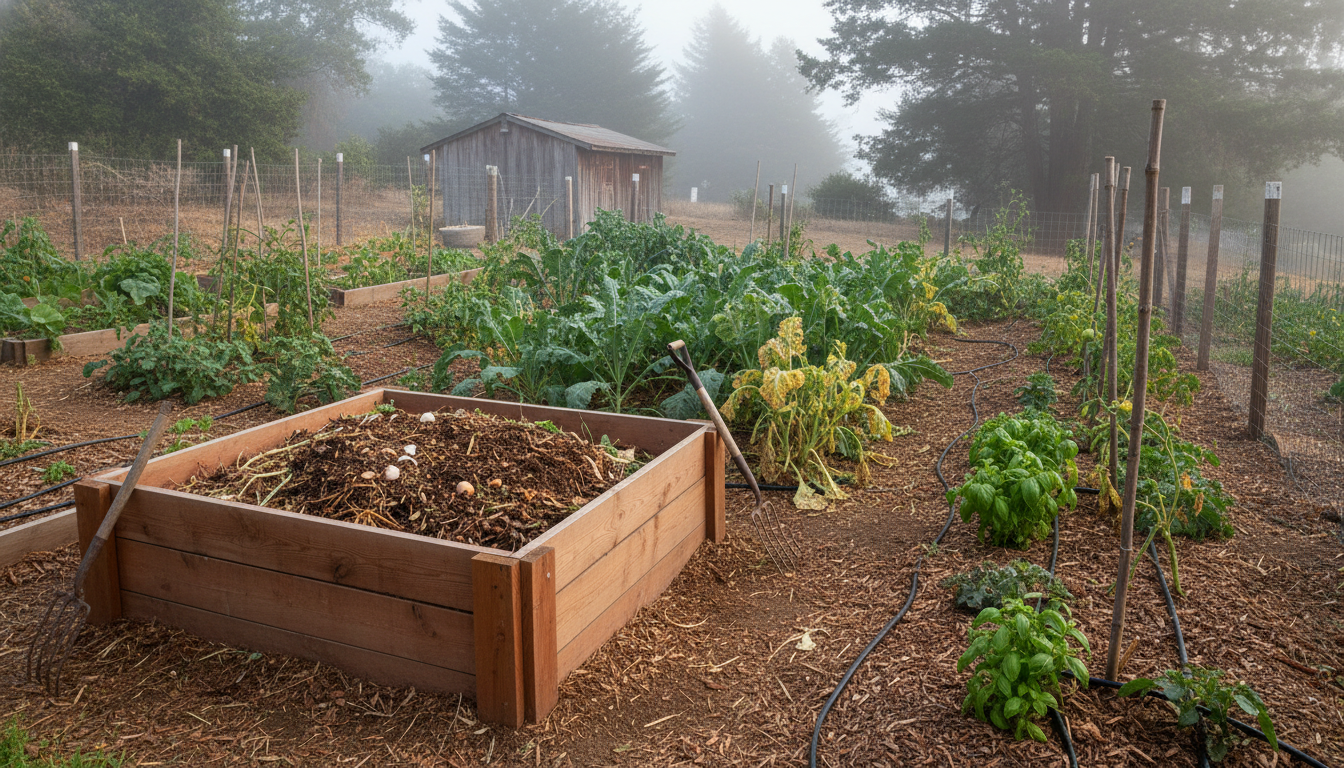
Finished compost is the workhorse amendment for building and maintaining garden beds. When you need to fill a new raised bed, improve heavy clay soil, or replenish nutrients across an entire garden, compost is the affordable, practical choice. Buying a cubic yard of finished compost from a local landscape supply (like Scarborough Lumber or Santa Cruz landscape yards) costs $30-50 and will amend several beds.
Compost also does something worm castings cannot: it physically changes soil structure. Santa Cruz's heavy clay benefits enormously from 2-4 inches of compost worked into the top 6-8 inches of soil each year. Over two or three seasons, this transforms sticky clay into crumbly, well-draining loam that roots move through easily. If your soil is compacted or heavy, bulk compost is the fix.
The Bottom Line for Santa Cruz Gardeners
Use compost as your foundation and worm castings as your booster. Each fall, top-dress your beds with 2-3 inches of finished compost and work it into the soil. During the growing season, add a quarter-inch of worm castings around your most demanding crops (tomatoes, peppers, squash) once a month. This two-tier approach gives you the bulk soil improvement of compost and the microbial supercharge of castings without breaking the bank. If budget is tight, prioritize compost. It does 80% of the job at 20% of the cost.
This week: Buy one bag of worm castings and side-dress your three hungriest plants with a quarter-inch layer around their stems. Water in well and compare their growth to untreated plants over the next few weeks.
For more on building healthy soil in California gardens, check out our free Seasonal Planting Guide at [/your-garden-toolkit].
Frequently Asked Questions
Are worm castings or finished compost a better soil amendment?
Worm castings are more potent pound for pound, but finished compost is the better value for most garden-scale uses. Ohio State University research found that as little as 10 percent vermicompost in a mix can stimulate germination, growth, and yield. Head-to-head microbial comparisons with ordinary compost are mixed, so treat castings as a supplement to compost rather than a replacement. Using both in different roles is the smartest approach.
When should I use worm castings?
Use them for targeted, high-value jobs: a handful in each transplant hole, a quarter to half inch top dressing around heavy feeders like tomatoes and peppers mid-season, or brewed into compost tea. Mixing 10 to 20 percent into seed-starting mix improves germination and produces sturdier seedlings.
When is finished compost the better pick?
Finished compost is the workhorse for filling new raised beds, improving heavy clay, or replenishing nutrients across a whole garden. A cubic yard from a local landscape supply costs $30 to $50 and amends several beds. Unlike castings, it physically changes soil structure.
How do worm castings and compost fit together in a Santa Cruz garden?
Use compost as your foundation and castings as a booster. Each fall, top-dress beds with 2 to 3 inches of compost worked into the top 6 to 8 inches of soil, and during the season add a quarter-inch of castings around your hungriest crops once a month. If budget is tight, prioritize compost, which does about 80 percent of the job at 20 percent of the cost.
