

Can I Keep Chickens in My Santa Cruz Neighborhood?
A few of the product links in this guide are affiliate links. If you buy through one, Ambitious Harvest may earn a small commission at no extra cost to you, which helps keep these guides free. We only point to gear we would use in our own Santa Cruz garden. As an Amazon Associate, we earn from qualifying purchases. Read our full disclosure.
Can I Keep Chickens in My Santa Cruz Neighborhood?
Whether you may keep chickens depends on the city, the parcel’s zoning, lot size, animal count, enclosure location, and nuisance rules. Do not rely on a countywide yes-or-no answer.
In the City of Santa Cruz, zoning provisions treat hens differently from roosters and other noisy fowl. Roosters should not be described as prohibited solely “under Chapter 9.36,” which is the city’s general noise ordinance. Before acquiring birds, verify the current animal and zoning provisions for the parcel with City Planning or Code Compliance. Unincorporated county parcels and the cities of Capitola, Scotts Valley, and Watsonville follow different rules.
Check the current rules: City code portal, City Code Compliance, and local animal-law summary.
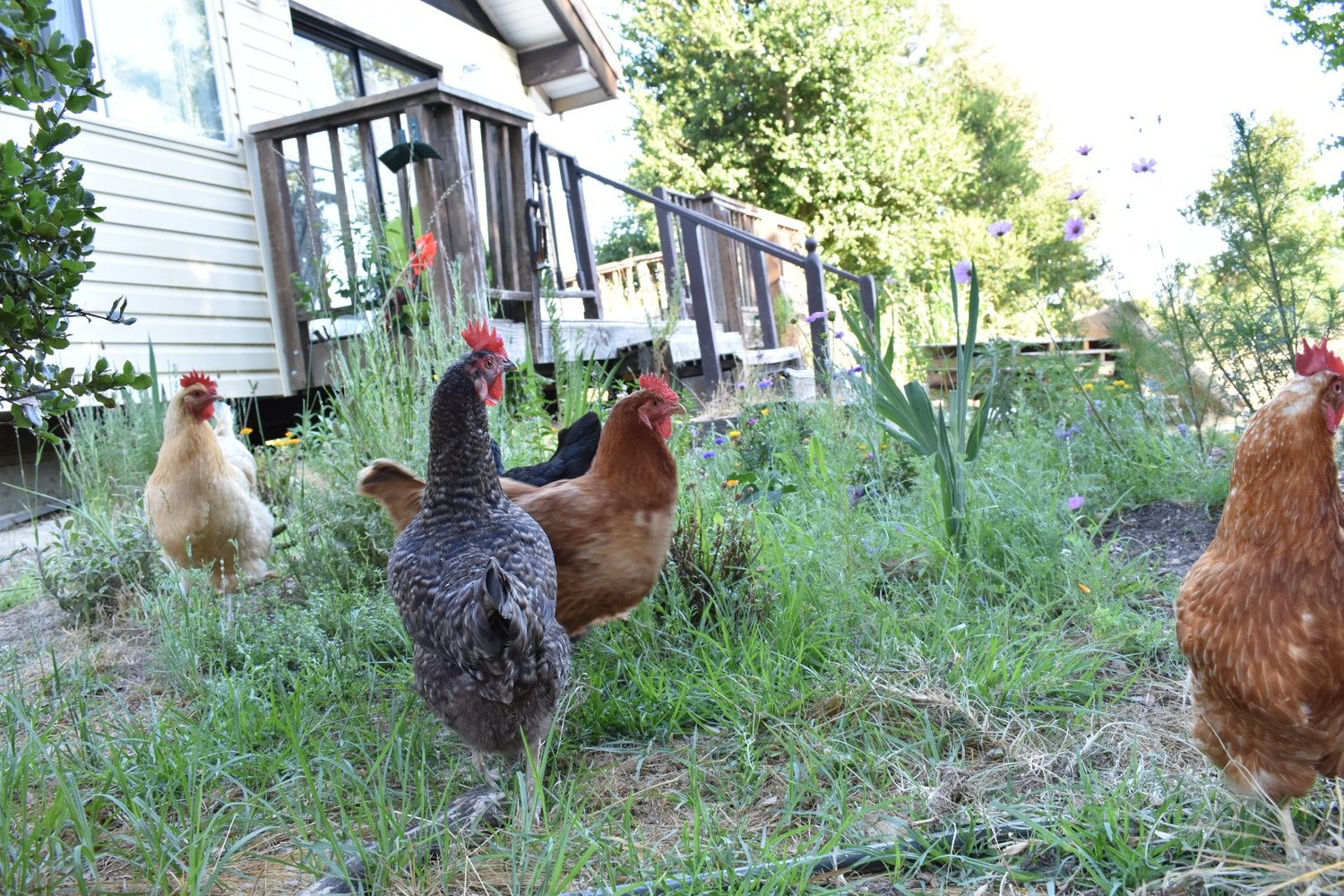
Here in Boulder Creek (unincorporated county), I keep a mixed flock that includes chickens, ducks, and a Toulouse goose. The county has been straightforward about allowing poultry on residential parcels in the San Lorenzo Valley. The biggest concern from neighbors is usually noise, which is almost entirely a rooster issue. Hens are quiet by comparison.
A few things to keep in mind before you build your coop. First, even where chickens are allowed, your enclosure needs to be well maintained. A neglected coop can attract rats and flies, which is the fastest way to get a complaint. Second, talk to your neighbors before you bring birds home. A dozen fresh eggs go a long way toward goodwill. Third, consider predator pressure. Santa Cruz County is home to raccoons, foxes, coyotes, bobcats, and hawks. A secure run with hardware cloth (not chicken wire, which raccoons can tear through) is not optional here.
If you rent, check your lease. Many landlords have not thought about poultry one way or the other, and a conversation upfront saves trouble later. If your HOA has CC&Rs that restrict livestock, those private rules can override the city's permissive stance.
This week: Look up your specific jurisdiction's poultry rules online or call your local planning department, and have a friendly conversation with your immediate neighbors about your plans.
Keep Reading
- Starting a Backyard Flock in Santa Cruz County
- Choosing the Right Breeds for Coastal California Gardens
- Designing a Predator-Proof Run for Your Garden Flock
Frequently Asked Questions
Are roosters allowed in the City of Santa Cruz?
No. Hens are generally permitted on residential property without a permit, but roosters are prohibited within city limits. Most neighbor complaints come down to noise, which is almost entirely a rooster issue, not a hen one.
What should I check before getting chickens?
Rules vary by jurisdiction, so contact your local planning department to confirm setback and zoning requirements for your address. Also review any rental lease or HOA rules, since those private restrictions can override what the city allows.
How do I protect a backyard flock from local predators?
Use hardware cloth rather than chicken wire, which predators can tear through or reach into. Plan for the area's raccoons, foxes, coyotes, bobcats, and hawks, and keep the coop clean so it does not attract rats and flies.
Editor’s note, July 2026: This article was reviewed and materially updated against current primary sources. Earlier wording was removed or corrected. Source links and the review date are included so readers can verify the guidance.
