

California Poppy: Meaning, History, and Uses Beyond the Garden
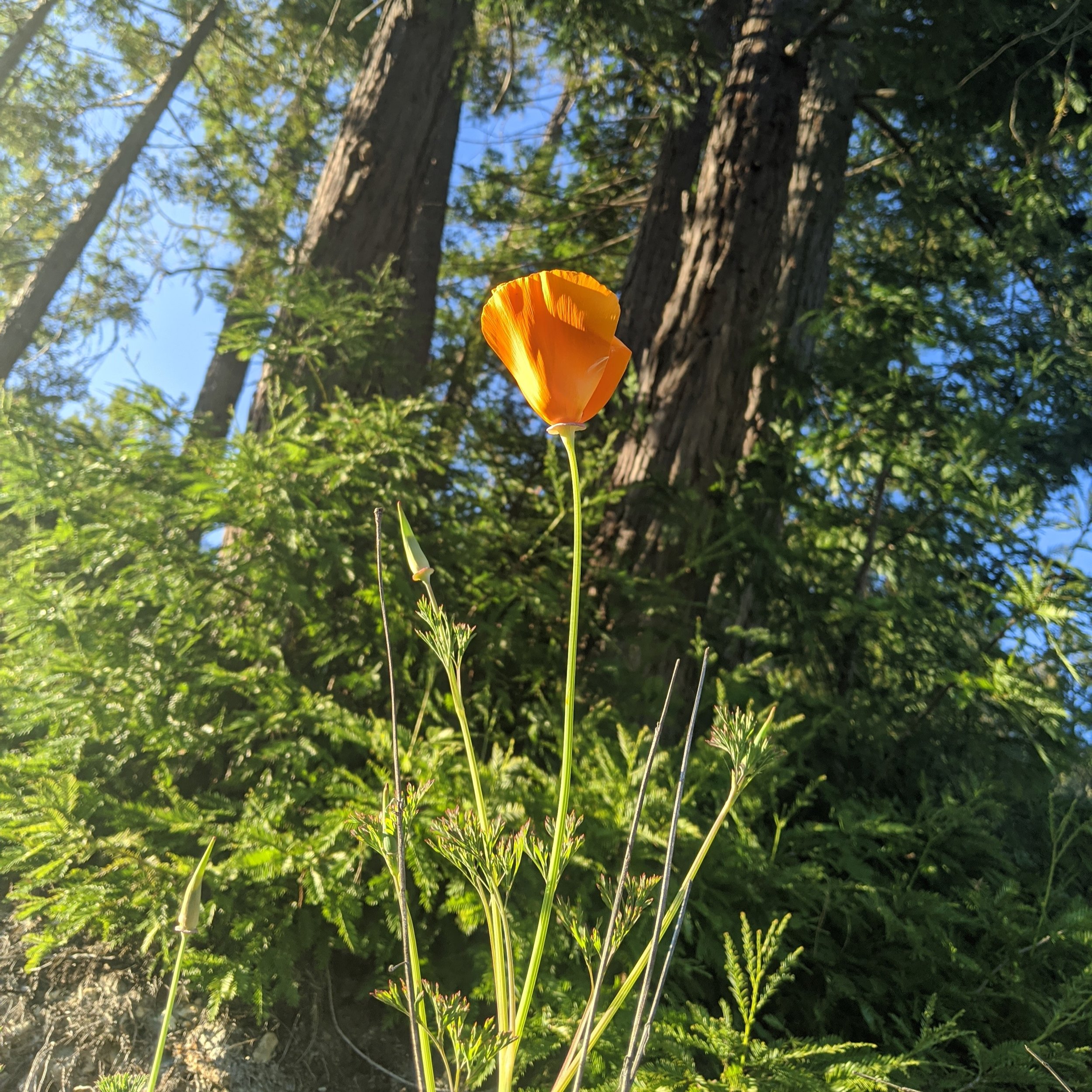
California poppies are beloved for their brilliant orange blooms, but there is much more to the plant than garden beauty. California Indigenous communities have longstanding cultural relationships with native plants, and historical sources describe food, medicinal, and ceremonial uses of California poppy. It also remains a powerful symbol of California identity and resilience. According to UC Agriculture and Natural Resources, the California poppy became the state flower in 1903 and thrives in well-drained soils across the state, providing pollen resources for native bees.
This guide explores the cultural significance, traditional and modern medicinal uses, and practical applications of California poppies. It covers the plant's history, its use in herbal remedies, and the background behind our state flower.
What Does the California Poppy Symbolize?
Our State Flower
California designated Eschscholzia californica as the official state flower on March 2, 1903 (California Government Code §421), making it one of the earliest state symbols established. The choice was fitting: by the time of designation, California poppies had already captured the public imagination as an emblem of the Golden State.
Later writers described the poppy-covered coast as a "land of fire," reflecting how the orange hillsides looked from offshore. The flowers were so abundant and so distinctly Californian that choosing another state flower was never seriously considered. When the legislature voted, the poppy won easily over the Mariposa lily and the Matilija poppy.
April 6th is California Poppy Day, established to celebrate the state flower and encourage Californians to plant poppies in their gardens and public spaces. The date falls during peak bloom season in much of the state, when wild poppies paint hillsides from the Antelope Valley to the coastal bluffs of Santa Cruz County.
What California Poppies Represent
Resilience and adaptability: California poppies thrive in challenging conditions, from poor rocky soils to drought and heat. They return year after year, self-sowing through whatever weather comes. This tenacity resonates with California's identity as a place of reinvention and perseverance.
California identity: More than any other plant, poppies symbolize California itself. They appear on welcome signs, license plates, school logos, and countless business names. For Californians who move away, a hillside of poppies is often the image that represents home.
The golden dream: The poppy's orange-gold color connects to California's Gold Rush history and the promise of opportunity that drew (and still draws) people westward. "Golden State" refers partly to the gold in the hills, but also to the golden poppies covering them.
Remembrance: In some contexts, California poppies are used in memorial plantings, particularly for Californians or to honor connections to the state. While red poppies (Papaver rhoeas) are the traditional remembrance flower for veterans, California poppies sometimes appear in Western memorial gardens.
Joy and optimism: The flowers' bright color and sunny disposition (they literally open with the sun and close at night) represent cheerfulness and hope. A patch of poppies is almost impossible to look at without feeling lighter.
Poppies in Indigenous Culture
Long before European contact, California's indigenous peoples valued poppies for practical and cultural purposes. The Costanoan (Ohlone) people of the Monterey Bay region, the Chumash of the Central Coast, and many other groups incorporated poppies into their lives.
Ethnobotanical summaries describe traditional uses of the whole plant, including preparations associated with calming and pain relief. These historical accounts do not establish modern clinical effectiveness, dosing, or safety for children.
Uses varied by tribe and region, but commonly included:
Medicine: Root and leaf preparations for pain, sleep support, and calming (well-documented in ethnobotanical literature)
Food: Some ethnobotanical sources mention limited use of young leaves or seeds as food, but documented food use is less consistent than medicinal use
Ceremony: The plant held cultural significance in some traditions
Practical applications: Pollen was used cosmetically; plant oils had various uses
The specific practices of local tribes are not always well-documented in accessible sources, and some traditional knowledge remains with descendant communities. The Amah Mutsun Tribal Band and other local indigenous groups continue to work on preserving and reviving traditional plant knowledge in the Monterey Bay region.
What does research say about California poppy?
California poppy has a history of traditional herbal use, but human evidence for sleep, anxiety, or pain is limited. A commonly cited human trial tested California poppy as part of a combination with hawthorn and magnesium, so the study cannot show the poppy’s independent effect. Traditional use and a combination-product trial do not establish a standard dose, pediatric safety, long-term safety, or freedom from drug interactions.
This article does not recommend ingesting garden-grown California poppy or provide preparation or dosing instructions. Herbal products can vary in identity, concentration, and contamination risk. Children, pregnant or breastfeeding people, people taking sedating medicines, and anyone considering an herbal product for a health condition should discuss it with a qualified health-care professional.
Sources: PubMed combination trial and NCCIH guidance for children and complementary health approaches.
What Other Uses Do California Poppies Have?
Culinary and ethnobotanical history
Some ethnobotanical sources describe limited historical food use of young leaves or seeds in certain regions. This article presents that information as history and does not recommend eating California poppy or preparing garden-grown plants for ingestion.
Natural Dye
California poppies produce dyes in shades of yellow, gold, and soft orange, depending on the plant parts used and the mordant (fixative) applied.
Parts used: Petals produce the brightest colors; whole plants (including leaves and stems) yield more muted tones.
Colors achieved: Typically yellow to gold; true orange is difficult to achieve and may require specific mordants or techniques.
Fiber compatibility: Works on natural fibers including wool, silk, cotton, and linen. Protein fibers (wool, silk) typically take dye more readily.
Process basics: Fresh or dried plant material is simmered in water to extract color, then fiber is added (usually after pre-treatment with a mordant like alum). Specific recipes vary; consult natural dyeing resources for detailed instructions.
California poppy isn't among the strongest natural dyes, but it's readily available for Santa Cruz County gardeners who want to experiment with plant-based color.
Ornamental Value
Beyond the garden, California poppies have ornamental uses:
Cut flowers: Poppies can be cut for arrangements, though they're short-lived in the vase (typically 2 to 4 days). Cut stems in early morning when flowers are closed, and sear the stem ends briefly with a flame or dip in boiling water to extend vase life.
Dried flowers: Poppy seed pods dry well and are attractive in dried arrangements. The pods have an interesting sculptural quality. Flowers themselves don't dry well and lose their color.
Photography and art: The photogenic quality of poppy fields has inspired countless artists and photographers. Our local hillsides during bloom season offer opportunities for nature photography without traveling to the famous (and crowded) superbloom sites.
What Are the Key California State Flower Facts?
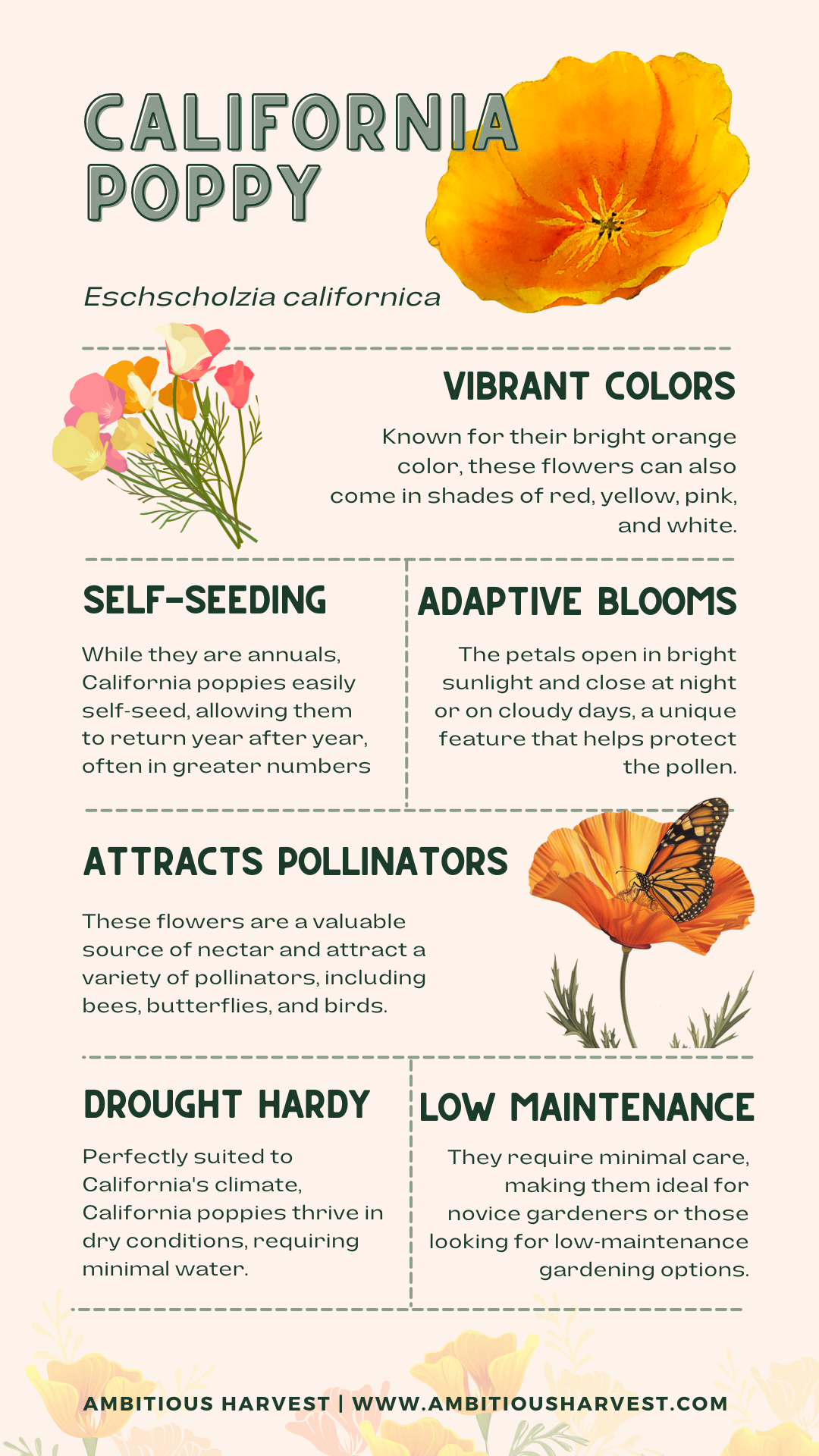
Quick Facts
Designated: March 2, 1903 (California Government Code §421)
Scientific name: Eschscholzia californica
Named for: Johann Friedrich von Eschscholtz, a 19th-century naturalist
California Poppy Day: April 6
Native range: Southern Washington to Baja California
Also called: Golden poppy, California sunlight, cup of gold
Why the Poppy Was Chosen
When California's legislature considered state flower options in the early 1900s, the poppy was the clear frontrunner. Several factors made it the obvious choice:
Abundance: Poppies covered vast areas of the state, making them familiar to all Californians regardless of region.
Distinctiveness: While poppies grow elsewhere, they're most strongly associated with California. The flower says "California" in a way few other plants do.
Beauty: The brilliant orange color and silky petals made poppies aesthetically appealing and recognizable.
Historical significance: The poppy was already well-established in California's cultural identity through art, literature, and popular imagination.
Hardiness: The plant's ability to thrive in California's challenging conditions (drought, poor soil, heat) symbolized pioneer spirit and resilience.
Legal Myths vs. Reality
One persistent myth is that California poppies cannot be picked simply because they are the state flower. CDFW says no law protects California poppy specifically, but that does not mean plants may be taken from land without permission.
The myth: "You can't pick California poppies because they're the state flower."
The reality: California Penal Code section 384a restricts cutting, damaging, or removing plant material from public land and highway rights-of-way and from land a person does not own without the required permission. CDFW also warns that unauthorized removal or damage may constitute trespass or petty theft.
What IS illegal:
Picking poppies (or any plants) on state, county, or city property
Picking poppies on private property without the owner's permission
Damaging plants in any protected area
What IS legal:
Growing poppies on your own property
Picking, harvesting, and using poppies from your own garden
Selling poppies or poppy seeds you've grown
Collecting seeds from your own plants
The confusion likely stems from general plant and property protections combined with the poppy's status as state flower. CDFW explains both the myth and the applicable permission rules; rules for a park, preserve, lease, protected species, or other regulated site may add restrictions.
How Do You Grow California Poppies in Santa Cruz County?
If this article has inspired you to grow California poppies, you're in luck. They're among the easiest plants to grow in our Mediterranean climate, requiring almost no care once established.
For detailed growing instructions, see our complete guide: Growing California Poppies in Santa Cruz County
Quick tips:
When to plant: Fall (October through December) is ideal; early spring also works
Where to plant: Full sun, well-drained soil; poor soil is actually better than rich garden beds
How to plant: Scatter seeds on bare soil, press lightly, don't cover deeply
Care: Almost none; don't water established plants, don't fertilize
Self-sowing: Once established, poppies reseed themselves indefinitely
Local seed sources:
Renee's Garden Seeds (Felton)
Mountain Feed & Farm Supply (Ben Lomond)
San Lorenzo Garden Center (Santa Cruz)
Sierra Azul Nursery (Watsonville)
Check our Garden Conditions Dashboard for current soil temperatures and planting conditions, or browse our Garden Events Calendar for native plant sales and wildflower walks.
Frequently Asked Questions About California Poppy Uses
How is California poppy different from opium poppy?
California poppy (Eschscholzia californica) and opium poppy (Papaver somniferum) are in the same plant family but are completely different species with different chemistry. California poppy contains benzylisoquinoline alkaloids (like protopine) but no opiates; it is non-addictive and legal to grow and use. Opium poppy contains morphine, codeine, and other opiates, has high addiction potential, and is regulated. The two plants look quite different as well.
What does California poppy symbolize?
California poppies symbolize several things: California identity and the Golden State, resilience and adaptability (the plants thrive in tough conditions), joy and optimism (their sunny color and light-responsive blooms), and the golden promise that has long drawn people to California. For Californians, poppies often represent home and connection to the state's natural heritage.
Is it really legal to pick California poppies?
A landowner may generally pick California poppies growing on that private property; CDFW expressly says the cited laws do not prevent a private landowner from collecting California poppies there. That statement does not by itself answer every harvesting, sale, protected-habitat, lease, or local land-use question, so check any rule that applies to the property and activity.
Where can I see wild California poppies in Santa Cruz County?
Wild poppies bloom on grasslands and open hillsides throughout Santa Cruz County, typically from March through May depending on weather. Good viewing spots include Wilder Ranch State Park, the grasslands around UCSC, parts of the Pogonip, and rural roadsides in the inland valleys. Peak bloom varies year to year based on rainfall; check our Garden Events Calendar for wildflower walk announcements.
Free California Poppy Resources
Seasonal Planting Calendar - Month-by-month guide to planting times for Santa Cruz County, including wildflower seeding windows.
Water-Wise Gardening Guide - Comprehensive strategies for reducing water use while keeping your garden thriving.
Know Your Microclimate Worksheet - Identify your garden's specific growing conditions for better plant selection.
Why Is the California Poppy More Than a Pretty Flower?
California poppies offer so much more than spring color. They connect us to California's indigenous heritage, provide gentle herbal support for modern stresses, and symbolize everything that makes this state special: resilience, beauty, optimism, and the golden promise of possibility.
Whether you grow poppies for their looks, their history, their calming properties, or simply because they're the easiest flowers you'll ever plant, you're participating in a tradition that stretches back thousands of years. The same plant that covered these hillsides when the Ohlone walked this land still blooms here today, unchanged and unchanging.
This fall, scatter some seeds in a sunny corner. Next spring, when those silky orange petals open to greet the sun, you'll understand why California claimed this flower as its own.
Editor’s note, July 2026: This article was reviewed and materially updated against current primary sources. Earlier wording was removed or corrected. Source links and the review date are included so readers can verify the guidance.
