

Best Carrot Varieties for Santa Cruz County Gardens
A few of the product links in this guide are affiliate links. If you buy through one, Ambitious Harvest may earn a small commission at no extra cost to you, which helps keep these guides free. We only point to gear we would use in our own Santa Cruz garden. As an Amazon Associate, we earn from qualifying purchases. Read our full disclosure.
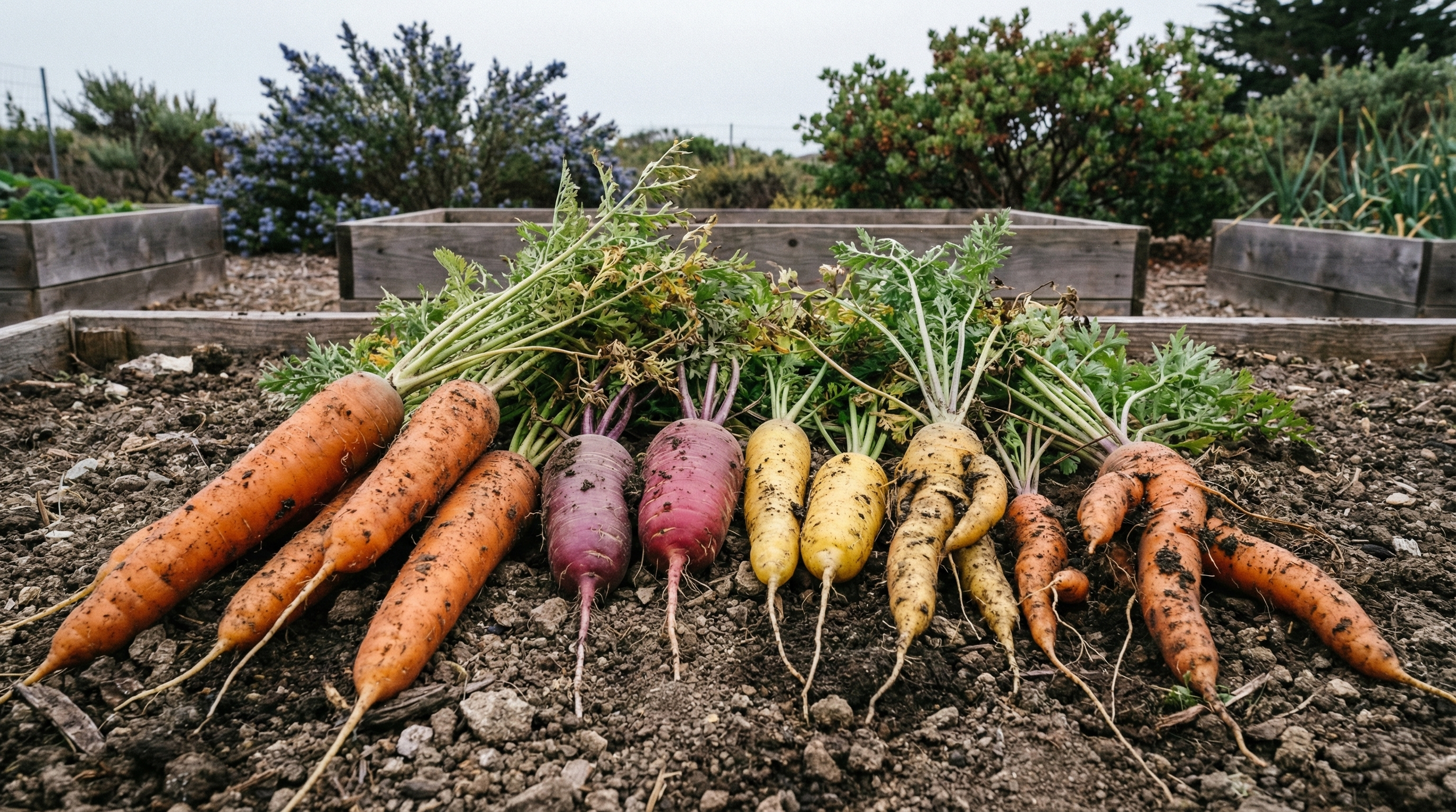
If you've struggled to grow carrots in Santa Cruz County, you're not alone. Between our clay soil, gophers, and the dramatic differences between coastal fog and sunny mountain gardens, carrots can feel more challenging than they should be. The good news? Success comes down to choosing the right variety for your specific conditions and preparing your soil properly.
This guide covers 12 carrot varieties that thrive in our region, with specific recommendations for each of Santa Cruz County's unique microclimates. There is a carrot variety that works in foggy Aptos, in sunny Boulder Creek, and in shaded Felton.
Why Carrots Can Be Tricky in Santa Cruz County
Before we get to varieties, let's address the elephant in the garden: why do so many local gardeners struggle with carrots?
Clay soil is the primary culprit. Much of Santa Cruz County has heavy clay soil that causes carrots to fork, twist, or simply give up a few inches down. According to the UC Cooperative Extension of Santa Cruz County, our coastal clay soils often contain over 40% clay content, which creates compaction that root vegetables struggle to penetrate.
Inconsistent moisture matters. Carrot seeds need consistent moisture to germinate (often 14-21 days), but our dry summers and winter rain cycles don't naturally provide this. Seeds that dry out during germination simply won't sprout.
Gophers love carrots. If you've ever watched a beautiful row of carrot tops get sucked underground one by one, you know the heartbreak. Raised beds with hardware cloth bottoms are essential for most Santa Cruz gardens. (For a deeper dive on pests, see our carrot troubleshooting guide.)
Temperature swings affect sweetness. Carrots develop their best flavor when they mature during cool weather. Our mild climate is actually an advantage here, as fall and winter carrots in Santa Cruz can develop exceptional sweetness that rivals anything grown elsewhere.
Understanding Carrot Types
Carrots fall into several distinct types, each with characteristics that make them better or worse suited to specific soil conditions. Understanding these categories will help you choose wisely.
Nantes types are cylindrical with blunt tips and are generally the most forgiving in imperfect soil. They're sweet, tender, and don't require perfectly loose soil to form well. If you're new to growing carrots in Santa Cruz, start here.
Chantenay types are shorter and stockier, with broad shoulders that taper to a point. They were specifically developed for heavy, clay, or rocky soils and can handle compaction that would destroy a Nantes type. Excellent for many Santa Cruz gardens.
Danvers types are medium length with tapered tips. They're good all-purpose carrots that can adapt to various soil conditions, though not quite as forgiving as Chantenay types in heavy clay.
Imperator types are the long, slender carrots you see in supermarkets. They require deep, perfectly loose, sandy soil to grow properly. These are challenging in most Santa Cruz gardens unless you've built raised beds with imported soil.
Mini and round types are specialty carrots bred for shallow containers or very heavy soils. They're an excellent solution for gardeners dealing with hardpan clay or growing in containers.
The 12 Best Carrot Varieties for Santa Cruz County
1. Nantes Scarlet (Best All-Around Choice)
Days to Maturity: 68-70 days
Length: 6-7 inches
Type: Nantes
Best Microclimates: All (coastal, inland, mountains)
The classic Nantes Scarlet is arguably the most reliable carrot for Santa Cruz County gardens. Its cylindrical shape with a blunt, rounded tip means it doesn't need perfectly loose soil to form properly. The roots push through moderate clay better than pointed varieties.
Flavor-wise, Nantes Scarlet delivers exceptional sweetness, especially when harvested in fall or winter after a few light frosts (if you're in the mountain areas) or during our cool, foggy coastal winters. The thin core makes them excellent for eating raw, juicing, or cooking.
Why it works here: The blunt tip allows roots to push through our clay soil rather than forking when they hit resistance. Moderate length means you don't need 12 inches of perfectly prepared soil.
Local tip: Renee's Garden Seeds in Felton carries Nantes Scarlet and ships to local gardeners. Their seeds are tested in Northern California conditions, which gives them an edge over national suppliers.
2. Scarlet Nantes (Nearly Identical Performer)
Days to Maturity: 65-70 days
Length: 6-7 inches
Type: Nantes
Best Microclimates: All
Often confused with Nantes Scarlet (and essentially the same carrot), Scarlet Nantes is the name used by many seed suppliers for this reliable variety. Look for either name when shopping, they perform identically.
3. Bolero (Best for Storage)
Days to Maturity: 75 days
Length: 7-8 inches
Type: Nantes
Best Microclimates: All, especially good for fall planting
If you want to grow carrots for long-term storage, Bolero is your variety. This hybrid Nantes type was developed specifically for cold storage, maintaining crisp texture and sweet flavor for months in a root cellar, refrigerator, or even left in the ground through winter.
Bolero also has excellent disease resistance, particularly to Alternaria leaf blight and powdery mildew, both of which can affect carrots in our foggy coastal areas. The strong tops make harvesting easier in clay soil.
Why it works here: Disease resistance is particularly valuable in coastal Santa Cruz where humidity promotes fungal issues. The sturdy tops don't break when you're pulling carrots from clay soil.
4. Chantenay Red Core (Best for Heavy Clay)
Days to Maturity: 65-70 days
Length: 5-6 inches
Type: Chantenay
Best Microclimates: All, especially areas with heavy clay
If you haven't amended your clay soil and still want to grow carrots, Chantenay Red Core is your solution. This variety was specifically bred for heavy, clay, and rocky soils. The shorter, stockier roots push through compacted soil that would cause longer varieties to fork.
The flavor is rich and sweet, with a distinctive "carroty" taste that some gardeners prefer over the milder Nantes types. The red core adds visual interest when sliced.
Why it works here: Chantenay types are the most clay-tolerant carrots available. If you're gardening in unamended Aptos or Watsonville clay, start here.
5. Yaya (Best Baby Carrot for Foggy Areas)
Days to Maturity: 55-60 days
Length: 6 inches
Type: Nantes
Best Microclimates: Coastal (Aptos, Capitola, Live Oak), shaded gardens
Yaya is a quick-maturing Nantes hybrid that produces sweet, tender carrots in less than two months. This makes it perfect for succession planting throughout our long growing season and for coastal gardens where cooler temperatures slow growth of longer-season varieties.
The uniform, cylindrical roots are tender enough to eat raw without peeling, making them ideal for snacking and salads. They're also excellent for gardeners who want to get multiple carrot harvests per year.
Why it works here: The short maturity time compensates for slower growth in foggy coastal microclimates. Plant every 3-4 weeks from February through September for continuous harvest.
6. Napoli (Best for Year-Round Growing)
Days to Maturity: 58 days
Length: 7 inches
Type: Nantes
Best Microclimates: All, especially coastal year-round gardens
Napoli is another early Nantes hybrid that handles our cool, coastal conditions exceptionally well. It was developed in the Netherlands for maritime climates similar to coastal California, making it naturally suited to our foggy growing conditions.
The roots are sweet, crisp, and maintain quality even if left in the ground a bit past maturity, this is important for gardeners who can't always harvest at the perfect time.
Why it works here: Maritime climate breeding means it thrives in cool, foggy conditions where other varieties might struggle or develop poor flavor.
7. Parisian (Best for Containers and Rocky Soil)
Days to Maturity: 50-55 days
Length: 1-2 inches (round)
Type: Mini/Round
Best Microclimates: All, especially challenging soils and container gardens
Parisian is a round, golf-ball-sized carrot that produces reliably in conditions that would defeat standard varieties. Heavy clay? Rocky soil? Shallow raised beds? Parisian doesn't care. The round roots form well in just a few inches of soil.
Don't let the small size fool you: these carrots pack intense, sweet flavor. They're excellent roasted whole and make charming additions to vegetable trays.
Why it works here: Perfect for Santa Cruz gardeners who don't have the time or resources to build deep raised beds but still want to grow carrots.
8. Thumbelina (Best for Kids and Containers)
Days to Maturity: 60-65 days
Length: 1-2 inches (round)
Type: Mini/Round
Best Microclimates: All
Similar to Parisian, Thumbelina produces round, bite-sized carrots that are perfect for containers, window boxes, or shallow beds. They're particularly popular with kids because of their fun shape and sweet flavor.
Thumbelina won the prestigious All-America Selections award for its exceptional performance in home gardens across varying conditions.
Why it works here: If you're gardening with children (or dealing with extremely heavy clay), Thumbelina offers almost guaranteed success. Our complete guide to growing carrots in Santa Cruz covers more details on getting started.
9. Little Finger (Best Small Nantes)
Days to Maturity: 55-65 days
Length: 3-4 inches
Type: Nantes (miniature)
Best Microclimates: All, especially container gardens
Little Finger is a miniature Nantes variety that produces slender, finger-sized carrots with excellent sweet flavor. They're perfect for snacking, pickling, or canning whole.
These carrots mature quickly and don't require the deep soil that full-sized Nantes varieties need, making them ideal for raised beds with limited depth or container growing.
Why it works here: A good compromise between the reliability of round varieties and the flavor profile of traditional Nantes carrots.
10. Cosmic Purple (Best Colorful Variety)
Days to Maturity: 70-75 days
Length: 7 inches
Type: Imperator/Nantes cross
Best Microclimates: Warmer microclimates (Boulder Creek, Scotts Valley, Watsonville)
If you want to add visual excitement to your harvest, Cosmic Purple delivers stunning deep purple skin with orange flesh inside. The color comes from anthocyanins, the same antioxidants found in blueberries.
Cosmic Purple requires slightly better soil than pure Nantes types but handles moderate clay reasonably well. The flavor is sweet with mild spicy notes when eaten raw.
Why it works here: Best for inland and mountain microclimates where soil tends to be less heavy clay than coastal areas. The warmer temperatures in these areas also help develop good color.
11. Atlas (Best Short Chantenay)
Days to Maturity: 70 days
Length: 4-5 inches
Type: Chantenay
Best Microclimates: All, especially heavy clay areas
Atlas is a Chantenay hybrid that combines clay soil tolerance with improved sweetness and smoother skin than older Chantenay varieties. The roots are short and stocky, pushing through heavy soil without forking.
This variety is particularly good for summer planting for fall harvest, when you want carrots that will mature during our cool weather for maximum sweetness.
Why it works here: Modern breeding has improved on traditional Chantenay flavor while maintaining the soil tolerance that makes this type essential for clay-heavy Santa Cruz gardens.
12. Danvers 126 (Best Traditional Variety)
Days to Maturity: 75 days
Length: 6-7 inches
Type: Danvers
Best Microclimates: Inland valleys (Scotts Valley, Soquel), Watsonville
Danvers 126 is an heirloom variety developed in Danvers, Massachusetts in the 1870s. It remains popular because of its adaptability to various soil types and excellent storage qualities.
The tapered roots handle moderate clay better than Imperator types but don't quite match Chantenay varieties in heavy clay. The flavor is classic and robust, excellent for cooking.
Why it works here: A good middle-ground variety for gardeners with moderately improved soil who want longer carrots than Chantenay types produce.
Carrot Variety Selection by Santa Cruz Microclimate
Coastal Areas (Aptos, Capitola, Santa Cruz, Live Oak)
Your challenges: Heavy clay soil, persistent fog reducing soil temperature, humidity promoting fungal diseases, year-round mild temperatures.
Best varieties: Yaya, Napoli, Bolero, Chantenay Red Core, Parisian
Why these work: Quick-maturing varieties like Yaya and Napoli compensate for slower growth in cool conditions. Bolero's disease resistance is valuable in humid coastal air. Chantenay and round types handle the heavy clay common in coastal areas.
Planting timing: You can plant carrots year-round on the coast, though August-September plantings for winter harvest tend to produce the sweetest carrots. Avoid July, when fog is heaviest and germination can be unreliable.
San Lorenzo Valley Chaparral (Boulder Creek, Ben Lomond Sunny Exposures)
Your challenges: Warmer temperatures, frost risk in winter, often rocky or shallow soil, drier conditions.
Best varieties: Nantes Scarlet, Cosmic Purple, Danvers 126, Atlas, Bolero
Why these work: Warmer temperatures allow for a wider variety range. Rocky soil in some areas benefits from shorter Chantenay types. The distinct seasons with cold winters create excellent conditions for sweet fall/winter carrots.
Planting timing: Best results from February-April spring planting and August-September fall planting. Summer carrots are possible but need consistent irrigation and may lack sweetness.
Under the Redwoods (Felton, Ben Lomond Canyons, Shaded Areas)
Your challenges: Shade (often less than 6 hours of direct sun), acidic soil, cool and moist conditions year-round, often heavy clay.
Best varieties: Yaya, Little Finger, Parisian, Thumbelina
Why these work: Shorter varieties with faster maturity times are essential for shaded conditions. Carrots need at least 4-6 hours of sun, so stick to your sunniest spots and choose quick-maturing types.
Realistically: If you have less than 4 hours of direct sun, carrots may not be your best crop. Consider focusing on leafy greens, which tolerate shade much better. Our beginner vegetable garden guide can help you find crops suited to your light conditions. That said, the mini and round varieties listed above are worth trying in partly shaded spots.
Planting timing: Late spring through early fall, when day length is longest and you'll capture maximum available sunlight.
Inland Valleys (Scotts Valley, Soquel Hills)
Your challenges: Variable conditions depending on exact location, moderate clay in many areas, frost possible in winter.
Best varieties: Nantes Scarlet, Danvers 126, Bolero, Atlas, Cosmic Purple
Why these work: Moderate conditions allow for a wide variety range. You have more flexibility than coastal gardeners dealing with heavy fog or mountain gardeners dealing with challenging soil.
Planting timing: February-April for spring harvest, August-October for fall/winter harvest. The cool fall conditions in inland valleys produce exceptionally sweet carrots.
Pajaro Valley (Watsonville)
Your challenges: Warmest microclimate in the county, often sandy loam soil (a blessing for carrots!), agricultural zone with longer growing season.
Best varieties: All varieties work here, including Imperator types if soil is sandy
Why this works: Watsonville gardeners have the most flexibility because the warmer temperatures and often better-draining soil create ideal carrot conditions. You can even try the long Imperator varieties that fail elsewhere in the county.
Planting timing: Plant from February through October. The long season allows for extensive succession planting.
Soil Preparation: The Key to Carrot Success
No variety, no matter how clay-tolerant, will produce well in unprepared soil. Here's how to give your carrots the best chance:
Loosen soil deeply. Use a broadfork or digging fork to loosen soil to at least 12 inches deep without completely inverting it. This maintains soil structure while creating channels for roots to follow.
Add organic matter. Work 2-3 inches of finished compost into the top 6-8 inches of soil. This improves drainage in clay and water retention in sandy soil. According to UC IPM research, carrots do best in deep, loose, fertile soil with a pH between 6.0 and 6.5.
Consider raised beds. For gardeners with particularly heavy clay, raised beds filled with a mix of compost and purchased garden soil may be the most reliable solution. A 12-inch deep bed is sufficient for most Nantes and Chantenay varieties.
Avoid fresh manure and heavy nitrogen. These cause carrots to fork and produce hairy roots. If you add manure to your garden, do so in fall and plant carrots the following spring.
Remove rocks and debris. Carrots fork when they hit obstacles. Even small rocks can cause misshapen roots.
Planting and Care Tips for Santa Cruz Gardeners
Seed to soil contact matters. Carrot seeds are tiny and need good contact with soil to absorb moisture for germination. Press seeds firmly into soil and cover with no more than ¼ inch of fine soil or vermiculite.
Keep seeds moist during germination. This is where many gardeners fail. Carrot seeds can take 14-21 days to germinate, and they need consistent moisture the entire time. Cover beds with burlap, floating row cover, or a thin layer of grass clippings to retain moisture. Water lightly daily until seedlings emerge.
Thin ruthlessly. Crowded carrots never size up properly. Thin to 2-3 inches apart when seedlings are 2-3 inches tall. Yes, this feels wasteful. Do it anyway.
Mulch to moderate temperature. A 2-inch layer of straw mulch keeps soil cool in summer (important for coastal gardens) and protects from frost in winter (important for mountain gardens).
Water deeply and consistently. Irregular watering causes cracked and bitter carrots. Drip irrigation with a timer is ideal.
When and How to Harvest
Check size before harvesting. Brush away soil at the base of the foliage to check root diameter. Most varieties are ready when shoulders reach ½ to ¾ inch in diameter.
Loosen soil first. Use a garden fork to loosen soil alongside the row before pulling. This prevents breaking roots in clay soil.
Leave carrots in the ground for storage. In Santa Cruz's mild climate, you can leave carrots in the ground through winter and harvest as needed. Add extra mulch for protection in mountain areas. This living storage keeps carrots fresher than any refrigerator.
For indoor storage: Remove tops immediately (they draw moisture from roots), brush off soil without washing, and store in plastic bags in the refrigerator. Nantes types last 2-3 months; storage varieties like Bolero can last 4-6 months.
Where to Buy Carrot Seeds Locally
Renee's Garden Seeds (Felton): Local seed company with varieties tested in Northern California conditions. Their Nantes and specialty carrot blends are excellent.
San Lorenzo Garden Center (Santa Cruz): Carries seeds from multiple suppliers, including Botanical Interests and Renee's Garden.
Mountain Feed & Farm Supply (Ben Lomond): Good selection of organic and heirloom seeds.
Dig Gardens (Santa Cruz): Curated seed selection with knowledgeable staff who can advise on local conditions.
Online options: Johnny's Selected Seeds offers an excellent selection of professional-quality carrot varieties with detailed growing information. Baker Creek Heirloom Seeds carries unusual and colorful varieties.
Common Problems and Solutions
Frequently Asked Questions
When is the best time to plant carrots in Santa Cruz?
For most microclimates, the best plantings are August-September for winter harvest (sweetest carrots) and February-March for early summer harvest. Coastal gardeners can plant nearly year-round. Avoid planting in July when coastal fog is heaviest and germination is unreliable.
How long do carrots take to grow in Santa Cruz?
Most varieties mature in 55-75 days, but cooler coastal temperatures can add 1-2 weeks. Mini and round varieties are fastest at 50-60 days; storage varieties like Bolero take 75 days or longer.
Can I grow carrots in containers in Santa Cruz?
Yes! Use containers at least 12 inches deep for standard varieties, or 6-8 inches for round varieties like Parisian and Thumbelina. Container growing is actually advantageous because you control the soil quality.
Why are my carrots small?
Usually due to crowding (thin to 2-3 inches apart), poor soil (add compost and loosen deeply), or harvesting too early (check packet for days to maturity and add time in cooler coastal areas).
What carrots grow best in clay soil?
Chantenay Red Core and Atlas are specifically bred for clay soil. Round varieties like Parisian and Thumbelina also handle clay well. Avoid long Imperator types.
Can I grow carrots year-round in Santa Cruz?
In coastal microclimates, yes. Mountain and inland gardeners should avoid planting December-January when soil is too cold and wet for germination. The key is consistent moisture for germination and timing harvest for cool weather.
How do I protect carrots from gophers?
Raised beds with ½-inch hardware cloth on the bottom and sides are most effective. Line the entire bed before adding soil.
What carrots are sweetest?
All carrots become sweeter when harvested in cool weather. For our climate, fall and winter harvests produce the sweetest carrots regardless of variety. Among types, Nantes varieties (like Scarlet Nantes, Napoli, and Yaya) are generally sweetest.
Downloadable Resources
Ready to start growing the best carrots for your microclimate? These free guides will help:
Santa Cruz Seasonal Planting Calendar: Month-by-month planting guide including best carrot timing for your area.
Seed Starting Guide: Comprehensive guide to starting seeds successfully, including tips for the tricky germination phase.
Companion Planting Guide: Learn what to plant alongside carrots for pest control and improved growth.
Start Growing
Growing great carrots in Santa Cruz County isn't difficult once you match the right variety to your specific conditions. If you're just getting started, our guide to the first 5 vegetables to grow in Santa Cruz County is a great companion resource. Start with forgiving Nantes types like Scarlet Nantes or Yaya if you're new to carrots, or jump straight to Chantenay Red Core if you're dealing with heavy clay. Prepare your soil well, keep those seeds moist during germination, and time your harvest for cool weather.
The sweetest carrots I've ever tasted came from local gardens during our mild winters, when cool temperatures concentrate sugars in the roots. With the right variety and a little attention to timing, you can grow carrots that rival anything from even the best farmers market.
