

Native Garden Design in Santa Cruz County: A Complete Guide to Growing California Natives


A few of the product links in this guide are affiliate links. If you buy through one, Ambitious Harvest may earn a small commission at no extra cost to you, which helps keep these guides free. We only point to gear we would use in our own Santa Cruz garden. As an Amazon Associate, we earn from qualifying purchases. Read our full disclosure.
Native plants aren't just a trend. They're a practical solution to many of the challenges Santa Cruz County gardeners face: water scarcity, wildlife habitat loss, and the desire for beautiful gardens that don't demand constant attention.
California natives evolved with our Mediterranean climate. They expect wet winters and dry summers. They've developed relationships with our native pollinators, birds, and beneficial insects over thousands of years. And they're adapted to our varied microclimates, from foggy coast to sunny mountain ridges to shaded redwood understory.
A well-designed native garden requires less water once established, supports local wildlife, and creates year-round beauty with far less maintenance than conventional landscaping. This guide covers the principles of native garden design, plant selection for Santa Cruz County conditions, and practical steps to create a thriving native landscape.
Why Do Native Plants Thrive in Santa Cruz County?
| Benefit | How it shows up in your garden | Why it matters |
|---|---|---|
| Water savings | Once established, most natives need little beyond winter rainfall | Native gardens can use up to 80–85% less water than turf-based landscapes |
| Wildlife habitat | More native bees, butterflies, birds, and beneficial insects | Wildlife evolved alongside native plants and depends on them for food and shelter |
| Lower maintenance | Less mowing, fertilizing, and pest control than conventional landscapes | Native plants are adapted to local conditions and do not need constant intervention |
| Fire-wise potential | Many natives with high moisture and open structure can fit into a fire-wise design | Some species are relatively less flammable when properly placed and maintained |
Water Efficiency
Once established (typically two to three years), most California natives need little to no supplemental irrigation. They're adapted to our dry summers and actually prefer the rainfall patterns we naturally receive.
According to UC Agriculture and Natural Resources, native plants conserve water while supporting biodiversity. This matters in Santa Cruz County, where water costs continue rising and drought is a recurring reality. A native garden can eliminate landscape irrigation almost entirely, saving hundreds or thousands of gallons annually. Our water-wise gardening guide covers additional strategies for reducing outdoor water use in California.
Wildlife Habitat
Our native birds, butterflies, bees, and other wildlife evolved alongside native plants. They depend on specific natives for food, shelter, and reproduction.
Monarch butterflies need native milkweed (not tropical varieties). For more on supporting these species, see our guide to pollinator-friendly gardens in California. Native bees have evolved to pollinate specific flower shapes and bloom times. Birds rely on native berries and the insects that native plants support.
When you plant natives, you're not just gardening. As UC Davis research confirms, native plants are the most effective at attracting native pollinators. You're restoring habitat in a region where development has eliminated much of what wildlife needs.
Reduced Maintenance
Native plants don't need the fertilizers, pesticides, and amendments that non-native ornamentals often require. They're adapted to local soil conditions. They've co-evolved with local pests and diseases, developing natural resistance.
After the establishment period, a native garden typically needs only occasional pruning, seasonal cleanup, and perhaps supplemental water during extreme drought. Compare that to the constant intervention conventional landscapes demand.
Fire Resistance
Many California natives have adapted to our fire-prone environment. Some resprout from roots after fire. Others have low oil content and high moisture, making them more fire-resistant than non-native species. Some species maintain higher internal moisture and lower resin content, making them relatively less flammable when properly maintained.
In fire-prone areas of Santa Cruz County (much of the San Lorenzo Valley, mountain areas, and rural properties), native plantings can be part of a fire-wise landscape strategy.
What Are Your Site Conditions?
Successful native garden design starts with understanding what you're working with.
Sunlight
Observe your site throughout the day and across seasons. Note which areas receive:
Full sun (6+ hours direct sunlight): Best for many flowering natives including California poppies, manzanita, ceanothus, and native sages.
Part shade (3 to 6 hours): Suitable for coffeeberry, toyon, native currants, and many native grasses.
Full shade (less than 3 hours): Challenging but options exist: redwood sorrel, wild ginger, native ferns, and some native sedges thrive in deep shade.
Soil
Santa Cruz County soils vary dramatically:
Coastal areas: Often sandy, well-draining, slightly alkaline.
Mountain areas: Variable; may be sandy decomposed granite, rocky, or clay-heavy.
Under redwoods: Acidic (pH 5.5 to 6.5), often high in organic matter from decomposing duff.
Valleys: Often heavier clay, slow-draining.
Most natives are adapted to lean, well-draining soil. Avoid the temptation to add rich amendments. Natives generally perform better in native soil than in heavily amended beds (which can promote excess growth and reduce drought tolerance).
Moisture Patterns
Note where water naturally collects and where it drains away quickly. Some natives (sedges, rushes, certain willows) tolerate or require seasonal moisture. Others (manzanita, sage, buckwheat) demand excellent drainage and suffer in wet soil.
Match plants to your site's natural moisture patterns rather than fighting them. Understanding your local microclimates in Santa Cruz County helps you choose the right natives for each area of your garden.
Existing Features
Work with what you have:
Existing trees: Many natives thrive in the filtered light and root competition under oaks or other native trees.
Slopes: Deep-rooted native shrubs (coyote brush, coffeeberry, ceanothus) excel at erosion control on slopes.
Hardscape: Allow space for native plants to reach their mature size. Many natives resent being crowded against walls or fences.
What Are the Key Design Principles for Native Gardens?
Think in Layers
Natural plant communities have vertical structure: canopy trees, understory trees and large shrubs, smaller shrubs, and groundcovers. Mimicking this layering creates a more natural appearance and provides diverse habitat.
Canopy (if space allows): Coast live oak, valley oak, California bay laurel, western redbud.
Large shrubs and small trees (6 to 15 feet): Toyon, coffeeberry, manzanita, ceanothus, elderberry.
Medium shrubs (3 to 6 feet): Native sages, buckwheat, bush lupine, sticky monkey flower.
Small shrubs and groundcovers (under 3 feet): Coyote mint, low-growing manzanitas, California fuchsia, native strawberry, yarrow.
Grasses and grass-like plants: California fescue, purple needlegrass, sedges.
Plan for Mature Size
Natives grow. That small manzanita in a one-gallon pot may reach 8 feet wide in five years. Research mature dimensions before planting and space accordingly.
Underplanting (spacing too close initially) is a common mistake. The garden looks sparse at first but fills in naturally. If you need immediate impact, use fast-growing annuals or short-lived perennials as temporary fillers.
Create Groupings
Cluster plants of the same species rather than scattering single specimens. Groupings look more natural, create better habitat, and make maintenance easier.
A drift of three to five manzanitas has more visual impact than five different shrubs planted individually. A mass of California poppies creates a stunning display; scattered plants look weedy.
Include Bloom Succession
Plan for flowers across all seasons to provide continuous food for pollinators:
Winter/early spring: Manzanita, California currant, native willows.
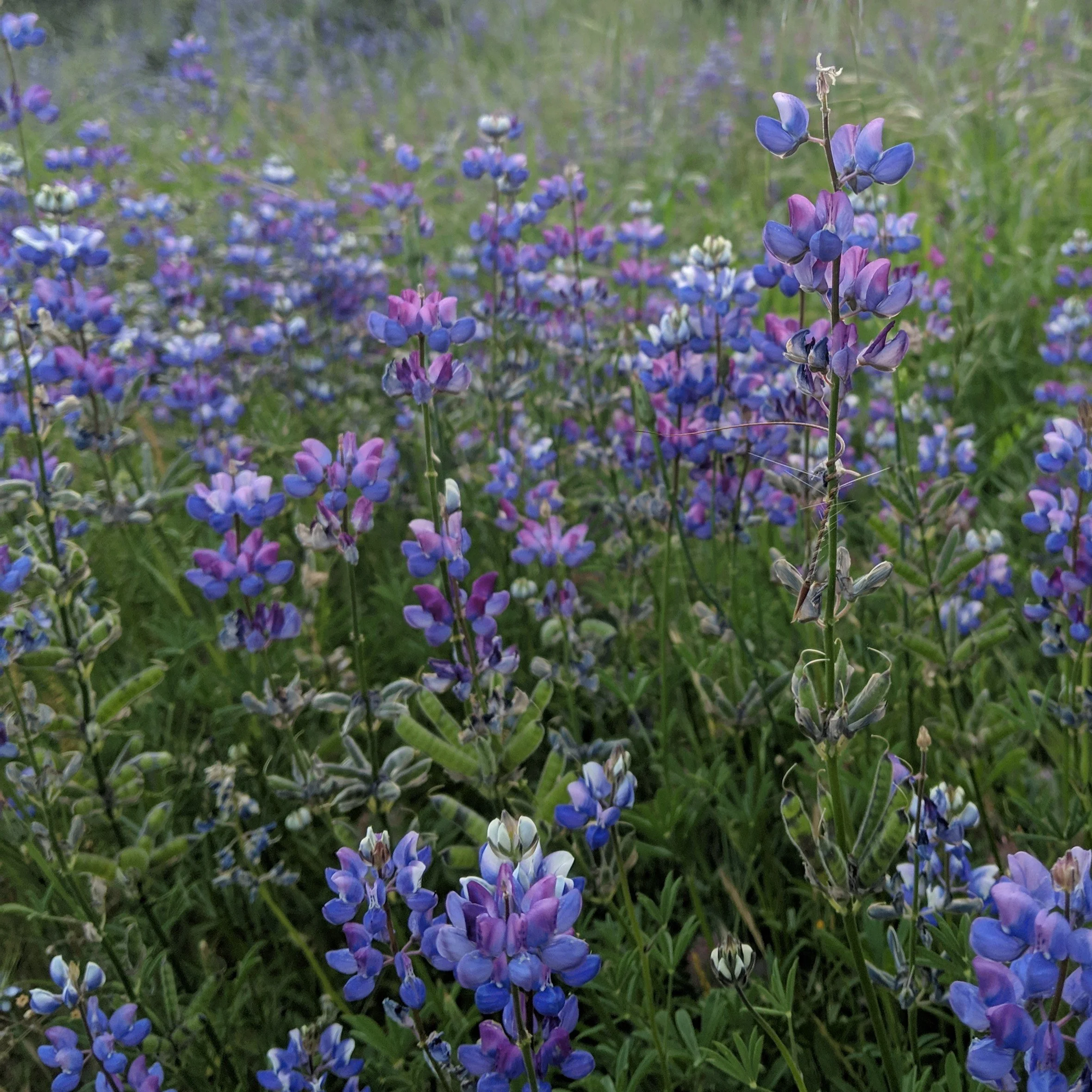
Spring: Ceanothus, lupine, California poppies, iris.
Late spring/summer: Sticky monkey flower, buckwheat, native sages, penstemon.
Fall: California fuchsia, coyote brush, goldenrod.
Allow for Natural Aesthetics
Native gardens have a different aesthetic than conventional landscapes. They're less manicured, more varied, and change dramatically with seasons.
Embrace this. Dead flower stalks provide winter interest and food for birds. Seasonal dormancy is natural, not a sign of failure. A native garden in August looks different from the same garden in April, and that's part of its beauty.
Which Native Plants Work Best in Santa Cruz County Gardens?
These plants perform well across most of Santa Cruz County. All are available from local native plant nurseries.
Large Shrubs and Small Trees
Toyon (Heteromeles arbutifolia) Also called California holly, toyon is an evergreen shrub or small tree reaching 10 to 15 feet. White flower clusters in summer give way to brilliant red berries in winter, providing critical food for birds. Extremely drought-tolerant once established. Full sun to part shade.
Coffeeberry (Frangula californica) Versatile evergreen shrub growing 6 to 15 feet depending on variety. Inconspicuous flowers followed by berries that birds love. Tolerates more shade than many natives. Excellent for informal hedges or screening.
Western Redbud (Cercis occidentalis) Small deciduous tree to 15 feet with stunning magenta flowers on bare branches in early spring. Heat-tolerant; performs best in warmer inland areas of the county. Full sun.
Elderberry (Sambucus species) Fast-growing deciduous shrub reaching 10 to 15 feet. Creamy flower clusters followed by edible berries (cook before eating). Tolerates more moisture than most natives. Attracts birds and beneficial insects.
Medium Shrubs
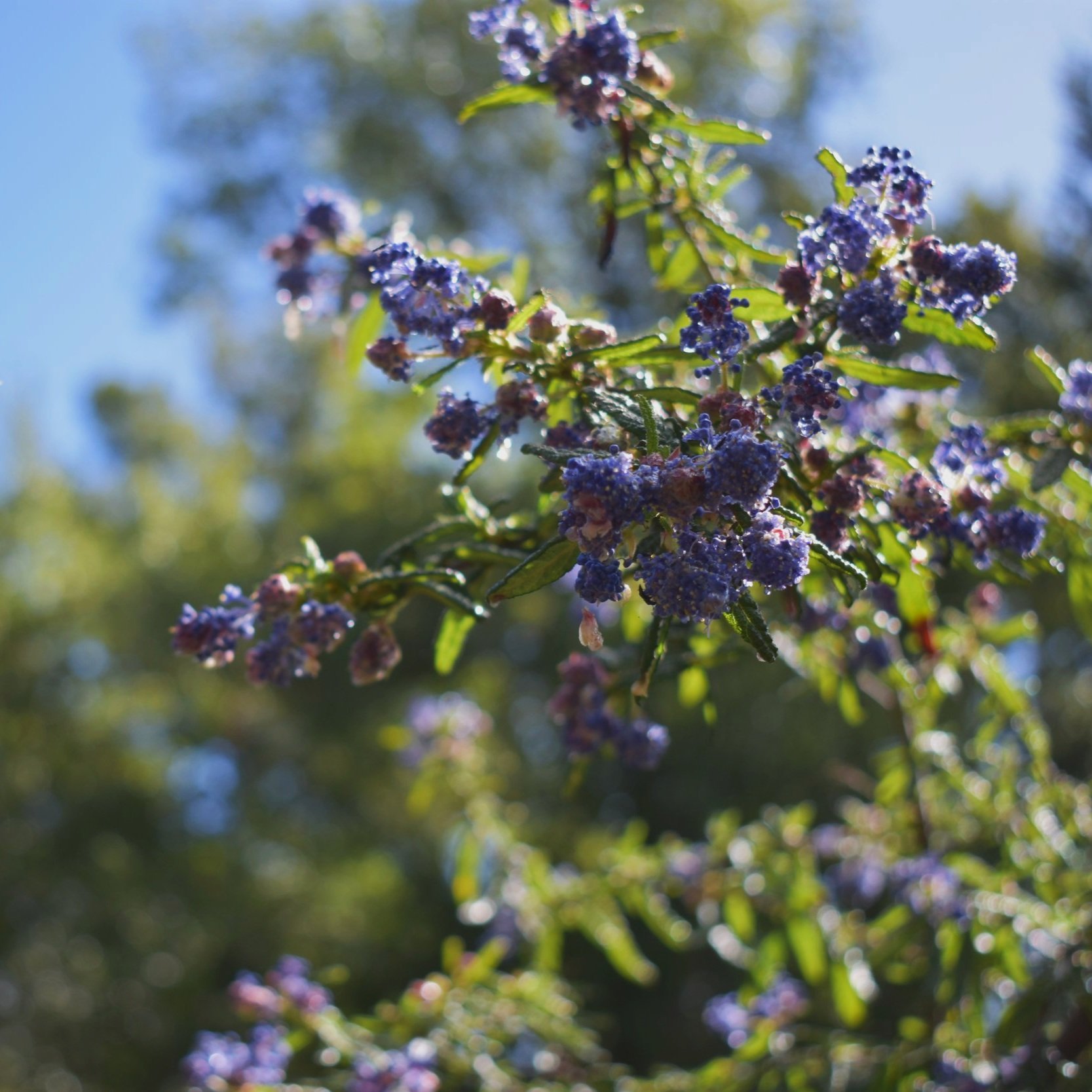
California Lilac (Ceanothus) One of our showiest natives. Blue, purple, or white flower clusters in spring attract countless bees. Many species and cultivars available, from groundcovers to large shrubs. Most require excellent drainage and full sun. Very drought-tolerant but short-lived (8 to 15 years typically).
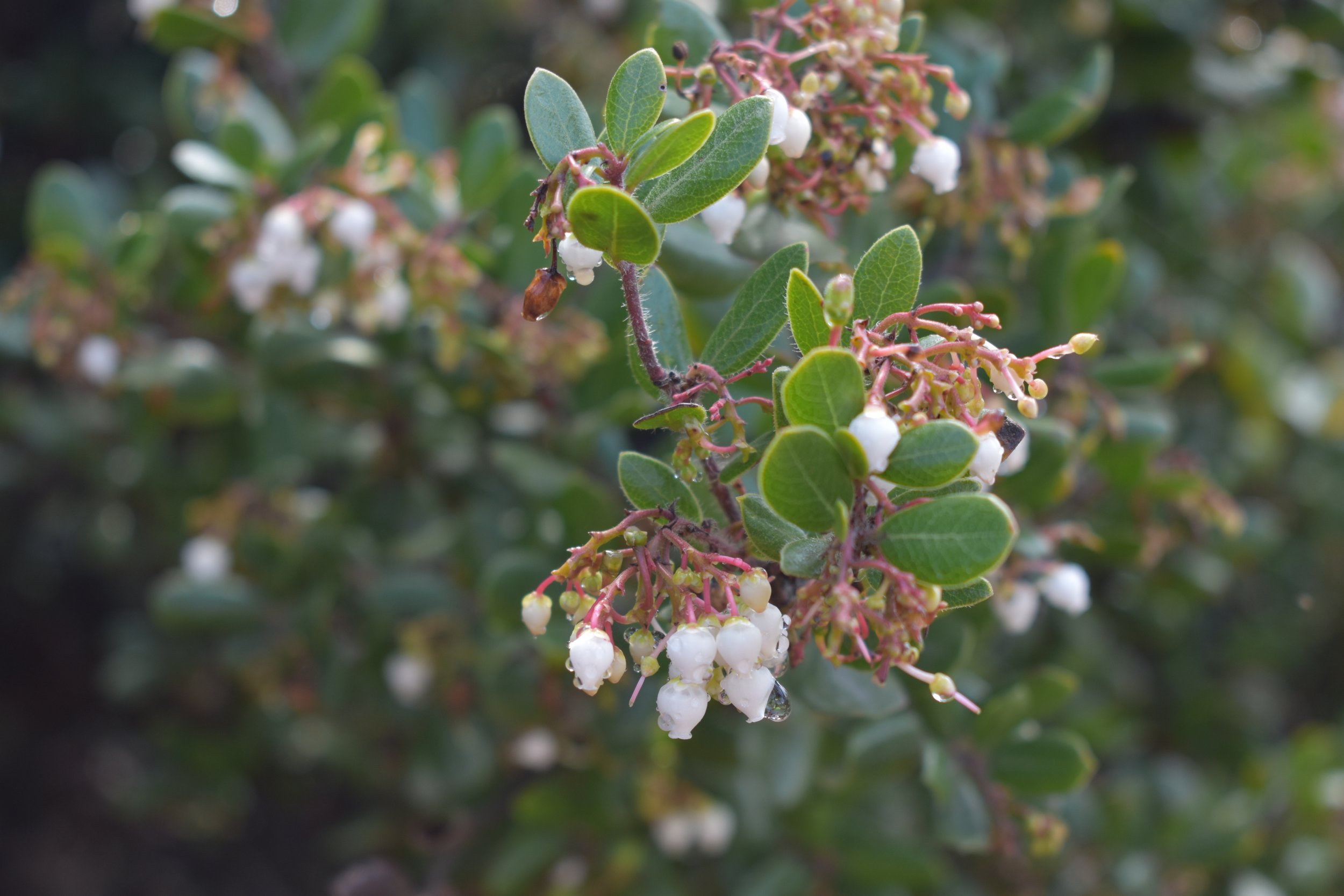
Manzanita (Arctostaphylos) Beautiful year-round with smooth red bark, gray-green leaves, and pink or white winter flowers followed by berries. Many species from groundcovers to small trees. Requires excellent drainage; do not overwater.
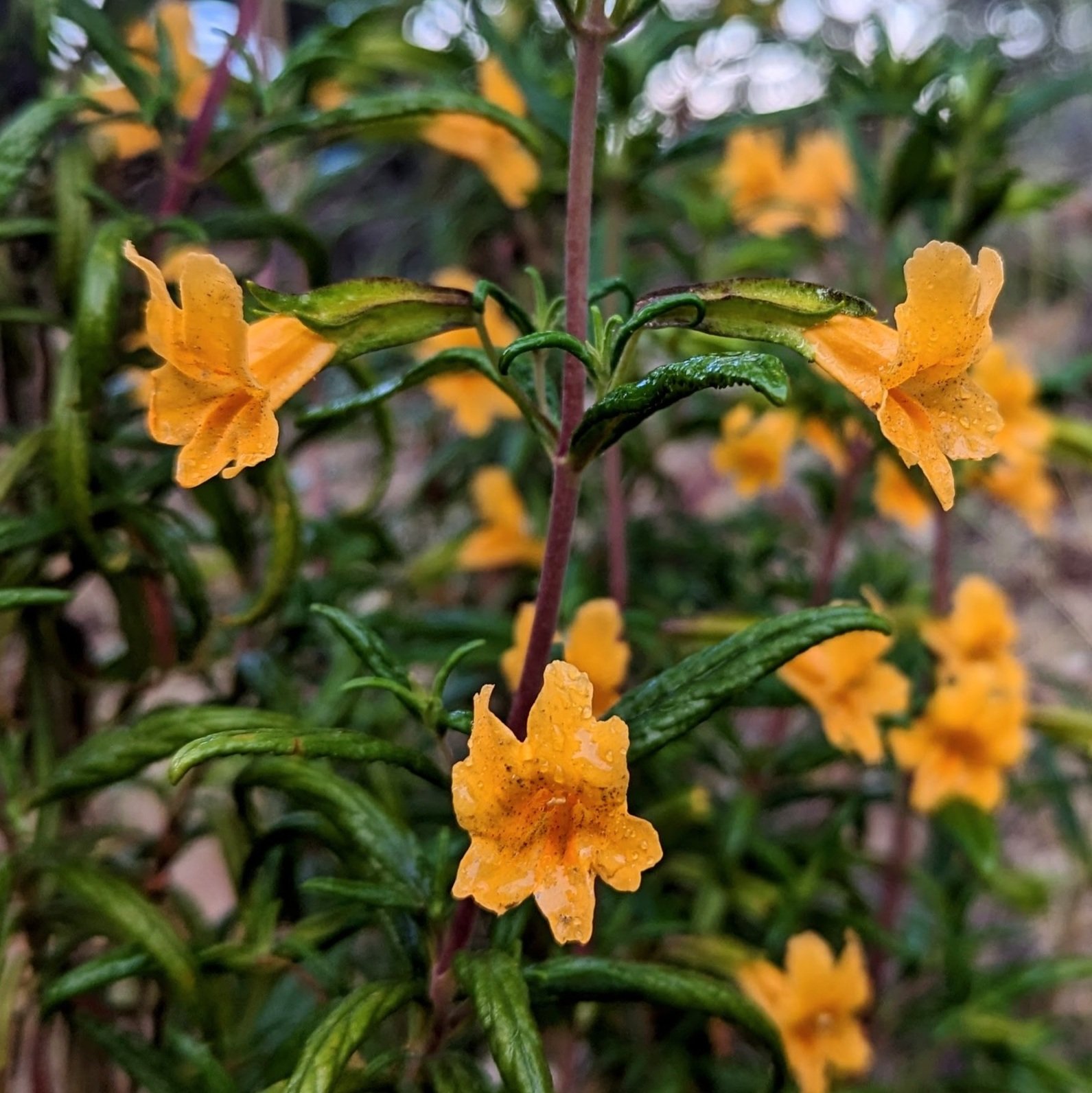
Sticky Monkey Flower (Mimulus aurantiacus) Orange, yellow, or red tubular flowers spring through fall, loved by hummingbirds. Easy and adaptable. Tolerates some shade. May go dormant in summer drought but rebounds with fall rains.
Cleveland Sage (Salvia clevelandii) Intensely fragrant gray-green foliage with blue-purple flowers in spring. Heat and drought-tolerant. Full sun, excellent drainage. Attractive to bees and hummingbirds.
California Buckwheat (Eriogonum fasciculatum) Tough, adaptable shrub with clusters of white to pink flowers that age to rusty brown. Excellent for erosion control on slopes. Extremely drought-tolerant. Full sun.
Groundcovers and Small Plants
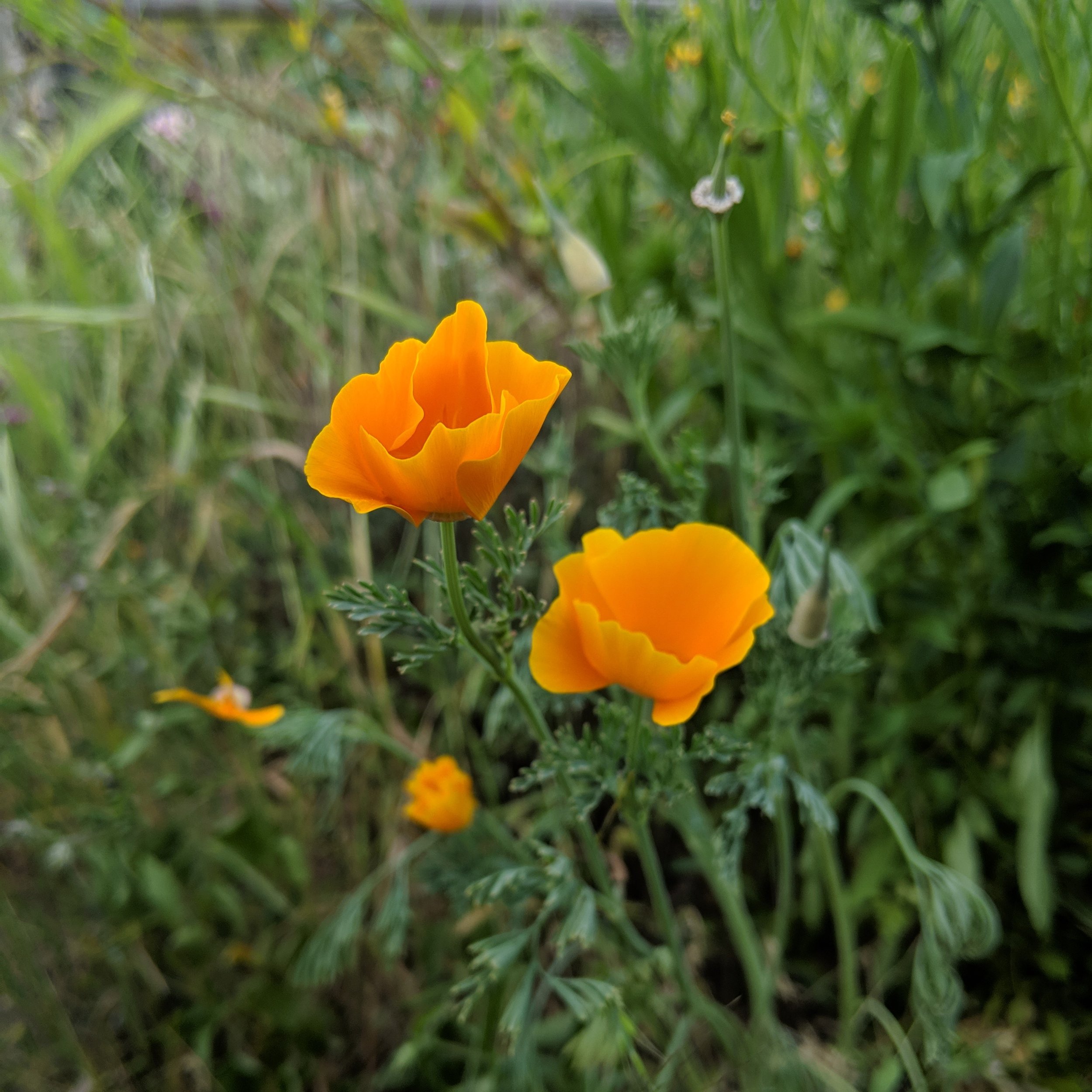
California Poppy (Eschscholzia californica) Our state flower. Brilliant orange (or yellow, red, pink in cultivated varieties) blooms late winter through early summer. Self-seeds readily. Annual or short-lived perennial. Full sun.
California Fuchsia (Epilobium canum) Tubular red-orange flowers late summer through fall, when little else blooms. Essential hummingbird plant. Spreading groundcover. Full sun. Drought-tolerant.
Yarrow (Achillea millefolium) Flat clusters of white flowers over ferny foliage. Native form is white; cultivars come in many colors. Tough and spreading. Full sun to part shade. Tolerates some foot traffic.
Douglas Iris (Iris douglasiana) Elegant purple, blue, or cream flowers in spring over evergreen grass-like foliage. Tolerates more shade than many natives. Good under oaks or at woodland edges.
Native Strawberry (Fragaria californica) Spreading groundcover with small white flowers and edible (if tiny) fruits. Tolerates part shade. Good for understory planting or erosion control.
Native Grasses and Sedges
California Fescue (Festuca californica) Elegant clumping grass to 3 feet. Tolerates part shade and summer drought. One of the few grasses that stays green with some moisture.
Purple Needlegrass (Stipa pulchra) California's state grass. Clumping, to 2 feet, with distinctive purple seed heads. Full sun.
Carex species (Native Sedges) Many sedges native to California. Some tolerate wet conditions; others prefer dry shade. For a native lawn alternative, confirm the plant is foothill sedge (Carex tumulicola), not the often-confused Carex divulsa.
For Shade
Redwood Sorrel (Oxalis oregana) Delicate clover-like leaves with pink or white flowers. Excellent groundcover for deep shade under redwoods. Tolerates dry summer shade once established.
Wild Ginger (Asarum caudatum) Heart-shaped evergreen leaves, unusual brown flowers hidden beneath foliage. Groundcover for moist shade.
Western Sword Fern (Polystichum munitum) Classic evergreen fern of coastal forests. Tough and adaptable once established. Thrives in shade with moderate moisture.
Where Can You Find Native Plants in Santa Cruz County?
Nurseries
California Native Plant Society Santa Cruz Chapter holds spring and fall plant sales at Cabrillo College Horticulture Center. Best selection of locally appropriate natives at reasonable prices.
UCSC Arboretum (1156 High Street, Santa Cruz) offers seasonal plant sales featuring natives and California-adapted plants.
Sierra Azul Nursery (2660 E. Lake Avenue, Watsonville) specializes in California natives with excellent selection and knowledgeable staff.
Dig Gardens (420 Water Street, Santa Cruz and 7765 Soquel Drive, Aptos) carries natives alongside ornamentals.
Choosing Healthy Plants
Look for plants grown from local seed sources when possible (called "local ecotypes"). These are adapted to our specific conditions.
Avoid rootbound plants (roots circling the pot). Small plants in 4-inch pots or one-gallon containers often establish faster than large container plants, especially for drought-tolerant species.
How Should You Plant and Establish Native Plants?
The establishment period is critical. Native plants need attention during their first one to three years even though they'll be drought-tolerant later.
| Year | What you do | What plants are doing |
|---|---|---|
| Year 1 | Fall planting; regular watering through the first dry season; consistent mulching and weeding | Root systems establish in surrounding soil; top growth is modest |
| Year 2 | Reduce watering to every 2–3 weeks during the dry season; light shaping and cleanup only | Roots extend deeper into native soil; plants handle heat and dry periods better |
| Year 3+ | Occasional deep watering only during extreme drought; basic seasonal maintenance | Many natives thrive primarily on rainfall; overall maintenance needs drop significantly |
When to Plant
Fall (October through November): Best time for most natives. Plants establish roots during cool, wet months and enter their first summer with stronger root systems. Winter rains do most of the watering.
Winter (December through February): Still good if soil isn't waterlogged. Avoid planting in soggy conditions.
Spring (March through April): Acceptable but requires more summer irrigation. Get plants in the ground before weather heats up.
Summer: Avoid if possible. Summer planting stresses plants and requires intensive watering.
How to Plant
Dig a wide, shallow hole: Two to three times the width of the root ball but no deeper. Natives do best when the root crown sits at or slightly above soil level.
Don't amend the soil: Use native soil. Amendments create an interface that roots resist crossing, and rich soil promotes weak growth that's less drought-tolerant.
Remove plants carefully from pots: Gently loosen circling roots. If severely rootbound, make vertical cuts in the root ball.
Water thoroughly at planting: Soak the root zone to eliminate air pockets.
Mulch: Apply 2 to 3 inches of organic mulch, keeping it away from stems. Mulch retains moisture and suppresses weeds during establishment.
Establishment Watering
First dry season: Water weekly (or more in hot weather) until plants show new growth and appear healthy. Most natives need consistent moisture their first summer.
Second dry season: Reduce to every two weeks. Plants should be extending roots into native soil.
Third year and beyond: Taper further. Most established natives need only occasional deep watering during extended dry spells, if that.
Signs of establishment: Strong new growth, plants bouncing back quickly from heat, little wilting even on hot days.
What Not to Do
Don't overwater established plants: The most common way to kill natives. Many (especially manzanita and ceanothus) are killed by summer irrigation once established.
Don't fertilize: Most natives have evolved in nutrient-poor soils. Fertilizer promotes weak, leggy growth.
Don't prune heavily: Native plants have natural forms. Light pruning to remove dead wood or shape gently is fine; aggressive pruning stresses plants.
How Do You Maintain a Native Garden?
Native gardens are low-maintenance, not no-maintenance.
Seasonal Tasks
Fall: Best time for planting and major pruning. Cut back dead flower stalks if desired (or leave for wildlife). Spread fresh mulch.
Winter: Minimal work. Enjoy the garden. Remove any seriously damaged growth after storms.
Spring: Light cleanup. Remove spent annual flowers only after they've dropped seed if you want them to naturalize. Watch for any plants struggling and adjust as needed.
Summer: Water new plantings as needed. Established gardens largely take care of themselves. Leave dead flower heads for birds unless they bother you aesthetically.
Weeding
Native gardens need weeding, especially during establishment. Non-native grasses and broadleaf weeds compete with young plants for water and light.
Weed when weeds are small. Hand-pull or use a hori-hori knife. Avoid herbicides, which can damage native plants and soil life.
Dense plantings and good mulch reduce weeding over time. A mature native garden may need only occasional weeding.
Pruning
Most natives need minimal pruning:
Manzanita: Rarely prune except to remove dead wood or raise canopy for clearance.
Ceanothus: Light tip pruning after flowering keeps plants dense. Avoid cutting into old wood.
Sages: Cut back by one-third to one-half after flowering to maintain compact shape.
Perennials: Cut back dead growth in fall or early spring.
Pest and Disease Management
Healthy native plants in appropriate locations rarely have serious pest problems. When issues arise:
Identify before treating: Many "pests" are actually beneficial or harmless. Native gardens support diverse insects; that's a feature, not a bug.
Cultural controls first: Improve drainage, reduce watering, increase air circulation.
Accept some damage: A few chewed leaves or aphids on new growth isn't cause for alarm. Predators often arrive naturally.
Avoid pesticides: They kill beneficial insects along with pests and disrupt the natural balance natives depend on.
Seeing a mature native planting teaches more than any plan on paper. Our guide to the public gardens north of Santa Cruz covers the UC Berkeley Botanical Garden and others where California natives are grown well and clearly labeled.
Frequently Asked Questions About Native Garden Design
How long until my native garden looks established?
Most native gardens look sparse for the first year or two. By year three, plants have filled in significantly and the garden begins to have the lush, natural look you're aiming for. By year five, you'll have a mature garden that looks like it's always been there. Patience during the establishment period pays off.
Can I mix natives with non-native plants?
Yes, many gardeners combine natives with Mediterranean plants (lavender, rosemary, rockrose) that share similar water needs. The key is grouping plants by water requirements. Avoid mixing drought-tolerant natives with water-hungry plants that require regular irrigation, which can kill drought-adapted species.
Will a native garden look messy?
It depends on your approach. Native gardens have a different aesthetic than formal landscapes, but they don't have to look unkempt. Strategic plant placement, clean edges along paths and beds, and thoughtful maintenance create a natural but intentional appearance. Some of the most beautiful gardens in Santa Cruz County are native plantings.
What if I have heavy clay soil?
Many natives actually thrive in clay: toyon, coffeeberry, native oaks, California fuchsia, sticky monkey flower. Avoid species that require excellent drainage (manzanita, ceanothus) or plant them on mounds or slopes. Don't amend clay soil; instead, choose plants adapted to it.
Do natives attract more insects?
Yes, that's a benefit. Native plants support native insects, which are food for birds and other wildlife. Most of these insects are harmless to humans. If you're concerned about specific pests, avoid planting near outdoor living areas and enjoy the wildlife from a distance.
Can I grow vegetables alongside native plants?
Vegetable gardens and native plantings have different water and fertility needs, so they're usually best kept separate. However, native plants make excellent borders around vegetable gardens, providing habitat for beneficial insects that help with pest control. Native flowering plants also attract pollinators to your vegetables.
What natives work for erosion control on slopes?
Many natives excel on slopes: coyote brush, coffeeberry, California buckwheat, native sages, manzanita, and ceanothus. Their deep root systems stabilize soil while requiring no irrigation once established. Plant in fall before rains and mulch well to prevent erosion during establishment.
How do I replace a lawn with natives?
Start by removing the lawn (sheet mulching is effective and avoids herbicides). Plant native groundcovers (yarrow, native strawberry, creeping sage) or native grasses (California fescue, sedges) suited to your conditions. The transition takes one to two years. For areas that need foot traffic, consider pathways through the planting or focus natives in areas that don't require walking.
What Free Gardening Resources Are Available?
Water-Wise Gardening Guide: Broader strategies for reducing water use including native plant integration.
Know Your Microclimate Worksheet: Assess your site conditions to choose appropriate natives.
Seasonal Tasks Checklist: Year-round maintenance including native garden care timing.
Where Can You Learn More About Native Plants?
UC Master Gardeners: Native Plants for Water Conservation and Biodiversity
CA Department of Water Resources: Why Garden with Native Plants
Ready to Start Your Native Garden?
You don't need to transform your entire property at once. Start with one area: replace a section of lawn, add natives to an existing bed, or create a new planting where irrigation has been challenging.
Fall is the ideal time to plant. The California Native Plant Society Santa Cruz Chapter fall sale is an excellent opportunity to acquire locally appropriate plants and get advice from knowledgeable members.
Every native plant you add contributes to habitat restoration, water conservation, and the character of your garden. Start small, learn what thrives in your specific conditions, and expand from there.
