

Growing Glass Gem Corn in Santa Cruz County: A Complete Guide to Rainbow Kernels
A few of the product links in this guide are affiliate links. If you buy through one, Ambitious Harvest may earn a small commission at no extra cost to you, which helps keep these guides free. We only point to gear we would use in our own Santa Cruz garden. As an Amazon Associate, we earn from qualifying purchases. Read our full disclosure.
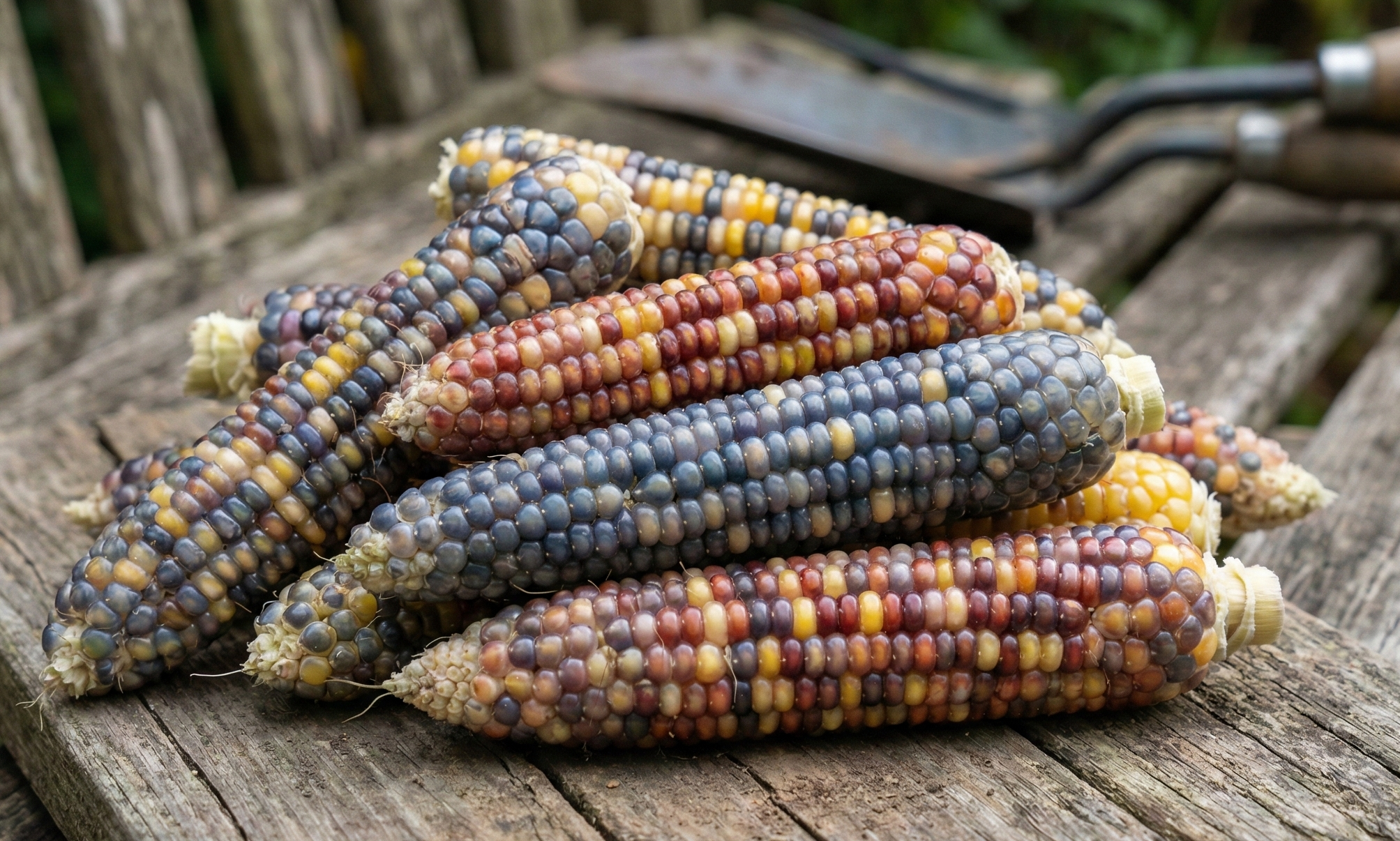
The first time you peel back the husk on a ripe ear of Glass Gem corn, you'll understand why this variety has captivated gardeners worldwide. Each kernel gleams like a polished gemstone: ruby, sapphire, amber, emerald, and every shade between. No two ears are identical, and even kernels on the same ear display a rainbow of translucent colors.
Glass Gem isn't a modern hybrid created in a laboratory. It's an heirloom variety developed by Carl Barnes, a part-Cherokee farmer in Oklahoma who spent years selecting and saving seeds from traditional Native American corn varieties. His work preserved and combined genetic diversity that might otherwise have been lost, resulting in this stunning variety that connects us to thousands of years of indigenous corn cultivation.
For Santa Cruz County gardeners, Glass Gem offers something different from typical vegetable growing. This is a project that requires space, patience, and attention to pollination, but rewards you with ears so beautiful you'll want to display them before you even consider eating them. And yes, you can eat it: Glass Gem makes excellent popcorn with a slightly nutty flavor.
What Is Glass Gem Corn?
What Kind of Corn Is This?
Glass Gem is a flint corn, not a sweet corn. The distinction matters for how you'll grow and use it.
Sweet corn (what you eat fresh at summer barbecues) is harvested immature, when kernels are tender and full of sugar. You pick it, cook it immediately, and eat it off the cob.
Flint corn (including Glass Gem) is left on the stalk until fully mature and dry. The kernels develop hard, glassy exteriors, which is where the "glass" in Glass Gem comes from. You harvest it late in the season, dry it further, and use it for grinding into flour, making hominy, or popping as popcorn.
This difference affects your growing timeline. Sweet corn might be ready in 70 to 90 days. Glass Gem needs 100 to 120 days to full maturity, plus additional drying time on the stalk. In Santa Cruz County, that means planning for a long growing season.
The Colors
Glass Gem's famous colors come from anthocyanins and other pigments in the kernel's outer layer. The genetics are complex, which is why colors vary so dramatically. Each kernel's color depends on the pollen that fertilized it, so even kernels on the same ear may look different.
You might get ears that are predominantly blue, others that are pink and purple, some with golden yellows and oranges, and occasionally ears with the full rainbow spectrum. This unpredictability is part of the magic. You won't know exactly what you're getting until harvest.
The translucent, jewel-like quality develops as kernels dry. Fresh Glass Gem doesn't look as spectacular as dried Glass Gem. Patience pays off.
Can You Grow Glass Gem in Santa Cruz County?
Yes, but with realistic expectations based on your microclimate.
Best Locations: Warm Inland Areas
Glass Gem performs best in the warmest parts of Santa Cruz County. The Pajaro Valley near Watsonville, sunny exposures in Scotts Valley, and the warmer ridges of Boulder Creek and Ben Lomond provide the heat units corn needs.
In these locations, you can expect good results with Glass Gem. Plant in late spring after soil has thoroughly warmed, and you should have mature ears by late September or October.
Challenging but Possible: Coastal Areas
Coastal gardeners in Santa Cruz, Aptos, Capitola, and Live Oak face more challenges with corn in general, and Glass Gem specifically. The cooler temperatures and fog mean slower growth and potentially incomplete kernel development.
If you're determined to grow Glass Gem on the coast, choose your warmest, most protected spot. A south-facing location against a heat-absorbing wall helps. Black plastic mulch can raise soil temperature several degrees. Row cover in early season provides additional warmth.
Expect a longer growing season (possibly 130 to 140 days rather than 110 to 120) and accept that some years may not produce fully mature ears. Consider this an experiment rather than a reliable crop.
Not Recommended: Shaded Areas
Corn is a full-sun crop that needs significant heat. If you garden under redwoods, in shaded canyons, or in areas that receive less than 6 to 8 hours of direct sun, Glass Gem isn't likely to succeed. The plants may grow, but ear development will be poor.
Focus on crops better suited to your conditions, or consider Glass Gem only if you have one sunny spot where you can concentrate your corn planting.
What Should You Plan Before Planting Glass Gem?
Space Requirements
Corn is wind-pollinated and needs to be planted in blocks rather than single rows for successful pollination. This is the most important planning consideration.
A minimum planting for reliable pollination is a 4x4 block (16 plants) with rows about 30 to 36 inches apart and plants 8 to 12 inches apart within rows. Larger blocks (6x6 or bigger) produce better results. If you plant a single long row, poor pollination will result in ears with missing kernels.
For a reasonable harvest (enough ears for display and some popcorn), plan on at least 50 square feet devoted to corn. This isn't a crop for small gardens or containers.
Isolation for Color Purity
Here's where Glass Gem gets complicated: corn cross-pollinates readily with other corn varieties. If your neighbor grows sweet corn, or if there's field corn within a quarter mile, pollen can travel on the wind and fertilize your Glass Gem.
Cross-pollination won't ruin your harvest, but it may affect kernel colors in future generations if you save seeds. For the current year's decorative purposes, it doesn't matter much.
If you want to maintain Glass Gem's genetics for seed saving, you need either distance isolation (at least 250 feet from other corn, preferably more) or time isolation (plant so your Glass Gem tassels at a different time than neighboring corn). In practice, most home gardeners accept some cross-pollination and simply enjoy what they get. If you are planning what to grow alongside your corn block, our companion planting guide for Santa Cruz gardens covers pairings that work well in our climate.
Seed Sources
Glass Gem seeds are widely available from seed companies. Native Seeds/SEARCH carries Glass Gem and has a direct connection to the variety's indigenous heritage. Baker Creek Heirloom Seeds is another reliable source with good germination rates.
Locally, check specialty seed vendors at Santa Cruz farmers markets. The Felton Seed Lending Library occasionally has Glass Gem seeds available from previous growers.
Be aware that Glass Gem genetics are diverse, and seed from different sources may produce slightly different color ranges. This isn't a standardized hybrid with predictable results. Variation is part of the variety's charm.
When and How Should You Plant Glass Gem Corn?
When to Plant
Corn needs warm soil to germinate well. In Santa Cruz County, that typically means waiting until mid to late May for inland areas, and late May to early June for coastal locations.
Check soil temperature before planting. Our interactive planting calendar can help you dial in the right timing for your zone. Corn germinates best when soil is at least 60 degrees Fahrenheit, and 65 to 70 degrees is better. Cool soil leads to slow, uneven germination and potential seed rot.
If you're eager to start earlier, you can pre-warm soil with black plastic mulch for two to three weeks before planting. This can gain you a week or two of growing time, which helps in coastal areas.
Direct Sowing (Recommended)
Corn has a sensitive root system that doesn't transplant well. Direct sowing is the preferred method.
Plant seeds 1 to 1.5 inches deep. Space seeds 4 to 6 inches apart initially, then thin to 8 to 12 inches apart once seedlings are established. Rows should be 30 to 36 inches apart.
Remember to plant in blocks, not single rows. A block that's at least 4 rows wide in each direction ensures adequate pollination.
Water seeds in well after planting and keep soil consistently moist until germination, which takes 7 to 14 days depending on soil temperature.
Starting Indoors (If Necessary)
If you need a head start in coastal areas, you can start seeds indoors in deep containers (corn roots grow quickly). Use soil blocks or peat pots that can be planted directly in the ground without disturbing roots.
Start seeds 2 to 3 weeks before your planned transplant date. Harden off seedlings before transplanting and handle roots very carefully. Transplant shock is common with corn and can set plants back significantly.
In most cases, waiting for appropriate soil temperature and direct sowing produces better results than early indoor starting.
How Do You Grow Glass Gem Through the Season?
Soil and Fertility
Corn is a heavy feeder, especially for nitrogen. Unlike many crops where we advise restraint with fertilization, corn benefits from rich soil and supplemental feeding.
Prepare beds by working in 2 to 4 inches of compost before planting. If you are building your soil from scratch, our guide on how to start composting at home will help you produce your own amendments. If your soil is nitrogen-poor, add blood meal, feather meal, or another nitrogen source according to package directions.
Side-dress with additional nitrogen when plants are knee-high (about 12 to 18 inches) and again when tassels begin to appear. Fish emulsion, blood meal, or a balanced organic fertilizer all work well. Pale green or yellowing leaves indicate nitrogen deficiency; dark green, vigorous growth means plants are well-fed.
Watering
Corn needs consistent moisture throughout the growing season, with critical periods during germination, tasseling, and ear fill.
During germination and early growth, keep soil consistently moist but not waterlogged. Once plants are established, water deeply once or twice per week rather than frequent shallow watering. Deep watering encourages roots to grow down rather than staying near the surface.
The most critical watering period is during pollination and ear development (when tassels appear and silks emerge). Water stress during this time directly reduces kernel development. Watch plants closely and don't let soil dry out completely during this phase.
Drip irrigation or soaker hoses work well for corn, keeping water at ground level where it's needed. Overhead watering is less efficient and can wash pollen off tassels during the critical pollination period.
Mulching
Once plants are 6 to 12 inches tall, apply 2 to 3 inches of organic mulch between rows. Mulch conserves moisture, suppresses weeds, and keeps roots cool during hot weather.
Straw or wood chips work well. Avoid piling mulch directly against stalks.
Support
Glass Gem typically grows 6 to 8 feet tall. In exposed locations, wind can blow plants over, especially after ears develop and add weight.
Planting in blocks helps because plants support each other. In windy areas, you can hill up soil around the base of stalks when plants are about 1 foot tall, which encourages additional support roots.
If plants do blow over, don't panic. Corn often rights itself if the roots aren't completely torn out. You can also stake individual plants or tie rows to support lines if needed.
How Does Pollination Work for Glass Gem Corn?
Understanding corn pollination is essential for a successful harvest. Poor pollination is the most common reason for ears with missing kernels or empty patches.
How Corn Pollinates
Corn has separate male and female flowers on the same plant. The tassel at the top of the stalk produces pollen. The silks emerging from developing ears are the female flowers, with each silk connecting to a potential kernel.
Pollen must land on each silk for a kernel to develop. A single silk that doesn't receive pollen results in a missing kernel. This is why block planting matters: with more plants in close proximity, there's more pollen in the air, and each silk is more likely to receive some.
Timing
Tassels typically appear 55 to 65 days after planting, followed by silks a few days later. The pollination window is about 7 to 10 days. Pollen is released primarily in the morning.
During this period, you may notice a yellow dust on leaves and the ground. That's pollen. You might also see bees visiting tassels (they collect pollen even though corn is wind-pollinated).
Helping Pollination Along
For small plantings, you can hand-pollinate to improve results. In the morning while pollen is being released, gently shake tassels to release pollen, or cut a tassel and brush it over silks.
Some gardeners place paper bags over tassels, collect pollen, then dust it directly on silks. This ensures maximum pollen transfer.
In larger plantings with good block layout, natural wind pollination usually suffices.
Signs of Poor Pollination
After pollination, silks turn brown and dry. If pollination was successful, you'll start to see ears fill out over the following weeks.
Signs of pollination problems: ears with scattered kernels rather than full rows, patches of missing kernels, small or poorly filled ears. By the time you notice these problems, it's too late to fix them for that season, but you'll know to improve your planting layout next year.
When and How Should You Harvest Glass Gem Corn?
When to Harvest
Glass Gem is harvested when fully mature and dry, which is different from sweet corn.
As ears mature, husks change from green to tan or brown. Kernels harden and develop their characteristic glassy appearance. This typically happens 100 to 120 days after planting, though it can take longer in cooler areas.
To check for maturity, pull back a husk and press a kernel with your fingernail. Mature kernels are hard and dent-resistant. If your fingernail leaves a dent or punctures the kernel, the ear needs more time.
Ideally, leave ears on the stalk until husks are completely dry and papery. However, if rain threatens or you're running out of season, you can harvest slightly early and finish drying off the stalk.
Harvest Technique
Pull ears down and twist to detach from the stalk. There's no need to cut.
Peel back husks immediately to inspect kernels. This is the moment you've been waiting for: seeing the colors for the first time.
If kernels are still soft or show any signs of mold, separate those ears and use them first (for popcorn) after thorough drying.
Curing and Drying
Even if ears seem dry at harvest, they benefit from additional curing.
Pull husks back (or remove entirely) and hang ears in a warm, dry, well-ventilated location. A covered porch, garage, or indoor room works well. Avoid damp areas where mold could develop.
Allow ears to cure for 4 to 6 weeks. Kernels should be completely hard and glassy when done. At this point, they're ready for display, storage, or use.
Storage
Dried Glass Gem stores well for years in a cool, dry location. For display, leave ears whole. For seed saving or popcorn use, you can leave ears intact or remove kernels and store in airtight containers.
If saving seeds for next year's planting, select your most beautiful, fully filled ears. Store kernels in a cool, dry place over winter. Viability remains good for 2 to 3 years with proper storage.
What Can You Do With Glass Gem Corn?
Decorative Uses
Most people grow Glass Gem for its looks. The ears make stunning fall decorations, either displayed whole or with kernels removed and used in crafts.
Dried ears last for years as decorations if kept away from moisture. Some people spray with a clear sealant for extra protection and shine, though this isn't necessary.
Individual kernels can be used in mosaics, jewelry, or other craft projects. Their translucent quality is especially striking when backlit.
Popcorn
Glass Gem makes excellent popcorn with a slightly nutty, earthy flavor different from commercial popcorn varieties.
To pop, remove kernels from the cob (a firm twisting motion works well once ears are fully dry). Pop in a heavy-bottomed pot with oil, or use an air popper.
Note that popped Glass Gem doesn't retain its rainbow colors. Like all popcorn, it pops white or cream-colored. The magic is in the unpopped kernels.
Cornmeal and Flour
Glass Gem can be ground into cornmeal or flour for traditional uses like tortillas, polenta, or cornbread. Different colored kernels may produce slightly different flavored meal, though the differences are subtle.
You'll need a grain mill capable of grinding hard corn. Hand-cranked mills work but require effort. Electric grain mills make the job easier.
What Are the Most Common Problems and Solutions?
Poor Pollination (Spotty Ears)
Cause: Usually from planting in single rows rather than blocks, or from very small plantings where there isn't enough pollen.
Solution: Plant in blocks at least 4x4. For small plantings, hand-pollinate. Avoid planting when extreme heat or heavy rain is forecast during the pollination window, as these conditions interfere with pollen release and reception.
Corn Earworms
These caterpillars enter ears through the silks and eat developing kernels. You'll find them, along with their damage and droppings, when you peel back husks at harvest.
Prevention: Mineral oil applied to silks (a few drops per ear after silks have browned) can deter earworms. Bt (Bacillus thuringiensis) spray applied to silks is effective if applied before larvae enter.
Treatment: There's no effective treatment once earworms are inside ears. Cut away damaged portions at harvest. Some damage is typical in organic corn growing.
Raccoons and Birds
Both love corn. Raccoons typically strike just before harvest when ears are nearly mature, often knocking down stalks and partially eating ears. Birds peck at kernels, especially exposed ones.
Prevention: Electric fencing is the most reliable raccoon deterrent. For smaller plantings, individual ear covers (paper bags secured over ears after pollination) deter both raccoons and birds.
Some gardeners report success with motion-activated sprinklers or lights for raccoons.
Lodging (Plants Falling Over)
Cause: Wind, heavy rain, shallow roots, or heavy ear loads.
Prevention: Plant in blocks for mutual support. Hill soil around stalks when plants are young to encourage prop roots. Ensure adequate soil fertility for strong stalks. Avoid excessive nitrogen late in the season, which can produce tall, weak growth.
Treatment: Stake fallen plants if roots are intact. Plants often recover on their own.
Slow Growth or Pale Leaves
Cause: Usually insufficient nitrogen, though cold soil or poor drainage can also cause poor growth.
Solution: Side-dress with nitrogen fertilizer. For future plantings, incorporate more compost and nitrogen before planting.
Where Can You Find Local Glass Gem Resources?
Seeds and Supplies
Native Seeds/SEARCH carries Glass Gem with connection to its heritage origins.
Baker Creek Heirloom Seeds offers Glass Gem and other ornamental corn varieties.
San Lorenzo Garden Center (235 River Street, Santa Cruz) carries corn seeds seasonally and can advise on soil amendments.
Education
UC Master Gardeners of Monterey Bay offer workshops on vegetable growing and can answer specific questions about corn cultivation in our climate.
The Felton Seed Lending Library at the Felton Branch Library sometimes has Glass Gem seeds from local growers, along with advice from experienced gardeners.
Glass Gem follows the same life cycle as any corn; our corn growth stages guide covers tasseling, silking, and everything in between.
Frequently Asked Questions About Growing Glass Gem Corn
How much space do I need to grow Glass Gem corn?
Plan on at least 50 square feet for a meaningful harvest. Corn must be planted in blocks (at least 4x4) rather than single rows for successful pollination. Rows should be 30 to 36 inches apart with plants 8 to 12 inches apart within rows. If you can't dedicate this much space, corn may not be practical for your garden.
Can I grow Glass Gem in a container?
Not really. Corn's height (6 to 8 feet), extensive root system, and need for block planting make container growing impractical. Even a very large container wouldn't support enough plants for adequate pollination. If you have only container space, consider other crops.
Will my Glass Gem cross with my neighbor's corn?
Corn cross-pollinates readily via wind. If there's other corn within a quarter mile, some cross-pollination is likely. This won't affect your current harvest's appearance, but if you save seeds, future generations may show different colors. For pure seed saving, you need isolation distance (250+ feet) or timing isolation (plant so pollination occurs at different times).
Can I eat Glass Gem like sweet corn?
Glass Gem is a flint corn, not a sweet corn. The kernels develop hard, starchy interiors very different from tender sweet corn. You could technically eat it very young (before kernels mature), but it wouldn't taste like sweet corn and you'd lose the beautiful colors. Glass Gem is best used for popcorn, grinding into meal, or decoration.
How long until harvest?
Glass Gem takes 100 to 120 days from planting to maturity, plus several weeks of drying time on the stalk. In coastal Santa Cruz County, expect the longer end of this range or beyond. Plant in late May or early June, and you'll harvest in late September through October.
What if my ears have missing kernels?
Spotty kernel development almost always indicates pollination problems. For future plantings, use larger blocks (more plants in close proximity means more pollen in the air), hand-pollinate to ensure pollen reaches all silks, and avoid irrigation during the morning when pollen is released.
Do the colors come through when I pop it?
No. Like all popcorn, Glass Gem pops white or cream-colored regardless of kernel color. The rainbow colors are only visible in the unpopped kernels. The popped corn has excellent flavor with slight nutty notes, but you grow Glass Gem for the visual beauty of the dried ears, not for colorful popcorn.
How do I save seeds for next year?
Select your most beautiful, fully developed ears. Allow them to dry completely on the stalk, then cure indoors for 4 to 6 weeks. Store kernels in a cool, dry place. Glass Gem seeds remain viable for 2 to 3 years with proper storage. Note that Glass Gem genetics are variable, so saved seeds will produce similar but not identical color patterns.
Free Gardening Resources
Getting Started
Beginner Garden Setup Checklist : Complete setup guide to start your garden right.
Know Your Microclimate Worksheet : Understand your local conditions before planting.
Planning & Timing
Seasonal Planting Calendar : Avoid timing mistakes with month-by-month guidance.
Vegetables by Season Chart : Quick reference for what to plant and when in Santa Cruz County.
Seasonal Garden Tasks Checklist : Stay on track with monthly garden maintenance tasks.
Growing Guides
Companion Planting Guide : Learn which plants grow better together and which to keep apart.
Tomato Variety Selector : Find the best tomato varieties for your Santa Cruz microclimate.
Problem Solving
Garden Troubleshooting Guide : Diagnose common problems before they become disasters.
Gopher Control Guide : Humane and effective strategies for managing gophers in your garden.
Santa Cruz-Specific Guides
Water-Wise Gardening Guide : Conserve water while keeping your garden thriving through dry seasons.
Is Glass Gem Corn Worth the Effort?
Growing Glass Gem corn requires patience, space, and attention that some vegetables don't demand. You'll wait longer for harvest, need more room, and have to think about pollination in ways you never considered with tomatoes or lettuce.
But when you peel back that first husk and see jewel-toned kernels glinting in the light, you'll understand why gardeners make the effort. Glass Gem connects you to thousands of years of corn cultivation, to the indigenous seed savers who preserved this genetic heritage, and to the simple wonder of growing something beautiful.
Save some seeds from your best ears. Plant them next year. Each generation carries forward this remarkable variety and writes your garden into its continuing story.
