

California Natives vs. Mediterranean Plants Compared
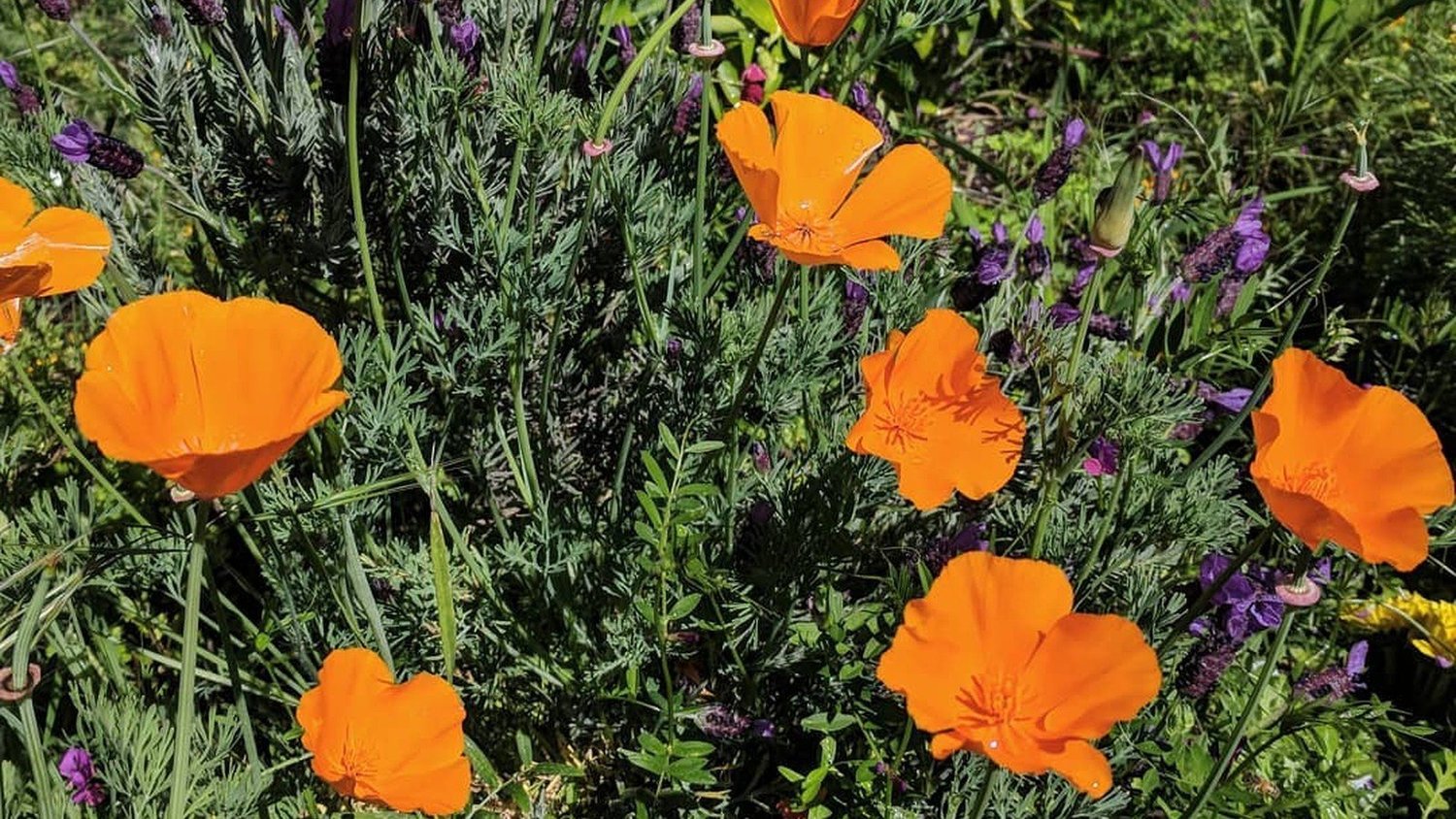
California poppies and Spanish lavender growing together in Adrienne's garden, illustrating California-native and Mediterranean-climate plants in the same bed. Photo: Adrienne Gaughan / Ambitious Harvest Co
A few of the product links in this guide are affiliate links. If you buy through one, Ambitious Harvest may earn a small commission at no extra cost to you, which helps keep these guides free. We only point to gear we would use in our own Santa Cruz garden. As an Amazon Associate, we earn from qualifying purchases. Read our full disclosure.
California natives and plants from other Mediterranean-climate regions can both be low-water choices when the individual species fits the site and irrigation is managed well. UC guidance notes that research-based water-use data do not exist for most landscape plants and does not support a universal percentage advantage for one group over the other. Natives can provide especially valuable habitat for local wildlife, while Mediterranean plants broaden the design palette.
When to Choose California Natives
California natives are the ecological gold standard. Plants like coyote brush, manzanita, California fuchsia, deer grass, and coast live oak evolved with our exact rainfall patterns, soil types, and pollinators. They provide food and habitat for native bees, butterflies, and birds that depend on them. Many true natives need zero summer irrigation once their roots are established (typically after 1-2 years of regular watering).
For Santa Cruz gardeners, natives from the coastal scrub and chaparral plant communities are especially well-suited. California buckwheat, ceanothus, coast sunflower, and yarrow all thrive in our conditions. The UCSC Arboretum and Sierra Azul Nursery are excellent local sources. If you are converting a lawn to a water-wise landscape, starting with a backbone of natives makes the most ecological sense.
When to Choose Mediterranean Plants
Mediterranean plants from regions like southern Europe, South Africa, and Australia share our climate pattern of wet winters and dry summers, so they slot right into Santa Cruz gardens with minimal fuss. Lavender, rosemary, cistus (rockrose), Agapanthus, ornamental grasses like Festuca, and olive trees are all Mediterranean-climate plants that thrive here with very little water.
The practical advantage of Mediterranean plants is variety and availability. Any nursery in town stocks a deep selection of lavender, rosemary, and sage. These plants also tend to be more forgiving of garden conditions like amended soil, drip irrigation, and mixed plantings with edibles. If you want a colorful, fragrant, low-water garden without the learning curve of all-native plantings, a Mediterranean palette is a great path.
The Bottom Line for Santa Cruz Gardeners
A mixed palette can work well when plants suit the site. UC IPM recommends grouping plants with similar water needs and irrigating each group appropriately. Choose individual species for mature size, soil, exposure, wildlife value, and verified water needs instead of assuming origin alone determines irrigation.
This week: Visit the UCSC Arboretum plant sale or Sierra Azul Nursery and pick up one California native plant you have never grown before. Coast buckwheat (Eriogonum latifolium) is an excellent starter native for coastal gardens.
For more on water-wise gardening in California, check out our free Native Plant Guide at Your Garden Toolkit.
Keep Reading
- Best California Native Plants for Santa Cruz Gardens
- How to Convert Your Lawn to a Water-Wise Garden
- Cool-Season vs. Warm-Season Grasses: Which Lawn Works?
- Drought-Tolerant Landscaping Ideas for Coastal California
Both palettes are easy to see in person on a day trip. Our guide to the public gardens south of Santa Cruz covers the Monterey adobe gardens and Carmel Mission, where Mediterranean plantings and California natives sit side by side.
Frequently Asked Questions
Do I have to choose only natives or only Mediterranean plants?
No, and a hybrid approach often works best. Use California natives like coastal scrub and chaparral species as your structural backbone, then add Mediterranean plants such as lavender or rosemary for color and herbs.
How much water can each type save?
There is no single defensible savings percentage for either group. UC guidance says water use depends on the plant, site, irrigation system, and scheduling; many natives and Mediterranean-climate plants can perform with limited irrigation after establishment when matched and managed appropriately.
Where can I find good native plants near Santa Cruz?
The UCSC Arboretum and Sierra Azul Nursery are excellent local sources for natives suited to our coastal conditions. Coast buckwheat is a forgiving starter plant that supports pollinators.
