

What Companion Plants Work Well with Tomatoes in California?
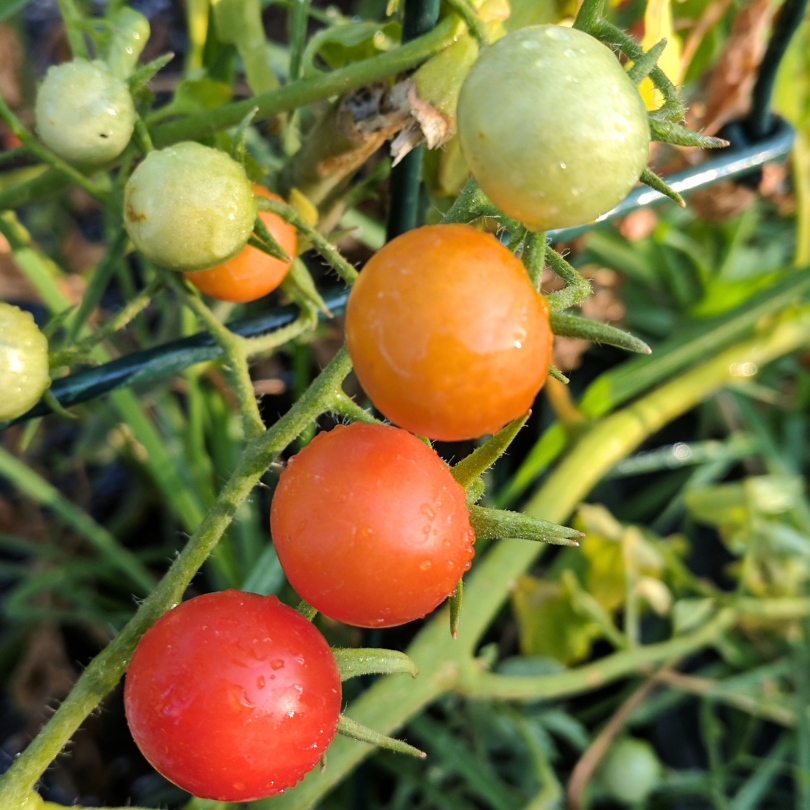
Basil beside a tomato is an easy pairing to enjoy at harvest. Marigolds add flowers, and carrots or parsley can make use of an open edge of the bed. The best companion is one you have room to grow well, with enough light, water and space left for the tomato as it fills out.
Start by placing the tomato and its support, then fit other plants around that mature footprint. A bed that looks sparse in spring can be crowded by summer, especially with an indeterminate tomato reaching beyond its cage.
Basil: useful in the kitchen and worth a small trial
Basil is a practical choice if your bed has a sunny opening and you will use the leaves. Follow the spacing for the varieties you're growing rather than squeezing a set number of basil plants between tomatoes.
There is research behind some pest effects, but it is more specific than the usual companion chart suggests. University of Minnesota Extension's research review describes studies in which basil and marigolds reduced thrips in tomatoes. That doesn't establish a dependable defense against every aphid or whitefly in a Santa Cruz garden. Keep checking the plants; our guide to managing aphids organically covers that problem directly.
You can leave a basil plant to flower if you have room and want flowers as well as leaves. Flowering plants can supply food for garden insects. Tomatoes are self-fertile, though, and their pollination isn't simply a matter of attracting more insects to nearby herbs. UC's tomato blossom-drop guide explains the roles of vibration and growing conditions in fruit set.
Marigolds: flowers now, a different plan for nematodes
A compact marigold can fit at a sunny bed edge without swallowing the planting space. If your reason for buying it is nematode control, the planting method matters much more than a border of orange flowers.
UC IPM's nematode guidance identifies certain French marigold cultivars, including 'Queen Sophia' and 'Tangerine', as suppressive to some nematodes. It reports the greatest effect from a solid planting for an entire season; interplanting marigolds among vegetables usually gives poor control. The nematode species matters too, and signet marigolds can host nematodes. Diagnose a suspected problem before choosing that treatment.
For support above ground, think about a succession of flowers rather than one protective plant. UC IPM's insectary-plant guide explains how nectar, pollen and shelter support predatory and parasitic insects. Choose locally suited flowers whose size and care fit the bed, and protect the insects already working there.
Carrots, parsley and the space around the tomato
Carrots and parsley can be edible neighbors where they have enough room, but their roots still share water and nutrients with the tomato. An earlier crop that you harvest before the tomato canopy expands can be easier to manage than an understory crowded beneath it all summer.
In a cool coastal garden, pay attention to shade as the plants grow. A parsley plant near an accessible edge may be useful; a carrot row you can no longer reach is less so. Our guide to what to plant together in raised beds can help turn a list of plants into a workable layout.
Choose neighbors by size and season
Give fennel its own space if its mature growth would crowd the tomato bed. Broccoli, cabbage and kale also need room, and their cooler-season schedule may fit a different bed or planting time. These are decisions about growing conditions and access, rather than a reason to treat every pairing as either helpful or harmful.
Set the tomato up well first. Compare tomato varieties for Santa Cruz County microclimates and check when to transplant tomatoes outside before deciding what will share the bed.
Frequently Asked Questions
What is the best companion plant for tomatoes?
Basil is a useful starting choice when you want both crops and can give each enough space. A smaller bed may be better with the herb in a separate pot nearby. Choose for the harvest you want and the space available, then observe how the planting performs.
Will a row of French marigolds protect tomato roots?
Not reliably. Nematode suppression depends on the marigold cultivar, the nematode and the way the area is planted. UC's guidance describes a season-long solid planting, not a decorative border beside susceptible vegetables.
How close should I plant the companions?
Use the mature spread and spacing guidance for both plants. Leave room to water, inspect leaves and harvest. If the tomato already fills a container or bed, keep the companion in another container instead of crowding the roots.
This week: Mark the tomato's expected spread on your bed sketch. Choose one edible companion or flowering plant that fits the remaining space, and keep a note of what you harvest and which insects visit.
Find companion-planting resources in the free Garden Toolkit. For more gardening information, browse UC Agriculture and Natural Resources or the Ambitious Harvest home page.
Where to get seeds: Seeds Now offers a seed catalog to browse. Compare the variety's size and growing requirements with your plan. This is an affiliate link; see our disclosure.
