

Best Avocado Varieties for Santa Cruz County | Cold-Hardy Options
Best Avocado Varieties for Santa Cruz County: Cold-Hardy Options That Produce
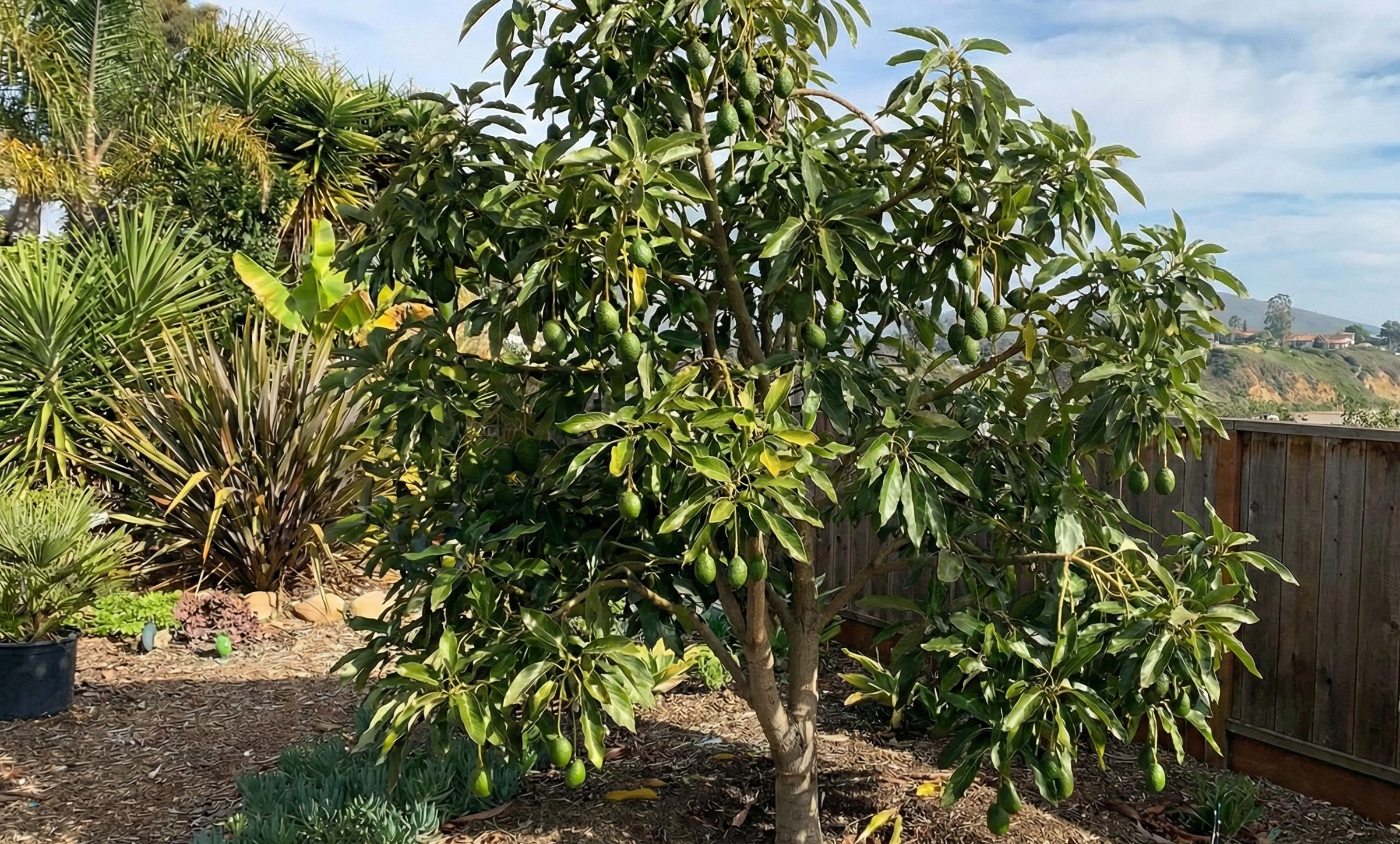
The best avocado varieties for Santa Cruz County are cold-hardy selections from the Mexican race, including Mexicola, Bacon, and Fuerte, which tolerate temperatures 5 to 12 degrees colder than the grocery-store Hass. According to UC Agriculture and Natural Resources, Mexican-race avocados can survive brief dips to 18 to 22 degrees Fahrenheit, making them far better suited to our coastal California microclimates than the Guatemalan-race Hass most people picture when they think "avocado." For a complete overview of growing these trees locally, see our guide to growing avocados in Santa Cruz County.
Why Does Variety Selection Matter So Much in Santa Cruz?
Avocado varieties are not interchangeable, especially at the northern edge of their growing range. The difference between a variety that tolerates 18 degrees and one that suffers damage at 30 degrees is the difference between a tree that survives a typical Santa Cruz winter and one that dies in its first cold snap.
Beyond cold tolerance, varieties differ in how much summer heat they need to ripen fruit properly. This is a critical and often overlooked factor for our county. According to UC Davis research on avocado fruit development, some varieties require significantly more heat units to mature than others. In the fog belt of Santa Cruz, summer temperatures may not climb high enough or stay warm long enough for heat-demanding varieties to produce quality fruit.
Choosing the right variety means matching three factors to your specific location: cold tolerance for winter survival, heat requirement for fruit development, and tree size for your available space.
What Are the Three Races of Avocados, and Why Does It Matter?
Understanding avocado genetics helps explain why some varieties work here and others do not. Avocados are classified into three horticultural races, each originating from different elevations in Central America and Mexico.
Mexican race avocados evolved at high elevations (4,000 to 8,000 feet) where temperatures regularly drop to freezing or below. They are the most cold-hardy, with thin skin, high oil content, and often an anise-like aroma in the leaves. Fruit tends to be smaller. These are your best options for Santa Cruz.
Guatemalan race avocados come from intermediate elevations with mild climates. They have moderate cold tolerance and thick, pebbly skin. Hass is primarily Guatemalan. These need warmer conditions than most of Santa Cruz offers.
West Indian race avocados are tropical lowland trees with virtually no cold tolerance. They are not viable anywhere in Santa Cruz County.
Many commercial varieties are hybrids between races. Fuerte, for example, is a Mexican-Guatemalan hybrid that combines reasonable cold hardiness with larger fruit size. According to UC Riverside's avocado breeding program, understanding a variety's racial background gives you a reliable indicator of its climate preferences.
Which Varieties Are Best for Each Santa Cruz Microclimate?
Mexicola and Mexicola Grande
Cold tolerance: Approximately 18 to 20 degrees Fahrenheit (the hardiest available) Flower type: Type A Fruit size: Small, 3 to 6 ounces (Mexicola Grande is slightly larger, 6 to 10 ounces) Skin: Thin, smooth, turning black when ripe. The skin is edible. Flavor: Rich, nutty, high oil content. Many avocado enthusiasts consider these among the best-tasting varieties. Ripening season: Late summer through early fall (August to October) Tree size: Medium to large, 15 to 30 feet if unpruned
Best for: Virtually any microclimate in Santa Cruz County where you can provide reasonable drainage and sun. This is the safest choice for the San Lorenzo Valley fringe areas, north-county locations, and exposed coastal sites. If you can only plant one avocado tree and are unsure about your microclimate, plant a Mexicola.
The main drawback is fruit size. Mexicola avocados are small, roughly the size of a large plum. You will need several to make a batch of guacamole. But the flavor is outstanding, and the thin skin means less waste. Mexicola Grande offers a compromise with slightly larger fruit and similar cold hardiness.
According to UC ANR, Mexicola is also notably resistant to several common avocado diseases, adding another advantage for growers in challenging climates.
Bacon
Cold tolerance: Approximately 24 to 26 degrees Fahrenheit Flower type: Type B Fruit size: Medium, 6 to 12 ounces Skin: Smooth, green, thin Flavor: Mild, creamy, less rich than Mexicola or Hass. Some describe it as lighter and more delicate. Ripening season: Late fall through early spring (November to March) Tree size: Medium to large, 15 to 25 feet unpruned
Best for: The banana belt (Aptos, Capitola, Soquel), protected sites in Santa Cruz proper, and warmer Watsonville locations. Bacon is an excellent choice for growers who want a larger fruit than Mexicola but still need meaningful cold hardiness.
Bacon was developed in Buena Park, California, introduced by James Bacon in the late 1920s, and has been a reliable backyard variety in coastal California for decades. Its winter ripening season is a nice complement to summer-ripening varieties like Mexicola. The flavor is milder than Hass, which some people love and others find bland. It makes excellent guacamole and works well sliced on sandwiches and in salads.
Bacon pairs well with Mexicola Grande for cross-pollination, since Bacon is Type B and Mexicola Grande is Type A. This is arguably the best two-tree combination for Santa Cruz County.
Fuerte
Cold tolerance: Approximately 26 to 28 degrees Fahrenheit Flower type: Type B Fruit size: Medium to large, 8 to 16 ounces Skin: Smooth, green, medium thickness Flavor: Rich, creamy, excellent. Many consider Fuerte the gold standard for flavor among green-skinned varieties. Ripening season: Late fall through spring (November to April) Tree size: Large, 25 to 35 feet unpruned. Fuerte is a vigorous grower.
Best for: The warmest banana belt locations, south-facing protected sites, and warm Watsonville microclimates. Fuerte needs slightly more warmth than Bacon but rewards growers with superior flavor and larger fruit.
Fuerte was the dominant commercial avocado in California before Hass replaced it in the 1970s. It fell out of favor commercially because of inconsistent production (it tends toward heavy alternate bearing) and because its green skin does not signal ripeness to shoppers the way Hass's color change does. For home growers, neither of these issues matters much.
According to UC Cooperative Extension, Fuerte came into California as budwood in 1911 and was the variety the state's avocado industry was built on, which puts more than a century of California growing behind it. The variety name means "strong" in Spanish, a reference to its survival of a severe freeze in 1913.
One note of caution: Fuerte is particularly sensitive to hot, dry winds during bloom. In Santa Cruz, this is rarely a problem, but inland valley locations near Watsonville that occasionally experience warm northeast winds during spring may see reduced fruit set in some years.
Stewart
Cold tolerance: Approximately 24 to 26 degrees Fahrenheit Flower type: Type B Fruit size: Small to medium, 4 to 8 ounces Skin: Dark green to purple, somewhat pebbly Flavor: Good, creamy, similar in richness to Hass Ripening season: Fall through winter (October to January) Tree size: Medium, 15 to 20 feet unpruned
Best for: Banana belt locations and protected urban sites. Stewart is less commonly available than Bacon or Fuerte but worth seeking out for its combination of good cold hardiness, compact size, and Hass-like flavor.
Stewart is a Mexican-race avocado that flies under the radar. It does not get the attention of the more famous varieties, but UC variety trials have shown it to be a reliable performer in marginal climates. Its more compact growth habit makes it a good choice for smaller yards.
Hass
Cold tolerance: Approximately 28 to 30 degrees Fahrenheit Flower type: Type A Fruit size: Medium, 6 to 12 ounces Skin: Thick, pebbly, turning dark purple-black when ripe Flavor: Rich, creamy, nutty. The industry standard for good reason. Ripening season: Spring through fall (April to September), though timing varies significantly by location Tree size: Medium to large, 15 to 30 feet unpruned
Best for: Only the warmest microclimates in Santa Cruz County. South-facing walls in the banana belt, protected urban courtyards in Aptos or Capitola, and the warmest Watsonville sites. Hass is marginal here and should be treated as a stretch goal, not a safe bet.
Realistically, most people want to grow Hass because it is what they buy at the store. In Santa Cruz County, Hass can work, but it is not the best choice for most locations. It needs more heat than our summers typically provide, and its cold tolerance is the lowest of the varieties discussed here. In a mild winter, Hass will be fine. In a cold winter with temperatures dipping below 30 degrees for extended periods, unprotected Hass trees can suffer significant damage.
If you are determined to grow Hass, give it the best microclimate you have, be prepared with frost protection, and plant a cold-hardier variety nearby as insurance.
Reed
Cold tolerance: Approximately 28 to 30 degrees Fahrenheit (similar to Hass) Flower type: Type A Fruit size: Large, 12 to 18 ounces. Reed produces some of the largest avocados of any common variety. Skin: Thick, green, slightly pebbly Flavor: Excellent, creamy, buttery. Many avocado connoisseurs rank Reed among the top varieties for eating quality. Ripening season: Summer through early fall (July to October) Tree size: Medium, relatively compact, 12 to 20 feet unpruned
Best for: The warmest sites only (same as Hass). Reed's advantage over Hass is its more compact growth habit and its reputation for excellent flavor. Its disadvantage is the same limited cold tolerance.
Reed is worth mentioning because of its exceptional fruit quality and because its more upright, compact growth makes it manageable in smaller spaces. If you have a truly warm microclimate and want to try something different from Hass, Reed is an excellent alternative.
How Do Pollination Types Affect Variety Selection?
Avocado pollination is unusual. Each flower opens twice: once as female and once as male, but at different times. According to UC Riverside, avocado flowering behavior is believed to promote cross-pollination, because the male and female phases of an individual flower open at different times.
Type A varieties (Hass, Reed, Mexicola, Mexicola Grande) open as female in the morning and as male the following afternoon.
Type B varieties (Bacon, Fuerte, Stewart) open as female in the afternoon and as male the following morning.
In warm climates, the timing is strict, and cross-pollination between Type A and Type B trees significantly improves fruit set. In cooler climates like Santa Cruz, the timing becomes less predictable. Cool temperatures can cause the male and female phases to overlap, allowing some self-pollination within a single tree.
However, cross-pollination still improves yields even in cool climates. If you plant two trees, choose one Type A and one Type B. The best pairings for Santa Cruz County are:
Mexicola Grande (A) + Bacon (B): The most cold-hardy pairing with complementary ripening seasons
Mexicola Grande (A) + Fuerte (B): Slightly less cold-hardy but excellent fruit from both trees
Hass (A) + Bacon (B): Good for the warmest sites, with Bacon providing insurance if Hass struggles
A single tree will still produce some fruit through self-pollination, and if neighbors within a few hundred yards have avocado trees, bees will handle cross-pollination for you.
What About Dwarf and Semi-Dwarf Varieties for Small Spaces?
If space is limited or you want to grow avocados in containers, a few compact varieties are worth considering:
Wurtz (also sold as Little Cado or Littlecado) is the most widely available dwarf avocado, reaching 8 to 12 feet in the ground (smaller in containers). It is a Mexicola-Guatemalan hybrid that is somewhat cold-hardy, comparable to Fuerte. Fruit is medium-sized with good flavor. Wurtz is a reasonable choice for container growing in Santa Cruz because it stays manageable and can be moved to shelter in cold weather.
Holiday (also called Wertz) is another compact variety similar to Wurtz, sometimes reaching 10 to 15 feet. Cold tolerance and fruit quality are comparable.
Lamb Hass is a Hass-type variety with a more compact growth habit, though it is not truly dwarf. Cold tolerance is similar to Hass (marginal for most of Santa Cruz).
For full details on container growing, see our guide to growing avocados in containers in California.
How Do I Find and Buy These Varieties Locally?
Sourcing specific avocado varieties in Santa Cruz County requires some effort. Big-box stores typically sell only Hass (and sometimes on unknown rootstock, which is a gamble). Here are better options:
Local nurseries in the Santa Cruz area occasionally stock cold-hardy varieties, especially in spring. Call ahead and ask specifically for Mexicola, Bacon, or Fuerte. If they do not carry them, they can often special-order from their wholesale suppliers.
California specialty growers such as Four Winds Growers (Winters, CA) and other online nurseries ship grafted avocado trees throughout California. Selection is better online than at local retail, especially for varieties like Stewart and Mexicola Grande.
UC Master Gardener plant sales are run by the UC Master Gardeners of Monterey, San Benito and Santa Cruz Counties, and their Gardening Advice Line is the place to ask which avocado variety suits your specific location.
When purchasing, always confirm: 1. The variety name 2. The rootstock (Dusa or Duke 7 preferred for our wet winters) 3. That the tree is grafted, not seed-grown
Expect to pay $30 to $60 for a grafted 5-gallon avocado tree. This is a small investment compared to the years you will spend growing it, so do not cut corners.
Frequently Asked Questions
Which avocado variety produces fruit fastest in Santa Cruz County?
Mexicola and Mexicola Grande typically produce fruit earliest among cold-hardy varieties, often within 3 to 4 years of planting a grafted nursery tree. Their lower heat requirements mean they can set and ripen fruit even in Santa Cruz's cooler summers. Bacon is also relatively quick to produce, usually fruiting within 4 to 5 years. Hass and Reed may take 5 years or longer in our cooler conditions.
Can I grow a Hass avocado from a grocery store pit in Santa Cruz?
You can sprout a Hass pit and grow it into a tree, but it will not produce fruit true to the parent. (See our full guide on growing avocado from seed.) Seed-grown avocado trees take 7 to 15 years to fruit (if they ever do), and the fruit quality is unpredictable. In Santa Cruz's marginal climate, spending a decade waiting for uncertain results from a cold-sensitive variety is not a practical strategy. Buy a grafted tree of a cold-hardy variety for reliable results.
What is the best-tasting avocado variety I can grow in Santa Cruz?
Taste is subjective, but Fuerte and Mexicola consistently rank among the best-flavored avocado varieties in taste tests and among avocado enthusiasts. Fuerte offers the classic rich, creamy avocado flavor in a larger fruit. Mexicola has intense, nutty flavor with high oil content. Both are significantly more cold-hardy than Hass. Reed is arguably the best-tasting of all, but its limited cold tolerance restricts it to the warmest Santa Cruz microclimates.
Do I need two avocado trees to get fruit?
A single avocado tree can produce fruit through self-pollination, especially in cooler climates where the male and female flower phases may overlap. However, cross-pollination between a Type A and Type B variety significantly improves fruit set and yield. According to UC research, having a pollinizer tree nearby can increase production by 10 to 30 percent or more. If you have space, planting both a Mexicola Grande (Type A) and Bacon (Type B) gives you the best results.
How big do avocado trees get in Santa Cruz County?
Full-sized avocado varieties like Fuerte can reach 25 to 35 feet tall and equally wide if left unpruned. Most varieties settle in the 15 to 25 foot range. In Santa Cruz's cooler conditions, growth is generally slower than in Southern California. Dwarf varieties like Wurtz (Little Cado) stay in the 8 to 12 foot range. All avocado trees respond well to pruning for size control, though heavy pruning reduces fruit production for a season.
Are there any avocado varieties that tolerate Santa Cruz's coastal fog?
Mexicola, Bacon, and Fuerte all tolerate the moderate humidity associated with coastal fog. The main issue with fog is not humidity but reduced heat and sunlight. Varieties that need less summer heat to develop fruit, particularly Mexicola, perform better in foggier locations. Avoid planting Hass or Reed in heavy fog zones, as they require more heat units to ripen fruit properly. South-facing slopes that sit above the fog line are ideal for any variety.
