

Edible Landscape Design: A Practical Guide for Santa Cruz Gardens


A few of the product links in this guide are affiliate links. If you buy through one, Ambitious Harvest may earn a small commission at no extra cost to you, which helps keep these guides free. We only point to gear we would use in our own Santa Cruz garden. As an Amazon Associate, we earn from qualifying purchases. Read our full disclosure.
What Is Edible Landscaping?
Edible landscaping blurs the line between ornamental garden and food production. Instead of separating "the vegetable garden" from "the pretty garden," you integrate edible plants throughout your landscape based on their beauty, texture, and form as much as their harvest.
Picture a front yard where blueberry bushes replace generic foundation shrubs, their spring flowers and fall foliage as attractive as any ornamental. Imagine a border of rainbow chard, its stems glowing red, orange, and gold. Consider an arbor draped with grape vines instead of clematis, or a hedge of rosemary instead of boxwood.
This approach makes particular sense in Santa Cruz County, where outdoor space is precious and the growing season is generous. Why devote square footage to plants that only look pretty when you could have plants that look pretty and feed you?
Edible landscaping isn't about rows of vegetables in the front yard (though if that's your style, go for it). It's about recognizing that many food plants are genuinely beautiful and deserve prominent placement in the landscape.
Why Does Edible Landscaping Work So Well in Santa Cruz?
Santa Cruz County offers ideal conditions for edible landscaping. Our mild winters mean many food plants remain attractive year-round. Our long growing season allows extended harvests. Our diverse microclimates support everything from citrus to blueberries.
Benefits Beyond Beauty
Fresh, nutritious food steps from your kitchen. Nothing compares to produce harvested at peak ripeness. Store-bought vegetables, even from farmers markets, lose nutrients and flavor during transport and storage.
Control over what you eat. You know exactly what went into your soil and onto your plants. Keep records of garden inputs, but home-grown produce can still become contaminated by soil, water, manure or handling. Keep poultry and fresh manure separate from growing food crops, and wash harvested produce under plain running water.
Financial savings over time. Seeds and starts cost pennies compared to grocery store produce. Perennial edibles like fruit trees and berry bushes produce for decades after initial investment.
Reduced environmental impact. Food from your yard can reduce transportation and packaging. Refrigerate perishable produce promptly at 40 F or below, refrigerate cut produce, and choose storage conditions appropriate to each crop. Your carbon footprint shrinks with every meal from the garden.
Habitat for pollinators and wildlife. Flowering vegetables, herbs, and fruit trees provide nectar and pollen for bees. Berry-producing plants feed birds. A diverse edible landscape supports ecosystem health.
Mental and physical health benefits. Gardening reduces stress, provides moderate exercise, and connects you to natural cycles. The satisfaction of eating what you've grown is profound.
According to the UC Agriculture and Natural Resources program, integrating edible plants into residential landscapes can reduce household food costs, support local pollinators, and improve soil health over time. The UC Master Gardeners of Monterey, San Benito and Santa Cruz Counties run classes and workshops for local gardeners.
How Do You Plan an Edible Landscape?
Successful edible landscaping requires thoughtful planning. Unlike purely ornamental gardens where aesthetics drive decisions, edible landscapes must balance beauty with the practical requirements of food production.
Edible Landscaping by Microclimate
What to plant (and avoid) in your Santa Cruz County location
- Meyer lemon, kumquat
- Blueberries
- Artichokes
- Strawberries
- Mediterranean herbs
- Greens (year-round)
- Oranges, grapefruit
- Long-season tomatoes
- Heat-loving peppers
- Melons
- Full citrus range
- Figs (all varieties)
- Grapes
- All tomato varieties
- Stone fruit (low-chill)
- Heat-loving herbs (basil)
- Extra frost protection
- Higher water needs
- Afternoon shade for greens
- Blueberries (acidic soil)
- Currants, gooseberries
- Greens and lettuce
- Mint, chives, parsley
- Citrus
- Figs
- Tomatoes, peppers
- Any sun-lover
- Any citrus variety
- Avocados (protected)
- Peppers, eggplants
- Melons
- Heat-loving everything
- Longest growing season
- Succession planting
- Extended harvests
Assess Your Site
Before choosing plants, understand what you're working with.
Sun exposure: Most vegetables and fruits need at least 6 hours of direct sunlight daily. Map your yard's sun patterns through the seasons (winter sun differs from summer sun). Reserve your sunniest spots for tomatoes, peppers, citrus, and other sun-lovers. Shadier areas can still support lettuce, herbs, and some berries.
Microclimates: Santa Cruz County's varied terrain creates dramatically different growing conditions within short distances. Coastal Aptos stays cooler and foggier than inland Watsonville. A south-facing slope in Boulder Creek differs from a shady canyon in Felton. Observe your specific site: where does frost settle? Where does heat collect? Where does wind hit hardest?
Soil conditions: Test your soil's pH and structure. Most edibles prefer slightly acidic to neutral soil (pH 6.0 to 7.0) with good drainage. Our local soils vary widely, from sandy coastal soils to heavy clay inland. You can amend almost any soil, but knowing your starting point helps.
Water access: Consider how you'll irrigate. Drip irrigation makes sense for most edible landscapes, but you'll need to plan zones that group plants with similar water needs.
Design Principles
Layer your plantings. Think in terms of canopy (fruit trees), understory (large shrubs like blueberries), mid-height plants (tomatoes, peppers, artichokes), and ground layer (strawberries, herbs, lettuce). This maximizes production in limited space while creating visual depth. Companion planting can further boost productivity in layered designs.
Consider seasonal interest. Choose plants that contribute beauty across seasons. Citrus offers evergreen foliage, fragrant spring flowers, and colorful fruit. Blueberries provide spring flowers, summer fruit, and brilliant fall foliage. Artichokes are architectural year-round.
Group by water needs. Citrus and blueberries need regular water; rosemary and lavender prefer drought. Placing plants with similar needs together simplifies irrigation and keeps everyone happy.
Plan for maintenance access. You'll need to harvest, prune, and tend your plants. Ensure pathways allow easy access to all areas. Consider mature plant sizes when spacing.
Think about views. What will you see from your kitchen window? Your front door? Your favorite outdoor seating area? Place your most attractive edibles where you'll enjoy them most.
Start Small
The enthusiasm of planning often exceeds the reality of maintenance. Start with a manageable area and expand as you learn what works. A few well-tended fruit trees and a productive herb border beat an ambitious but neglected edible landscape.
What Are the Best Edible Landscape Plants for Santa Cruz County?
These plants combine beauty with productivity and thrive in our local conditions.
Top performers that combine beauty with productivity
| Plant | Best Microclimates | Landscape Uses | Key Notes |
|---|---|---|---|
| Meyer Lemon | All Areas | Specimen, espalier, containers | Most reliable citrus; cold-hardy to 22F |
| Kumquat | All Areas | Hedge, specimen, containers | Very cold-hardy (to 18F); eat whole |
| Fig (Brown Turkey) | Inland Watsonville | Specimen, espalier, shade tree | Drought-tolerant; no pollination needed |
| Blueberry | Coastal Part Shade OK | Foundation, hedge, containers | Needs acidic soil (pH 4.5-5.5); gorgeous fall color |
| Artichoke | Coastal All Areas | Specimen, mass planting, focal point | Architectural silvery foliage; dislikes extreme heat |
| Rosemary | All Areas | Hedge, groundcover, border | Extremely drought-tolerant; nearly indestructible |
| Lavender | All Areas | Border, mass planting, pathway edging | Needs excellent drainage; beloved by bees |
| Strawberry | All Areas | Groundcover, edging, living mulch | Everbearing types produce spring through fall |
| Swiss Chard | All Areas Part Shade OK | Border edging, mixed beds, containers | Stunning colorful stems; year-round harvest |
| Bay Laurel | All Areas | Specimen, hedge, topiary | Evergreen; prune to any size; lasts decades |
Artichokes (Cynara scolymus)
Artichokes are architectural superstars. Their dramatic silvery-green foliage grows 3 to 4 feet tall and wide, creating bold focal points or stunning mass plantings. The edible flower buds are just a bonus.
Why they work here: Our mild coastal climate is ideal for artichokes, which dislike extreme heat or cold. They're perennial here, producing for 5 years or more.
Landscape use: Specimen plants, dramatic borders, silver-foliage accent
Growing notes: Full sun, good drainage, regular water during dry season. Cut back after harvest to encourage fall production. Gophers love artichoke roots, so consider protection in high-gopher areas.
Blueberries (Vaccinium species)
Blueberries offer multi-season interest: delicate white or pink spring flowers, summer berries, spectacular fall foliage in reds and oranges. They're beautiful enough for any front yard.
Why they work here: With proper soil amendment (blueberries need acidic soil, pH 4.5 to 5.5), they thrive in our climate. Coastal areas are particularly suitable.
Landscape use: Foundation plantings, hedges, mixed borders, containers
Growing notes: Full sun to partial shade. Acidify soil with sulfur and mulch with pine needles or acidic compost. Plant at least two varieties for cross-pollination. Regular water essential, especially during fruiting.
Recommended varieties for Santa Cruz: 'O'Neal' and 'Misty' are Southern highbush types that perform well in our mild winters.
Citrus Trees (Citrus species)
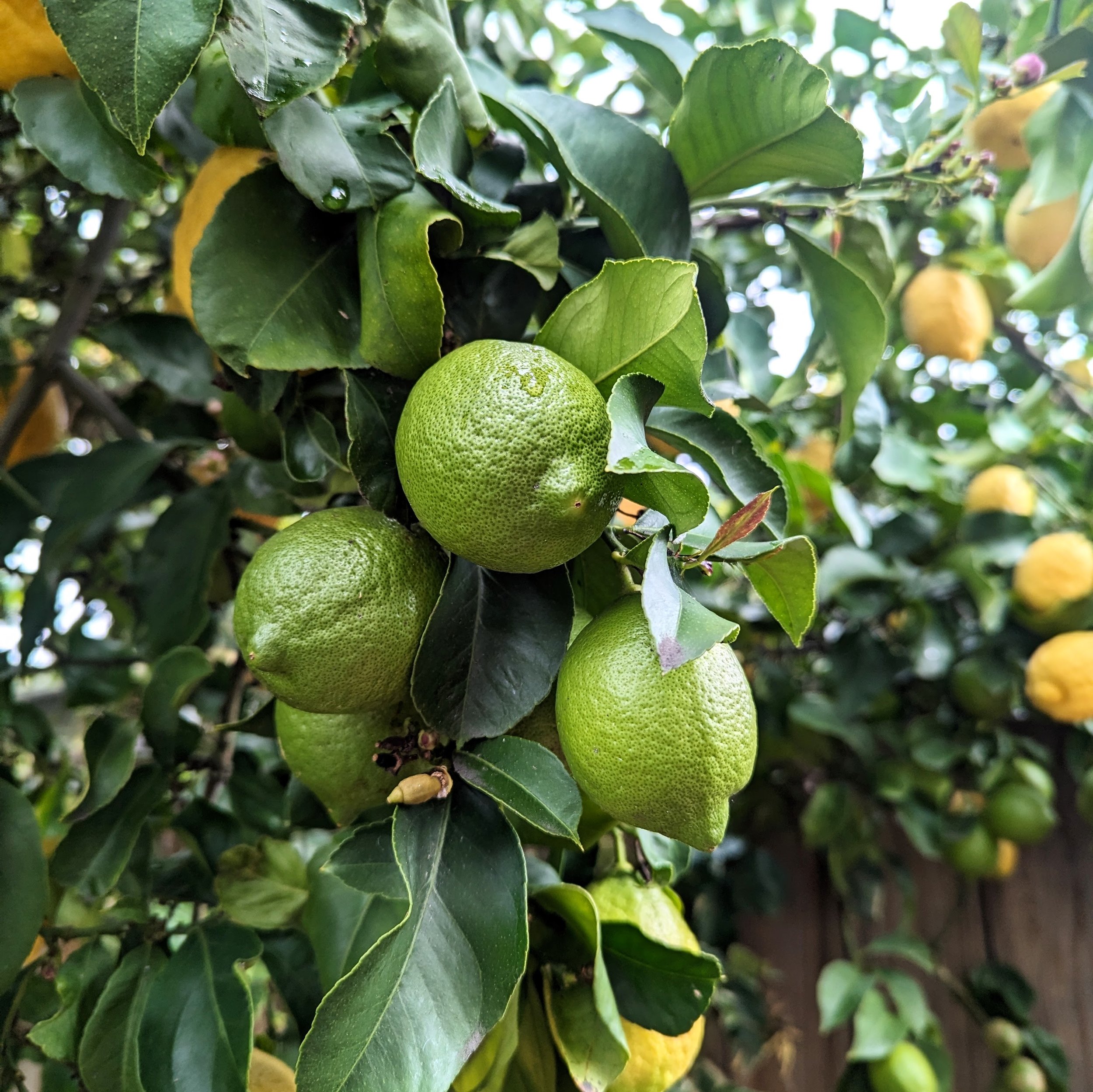
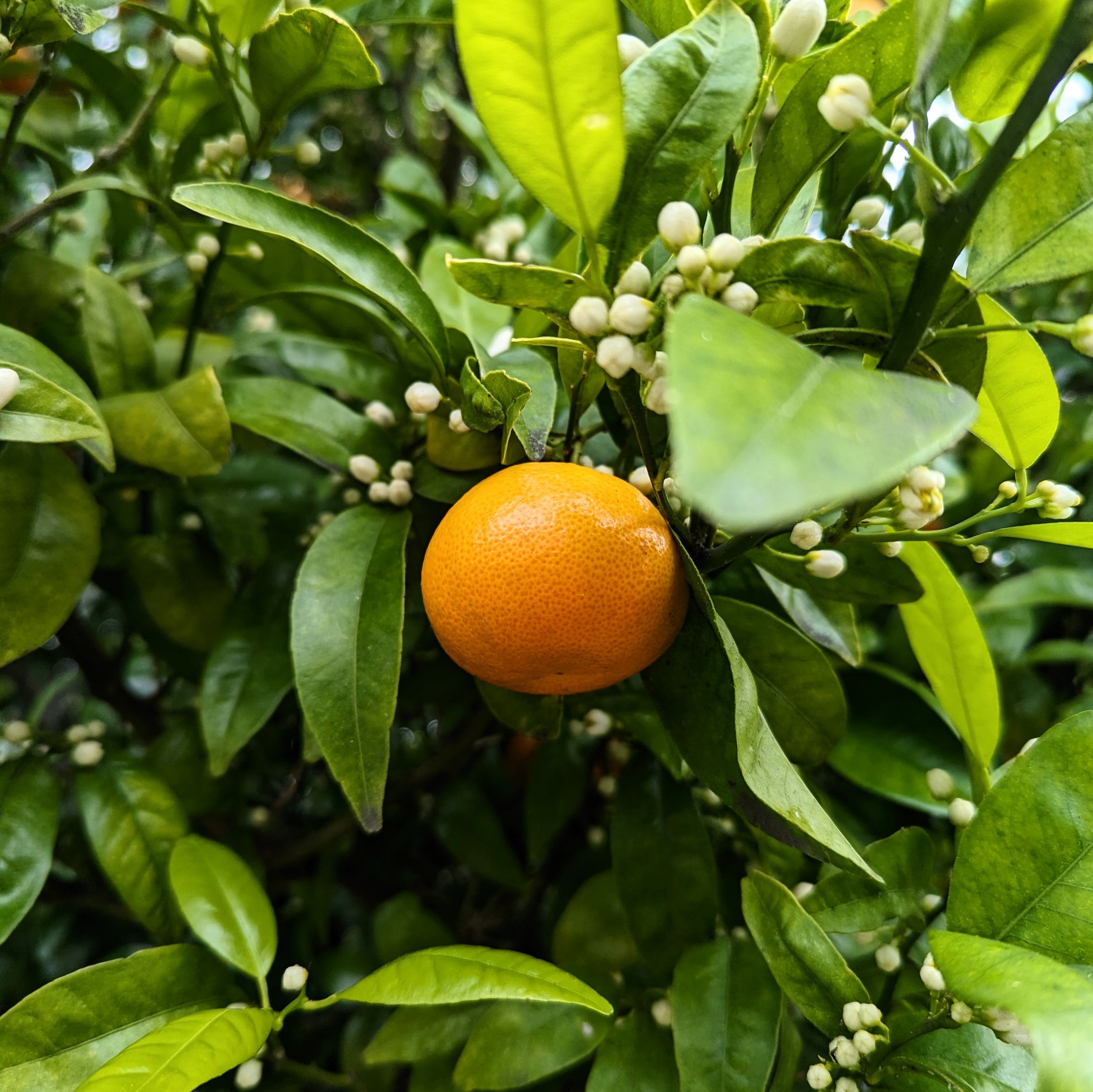
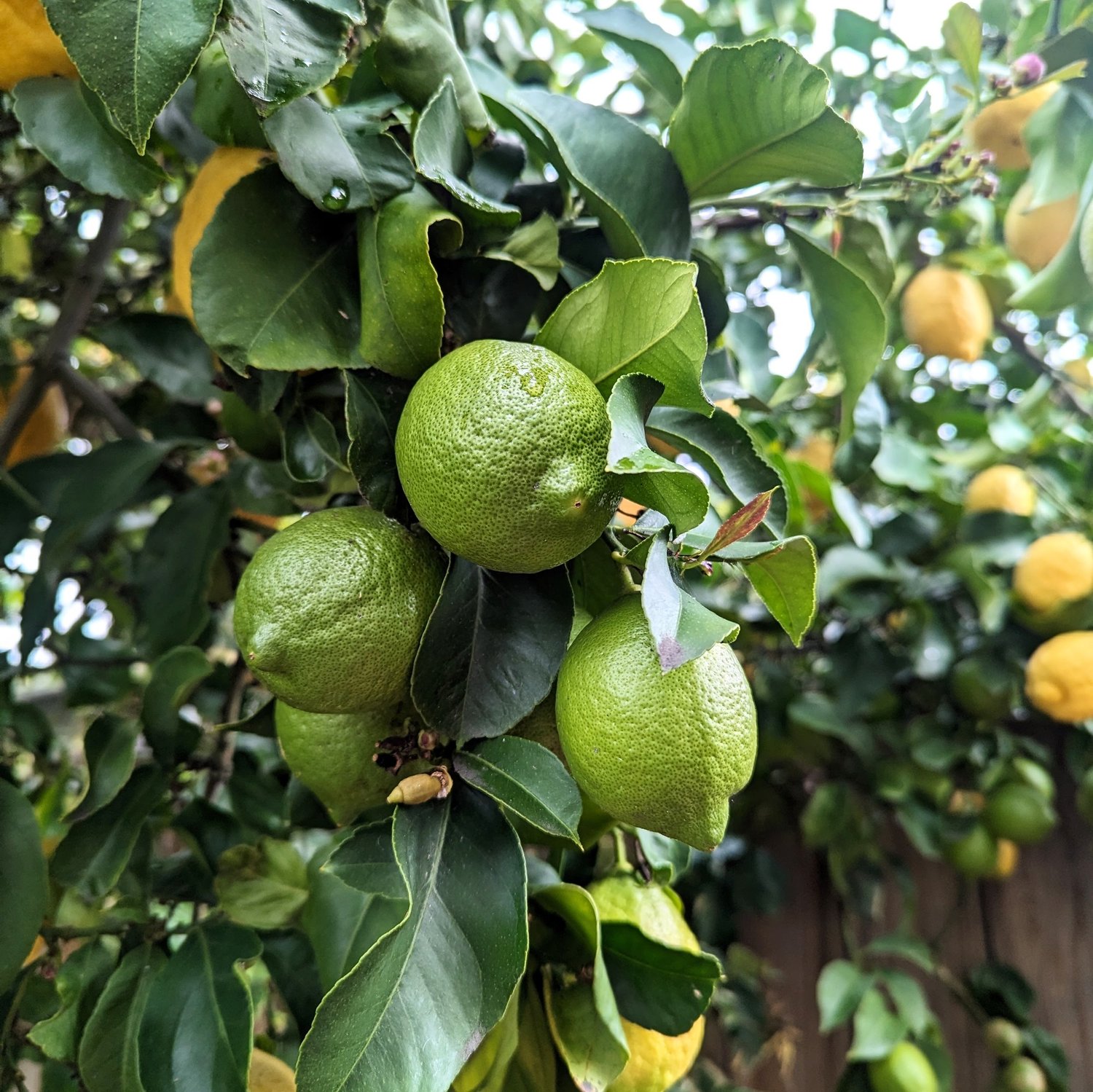
Citrus combines evergreen structure, fragrant flowers, and colorful fruit into a year-round landscape asset. From compact kumquats to full-sized oranges, there's a citrus for almost any space.
Why they work here: Santa Cruz's frost-free (or nearly frost-free) climate suits citrus well, especially in warmer microclimates and protected locations. Coastal gardeners may need to choose more cold-hardy types.
Landscape use: Specimen trees, espalier against walls, container plants, small orchards
Growing notes: Full sun, well-drained soil, regular water and feeding. Protect from hard frost. In cooler coastal areas, site against south-facing walls for extra warmth.
Best choices for Santa Cruz: Meyer lemon (cold-hardy, compact), Improved Dwarf Meyer lemon (container-friendly), Bearss lime, Washington navel orange (in warmer spots), kumquats (very cold-hardy).
Figs (Ficus carica)
Fig trees are genuinely beautiful landscape plants independent of their delicious fruit. Large, sculptural leaves provide bold texture, and mature trees develop characterful gnarled forms.
Why they work here: Figs love our dry summers and mild winters. They're among the most reliable fruit trees for Santa Cruz gardens.
Landscape use: Specimen trees, espalier, large containers, shade trees
Growing notes: Full sun, well-drained soil. Surprisingly drought-tolerant once established. Most varieties don't require pollination. Prune to maintain size and shape.
Recommended varieties: 'Brown Turkey' (reliable, good flavor), 'Black Mission' (excellent fresh or dried), 'Kadota' (great for preserves), 'Desert King' (productive in cooler areas).
Herbs
Culinary herbs are the backbone of edible landscaping: beautiful, fragrant, useful, and almost universally easy to grow. For the full details, see our guide to growing herbs in Santa Cruz.
Rosemary: Evergreen shrub with blue flowers, intensely fragrant. Use as hedges, groundcovers, or specimens. Extremely drought-tolerant once established. 'Tuscan Blue' is upright; 'Prostratus' trails beautifully over walls.
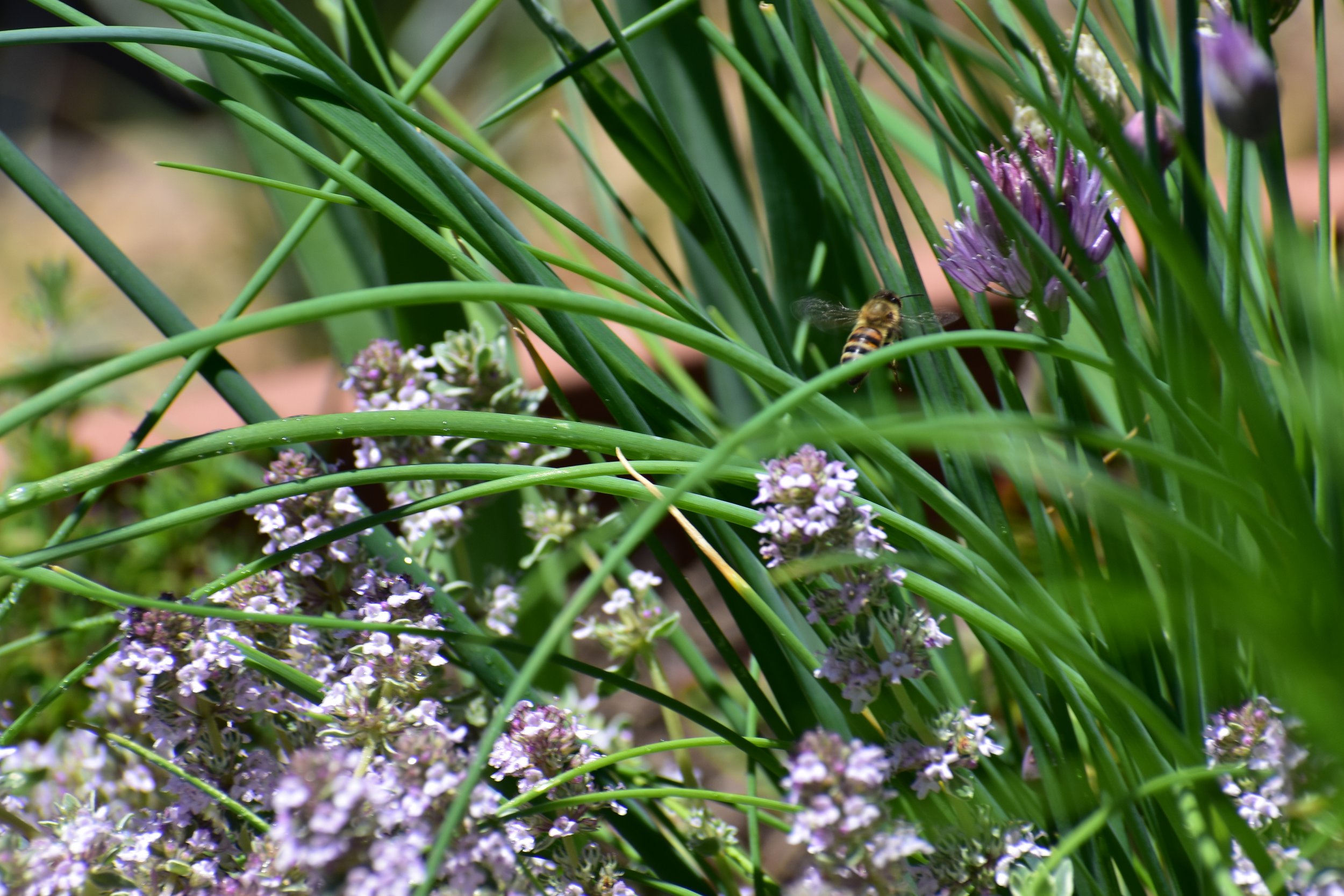
Lavender: Silvery foliage, purple flower spikes, beloved by bees. Combines beautifully with rosemary and other Mediterranean plants. Needs excellent drainage. 'Provence' and 'Grosso' are excellent culinary types.
Thyme: Low-growing groundcover or edging plant with tiny leaves and flowers. Extremely drought-tolerant. Many varieties from lemon-scented to caraway-flavored.
Sage: Soft gray-green leaves, purple flower spikes that bees adore. Common sage (Salvia officinalis) is the culinary standard; purple and golden varieties add color interest.
Bay Laurel: Evergreen tree or large shrub with glossy leaves. Can be pruned to any size or shape. Beautiful and useful for decades.
Strawberries (Fragaria × ananassa)
Strawberries make excellent groundcovers and border edging, their white flowers and red fruit providing seasonal interest while suppressing weeds.
Why they work here: Our climate supports both June-bearing and everbearing types, with everbearing strawberries producing from spring through fall.
Landscape use: Groundcover, border edging, hanging baskets, containers, living mulch under taller plants
Growing notes: Full sun (6+ hours), rich well-drained soil, regular water. Replace plants every 3 to 4 years as productivity declines. Protect from birds with netting if needed.
Recommended varieties: 'Seascape' (everbearing, excellent flavor), 'Albion' (everbearing, disease resistant), 'Chandler' (June-bearing, large berries).
Swiss Chard (Beta vulgaris)
Few vegetables match chard's ornamental value. Stalks glow in shades of red, orange, yellow, pink, and white, while glossy green leaves add lush texture. It's almost too pretty to eat.
Why it works here: Chard tolerates both heat and light frost, growing year-round in Santa Cruz. It produces continuously when harvested from the outside.
Landscape use: Border edging, mixed beds, containers, anywhere you want a color pop
Growing notes: Full sun to partial shade (appreciates afternoon shade in hot areas). Rich soil, regular water. Harvest outer leaves to keep plants productive. 'Bright Lights' offers mixed colors; 'Fordhook Giant' is a classic green.
Tomatoes (Solanum lycopersicum)
Yes, tomatoes belong in the landscape. Their lush foliage, yellow flowers, and colorful fruit are genuinely attractive, especially when trained on decorative supports.
Why they work here: Santa Cruz's warm inland valleys produce excellent tomatoes. Coastal areas can succeed with early and fog-tolerant varieties.
Landscape use: Ornamental cages or trellises, mixed borders, large containers
Growing notes: Full sun, rich well-drained soil, consistent water. Stake or cage indeterminate varieties. Coastal gardeners should choose varieties like 'Early Girl,' 'Stupice,' or 'San Francisco Fog.'
How Do You Implement an Edible Landscape?
Soil Preparation
Healthy soil is non-negotiable for productive edibles. Most Santa Cruz soils benefit from significant organic matter additions.
For new beds: Work 4 to 6 inches of compost into the top foot of soil. If soil is heavy clay, add additional compost and consider raised beds.
For established areas: Top-dress annually with 2 to 3 inches of compost. Let earthworms and soil life incorporate it.
For acid-loving plants (blueberries): Acidify soil with sulfur and maintain acidity with pine needle mulch and acidic fertilizers.
Local sources: Aptos Landscape Supply for bulk compost and amendments. Santa Cruz County composting program for free compost.
Irrigation
Drip irrigation is ideal for edible landscapes, delivering water directly to roots while keeping foliage dry (reducing disease). Our water-wise gardening guide covers irrigation strategies in detail. Plan zones that group plants with similar water needs:
High water zone: Vegetables, strawberries, blueberries, citrus Moderate water zone: Most fruit trees once established Low water zone: Mediterranean herbs (rosemary, lavender, thyme), figs once established
San Lorenzo Garden Center on River Street and other local nurseries carry drip irrigation components.
Mulching
Mulch suppresses weeds, retains moisture, moderates soil temperature, and breaks down into soil-improving organic matter. Apply 3 to 4 inches of organic mulch (wood chips, straw, or compost) around all plantings, keeping mulch away from tree trunks and plant stems.
Ongoing Maintenance
Feeding: Most edibles benefit from regular fertilization during the growing season. Use balanced organic fertilizers for vegetables, specialized citrus or berry food for those plants.
Pest management: Monitor regularly and address problems early. Most issues can be managed with physical controls, beneficial insects, and organic methods. See our Garden Troubleshooting Guide for common problems and solutions.
Pruning: Fruit trees and berry bushes need annual pruning for best production. Learn proper techniques for each plant type.
Harvesting: The best part. Harvest regularly to encourage continued production and enjoy your landscape's bounty.
Your step-by-step guide to getting started
Frequently Asked Questions About Edible Landscaping
Will an edible landscape look as good as a traditional landscape?
Done thoughtfully, yes. Many edible plants are genuinely beautiful, and a well-designed edible landscape can be more interesting than conventional plantings precisely because it offers multiple seasons of interest, varied textures, and the visual appeal of ripening fruit. The key is choosing plants with ornamental value, not just productivity, and maintaining them well.
Is edible landscaping appropriate for a front yard?
Absolutely. Front yard edible landscapes are increasingly common and can be stunning. Focus on plants with year-round appeal (citrus, blueberries, herbs) and maintain them neatly. Many communities have removed restrictions on front yard food gardens, and well-designed edible landscapes often receive compliments from neighbors.
How much maintenance does an edible landscape require?
More than a traditional landscape of shrubs and groundcovers, but less than you might think. Perennial edibles (fruit trees, berry bushes, herbs) need seasonal pruning and feeding but not constant attention. Annual vegetables require more work but can be incorporated as desired. Start small and expand as you gauge your capacity.
Can I grow edibles in shade?
Some edibles tolerate partial shade (4 to 6 hours of sun): lettuce, chard, herbs like mint and chives, some berries. Most vegetables and fruits need full sun (6+ hours) for best production. Assess your shade accurately and choose plants accordingly.
What about pests and diseases?
Edible landscapes attract some pests, but diverse plantings also attract beneficial insects that provide natural control. Good cultural practices (healthy soil, proper watering, good air circulation) prevent most disease problems. Occasional pest issues are manageable with organic methods. See our troubleshooting resources for specific guidance.
How do I protect my edibles from wildlife?
Deer, birds, squirrels, and gophers can all damage edibles. Deer fencing (at least 8 feet tall) may be necessary in deer-heavy areas. Netting protects berries from birds. Gopher baskets protect roots of valuable plants. Consider wildlife pressure when planning your edible landscape.
What should I plant first?
Start with the easiest and most rewarding plants: herbs (especially rosemary, which is nearly indestructible), citrus (if you have a warm spot), and a few strawberries. Add more demanding plants as you gain experience.
How long until I see results?
Herbs and strawberries produce within their first season. Most fruit trees take 3 to 5 years to produce meaningful harvests, though some citrus and figs may bear sooner. Think of fruit trees as long-term investments, providing decades of beauty and bounty.
Free Edible Landscaping Resources
Download these guides to help you create your edible landscape:
Beginner Garden Setup Checklist: Essential steps for starting any garden, including site preparation and basic infrastructure.
Know Your Microclimate Worksheet: Assess your garden's specific conditions for better plant selection.
Seasonal Planting Calendar: When to plant vegetables and other edibles in Santa Cruz County.
Water-Wise Gardening Guide: Irrigation strategies for efficient water use.
Companion Planting Guide: Which plants grow well together for healthier gardens and better yields.
How Do You Get Started With Edible Landscaping?
Converting an entire yard or adding a few edible plants to existing beds puts you in a growing movement of gardeners who want their landscapes to work harder. In Santa Cruz County, where sustainability matters and fresh food is celebrated, edible landscaping aligns perfectly with local values.
Begin this season with a few easy plants. Maybe a Meyer lemon in a sunny spot, some rosemary along a pathway, or a blueberry bush to replace that boring shrub. Taste the first fruit from your own yard, and you'll understand why edible landscaping is worth every bit of effort.
The journey toward a more productive, more sustainable, more delicious landscape starts with a single plant. Which one will you choose?
