

The Complete Guide to Growing Squash and Cucumbers in Santa Cruz County
A few of the product links in this guide are affiliate links. If you buy through one, Ambitious Harvest may earn a small commission at no extra cost to you, which helps keep these guides free. We only point to gear we would use in our own Santa Cruz garden. As an Amazon Associate, we earn from Read our full disclosure.
Few vegetables capture the excitement of summer gardening quite like squash and cucumbers. These sprawling, productive plants can transform a small patch of garden into an abundant harvest of zucchini, winter squash, and crisp cucumbers. But growing cucurbits (the botanical family that includes squash, cucumbers, melons, and pumpkins) in Santa Cruz County comes with unique challenges that national gardening advice rarely addresses.
Our coastal fog, variable microclimates, and cool summer nights can make cucurbits behave very differently here than in the hot, sunny gardens pictured in most gardening books. The good news? Once you understand how to work with our local conditions, you can grow exceptional squash and cucumbers that rival anything from the warmest inland valleys.
This comprehensive guide covers everything you need to know about growing cucurbits in Santa Cruz County, from variety selection to harvest. Whether you are dealing with coastal fog in Aptos or warm sunny slopes in Scotts Valley, you will find specific guidance for your microclimate.
What Is the Cucurbit Family?
The cucurbit family (Cucurbitaceae) includes some of the most productive and diverse vegetables you can grow. In Santa Cruz County, the main cucurbits home gardeners grow include summer squash (zucchini, yellow squash, pattypan), winter squash (butternut, acorn, spaghetti, delicata), cucumbers (slicing and pickling types), pumpkins, and melons (cantaloupe, honeydew, watermelon).
What all cucurbits share is a preference for warm soil, consistent moisture, and plenty of space. They are frost-sensitive and will not tolerate cold, wet conditions. According to UC ANR's vegetable planting guide, cucurbits require soil temperatures of at least 60°F for germination, with optimal germination occurring between 70-95°F.
This warmth requirement is where Santa Cruz County gardeners face their first challenge. Our coastal areas may not reach those soil temperatures until June, while inland gardens warm up much earlier.
Why Santa Cruz County is Different
National gardening advice typically assumes hot summers with warm nights, exactly the opposite of what many Santa Cruz County gardeners experience. Here is what makes our area unique for cucurbit growing.
Coastal fog and marine layer: Along the coast from Santa Cruz to Watsonville, summer fog keeps temperatures cool and humidity high. This extends the growing season but can reduce pollinator activity and increase disease pressure, particularly powdery mildew.
Cool nights: Even when daytime temperatures are warm, our nights often drop into the 50s. Cucurbits prefer night temperatures above 55°F for optimal fruit set. According to UC Davis vegetable research, temperatures below 55°F can cause flower drop and poor pollination.
Dramatic microclimate variation: A garden in foggy Aptos behaves completely differently than one on a sunny slope in Ben Lomond. Temperature differences of 10-15°F between microclimates are common on any given summer day.
Extended growing season: Our mild winters mean we can often plant earlier and harvest later than gardeners in harsher climates, if we choose the right varieties.
How Should You Choose the Right Cucurbits for Your Microclimate?
Variety selection is the single most important decision you will make for cucurbit success in Santa Cruz County. The wrong variety in a coastal garden will struggle and disappoint, while the right variety in the same spot will thrive.
For Coastal and Foggy Areas (Aptos, Capitola, Live Oak, Westside Santa Cruz)
Focus on shorter-season varieties that can mature during our limited warm period. Look for cucumbers with 50-60 days to maturity, summer squash varieties bred for cooler conditions, and skip melons entirely (they rarely sweeten properly without sustained heat).
Best bets for the coast:
Summer squash varieties like 'Costata Romanesco' (a ribbed Italian heirloom that tolerates cooler conditions), 'Ronde de Nice' (round French heirloom), and standard 'Black Beauty' zucchini all perform reasonably well. For cucumbers, 'Marketmore 76' and 'Diva' are reliable choices with good disease resistance.
Winter squash is actually easier than summer squash in coastal areas because you plant in late spring and harvest in fall, giving the plants more total growing time. 'Delicata', 'Butternut', and 'Acorn' all mature reliably in coastal microclimates.
For Warmer Inland Areas (Scotts Valley, Soquel Hills, San Lorenzo Valley Sunny Slopes)
You have more flexibility with variety selection. Longer-season varieties will mature properly, and you can successfully grow melons if you have a truly warm, sunny spot.
Standard summer squash varieties perform well, and you can experiment with specialty types. Winter squash options expand to include longer-season varieties like 'Hubbard' and 'Butternut'. Melons are possible with careful variety selection (see our detailed melon guide).
For Pajaro Valley and Watsonville
This is Santa Cruz County's warmest growing zone, with conditions similar to the Salinas Valley. Nearly any cucurbit variety will perform well here, including heat-loving melons and long-season winter squash.
When to Plant Cucurbits in Santa Cruz County
Timing is critical for cucurbit success, and it varies significantly by microclimate. Plant too early and seeds will rot in cold soil. Plant too late and you will not have enough warm weather to mature your crop.
Soil Temperature Matters More Than Calendar Date
Forget what the seed packet says about planting after your last frost date. For cucurbits, soil temperature is the real determining factor. According to UC ANR research, squash and cucumber seeds need soil temperatures of at least 60°F to germinate, with 70-85°F being optimal.
In coastal areas, soil often does not reach 60°F until mid-May or even June. In warmer inland areas, you may hit that temperature in late April. Use a soil thermometer (available at any garden center) to check your actual conditions rather than guessing.
Planting Windows by Microclimate
Coastal areas (Aptos, Capitola, Live Oak): Direct sow seeds late May through mid-June. Transplants can go out in mid-May if protected with row cover initially.
Foggy valleys and redwood areas (Felton, Ben Lomond canyons): Similar to coastal timing, possibly a week or two earlier if you have a sunny clearing.
Inland and sunny slopes (Scotts Valley, Soquel hills): Direct sow early to mid-May. Transplants can go out late April with protection.
Pajaro Valley and Watsonville: Direct sow late April through May. This is the one area where you can follow standard California planting advice.
Starting Seeds Indoors
Starting cucurbits indoors gives you a head start, but do it carefully. These plants resent root disturbance, so always start in biodegradable pots that can be planted directly into the ground.
Start seeds 2-3 weeks before your planned transplant date. Do not start earlier, as cucurbits grow fast and become rootbound quickly. Keep seedlings warm (at least 70°F) and harden them off gradually before transplanting.
How Should You Prepare Your Soil for Cucurbits?
Cucurbits are heavy feeders that need rich, well-drained soil with plenty of organic matter. In Santa Cruz County, most of us are working with either heavy clay (inland) or sandy loam (coastal), and both benefit from significant amendment before planting.
Building Fertility
Before planting, incorporate 2-4 inches of compost into your planting area. Cucurbits respond well to aged manure (never fresh) added the fall before planting. According to UC Master Gardeners, squash and cucumbers benefit from soil with a pH between 6.0 and 7.0.
Many Santa Cruz County gardeners have success creating "squash hills," which are mounded planting areas about 12 inches high and 2-3 feet across. Fill these with a mix of compost, aged manure, and native soil. The mounds warm up faster in spring, improve drainage in our wet winters, and concentrate fertility where the plants need it.
Warming the Soil
If you are eager to plant early, warm your soil before planting using black plastic mulch laid over your beds for 2-3 weeks before planting. This can raise soil temperature by 5-10°F, allowing you to plant a week or two earlier. Remove the plastic at planting time (cucurbits need the soil to breathe) or cut holes for transplants.
When and How Should You Plant and Spacing?
Cucurbits need room to sprawl. Crowded plants compete for nutrients, have poor air circulation (promoting disease), and produce less fruit. Give them generous spacing from the start.
Spacing Guidelines
Summer squash (bush types): Space plants 2-3 feet apart in rows 3-4 feet apart. Despite being called "bush" types, they still spread 3-4 feet across.
Winter squash and pumpkins (vining types): Space hills 4-6 feet apart, or allow vines to run into lawn or pathway areas. A single winter squash plant can spread 10-20 feet.
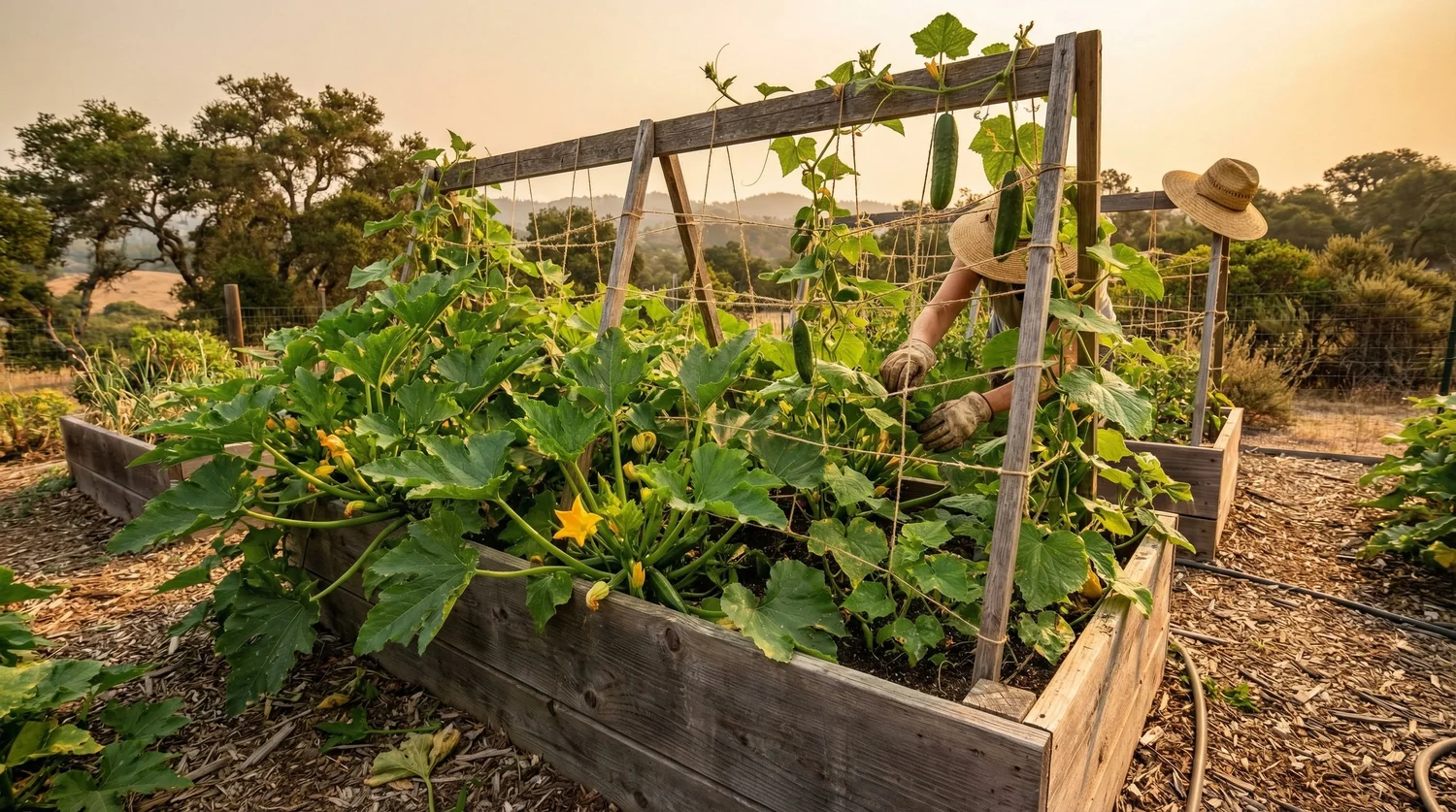
Cucumbers: Space 12-18 inches apart if trellised, or 3 feet apart if allowed to sprawl. Trellising is strongly recommended for Santa Cruz County because it improves air circulation and reduces disease.
Direct Sowing
Plant seeds 1 inch deep in warm, moist soil. For hills, plant 3-4 seeds per hill and thin to the strongest 2 seedlings after they develop true leaves. For rows, plant seeds 4-6 inches apart and thin to final spacing.
Transplanting
Transplant on a cloudy day or in late afternoon to reduce stress. Water deeply immediately after planting and provide shade for the first few days if hot weather is expected. Handle seedlings gently; cucurbits hate root disturbance.
How Often Should You Water Cucurbits?
Consistent moisture is critical for cucurbits, but so is avoiding wet foliage. The combination of humidity and wet leaves promotes the fungal diseases that plague Santa Cruz County gardens.
How Much to Water
Cucurbits need about 1-2 inches of water per week, more during hot weather or when plants are actively fruiting. According to UC ANR irrigation research, inconsistent watering is a leading cause of bitter cucumbers and misshapen squash.
How to Water
Always water at the soil level, never overhead. Drip irrigation or soaker hoses are ideal. Water deeply but less frequently rather than shallow daily watering. This encourages roots to grow deep, making plants more drought-tolerant and stable.
Mulch heavily (3-4 inches of straw, wood chips, or leaves) around plants to conserve moisture and keep fruit clean. In coastal areas, wait until soil has warmed before applying mulch to avoid keeping soil too cool.
Pollination: The Key to Fruit Production
Cucurbits have separate male and female flowers on the same plant. Male flowers appear first (often frustrating new gardeners who wonder why they have flowers but no fruit) and produce pollen. Female flowers appear 1-2 weeks later and have a small fruit behind the flower.
Why Pollination Sometimes Fails
In Santa Cruz County, pollination issues are common because of cool, foggy mornings when bees are less active and rainy or cool weather during bloom time when pollinators stay home.
Poor pollination results in small, misshapen fruit, fruit that starts to develop but then rots and falls off, or no fruit at all despite plenty of flowers.
Hand Pollination: Your Insurance Policy
When conditions are not ideal for pollinators, hand pollination ensures you get a harvest. It takes just a few minutes and dramatically improves yields.
In the morning (before 10 AM), find a male flower (straight stem, no swelling behind petals). Remove the petals to expose the pollen-covered stamen. Locate a female flower (has a small fruit behind the petals). Gently brush or touch the pollen onto the stigma (the central part inside the female flower). Repeat for several female flowers.
One male flower can pollinate multiple females. See our detailed guide to hand pollinating squash for step-by-step photos and techniques.
How Do You Manage Pests and Diseases?
Cucurbits face several serious pest and disease challenges in Santa Cruz County. The good news is that most can be prevented or managed with good cultural practices.
Powdery Mildew
This fungal disease is nearly universal on squash and cucumbers in our coastal climate. White, powdery spots appear on leaves, eventually covering them entirely and reducing plant vigor.
Prevention is easier than treatment. Plant resistant varieties, space plants generously for air circulation, water at soil level (never overhead), and remove affected leaves promptly.
For treatment, organic options include neem oil (which works as both prevention and early treatment), baking soda spray (1 tablespoon baking soda per gallon of water with a few drops of liquid soap), and sulfur-based fungicides. See our complete powdery mildew guide for detailed management strategies.
Squash Vine Borers
These larvae tunnel into squash stems, causing sudden wilting and plant death. The good news for Santa Cruz County gardeners is that squash vine borers are less common here than in other parts of the country. However, they do occur, especially in warmer inland areas.
Prevention includes wrapping stem bases with aluminum foil, using row covers until flowering begins, and planting resistant varieties like butternut squash (which has solid stems that borers cannot penetrate easily).
See our squash vine borer prevention guide for complete management strategies.
Cucumber Beetles
These small striped or spotted beetles damage leaves and, more importantly, spread bacterial wilt disease. Row covers provide the best protection until plants begin flowering.
Aphids
Common on young growth, aphids can be managed with strong water spray, insecticidal soap, or by encouraging beneficial insects like ladybugs and lacewings.
When Should You Harvest X?
Knowing when to harvest is important for both quality and continued production.
Summer Squash
Harvest when small for best flavor and texture. Zucchini is ideal at 6-8 inches, yellow squash at 5-7 inches, and pattypan at 2-4 inches across. Harvesting regularly encourages continued production. Left on the vine, summer squash becomes watery, seedy, and tough.
Winter Squash
Leave on the vine until fully mature. Signs of maturity include hard rind that resists fingernail scratching, dull skin color (rather than shiny), dried brown stem, and hollow sound when tapped.
Cure winter squash in a warm (80-85°F), dry place for 10-14 days after harvest to improve storage quality. Properly cured squash can store for months.
Cucumbers
Harvest when firm and uniformly green (or yellow for lemon cucumbers). Size depends on variety, but most slicing cucumbers are best at 6-8 inches. Pickling cucumbers harvest at 2-4 inches. Yellow or swollen cucumbers are over-mature and will be bitter and seedy.
Pumpkins
Harvest when fully colored with a hard rind. Leave 3-4 inches of stem attached for better storage. Cure like winter squash.
Where to Buy Seeds and Transplants Locally
Several local sources offer excellent cucurbit seeds and transplants suited to our region.
Renee's Garden Seeds in Felton specializes in varieties that perform well in coastal California conditions. Their trial gardens are right here in Santa Cruz County.
San Lorenzo Garden Center carries transplants in spring, often including varieties selected for local success.
Dig Gardens occasionally offers edible transplants including squash and cucumbers.
For more sources, see our complete guide to local nurseries and seed sources for Santa Cruz County.
Growing squash and cucumbers in Santa Cruz County rewards patience and attention to our unique local conditions. The keys to success are choosing varieties suited to your microclimate, timing your planting to warm soil rather than calendar dates, and staying ahead of powdery mildew with preventive care. Hand pollination is your secret weapon on foggy mornings when bees stay home. Do not be discouraged if your first season is not perfect. Every Santa Cruz County gardener has learned through trial and error which varieties thrive in their particular corner of the county. Start with reliable performers like 'Marketmore 76' cucumbers and 'Costata Romanesco' zucchini, pay attention to what works in your garden, and you will be enjoying abundant harvests of crisp cucumbers and tender squash all summer long.
Frequently Asked Questions
Why do my squash plants have lots of flowers but no fruit? Cucurbits produce male flowers first, often 1-2 weeks before female flowers appear. Male flowers fall off after producing pollen, which is normal. Once female flowers appear (you will recognize them by the small fruit behind the flower), pollination can occur. In cool, foggy weather, pollinators may be less active, so consider hand pollinating for better fruit set.
Can I grow melons in Santa Cruz County? Melons are challenging in most of Santa Cruz County because they need sustained heat to develop sweetness. Coastal and foggy areas generally cannot grow melons successfully. However, gardeners in Pajaro Valley, Watsonville, and the warmest inland microclimates can grow short-season varieties. See our guide to growing melons in Santa Cruz for specific recommendations.
How do I prevent powdery mildew on my squash plants? Powdery mildew thrives in our coastal humidity but can be managed. Start with resistant varieties, space plants generously for air circulation, water at soil level rather than overhead, and apply preventive treatments (neem oil or baking soda spray) before symptoms appear. Once established, remove heavily affected leaves and continue preventive sprays on healthy foliage.
Should I grow squash vertically or let it sprawl? Summer squash can be grown either way, though sprawling is more common. Winter squash and pumpkins are almost always grown sprawling due to the weight of mature fruit. Cucumbers benefit greatly from trellising in our climate because it improves air circulation and reduces disease pressure.
When is it too late to plant squash in Santa Cruz County? For summer squash and cucumbers, you can plant succession crops through early July in most areas. For winter squash and pumpkins, plant by July 1 to ensure fruit matures before fall weather arrives. Coastal areas have a shorter window; plant winter squash and pumpkins by mid-June.
Why are my cucumbers bitter? Bitterness in cucumbers usually results from stress, specifically irregular watering, temperature extremes, or leaving fruit on the vine too long. Water consistently, harvest promptly, and choose bitter-free varieties like 'Diva' or 'Tasty Green' for insurance.
How much space do squash plants really need? More than you think. Bush-type summer squash spread 3-4 feet across. Vining winter squash can spread 10-20 feet. Crowded plants have more disease problems and produce less fruit. If space is tight, train winter squash vines in one direction or grow compact bush varieties.
Do I need to hand pollinate squash every time? Not necessarily, but it helps in Santa Cruz County. Foggy mornings and cool weather reduce pollinator activity, leading to poor fruit set. Hand pollinating takes just a few minutes and dramatically increases reliable production, especially early in the season.\
Santa Cruz County Seasonal Planting Calendar - Includes optimal planting dates for cucurbits by microclimate. Download PDF
Garden Troubleshooting Guide - Quick reference for common pest and disease problems. Download PDF
Companion Planting Guide - Learn what grows well with squash and cucumbers. Download PDF
