

Should You Use Wound Paste on Pruning Cuts?
This guide includes affiliate links. If you buy through one, Ambitious Harvest may earn a commission at no extra cost to you. As an Amazon Associate, we earn from qualifying purchases. Read our full disclosure.
A fresh cut can look unfinished. That does not mean it needs a covering from a tin. The useful work happens before the cut: choosing the branch, checking its attachment and deciding whether this is a good time to remove it.
For routine tree pruning, leave the cut uncoated. Wound paste is not a substitute for a well-placed cut or the right pruning season. If a diagnosed disease calls for a specific treatment, follow that guidance rather than a general rule about every tree.
A tree responds differently from a scraped knee
Alex Shigo's work, cataloged by the USDA Forest Service, describes how trees compartmentalize injured and infected wood. They build boundaries around damage rather than restoring the injured wood to its original state.
New growth may eventually cover a wound, but closure is not a promise that decay cannot occur inside. The size and placement of the cut, tree condition and organisms present still matter.
UC's deciduous-fruit-tree pruning guide advises leaving routine cuts open rather than applying paint, emulsions or other coatings that can trap moisture. UC IPM's wood-decay guidance likewise does not recommend wound dressings as general protection.
Put the attention into the cut
For a branch-removal cut, identify the branch collar at the attachment and preserve it. Cutting flush with the trunk removes tissue you want to keep; leaving a long stub is not the same as protecting the collar. Heading a small shoot is a different kind of cut, so do not apply one placement rule to every pruning task.
Use a sharp tool suited to the branch. The linked pruning shears are an option for appropriate hand-pruning work, not a reason to force a thick branch into the blades. Large limbs, unstable trees, overhead work and branches near utility lines need qualified help.
Keep tools clean and follow disease-specific sanitation guidance when infection is suspected. Cleaning debris from a blade and disinfecting it are different tasks. Use the disinfectant's directions and tool-care advice instead of improvising a concentration or assuming a quick wipe controls every pathogen.
Check the crop and the weather
Winter is not the safest pruning season for every deciduous fruit tree. Current UC IPM Eutypa guidance specifies summer pruning for apricots and cherries, with August near the coast. Fresh wounds and wet weather are a particular concern.
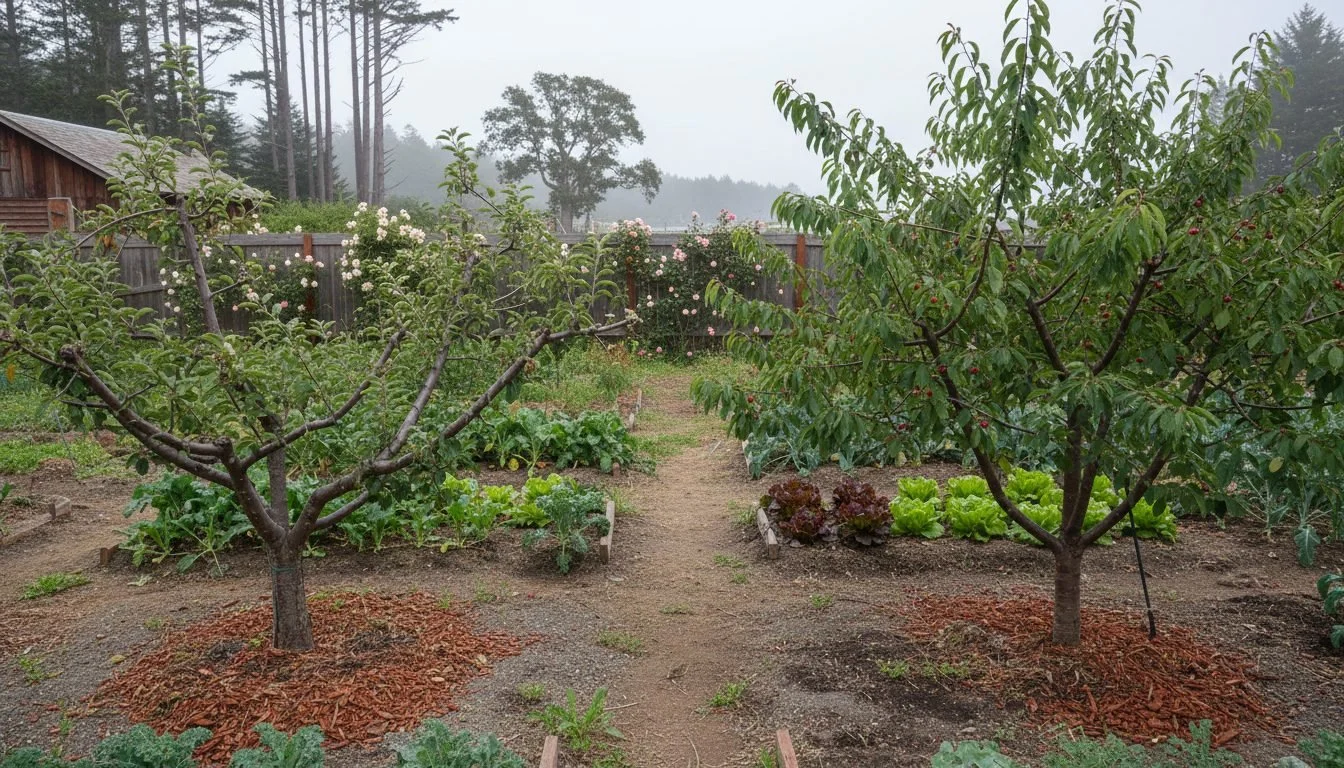
That matters in a damp Santa Cruz garden. Identify the tree and consult its current pruning guidance before setting a date. Other crops have their own dormant and summer tasks; a bare canopy alone does not settle the question.
Pruning can also expose previously shaded bark. Preserve appropriate foliage and use crop-specific sunburn-prevention advice when needed. Protecting exposed bark from sun is a different purpose from painting over a pruning wound.
Keep disease treatment separate from routine wound paste
Some management guidance includes treatments for particular pathogens or circumstances. UC's Eutypa page discusses specific wound treatments for that disease. Those measures are not an invitation to coat every cut.
If a tree has a canker, decay or unexplained dieback, get a diagnosis before cutting or treating it. A general article cannot choose a product or procedure for an unidentified disease. Follow the current directions for the particular problem and any product label.
Common questions about pruning wounds
Should I paint a large cut because it looks exposed?
Size alone is not a reason to add paste. Large cuts deserve careful planning, and a qualified arborist can assess the tree and the work involved.
Will an uncoated wound always close successfully?
No method guarantees that. Good placement and tree care help, but the tree's condition, wound size and disease exposure affect the outcome.
Should I throw an old product into the trash?
Check its label and your local disposal instructions. Deciding not to use a product on routine cuts does not determine how to dispose of it.
This week: identify the tree you plan to prune and find its recommended timing. Then check the tool and purpose of each proposed cut. Keep that plan with Your Garden Toolkit.
