

Do Succulents Really Need Zero Maintenance?
This guide includes affiliate links. If you buy through one, Ambitious Harvest may earn a commission at no extra cost to you. As an Amazon Associate, we earn from qualifying purchases. Read our full disclosure.
A succulent can sit quietly on a patio for weeks, which makes it easy to overlook until something changes. Succulents can be relatively easy to care for, but they still need the right light, drainage, water and occasional attention. Start with the plant's name, not a promise that it is impossible to kill.
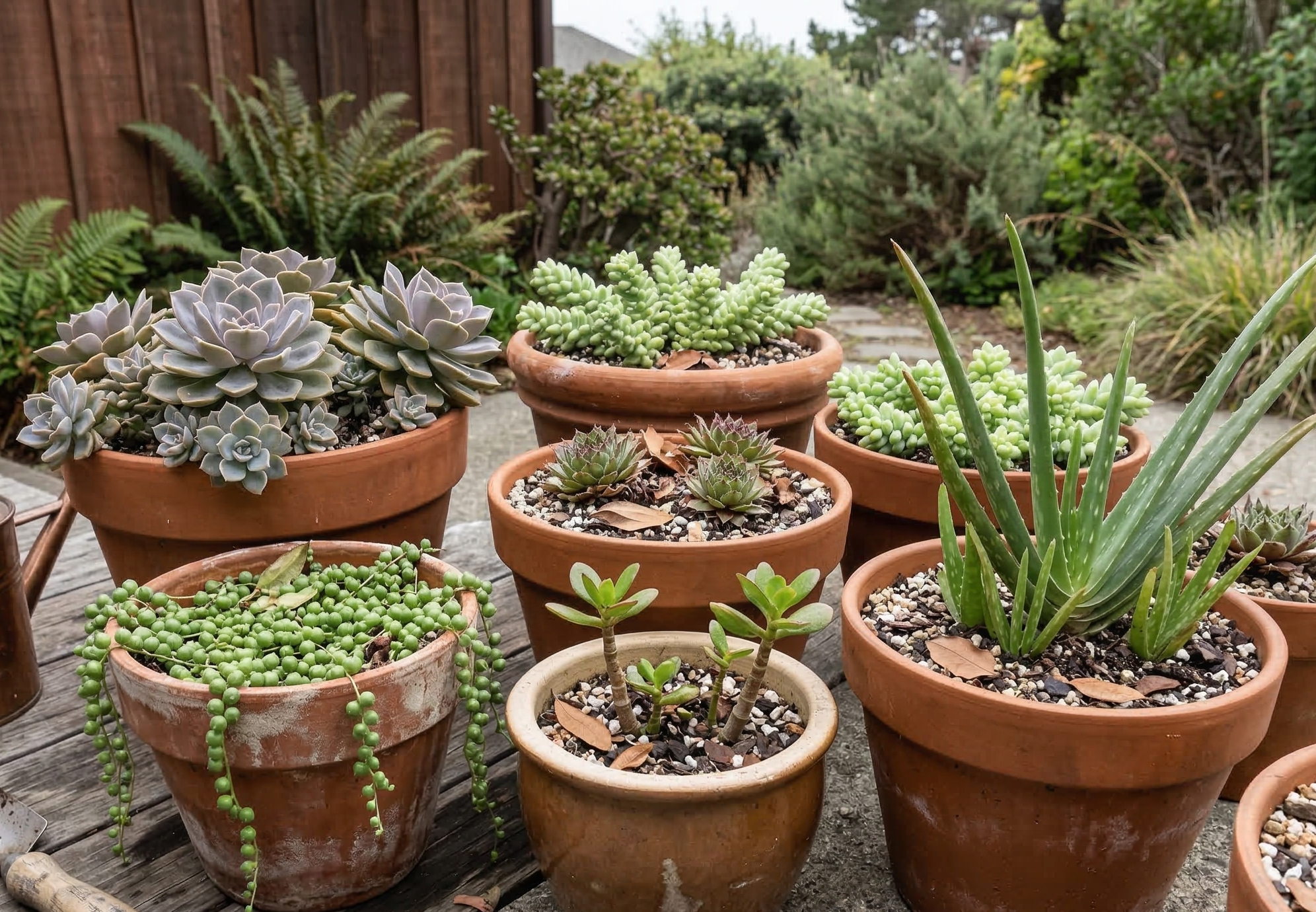
The plants grouped together as succulents have different growing seasons and tolerances. A collection of pots may look like one display while needing more than one care routine.
Learn which plant is in the pot
UC Santa Clara's succulent guide describes a range of light and cold tolerances. Some plants tolerate severe cold; others are frost tender. Some grow actively in summer, while others make their growth in cooler seasons.
Keep the nursery label or photograph the plant for identification. The local UC Master Gardener program is a place to seek help. A useful name lets you check care needs instead of applying a rule intended for a different plant.
Water according to the plant and the mix
UC Santa Clara recommends infrequent watering as many succulents approach dryness, rather than keeping the medium constantly moist. That is not a command to leave every plant bone dry for the same number of days.
Check the mix and observe the plant. A small exposed pot can behave differently from a large sheltered one. Winter rain reaching an outdoor container also counts, and a pot beneath a roof may receive none of it.
UC Orange County's succulent guidance distinguishes container and in-ground care and discusses growing seasons. Its example watering intervals are not a schedule for every Santa Cruz patio. Adjust for the species, weather, container and drainage instead of copying a regional calendar.
Make sure excess water can leave
Use a container with drainage and an appropriate growing mix. UC's drainage advice includes mixes amended with coarse mineral ingredients, but it does not make one recipe right for every succulent.
Perlite is one possible ingredient. Choose a suitable prepared mix or a recipe for the plant rather than automatically making every pot half perlite. A layer of stones at the bottom is not a drainage fix.
Check saucers and decorative outer pots after watering. A free-draining inner pot can still stand in collected water. If roots or stems are deteriorating, investigate the cause before assuming the plant simply needs another drink.
Match light and cold protection to the species
Too little light can produce stretched growth, while too much exposure can scorch susceptible plants. Not every succulent needs six hours of direct sun. A hot inland wall and a sheltered coastal patio create different conditions.
Read the plant's cold tolerance and watch your actual forecast. In a frost pocket or mountain garden, have a suitable protected location ready for tender containers. Shelter under an eave is not a guarantee against freezing, and a single temperature threshold does not describe the whole collection.
Notice pests before reaching for a treatment
Look into leaf joints and crowded growth for changes, including cottony material that may indicate mealybugs. Confirm the pest. UC IPM's mealybug guidance emphasizes inspection and protecting natural enemies outdoors.
The familiar alcohol-on-a-swab tip needs care. UC discusses it for houseplant problems and calls for a small-area test because foliage can be injured. Do not treat an entire outdoor collection automatically. Match the control to the plant and pest, and follow any pesticide label.
Remove accumulated dead material where appropriate, check crowding and plan division or repotting for the plant's growth period. Regular observation can be brief; it is easier when it is part of checking the patio rather than a rescue after months of neglect.
Questions about easy-care succulents
Does coastal fog replace watering?
Do not assume it does. Check the growing medium and species needs. A gray morning does not tell you how much water reached the roots.
Should all succulents rest in winter?
No. Find out when yours grows actively before changing water or fertilizer routines.
Do white patches always mean mealybugs?
No. Inspect closely and identify the cause before applying anything, particularly on plants with naturally pale or waxy surfaces.
This week: identify one succulent and compare its current location with its light, water and cold requirements. Keep the label and care notes with Your Garden Toolkit.
