

Succession Planting vs. All-at-Once: Which Yields More?
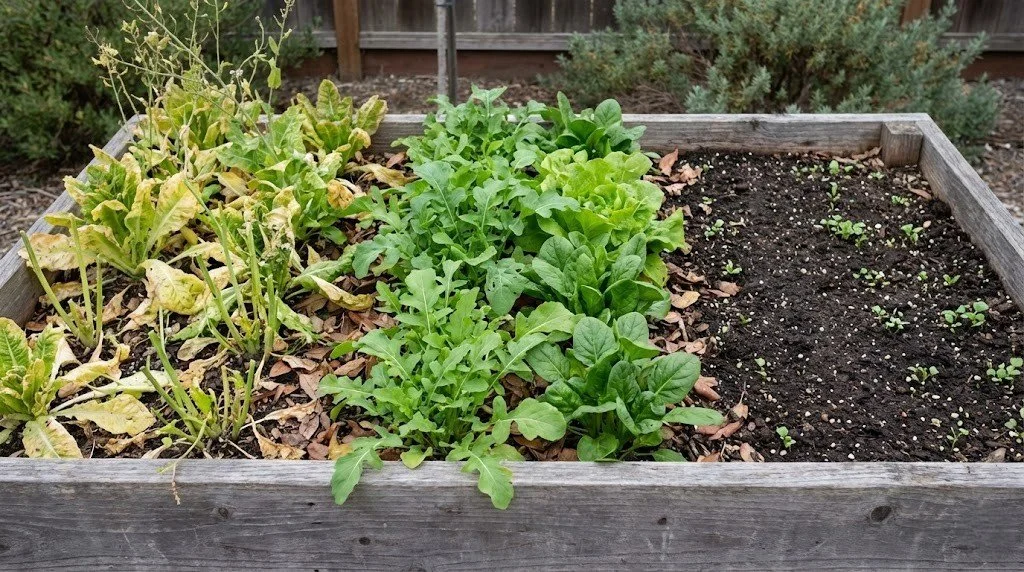
Succession planting produces more total food over the course of a season than planting everything at once. The reason is simple: staggered sowing dates spread your harvest across months instead of weeks, which means less waste and more usable produce. According to Cornell University's vegetable growing guides, succession planting can extend the harvest window for crops like lettuce and beans by 8-12 weeks compared to a single planting. In Santa Cruz's long growing season, that advantage is even more pronounced.
When to Choose Succession Planting
Succession planting is the smart move for any fast-maturing crop that you want to eat fresh rather than preserve. Lettuce is the classic example: sow a short row every two weeks from February through May (and again from September through November in Santa Cruz), and you will have tender salad greens on your table for months instead of a single glut that bolts before you can eat it all.
The same approach works beautifully for bush beans, cilantro, radishes, beets, and arugula. In the Pajaro Valley and coastal areas, where cool summer mornings keep lettuce and cilantro from bolting too fast, succession planting can stretch your harvest window even further than inland gardens. Set a recurring reminder on your phone every two to three weeks, and spend 15 minutes sowing a short row. That small habit produces remarkably steady results.
When to Choose All-at-Once Planting
Planting everything at once makes sense for crops that have a long growing season and a single harvest point. Tomatoes, peppers, eggplant, garlic, and winter squash all go in on one planting date because they need the full season to mature. There is no advantage to staggering these crops.
All-at-once planting is also the right strategy if you are growing specifically for preserving. If you want 40 pounds of tomatoes in one week for canning, or a big batch of basil for a summer's worth of pesto, planting everything at the same time gives you that concentrated harvest. Many Santa Cruz gardeners who do both fresh eating and preserving use a hybrid approach, and that is exactly the right instinct.
The Bottom Line for Santa Cruz Gardeners
Use succession planting for quick crops and all-at-once planting for long-season crops. In practice, this means planting your tomatoes, peppers, and squash all in one big spring planting day (mid-April to early May on the coast), while sowing lettuce, beans, cilantro, and radishes in small batches every 2-3 weeks throughout the season. Santa Cruz's mild climate gives us one of the longest succession-planting windows in the country, so take advantage of it.
This week: Sow one short row of lettuce (about 3 feet) and set a reminder to sow another row in two weeks. Keep going until mid-May, then switch to heat-tolerant varieties or pause until September.
For more on planning a productive garden calendar, check out our free Seasonal Planting Guide at [/your-garden-toolkit].
Frequently Asked Questions
Does succession planting really produce more food?
It produces more usable food over the season by spreading the harvest across months instead of weeks, which means less waste. Cornell Cooperative Extension advises spreading harvests over many weeks by sowing small amounts of a crop at intervals, for example planting lettuce every 10 to 14 days into early summer, rather than all at once.
Which crops are best for succession planting?
Fast-maturing crops you want to eat fresh: lettuce, bush beans, cilantro, radishes, beets, and arugula. Sow a short row every two to three weeks rather than all at once.
Which crops should I plant all at once?
Long-season crops with a single harvest point, like tomatoes, peppers, eggplant, garlic, and winter squash. There is no advantage to staggering these, and all-at-once planting also makes sense if you are growing for preserving.
When should I succession-sow lettuce in Santa Cruz?
Sow a short row every two weeks from February through May, then again from September through November. Switch to heat-tolerant varieties or pause around mid-May, since Santa Cruz's mild climate offers one of the longest succession-planting windows in the country.
