

Bush Beans vs. Pole Beans: Which Produces More?
A few of the product links in this guide are affiliate links. If you buy through one, Ambitious Harvest may earn a small commission at no extra cost to you, which helps keep these guides free. We only point to gear we would use in our own Santa Cruz garden. As an Amazon Associate, we earn from qualifying purchases. Read our full disclosure.
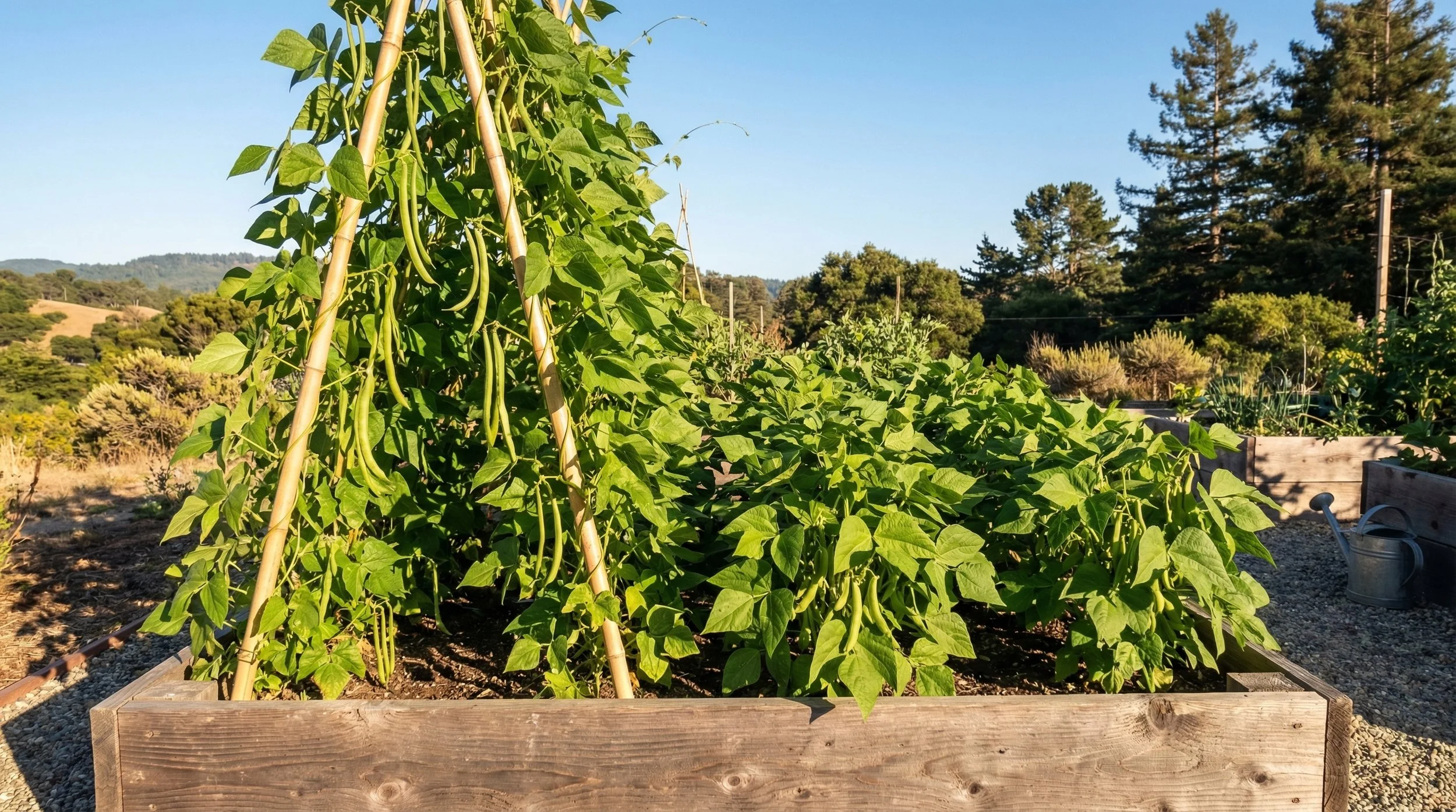
Pole beans produce significantly more food per square foot than bush beans, making them the better choice for small gardens. According to Oregon State University Extension, pole beans can yield substantially more per square foot than bush beans in the same ground area because they grow vertically and produce over a longer season. Bush beans are faster and easier, but if your garden space is limited (and in Santa Cruz, it often is), pole beans are the smarter investment.
When to Choose Bush Beans
Bush beans are the right call when you want fast results with minimal effort. Varieties like Provider, Contender, and Blue Lake 274 mature in about 50 days, need no support structures, and produce a concentrated harvest that is perfect for blanching and freezing in one batch.
They are also ideal for succession planting. In Santa Cruz, you can direct-sow bush beans every 3 weeks from mid-April through August and have fresh beans rolling in all summer. This works especially well in the Pajaro Valley where warmer temperatures speed germination. Bush beans also make a great cover crop between larger plantings, fixing nitrogen in the soil before your fall brassicas go in.
When to Choose Pole Beans
Pole beans are the productivity champion in a small garden. A single 4-foot row of Kentucky Wonder or Fortex pole beans, grown up a simple bamboo teepee, will outproduce an entire 4x8 bed of bush beans. The beans keep coming for 6-8 weeks as long as you pick regularly.
Flavor is another argument for pole beans. Many gardeners find that pole varieties like Romano, Fortex, and Scarlet Runner have a richer, more "beany" taste than their bush counterparts. The climbing habit also keeps pods off the ground, reducing slug damage (a real concern in fog-belt Santa Cruz). If you have a fence, arbor, or south-facing wall, just add some string or netting and you have a ready-made bean trellis.
The Bottom Line for Santa Cruz Gardeners
If your garden space is limited, grow pole beans. They produce more food in less ground area, and our long growing season gives them plenty of time to mature. Set up a teepee or string trellis along a sunny fence, plant Kentucky Wonder or Blue Lake pole beans in May, and you will be picking from July through September. Reserve bush beans for quick succession plantings, filling gaps between other crops, or for that one big batch of beans for the freezer.
This week: Build or buy a simple bean teepee (three 8-foot bamboo poles tied at the top) and set it in your sunniest bed. Plant 6-8 pole bean seeds around the base after your last frost date.
For more on growing beans and peas in California, check out our free Seasonal Planting Guide at Your Garden Toolkit.
Keep Reading
- Best Vegetables for Small Gardens in Santa Cruz
- Succession Planting for a Year-Round Harvest
- How to Fix Nitrogen in Your Soil with Cover Crops
- Sugar Snap Peas vs. Snow Peas: Which Grows Better Here?
Where to get seeds: For varieties that do well in our climate, we like Seeds Now, a California company selling non-GMO, open-pollinated, and heirloom seed. (Affiliate link, see our disclosure.)
Frequently Asked Questions
Which produces more beans in a small space?
Pole beans, by a wide margin. They can yield substantially more per square foot than bush beans in the same ground area because they keep producing along their vertical growth for weeks.
When would I choose bush beans instead?
Bush beans mature quickly, in roughly 50 days, and give a concentrated harvest that is handy for freezing. They are ideal for succession planting every few weeks or for filling gaps between other crops, and they need no trellis.
When should I plant pole beans in Santa Cruz County?
Plant after the last frost, around May, in your sunniest bed. Varieties like Kentucky Wonder or Blue Lake will keep producing into September given our long growing season, especially with regular picking.
