

Tomato trellising techniques in your California Garden
A few of the product links in this guide are affiliate links. If you buy through one, Ambitious Harvest may earn a small commission at no extra cost to you, which helps keep these guides free. We only point to gear we would use in our own Santa Cruz garden. As an Amazon Associate, we earn from qualifying purchases. Read our full disclosure.
Why Is Tomato Trellising Essential?
Treating your tomatoes right is key to a bountiful garden, especially in California. Here's the deal: tomatoes love the sun but hate sitting on the ground. That's where trellising comes in. It’s more than just keeping your garden tidy; it's about providing your tomatoes with what they need to thrive.
Firstly, trellising lifts your tomatoes off the ground, reducing rot, fewer pests, and better air circulation. Think of it as creating personal space for each tomato plant. Without trellising, your tomatoes are more likely to contract diseases from the soil or become a feast for bugs. Moreover, trellising helps your tomato plants get more sunlight, turning the spotlight on them to ensure they grow juicy and strong.
Picking tomatoes also becomes a breeze with trellising. No more bending over and searching through leaves on the ground. Your tomatoes will hang in plain sight, making harvest time quick and easy. Lastly, trellising saves space. Vertical growing means you can fit more plants into your California garden. More plants mean more tomatoes. If you want a thriving, healthy garden, trellising your tomatoes is the way to go. It's not just about growing plants; it's about growing them right.
What Are the Basics of Tomato Plant Structure?
Tomato plants come in two main types: determinate and indeterminate. Determinate tomatoes, often called "bush" tomatoes, grow to a fixed height and stop. They usually don't need much support beyond a simple cage or stake because their fruit ripens quickly, and the plant is done. Indeterminate or "vining" tomatoes keep growing and produce fruit until the cold stops them. These plants can get quite tall, and that's where trellising is handy. A trellis supports these long vines, helps manage plant health by keeping them off the ground, and can lead to more sun exposure and air circulation for your tomatoes. Understanding your tomato type is the first step in deciding how to support them in your California garden. According to UC Master Gardeners, concrete reinforcing wire cages (5 to 6 feet tall with 6-inch square mesh) are among the most effective support structures for indeterminate tomatoes.
What Are the Different Types of Trellising Techniques?
Keeping your tomatoes off the ground is key to healthy plants and abundant fruit. There are several trellis options to consider:
Stake and Weave: Drive stakes into the ground next to your tomato plants and use twine to create a support network. It's simple and cost-effective.
Tomato Cage: These ready-made structures surround the plant, offering support as it grows. Ideal for bush varieties.
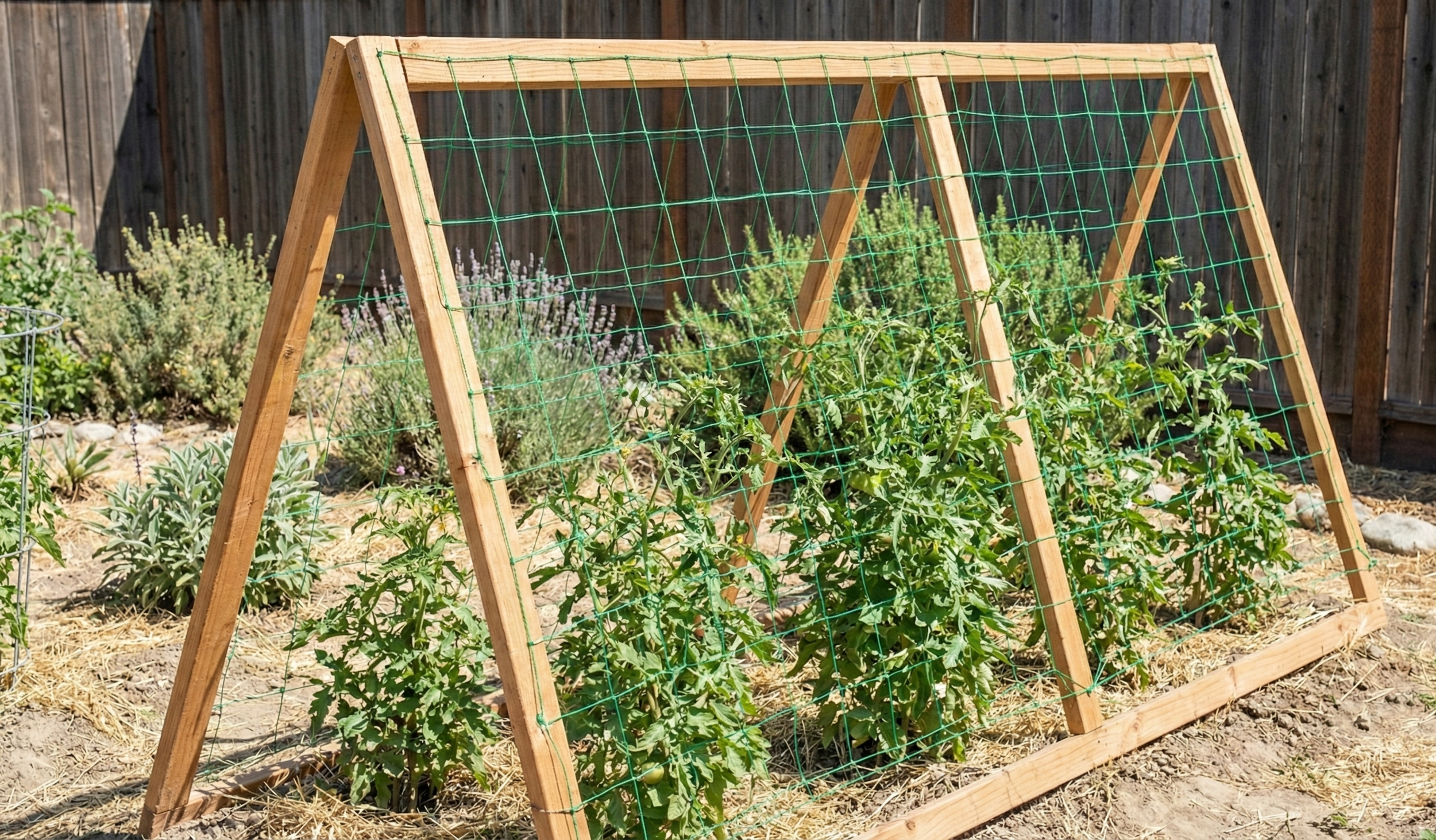
Trellis Nets: Great for larger gardens. Set up vertical or slanted supports and stretch a net for the plants to climb.
DIY Trellises: Let your creativity shine with trellises made from old wooden ladders, PVC pipes, or bamboo poles. This approach can be tailored to fit your garden's specific needs.
Each method has benefits, so consider your garden's size, tomato variety, and preference.
What Are the Benefits of Using a Trellis in Your California Garden?
Using a trellis in your California garden isn't just about keeping things tidy; it's a real help for your plants' health and yield. Trellises lift your plants off the ground, improving air circulation around the foliage, which reduces the risk of diseases that thrive in moist, stagnant air. Plants also get more sunlight, which is crucial for growth and helps prevent fungal diseases.
Then, there's the benefit of maximizing space. In California, where every inch of garden space is valuable, going vertical lets you grow more in less area. This is especially handy for small gardens or urban spaces. It also makes harvesting easier since you won't have to bend over as much, keeping your veggies clean and away from soil-borne pests. Plus, a garden with trellised plants looks organized and vibrant, adding aesthetic value to your space.
So, not only do trellises boost plant health and yields, but they also save space, ease the harvest process, and enhance your garden's beauty.
How Do You Choose the Right Trellis for Your Tomato Plants?
Selecting an appropriate trellis is crucial for a thriving garden. This choice should be simple yet effective, aiming to support your plants, maximize sunlight exposure, and simplify harvesting. Start by considering the type of tomatoes you are growing:
Determinate varieties (bush tomatoes) typically remain compact and may only require a short stake or cage.
Indeterminate varieties continue growing and require taller, sturdier support like a trellis or a tall cage.
Material: Choose between wood, which is classic and blends well with natural settings but requires maintenance, and metal, which is durable and low maintenance. Decide based on your readiness to maintain the structure.
Size: Ensure the trellis is tall enough to accommodate your tomato plants at their full height and sturdy enough to support them when laden with ripe tomatoes. Typically, a height of 4 to 6 feet suffices, but you may need to go taller for indeterminate varieties.
Design: The trellis design should be functional, supporting your tomatoes well and allowing good air circulation to prevent diseases. Options range from simple uprights with cross-sections to more elaborate structures. Choose a design that suits your garden's aesthetic and functional needs.
How Do You Train Tomato Plants to Climb?
Training your tomato plants to climb is more straightforward than it may seem and is crucial for healthier plants and a more productive harvest. Begin by selecting the appropriate trellis, which can vary from simple stakes to more elaborate systems, focusing on durability over cost.
As your plants grow, tie them to the trellis using soft materials like strips from old t-shirts or specialized plant ties. Avoid using anything sharp or too rigid that could damage the stems. Ties should be loose enough to allow growth but firm enough to provide support. Prune any suckers that sprout from the base to concentrate the plant’s energy on climbing and fruit production. Regularly inspect and adjust the ties to keep your plants well-supported and encourage upward growth.
What Are the Most Common Mistakes to Avoid When Trellising Tomatoes?
Effective trellising in your California garden can be undermined by common errors:
Starting too late: Begin tying plants when they are young to avoid difficulties with tall, unwieldy stems.
Using inappropriate materials: Avoid thin wire or rigid materials that could injure the plants. Soft ties are ideal.
Overcrowding plants: Ensure enough spacing between stakes or cages (typically 2 to 3 feet) to allow adequate light and air circulation.
Inadequate support: More robust or multiple supports might be necessary depending on the variety.
Ignoring plant variety needs: To prevent unnecessary challenges, tailor your trellising method to the specific growth habits and requirements of your tomato variety.
How Do You Maintain Your Tomato Trellis Throughout the Season?
Maintaining your trellis is vital for the health of your tomato plants:
Routine checks: Inspect your trellis weekly for any signs of damage or wear and repair any issues promptly to ensure continuous support.
Tying new growth: As tomatoes grow, tie new growth to the trellis to guide the plant upward, ensuring optimal sunlight and air circulation.
Pruning: For indeterminate varieties, prune any leaves that touch the ground and thin out denser areas to enhance airflow and reduce pest risks, focusing the plant’s energy on fruit production.
By adhering to these maintenance steps, you are setting the stage for a healthy, productive season.
How Can You Maximize Your Harvest with Effective Trellising?
The right trellising techniques can significantly enhance tomato yield, especially in California. Trellises support your plants, elevate them off the ground to reduce disease risk, and improve sunlight exposure and air circulation, all contributing to healthier plants and more abundant harvests. Whether using the stake-and-twine method, tomato cages, or elaborate trellis systems, the key is to optimize garden space and plant support. By implementing these strategies, you tidy up your garden and significantly boost your harvesting potential. Equip your garden with the right trellising technique and watch your tomato plants flourish.
Frequently Asked Questions About Tomato Trellising
What's the difference between determinate and indeterminate tomatoes for trellising?
Determinate (bush) tomatoes grow to a fixed height (3-4 feet), produce fruit all at once, and then stop. They need minimal support, often just a simple cage or short stake. Indeterminate (vining) tomatoes keep growing until frost, reaching 6-10 feet tall, and produce fruit continuously. These require substantial support like tall stakes, sturdy cages, or trellis systems. Check your seed packet or plant tag to know which type you're growing.
Which trellising method is best for beginners?
Tomato cages are easiest for beginners because you simply place them over young plants and let tomatoes grow through the rings. No tying required. For slightly more control, single stakes work well with determinate varieties. The stake-and-weave (Florida weave) method is more labor-intensive but excellent for rows of tomatoes. Start with cages your first year and experiment with other methods as you gain experience.
How tall should tomato supports be?
For determinate varieties, 3-4 feet is sufficient since plants stop growing at a set height. For indeterminate varieties, plan for 6-8 feet minimum. In Santa Cruz County's long growing season, indeterminate tomatoes can reach 8-10 feet by October, so taller is better. Cattle panels (from Mountain Feed & Farm Supply) make excellent tall, sturdy supports that last for years.
When should I start trellising tomato plants?
Install supports at planting time or within the first two weeks. Starting early is crucial because waiting until plants are tall creates problems: stems become brittle, root systems get disturbed by driving stakes, and you risk breaking branches. If using cages, place them over transplants immediately. If staking, install stakes before plants are 12 inches tall.
What materials work best for tying tomato plants?
Use soft, flexible materials that won't cut into stems as they grow. Good options include: cloth strips (cut old t-shirts into 1-inch strips), soft twine or jute, commercial plant ties, and Velcro garden tape. Avoid wire, thin string, or anything rigid. Tie loosely in a figure-8 pattern (loop around stake, cross, loop around stem) to allow stem expansion and prevent damage.
How do I prune tomatoes growing on a trellis?
For indeterminate tomatoes on single stakes, remove suckers (small shoots growing between the main stem and branches) to maintain 1-2 main stems. This focuses energy on fruit production rather than foliage. For caged tomatoes, pruning is optional since cages support multiple stems. Always remove leaves touching the ground to prevent soil-borne diseases. Use clean, sharp pruners and work when plants are dry.
What's the stake-and-weave (Florida weave) method?
The Florida weave uses stakes every 2-3 plants with twine woven between them, creating a "fence" of support. Drive sturdy stakes (6-8 feet tall) at row ends and every 2-3 plants. When plants are 12 inches tall, run twine along both sides, wrapping around each stake. Add new levels of twine every 8-12 inches as plants grow. This method is efficient for many plants but requires regular maintenance.
Can I reuse tomato cages and stakes?
Yes, and you should. Quality metal cages and wooden or metal stakes last many years with proper care. At the end of each season, remove plant debris, clean supports with a diluted bleach solution (1 part bleach to 9 parts water) to prevent disease carryover, let dry completely, and store in a dry location. Well-maintained supports can last 10+ years, making them a worthwhile investment.
Free Tomato Growing Resources
Download these free guides for growing tomatoes in Santa Cruz County:
Tomato Variety Selector - Find the perfect tomato varieties for your Santa Cruz microclimate. Includes determinate vs. indeterminate varieties, days to maturity, and recommendations by location.
Seasonal Planting Calendar - Know exactly when to plant tomatoes in your area. Timing affects how tall plants grow and how much support they'll need.
Garden Troubleshooting Guide - Common tomato problems like blossom drop, blossom end rot, and cracking fruit, plus solutions. Proper trellising helps prevent many issues.
Companion Planting Guide - Learn what to plant with tomatoes and what to keep separate. Basil is a classic tomato companion that fits well around trellised plants.
