

Sensory Garden for Babies and Toddlers: Engaging Little Ones in the Garden
A few of the product links in this guide are affiliate links. If you buy through one, Ambitious Harvest may earn a small commission at no extra cost to you, which helps keep these guides free. We only point to gear we would use in our own Santa Cruz garden. As an Amazon Associate, we earn from qualifying purchases. Read our full disclosure.
It's Never Too Early to Start
You might think gardening with a baby means waiting until they can walk, or at least sit up. But babies are sensory learners from day one. The garden offers a rich world of textures, scents, colors, and sounds that no toy can replicate.
Gardening with babies and toddlers isn't about teaching them to weed or plant seeds. It's about exposure. You're building positive associations with the outdoors and laying the groundwork for a lifetime of curiosity about the natural world. For a broader look at growing alongside your children, see our guide to gardening with kids.
Setting Up for Success
Before you head outside, a little preparation makes the experience better for everyone.
For Babies (0 to 12 months)
Use a blanket, bouncer, or carrier to keep them comfortable
Choose a shady spot or go out during cooler morning hours
Keep sessions short (15 to 20 minutes is plenty)
Bring items to them rather than expecting them to move around
For Toddlers (1 to 3 years)
Dress them in clothes that can get dirty
Set up a small "yes" space where they can explore freely
Have water available (for drinking and playing)
Accept that they'll eat some dirt. It happens.
| Sense focus | Example plants | Notes |
|---|---|---|
| Touch | Lamb’s ear, sage, dusty miller, succulents, lettuce, nasturtium leaves | Very tactile; supervise young children to prevent chewing on non-edible plants |
| Smell | Mint, basil, rosemary, lavender, lemon balm, scented geraniums | Encourage rubbing leaves and smelling fingers rather than pulling or crushing plants |
| Taste | Cherry tomatoes, strawberries, snap peas, cucumbers, basil, parsley, nasturtiums, pansies, calendula | Harvest only from untreated plants; use a consistent “ask first” rule |
| See | Zinnias, sunflowers, marigolds, rainbow chard, ornamental grasses | Bright colors and movement help draw attention. A rainbow garden is a fun way to organize by color and curiosity |
| Hear | Dried seed pods, ornamental grasses, rustling leaves | Garden sounds build awareness of wind, weather, and seasonal change |
Plants to Touch
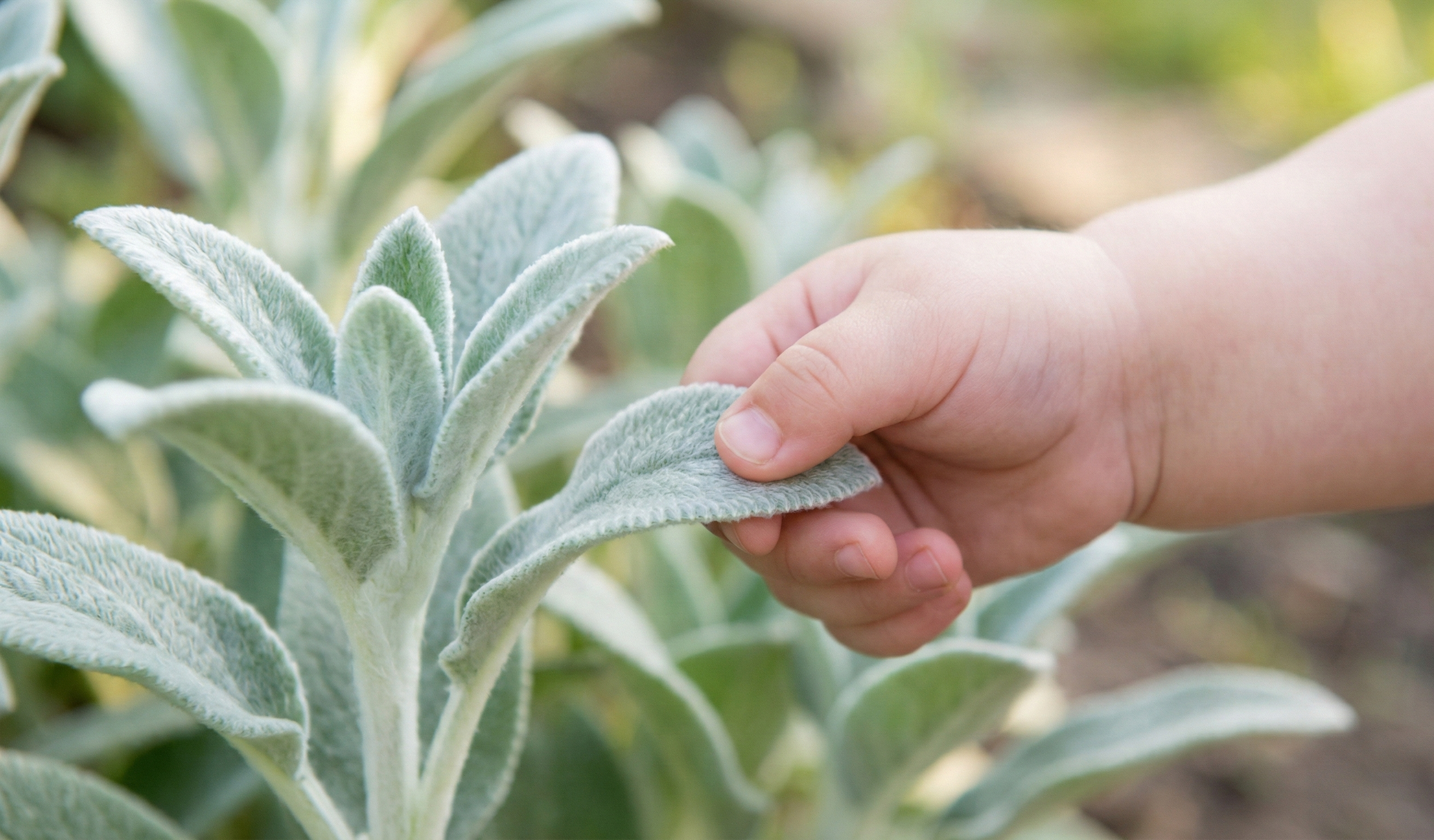
Texture is one of the first ways babies explore the world. The garden is full of safe plants with interesting surfaces.
Soft and Fuzzy
Lamb's ear (Stachys byzantina): irresistibly soft, kids love petting it
Sage: soft leaves with a satisfying texture
Dusty miller: silvery, velvety foliage
Smooth and Cool
Succulent leaves: plump, smooth, fascinating to touch
Lettuce: cool, crisp leaves straight from the garden
Nasturtium leaves: round, smooth, almost waxy
Bumpy and Textured
Strawberries: bumpy seeds on the outside
Squash and pumpkins: ridged, interesting surfaces
Tree bark: endless variety of textures to explore
Tips for Touching
Guide their hands gently at first
Name what they're feeling ("This is soft. This is bumpy.")
Let them explore at their own pace
Avoid plants with thorns, spines, or irritating sap
Plants to Smell
Babies have a strong sense of smell from birth. Fragrant plants create powerful sensory memories.
Herbs
Mint: strong, refreshing, hard to miss
Rosemary: piney, distinctive
Basil: sweet and familiar
Lavender: calming, classic garden scent
Lemon balm: bright citrus smell when leaves are rubbed
Flowers
Sweet alyssum: honey-like fragrance, low growing
Jasmine: sweet and strong (plant nearby, don't let them grab it)
Roses: classic, but watch for thorns
Scented geraniums: come in dozens of scents (lemon, rose, mint)
How to Explore Scent
Gently rub a leaf and hold it near (not on) their nose
Crush herbs between your own fingers and offer your hand to smell
Talk about what you smell ("This is mint. It smells fresh!")
Watch their reactions. They'll let you know what they like.
Plants to Taste (Safely)
Toddlers put everything in their mouths anyway, so why not make it intentional? Edible gardens give them safe options to explore taste.
Safe for Snacking
Cherry tomatoes: sweet, bite-sized, endlessly appealing
Strawberries: the ultimate garden treat
Snap peas: fun to pick, sweet to eat (and one of the easiest crops for kids to grow in Santa Cruz)
Blueberries: if you can get to them before the birds
Cucumbers: cool, mild, refreshing
Herbs for Tasting
Basil: sweet, mild, kid-friendly
Mint: strong but safe, fun reaction
Parsley: mild, good for chewing
Chives: mild onion flavor, some kids love it
Edible Flowers
Nasturtiums: peppery but safe
Violas and pansies: mild, pretty on a plate
Calendula petals: slightly tangy (learn more in our guide to growing calendula in Santa Cruz)
Safety First
Teach "ask first" before eating anything in the garden
Keep toxic plants completely out of reach (see list below)
Plants to See
Babies are drawn to high contrast and bright colors. Toddlers love spotting things and pointing them out.
Bright Colors
Zinnias: bold reds, oranges, pinks, yellows
Sunflowers: big, bright, impossible to miss
Marigolds: cheerful orange and yellow
Rainbow chard: colorful stems in red, yellow, orange
Movement and Interest
Ornamental grasses: sway in the breeze
Butterfly-attracting plants: built-in entertainment
Hummingbird favorites like salvia: exciting visitors
Things to Spot
Ladybugs, bees, butterflies
Birds visiting the garden
Worms and rolly pollies in the soil
Ripening tomatoes changing from green to red
Plants to Hear
Sound might seem unexpected, but the garden has its own soundtrack.
Garden Sounds to Notice
Leaves rustling in the wind
Bees buzzing around flowers
Birds singing and chirping
Water from a hose or watering can
Seeds shaking in a dried pod (save some lettuce or poppy heads)
Make Your Own Sounds
Crunch dry leaves together
Shake a gourd or dried seed pod
Splash in a water table or bucket
Tap sticks on different surfaces
Plants to Avoid
| Plant | Why avoid it |
|---|---|
| Foxglove | Contains cardiac glycosides; ingestion can affect heart rhythm |
| Oleander | Extremely toxic; even small amounts can be fatal if eaten |
| Lily of the valley | All parts are toxic and can cause serious heart symptoms |
| Daffodil and narcissus bulbs | Bulbs cause gastrointestinal upset and more severe symptoms if ingested |
| Angel’s trumpet (Brugmansia) | Highly poisonous; seeds, flowers, and leaves can be fatal if ingested |
| Castor bean | Seeds contain ricin; extremely toxic if chewed or swallowed |
| Tomato and potato leaves | Mildly toxic; fruit and tubers are safe when properly prepared |
| Rhubarb leaves | Toxic due to oxalic acid; stalks are safe to eat |
When in doubt, research any plant before letting little ones near it.
Simple Activities for Little Ones
For Babies
Tummy time on a blanket in the garden
Watching leaves move in the breeze
Listening to you narrate what you're doing
For Toddlers
Watering with a small can (expect mess)
Digging with a trowel or spoon
Picking ripe berries or tomatoes
Sorting rocks, seeds, or leaves by size
Hunting for bugs (a fairy garden makes a great base for toddler exploration)
Helping wash vegetables with a hose
Frequently Asked Questions About Sensory Gardens for Babies and Toddlers
What age can babies start enjoying a sensory garden?
Babies can start enjoying sensory gardens from birth! Even newborns benefit from outdoor time. They'll notice the movement of leaves, feel the breeze, and experience different temperatures. Around 3-4 months, they'll start reaching for textures. By 6-8 months, they're actively grabbing and exploring. The garden offers rich sensory experiences at every developmental stage in those first years.
What plants are safe for babies and toddlers to touch in Santa Cruz County?
Safe plants for babies and toddlers to touch include lamb's ear (soft and fuzzy), mint, basil, and sage (herbs with interesting textures), succulents (smooth and cool), lettuce, nasturtium leaves, and strawberry plants. Always supervise and avoid plants with thorns, irritating sap, or toxic parts. California natives like yarrow and California poppy are also safe for touching but not eating.
Can toddlers eat plants directly from the garden?
Yes, if you grow them organically without pesticides! Safe options for toddlers include cherry tomatoes, strawberries, snap peas, blueberries, cucumbers, and herbs like basil, mint, and parsley. Edible flowers like nasturtiums, violas, and calendula are also safe. Always teach your toddler to "ask first" before eating anything in the garden, and keep toxic plants completely out of reach.
What plants should I avoid with babies and toddlers in Santa Cruz gardens?
Avoid toxic plants including foxglove, oleander, lily of the valley, daffodil bulbs, castor bean, angel's trumpet, rhubarb leaves (stalks are safe), and tomato/potato leaves (fruit is safe). Also avoid plants with thorns like roses and barberry, plants with irritating sap like euphorbias, and anything treated with pesticides or chemicals. When in doubt, research before planting.
How long should garden sessions be with babies and toddlers?
For babies (0-12 months), keep sessions short. 15 to 20 minutes is plenty. They have limited attention spans and may get overstimulated. For toddlers (1-3 years), 20 to 45 minutes works well depending on their interest and energy level. Go during cooler morning hours in Santa Cruz County, especially in sunny microclimates like Boulder Creek and Scotts Valley. Follow your child's cues and end before they get fussy.
What's the best time of day for gardening with babies in Santa Cruz County?
Early morning (7-9 AM) is ideal in Santa Cruz County, especially during summer months. Coastal areas like Aptos and Capitola stay cooler with morning fog, while inland areas like Scotts Valley and Boulder Creek heat up quickly. Late afternoon (5-7 PM) also works well. Avoid midday sun, especially in warmer microclimates. Foggy days are perfect for longer garden sessions with little ones.
Do I need a special garden space for babies and toddlers?
No, you don't need a dedicated space! Start with what you have. Even a few pots on a patio work. Create a small "yes" zone where your toddler can explore freely without hearing "no" constantly. This might be a corner of your vegetable garden, a raised bed at toddler height, or a container garden on a deck. Safety is more important than size. Just remove toxic plants and secure any hazards.
What if my toddler eats dirt in the Santa Cruz garden?
It happens, and it's generally not harmful! Santa Cruz County soil is typically safe if you're not using pesticides or chemicals. Small amounts of dirt exposure may even support immune system development. However, if your toddler is consistently eating large amounts of dirt (pica), talk to your pediatrician. Keep compost bins closed, as decomposing material isn't safe to ingest.
Free Gardening Resources
Download these free guides for more gardening with kids information:
Seasonal Garden Tasks Checklist. Month-by-month garden activities you can do with little ones.
Companion Planting Guide. Plan a garden with kid-friendly edibles and sensory plants together.
Beginner Garden Setup Checklist. Start a family-friendly garden from scratch.
Additional Resources
How Do You Grow Together?
The time you spend in the garden with your baby or toddler might feel simple, but it adds up. You're building familiarity with the natural world, creating positive outdoor memories, and starting a habit that can last a lifetime.
Don't worry about productivity or mess. If your toddler spent the whole time digging one hole, or your baby just stared at a sunflower for ten minutes, that's a successful garden session.
