

Growing Mulberries in Santa Cruz County: The Overlooked Backyard Superfruit
A few of the product links in this guide are affiliate links. If you buy through one, Ambitious Harvest may earn a small commission at no extra cost to you, which helps keep these guides free. We only point to gear we would use in our own Santa Cruz garden. As an Amazon Associate, we earn from qualifying purchases. Read our full disclosure.
Mulberries might be the most underrated fruit tree you can grow in Santa Cruz County.
While we obsess over citrus, stone fruits, and berries, mulberry trees quietly produce pounds of sweet, juicy fruit with almost zero effort. Minimal spraying, optional pruning, good drought tolerance once established, and harvests so abundant you'll be giving fruit away to neighbors. Yet most home gardeners have never considered planting one.
Part of the problem is availability. UC Davis notes that mulberries are highly perishable and rarely seen in markets because the fruit is soft and has a very short shelf life. The California Rare Fruit Growers add that mulberries don't ship well, which means most people have never tasted a ripe one. That's a shame, because tree-ripened mulberries are extraordinary: often described as having complex sweetness with flavors somewhere between blackberry and honey, sometimes with grape or fig undertones depending on variety.
The other issue is mulberries' reputation as "messy" trees. And yes, they do drop fruit. But that's only a problem if you plant them over patios or driveways. Site them correctly, and that abundant fruit drop becomes a feature: fresh eating, baking, preserving, and happy birds all summer long.
Here's everything you need to know about growing mulberries in Santa Cruz County.
Why Do Mulberries Thrive in Santa Cruz County?
Mulberries are remarkably adaptable trees that succeed across a wide range of climates, and Santa Cruz County sits squarely in their comfort zone.
Climate Compatibility
The California Rare Fruit Growers describe mulberries as adaptable, with white mulberry and red mulberry quite tolerant of drought, pollution, and poor soil. Black mulberry is noted as more particular, best suited to Zone 7 and warmer with mild winters, which matches much of coastal California perfectly.
Mulberries are widely described as adaptable trees across roughly USDA Zones 4-9 depending on species and variety. Our zones 9b/10a are well within their range. They handle our mild winters without issue and thrive in our warm, dry summers.
Unlike many fruit trees, mulberries generally fruit reliably in mild-winter climates and are not as chill-dependent as stone fruits. This makes them consistent producers even in our warmest coastal and inland microclimates where peaches and apples sometimes struggle.
Drought Tolerance
CRFG notes that mulberry trees are fairly drought-resistant once established, making them well-suited to California's Mediterranean climate and water-conscious gardening. However, they add an important caveat: "If roots become too dry during drought, the fruit is likely to drop before it has fully ripened."
While mature mulberries can survive with less water than most fruit trees, supplemental summer irrigation improves fruit size, quality, and retention. Think of drought tolerance as a safety net, not a recommendation to skip watering entirely.
Soil Flexibility
CRFG recommends a warm, well-drained soil, preferably a deep loam, but mulberries adapt to less-than-ideal conditions better than most fruit trees. They tolerate sandy to clay soils as long as drainage is adequate. Our varied Santa Cruz County soils, from coastal sandy loams to inland clay, can all support healthy mulberry trees. Avoid shallow, chalky, or gravelly soils where roots can't develop properly.
Low Maintenance Requirements
Perhaps the biggest advantage of mulberries is how little they ask of you. CRFG states that mulberries are generally free of serious pests and diseases, and UC Davis confirms they have relatively few pest or disease problems in California. Compared to apples (codling moth, fire blight) or stone fruits (brown rot, peach leaf curl), mulberries are remarkably trouble-free and seldom require spraying.
What Types of Mulberries Can You Grow?
Before choosing a mulberry tree, understand the main species grown in California and their characteristics. For a deeper comparison, see our guide to the best mulberry varieties for Santa Cruz.
White Mulberry (Morus alba)
Despite the name, white mulberry fruit can be white, pink, red, purple, or black depending on variety. CRFG notes that white mulberry is the most widely grown mulberry species worldwide and includes many good fruiting varieties for home gardens. It's also the traditional food plant for silkworms.
Characteristics:
Most adaptable and vigorous of the mulberry species
Very cold-hardy
Fruit is typically very sweet with low acidity
Some seedling trees produce bland fruit; choose named cultivars for best flavor
Can become weedy in some climates due to vigorous self-seeding
Popular varieties:
'Illinois Everbearing': A Morus rubra × Morus alba hybrid that produces sweet, nearly black fruit over an extended season. Very reliable, cold-hardy, and adaptable. One of the most recommended varieties for home gardens.
'Shangri-La': Large fruit, sweet flavor, good for fresh eating.
Himalayan Mulberry (Morus macroura)
This species, sometimes sold under Morus alba, includes some of the most prized fruiting varieties.
Popular variety:
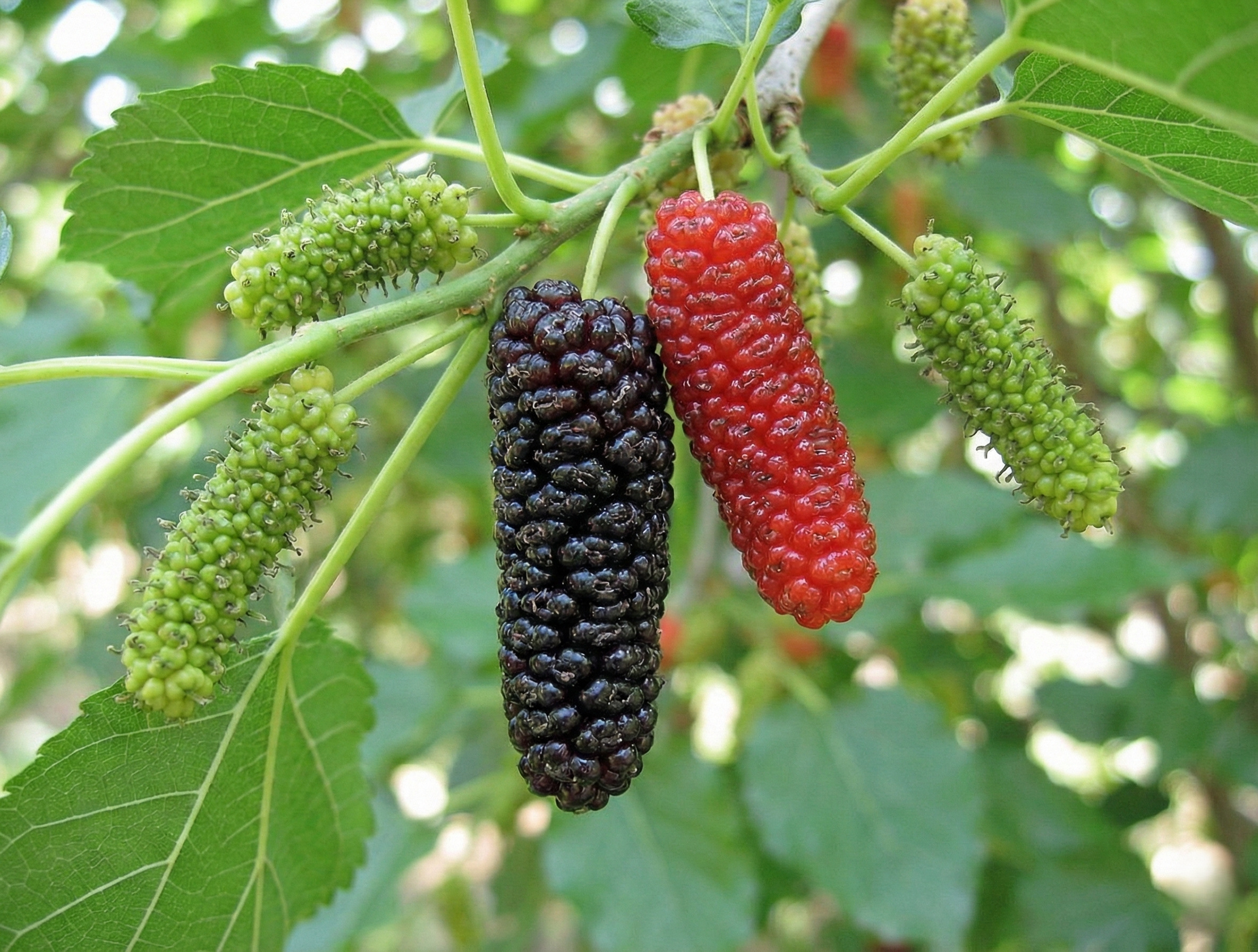
'Pakistan' (also sold as 'King White' or 'Shahtoot'): Classified as Morus macroura rather than true Morus alba, though often labeled as white mulberry in the nursery trade. Large, elongated fruit up to 3 inches long with exceptional honey-sweet flavor. Vigorous grower and a top choice for home gardens.
Black Mulberry (Morus nigra)
UC Davis notes that black mulberry is considered to have the finest-flavored fruit of all mulberry species, with complex flavor and good balance of sweetness and tartness.
Characteristics:
Slower growing and more compact than white mulberry
Fruit is always dark purple to black
Richer, more complex flavor than white mulberry
Best for fresh eating and preserves
CRFG notes it's limited to Zone 7 and warmer, which includes Santa Cruz County's mild winters
Popular varieties:
'Black Beauty': Large fruit with excellent flavor. A standard black mulberry for California gardens.
'Persian' (species itself): Traditional black mulberry, intensely flavored, long-lived trees.
Red Mulberry (Morus rubra)
Native to eastern North America, red mulberry is less commonly grown in California. It hybridizes readily with white mulberry, and many "red mulberry" trees in cultivation are actually hybrids.
Characteristics:
Native to humid eastern forests; less adapted to California's dry summers
Fruit quality is good but generally considered inferior to black mulberry
More disease-susceptible than other species
Not the best choice for Santa Cruz County as a pure species, though hybrids like 'Illinois Everbearing' perform well
Fruitless Mulberry (Morus alba 'Fruitless')
Sold as shade trees, fruitless mulberries are male clones that produce no fruit. They're sometimes recommended for areas where fruit drop would be problematic. Note that male trees produce pollen, which is a significant allergen for some people. If you want mulberries to eat, avoid these.
How Should You Choose the Right Variety for Your Garden?
For Santa Cruz County gardens, focus on varieties with proven performance in mild-winter, Mediterranean climates. The following are popular choices based on nursery availability and grower experience.
For Best Flavor
'Pakistan' (Morus macroura): If you can only plant one mulberry, this is a top candidate. The elongated fruit looks almost like a stretched blackberry and has exceptional sweetness. Vigorous grower that can be kept smaller with pruning.
Black Mulberry (any named variety): For the most complex, berry-like flavor with some tartness to balance the sweetness. 'Black Beauty' is widely available.
For Extended Harvest
'Illinois Everbearing' (Morus rubra × alba hybrid): Produces fruit over a longer period than most varieties, extending your harvest window. Very reliable and adaptable. Cultivar guides note its long harvest season and precocious bearing.
For Compact Spaces
'Dwarf Everbearing': A smaller tree (8-10 feet) suitable for small gardens or large containers. Fruit is smaller but production is good. Note that there's some confusion in the nursery trade between this variety and others; purchase from reputable sources.
Black Mulberry: Generally more compact than white mulberry varieties, reaching 15-20 feet rather than 30-40 feet.
For Container Growing
'Dwarf Everbearing' or any variety kept small through pruning. Mulberries respond well to container culture if given adequate root space and consistent water.
How Should You Plant and Establish Mulberry Trees?
Mulberries are forgiving, but proper planting sets them up for long-term success.
Site Selection
Sun: Full sun is ideal; mulberries tolerate light shade but produce best fruit in at least 6-8 hours of direct sunlight.
Space: Standard trees can reach 30-40 feet tall and wide; plan accordingly. Dwarf varieties and those kept pruned can be maintained at 10-15 feet. Black mulberries are naturally more compact at 15-25 feet.
Fruit drop consideration: This is the most important siting factor. Don't plant over patios, decks, walkways, driveways, or anywhere the purple-staining fruit would be problematic. Plant in lawn areas, orchards, or locations where fallen fruit can be collected or left for wildlife.
Root space: Mulberries have vigorous root systems that can lift pavement or interfere with structures if planted too close. Allow generous space from foundations, patios, septic systems, and underground utilities. At least 15-20 feet is wise.
Drainage: Mulberries tolerate various soils but not standing water. Avoid low spots where water collects.
When to Plant
Plant bare-root trees in winter (December through February) while dormant. Container-grown trees can be planted fall through spring, though fall planting allows root establishment before summer heat.
Planting Process
Dig a wide hole two to three times the width of the root ball but no deeper than the root ball height.
Set the tree at the same depth it grew in the nursery. Planting too deep causes problems.
Backfill with native soil. Don't amend the planting hole; this discourages roots from spreading into surrounding soil.
Water deeply to settle soil and eliminate air pockets.
Mulch with 3-4 inches of organic mulch, keeping it several inches away from the trunk.
Stake only if necessary for support in windy sites; remove stakes after one year.
First-Year Care
Water deeply once or twice weekly during dry periods for the first year. The goal is to encourage deep root growth. Mulberries establish relatively quickly compared to other fruit trees.
What Ongoing Care Do Mulberry Trees Need?
Once established, mulberries require remarkably little care.
Watering
Established trees: Mulberries are fairly drought-resistant but produce better fruit with some supplemental irrigation during dry summer months. CRFG emphasizes that if roots become too dry, fruit is likely to drop before ripening. Deep watering every 2-4 weeks during fruit development improves size, quality, and retention.
Young trees: Water weekly during the first two growing seasons, then gradually reduce as trees establish.
Fertilizing
Mulberries are not heavy feeders. In most garden soils, they need little to no fertilization.
If growth seems weak: Apply a modest dose of balanced fertilizer in early spring, following label directions. Avoid excessive nitrogen, which promotes leafy growth at the expense of fruit.
In poor soils: Annual light fertilization and mulching with compost helps.
Pruning
CRFG notes that mulberries tolerate heavy pruning and can even be pollarded. Fruit is borne on current season's growth on spurs and short shoots, so pruning doesn't eliminate the crop. Prune to:
Control size: Mulberries can grow large. Winter pruning can maintain smaller dimensions.
Remove dead or crossing branches: Standard fruit tree maintenance.
Improve air circulation: Open up the canopy if it becomes too dense.
Shape young trees: Establish a strong framework in the first few years.
Prune in winter while dormant. Mulberries bleed sap if pruned in spring; this doesn't harm the tree but can be messy. If you want to start new trees from your existing one, see our guide to mulberry propagation through cuttings, grafting, and layering.
Pest and Disease Management
This is where mulberries really shine. They are generally free of serious pests and diseases in California and seldom require spraying, especially compared to apples or stone fruit.
Potential issues (uncommon):
Popcorn disease: A fungal problem (Ciboria carunculoides) that affects developing fruit, causing them to become white and puffy rather than developing normally. Occurs primarily on white mulberries and hybrids. Remove and destroy affected fruit as they appear.
Birds: The main "pest." Birds love mulberries. Plant extra for them, or cover with netting if you want to keep all the fruit.
Scale insects: Occasionally present but rarely problematic. Horticultural oil spray in winter controls them if needed.
For most Santa Cruz County gardens, you'll never need to spray or treat mulberry trees for anything. If you do run into issues, our troubleshooting guide for mulberry problems covers solutions for the most common concerns.
When and How Should You Harvest Mulberries?
Mulberry harvest is simple but requires attention to timing and some acceptance of imperfection.
When to Harvest
Ripe mulberries detach easily. The common harvest method is to lay a sheet under the tree and shake the branches so ripe fruit falls. If you have to tug, it's not ready.
Harvest method: Spread a clean tarp or sheet under the tree and shake branches. Ripe berries fall; unripe ones stay attached. Repeat every day or two during peak season.
Season: USDA Forest Service notes that mulberry fruits generally ripen June through August in North America. In Santa Cruz County, expect harvest typically in June and July, with some variability by variety and microclimate. Everbearing types may produce intermittently for several months.
Handling and Storage
Mulberries are extremely perishable. They don't store or ship well, which is why you never see them in stores.
Fresh: Eat immediately or refrigerate for 2-3 days maximum.
Frozen: Spread in a single layer on a baking sheet, freeze until solid, then transfer to bags. Frozen mulberries keep for months.
Staining warning: Ripe mulberries stain everything. Wear clothes you don't mind turning purple, and pick before the fruit gets too soft.
Uses for Mulberries
Mulberries are versatile in the kitchen (and we cover recipes and preservation methods in our full guide to harvesting and using mulberries):
Fresh eating: The obvious choice. Tree-ripened mulberries need no embellishment.
Smoothies and shakes: Frozen mulberries blend beautifully.
Jams and preserves: Mulberries make excellent jam, often combined with other fruits for complexity.
Baking: Use like blackberries in pies, cobblers, muffins, and cakes.
Wine and cordials: Traditional use in many cultures.
Drying: Dried mulberries are sweet and chewy, similar to raisins.
Syrup: Cook down with sugar for pancake syrup or cocktail mixer.
How Can Mulberries Fit Into Your Santa Cruz Landscape?
Beyond fruit production, mulberries serve multiple landscape functions.
Shade Trees
Mature mulberries provide excellent shade. Their large, heart-shaped leaves create dense canopy coverage. Just plant where fruit drop won't be a problem.
Wildlife Habitat
Mulberries attract a wide variety of birds, from mockingbirds to cedar waxwings to wild turkeys. If you're creating wildlife habitat, mulberries are an excellent addition. The extended fruiting season provides food during a critical time when many other natural food sources are scarce.
Chicken and Livestock Forage
If you keep chickens, a mulberry tree planted where they can access fallen fruit provides excellent forage and enrichment. The fruit is nutritious, and chickens will clean up drops before they can become a mess.
Edible Landscaping
Mulberries fit well into edible landscape designs. Their attractive form, interesting bark on older specimens, and abundant fruit production make them useful specimen trees, especially in locations where their size and fruit drop are assets rather than liabilities.
Where Can You Find Mulberry Trees in California?
Mulberries aren't as widely available as other fruit trees, but several sources serve California gardeners.
Local and Regional Nurseries
Call ahead to check availability:
San Lorenzo Garden Center (Santa Cruz): Occasionally stocks fruiting mulberries
Sierra Azul Nursery (Watsonville): May carry or special-order varieties
Dig Gardens (Santa Cruz): Worth checking for unusual edibles
Online Specialty Nurseries
Bay Laurel Nursery (Atascadero): Good variety selection, ships to California
One Green World (Oregon): Wide mulberry selection, ships bare-root
California Rare Fruit Growers
The California Rare Fruit Growers (CRFG) organization often has mulberry scion wood or small plants available through members. The Monterey Bay chapter covers our area and is an excellent resource for unusual fruit varieties.
Frequently Asked Questions
Are mulberries messy?
Yes, during fruiting season. The fruit drops when ripe, and it stains. This is only a problem if you plant over paving or areas where staining matters. Site the tree appropriately and the "mess" becomes a harvest.
How big do mulberry trees get?
Standard white mulberry trees can reach 30-40 feet tall and wide. Black mulberries are smaller, typically 15-25 feet. Dwarf varieties and pruning can keep trees under 15 feet.
How long until my tree produces fruit?
Grafted garden mulberries are often precocious and may bear within a few years of planting, with full production developing over time. This is faster than most fruit trees.
Do I need two trees for pollination?
Most fruiting mulberries will produce a good crop as solitary trees. Female varieties often set fruit without pollination (parthenocarpically). You don't need to plant multiple trees for a harvest.
What's the best mulberry variety for eating fresh?
'Pakistan' (Morus macroura) has exceptionally sweet, large fruit. Black mulberry varieties offer more complex flavor with slight tartness. Either is excellent for fresh eating.
Can I grow a mulberry tree in a container?
Yes, with caveats. Choose a dwarf variety or be prepared to prune heavily. Use at least a 20-gallon container and expect to water frequently. Container mulberries won't produce as heavily as in-ground trees but can still yield useful harvests.
How do I keep birds from eating all my mulberries?
You probably can't. Bird netting works but is difficult on large trees. Most mulberry growers accept sharing with birds; the trees typically produce far more fruit than any family can use. Consider the birds part of the ecosystem service.
Why doesn't my mulberry tree produce fruit?
Possible causes include: too young (give it a few years), insufficient sunlight, male tree (no fruit), stress from recent transplanting, or late frost damage to developing flowers. If the tree is healthy and several years old in a sunny location, be patient.
Are mulberry roots invasive?
Mulberries have vigorous root systems that can lift pavement or interfere with structures if planted too close. Give trees at least 15-20 feet from structures, septic systems, and paving.
Are there thornless mulberries?
Yes, all common mulberry varieties are thornless. You may be thinking of wild blackberries, which are thorny. Mulberries are completely thornless.
Are all mulberry fruits edible?
All fruits from Morus species (white, black, red, and Himalayan mulberry) are edible. The unrelated "paper mulberry" (Broussonetia papyrifera) is not a true mulberry and its fruit is not typically eaten.
Do mulberries spread or become invasive?
CRFG notes that white mulberry is considered a weed tree in some regions due to its vigor and prolific self-seeding. Seedlings are easy to remove when young. The trees themselves don't spread by suckers or runners like some fruit plants.
What about mulberry allergies?
Start Your Mulberry Journey
Mulberries offer something rare in fruit growing: abundant harvests with minimal effort. Little to no spraying, occasional pruning if you want, and forgiving of neglect. Just plant, water when young, and wait for the fruit to arrive.
In a few years, you could be harvesting pounds of fruit that most people have never tasted. Your neighbors will wonder what that amazing tree is. Your kids will have purple-stained smiles all summer. And you'll wonder why you didn't plant one sooner.
Find a spot away from the patio, order a tree this winter, and join the small club of gardeners who know the secret of mulberries.
Free Gardening Resources
Know Your Microclimate Worksheet: Understand your specific Santa Cruz County growing conditions
Seasonal Planting Calendar: Month-by-month guidance for Santa Cruz County
Garden Troubleshooting Guide: General problem-solving for vegetable and fruit gardens
