

How Much Do I Really Need to Water My Garden in Winter in Santa Cruz County?
A few of the product links in this guide are affiliate links. If you buy through one, Ambitious Harvest may earn a small commission at no extra cost to you, which helps keep these guides free. We only point to gear we would use in our own Santa Cruz garden. As an Amazon Associate, we earn from qualifying purchases. Read our full disclosure.
Santa Cruz County's winters are cool, wet, and gentle on plants, which means most in-ground gardens need far less watering than many of us are used to giving them. Once storms settle in, rain and low evaporation do nearly all the work, especially if you garden in the San Lorenzo Valley or near the coast.
Winter is the season when you can usually turn irrigation off and focus instead on drainage, soil health, and a few special-case plants that still need attention. If you're used to checking your watering schedule every few days in summer, winter offers a welcome break. Your job shifts from delivering water to managing what nature provides.
In this guide, I'll walk you through what winter actually looks like here (backed by local climate data), break down watering needs by microclimate, and help you identify the few situations where you might need to intervene with a hose or drip system.
What Winter Actually Looks Like Here
In the city of Santa Cruz, long-term climate normals tell a very consistent story.
January and February each average about 5 to 6 inches of rain, delivered in a handful of storms rather than daily showers. Daytime highs hover near 60°F, and nights near 40°F, so plants grow slowly and lose water to the air much more slowly than they do in spring or summer.
From a water-needs perspective, that means a typical garden bed might only "use" roughly 1 to 1.5 inches of water in a winter month through evapotranspiration (the combination of evaporation from soil and water loss through plant leaves). Meanwhile, the sky often delivers several times that amount.
In other words: in open ground that actually receives the rain, the limiting factor is drainage and soil structure, not irrigation. Your main concern isn't whether your plants are getting enough water. It's whether your soil is handling all the water it's receiving.
This is why winter garden prep focuses on improving drainage, adding organic matter to heavy clay soils, and ensuring plants aren't sitting in standing water. The water is coming whether you want it or not.
How Often Should You Water by Microclimate: A Data-Driven Approach?
One of the things that makes Santa Cruz County gardening both challenging and fascinating is how dramatically conditions vary across short distances. Understanding Santa Cruz microclimates is key to knowing what your garden actually needs. A garden in Boulder Creek operates under completely different rules than one in Aptos or Watsonville. Here's what the data tells us about winter water needs in each major microclimate zone.
San Lorenzo Valley and the Mountains: Soaked but Not Foggy
San Lorenzo Valley sits on the wettest side of the county's winter story.
Hydrology reports show average annual rainfall around 50 inches in Ben Lomond and 55+ inches near Lockheed, among the highest totals in the county. Those totals are driven by repeated winter storms that can drop 6 to 8 inches in midwinter months and keep the soil profile saturated for long stretches. You can track current conditions through the San Lorenzo Valley Water District's local rainfall page.
Reference evapotranspiration (ET₀) over the valley is roughly 30 inches per year, actually a bit higher than at the foggier coast, but winter ET is only a small slice of that annual total. When you combine high winter rain with low ET, established in-ground trees and shrubs almost never need irrigation once the rainy pattern is underway.
Practical Guidance for San Lorenzo Valley and Mountain Gardens
Turn irrigation off by late fall and plan to leave it off from roughly December through February for in-ground plants.
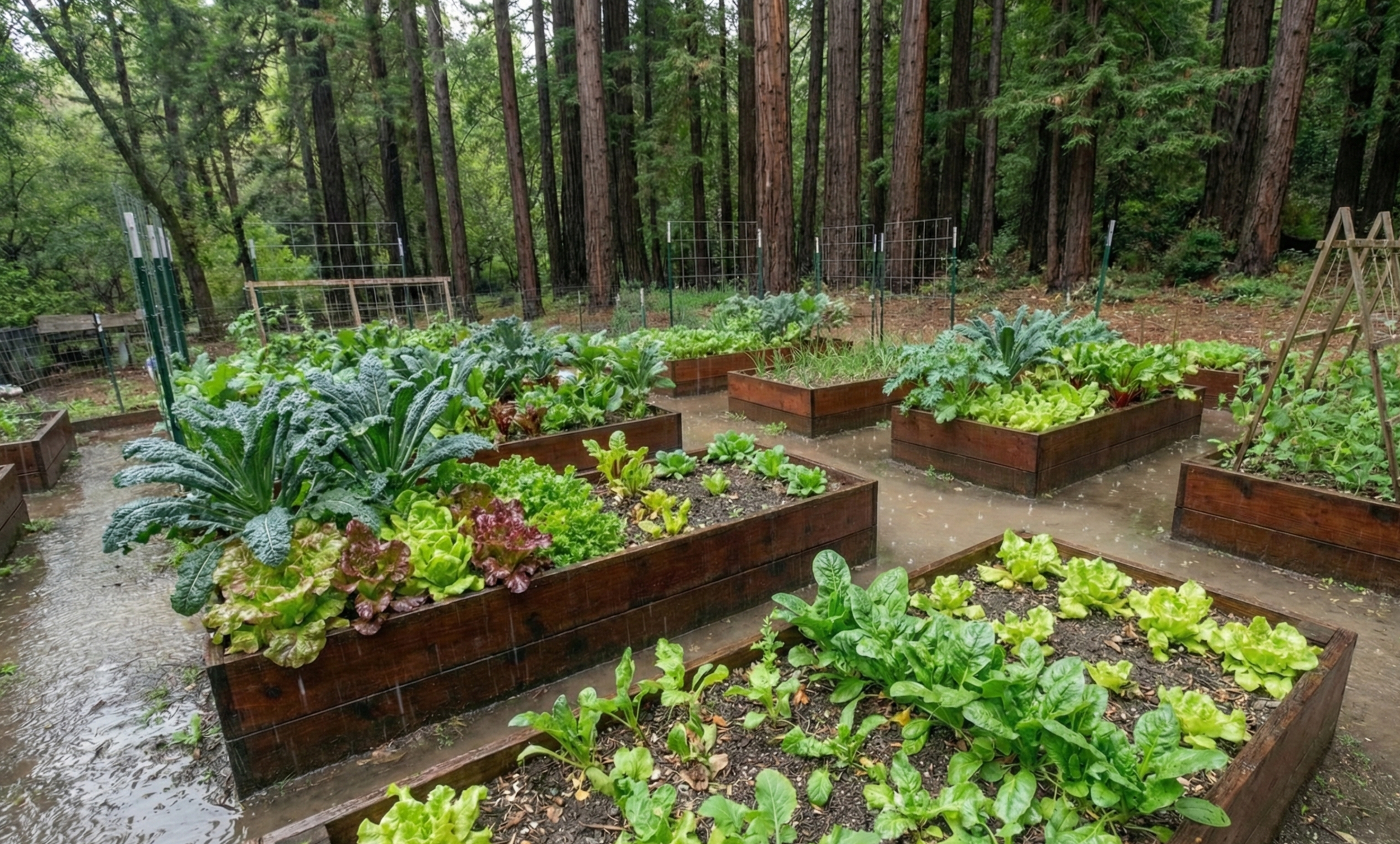
Water only during multi-week midwinter dry spells on steep slopes, under dense redwoods, or in covered/raised beds that storms don't actually wet.
Expect clay and loam soils to stay moist for weeks after a 2 to 3 inch storm. Check 4 to 6 inches down before you even think about watering.
Focus your energy on drainage. If you notice standing water or chronically soggy areas, consider raised beds or French drains for future plantings.
The redwood canopy creates one important exception worth noting: trees intercept a significant amount of rainfall before it reaches the ground. If your garden sits directly under large redwoods, the soil may receive less moisture than you'd expect from rainfall totals alone. In these spots, a quick soil check during dry spells is worthwhile.
Santa Cruz Coastal: Less Rain on Paper, More Help from Fog
Coastal neighborhoods around the city of Santa Cruz (from the Westside to Seabright and Live Oak) are somewhat drier on paper but cushioned by the marine layer.
Long-term records put annual rainfall around 30 to 33 inches at city-level stations, roughly 40% less than the wettest mountain gauges. January and February still deliver about 5 to 6 inches each, and the cool marine air brings frequent fog, drizzle, and heavy dew that keep surfaces damp between storms.
Because winter highs linger near 60°F and ET stays low, those 5 to 6 inches per month usually far exceed the 1 to 1.5 inches most beds would actually use, as long as the beds are out in the open and exposed to rainfall. Fog and dew add light but frequent moisture that slows drying even between storms.
Practical Guidance for Coastal Santa Cruz Gardens
Keep irrigation off all winter for established in-ground landscapes.
Water only in specific situations: containers and troughs under eaves, side yards or patios that barely see rain, and newly planted seedlings that haven't rooted in yet.
After any storm that drops about an inch or more, assume beds are reset. Skip watering for at least a week, often longer, unless a warm, windy high-pressure pattern settles in.
Use the finger test: if soil 3 to 4 inches down still clumps and feels cool and moist, you can safely skip the hose.
The coastal microclimate's secret advantage is consistency. You won't see the temperature swings or extended dry periods that catch inland gardeners off guard. The marine layer acts like a blanket, moderating conditions and keeping things damp.
Watsonville and Pajaro Farmlands: Drier, but Winter Still Does the Work
The Pajaro Valley and Watsonville farmlands sit in a slightly different winter pattern: milder inland air, valley fog, and somewhat lower annual rainfall.
Watsonville climate records show about 22 to 25 inches of rain per year, noticeably less than Santa Cruz city or San Lorenzo Valley. January typically brings around 4 to 5 inches of rain, with February adding another 3 to 4 inches, still plenty for most garden and field soils to stay moist if they drain reasonably. The Western Regional Climate Center maintains detailed historical data for the Watsonville area.
Even though annual totals are lower, those midwinter inches still exceed what garden beds are using because ET remains low and rainfall is concentrated in this season. The main differences for gardeners are soil type and drainage: heavy clay flats remain waterlogged, while lighter sandy loams near valley edges dry a bit faster between storms. The county's hydrology assessment provides more detail on how water moves through different soil types across the region.
Practical Guidance for Watsonville and Pajaro Valley Gardens
On heavier soils, turn irrigation off for the core of winter. Only water if a warm, windy dry spell runs 2 to 3 weeks and the soil is powdery several inches down.
On sandier patches or in raised beds, plan for an occasional deep soak during long dry breaks, not routine weekly watering.
Pay attention to your soil type. The Pajaro Valley has everything from heavy clay to sandy loam within a few miles. Know what you're working with.
For folks near fields, it's worth noting that the same 3 to 5 winter inches that refill ponds and ditches are also saturating farm soils, which is why growers worry more about mud and access than water shortage this time of year. Your home garden follows the same pattern.
Behind the Numbers: Why Winter Irrigation Usually Isn't Necessary?
If you're the type who likes to understand the "why" behind gardening advice, here's the simple math that explains winter watering.
Plants need water to grow and to regulate their temperature (through transpiration, which is basically plant sweating). The amount they need depends on temperature, humidity, wind, and how much sunlight they're receiving. Scientists measure this as "reference evapotranspiration" or ET₀.
In summer, a Santa Cruz garden might have an ET rate of 4 to 5 inches per month, with zero rainfall to offset it. That's why summer irrigation is essential.
In winter, ET drops to roughly 1 to 1.5 inches per month because of cooler temperatures, shorter days, and higher humidity. Meanwhile, rainfall delivers 4 to 8 inches per month in most of the county. The math is simple: supply dramatically exceeds demand.
The only situations where this equation breaks down are:
Covered areas that don't receive rainfall (under eaves, dense tree canopy, covered patios)
Containers and raised beds that drain quickly and have limited soil volume
New plantings that haven't developed root systems to access deeper moisture
Extended dry spells (two or more weeks without measurable rain)
If none of these apply to your situation, winter rain has you covered.
| Region | Approx. annual rain | Typical Jan rain | Winter irrigation for in-ground plants |
|---|---|---|---|
| San Lorenzo Valley / mtns | 50–55+ in/yr | 6–8 in | Irrigation off all winter; water only under cover or on steep, fast-draining slopes |
| Santa Cruz coastal | 30–33 in/yr | 5–6 in | Irrigation off Dec–Feb; water pots and rain shadow zones only |
| Watsonville / farmlands | 22–25 in/yr | 4–5 in | Mostly off; one deep soak in sandy or raised beds during long dry spells |
What Local Rules Already Assume
Water efficiency rules in Santa Cruz County are built around the assumption that winter rain should replace your irrigation system.
The City of Santa Cruz's landscape code requires rain sensors or smart controllers that shut off irrigation during and after measurable rainfall. The County of Santa Cruz has similar requirements for water-efficient landscaping. Prohibited-use rules explicitly ban watering while it is raining and within a short window after significant rain, reinforcing the idea that you should let the soil use what just fell before irrigating again.
For home gardeners, this creates an easy behavior shift: match your controller settings to both the law and the climate. Off for most of winter, with occasional manual cycles only when a genuine dry spell and dry soil line up.
If you have a smart irrigation controller, this is the season when it really earns its keep. A properly programmed controller with a rain sensor will do exactly what you should be doing manually: shut down when storms arrive and stay off until conditions warrant otherwise.
The Exceptions: When to Actually Water in Winter
While the general rule is "turn it off and relax," there are a few situations where winter watering makes sense.
Containers and Pots
Container plants are the most common exception. Even in winter, pots under eaves or against walls may receive little to no rainfall. Their limited soil volume dries faster than in-ground beds, and they can't tap into deeper moisture reserves.
Check your containers every week or two during dry stretches. If the top few inches are dry, give them a good soak. But don't water on autopilot. A container in full winter rain exposure may need nothing for weeks.
Covered Growing Areas
If you're growing under a hoop house, cold frame, or dense tree canopy, the plants inside are essentially in a permanent dry zone. These areas need manual watering throughout winter, though less frequently than summer.
New Transplants and Fall Plantings
Plants you put in the ground in fall need help establishing roots before they can tap into deeper moisture. Knowing your local frost dates also helps you time fall planting for the best root establishment. Water new transplants during any dry spell longer than a week until they're well rooted (usually by late winter).
Cool-season vegetables planted in fall (like broccoli, kale, and lettuce) are generally fine once established, but check them during extended dry periods, especially if they're in raised beds with faster drainage.
Unseasonable Dry Stretches
Every few years, we get an extended dry spell in December, January, or February. If it's been two or three weeks without significant rain and the soil is dry several inches down, a deep watering for established beds is reasonable. But wait for the soil to tell you it needs water rather than watering on a calendar schedule.
Simple Soil Checks That Tell You What to Do
The best irrigation advice I can give you is this: check your soil before you water.
The Finger Test
Push your finger 3 to 4 inches into the soil. If it feels cool and moist and the soil clumps together when you squeeze it, you don't need to water. If it's powdery and dry that deep, consider watering.
The Screwdriver Test
Try pushing a long screwdriver into the ground. In moist soil, it slides in easily. In dry soil, you'll meet resistance. This is a quick way to check multiple spots without getting your hands dirty.
The Visual Check
After a storm, observe where water pools and where it drains quickly. This tells you about your soil structure and drainage patterns. Areas that stay soggy for days have drainage issues worth addressing. Areas that dry out quickly may need more attention during dry spells.
Winter Tasks to Focus on Instead of Watering
Since you're not spending time on irrigation, winter is perfect for other garden improvements.
Improve Drainage. If you noticed standing water during storms, now is the time to plan fixes: raised beds, French drains, or soil amendments. Don't try to dig in saturated soil, but make notes and plans for when things dry out enough to work.
Build Soil Health. Add compost and organic matter to beds that aren't actively planted. Mulch and healthy soil structure work together to hold moisture and protect roots. The winter rains will help work amendments into the soil. If you're new to making your own, our composting guide walks you through the basics. Mulch around perennials to protect roots and reduce erosion. Research shows that good soil management is one of the most effective ways to maintain consistent moisture levels in garden beds.
Plan for Spring. Use the downtime to order seeds, plan your spring garden layout, and get supplies ready for when planting season begins.
Maintain Your Irrigation System. Winter is ideal for repairing drip lines, replacing worn emitters, and checking for leaks. Fix things now while the system is off so you're ready for spring.
Frequently Asked Questions About Winter Watering in Santa Cruz County
How often should I water my garden in winter in Santa Cruz?
For most established in-ground plants, you shouldn't need to water at all during a typical Santa Cruz County winter. Monthly rainfall of 4 to 6 inches far exceeds the 1 to 1.5 inches that plants actually use when temperatures are cool and days are short. Only water during extended dry spells (two or more weeks without rain) or for containers, covered areas, and new plantings.
Should I turn off my drip irrigation system in winter?
Yes, you can turn off drip irrigation for in-ground plants from late fall through late winter in most of Santa Cruz County. The exception is covered areas (under eaves, hoop houses, or dense tree canopy) and containers that don't receive rainfall. If you have a smart controller with a rain sensor, it should automatically skip irrigation during and after storms.
How do I know if my soil has enough moisture?
Use the finger test: push your finger 3 to 4 inches into the soil. If it feels cool and moist and clumps when squeezed, you have adequate moisture. If it's dry and powdery at that depth, consider watering. You can also use a screwdriver test. It should slide easily into moist soil but meet resistance in dry soil.
Is winter watering different in San Lorenzo Valley versus coastal Santa Cruz?
San Lorenzo Valley receives significantly more winter rainfall (50 to 55+ inches annually versus 30 to 33 inches on the coast), so mountain gardens generally need even less supplemental irrigation. However, gardens directly under dense redwood canopy may receive less rain than expected due to interception by the trees. Coastal gardens benefit from fog and marine layer moisture that keeps surfaces damp between storms.
When should I start watering again in spring?
Resume regular irrigation when rains become sporadic (typically late March through April) and daytime temperatures start climbing. Watch your soil moisture rather than the calendar. As ET increases with longer, warmer days, rainfall will no longer keep up with plant needs. Most Santa Cruz County gardeners begin transitioning to spring watering schedules in April.
Do raised beds need more watering in winter than in-ground gardens?
Raised beds can dry out faster than in-ground plantings because they have less soil volume and often better drainage. However, if your raised beds are uncovered and receive normal rainfall, they typically get enough water in winter. Check them during extended dry stretches, especially beds with sandy or light soil mixes.
What vegetables can I grow in winter without supplemental watering?
Cool-season crops like kale, chard, broccoli, cabbage, and lettuce generally do well on winter rainfall alone once established in open ground. Garlic and fava beans planted in fall typically need no irrigation until spring. New transplants need extra attention until their roots establish, and anything in containers or covered areas will need regular checking.
How does Watsonville winter gardening differ from the rest of the county?
Watsonville and the Pajaro Valley receive less annual rainfall (22 to 25 inches) than other parts of Santa Cruz County, but midwinter months still provide 3 to 5 inches, which exceeds plant needs during the cool season. The bigger variable is soil type: heavy clay soils stay wet for weeks after storms while sandier soils near valley edges may need occasional watering during extended dry periods.
Free Water-Wise Gardening Resources
Water-Wise Gardening Guide: A comprehensive guide to irrigation strategies, drought-tolerant plants, and water conservation techniques for Santa Cruz County gardens.
Know Your Microclimate Worksheet: Use this worksheet to identify your specific microclimate conditions, including sun exposure, fog patterns, and typical moisture levels.
Seasonal Garden Tasks Checklist: A month-by-month guide to garden maintenance tasks, including when to adjust irrigation schedules throughout the year.
Beginner Garden Setup Checklist: If you're setting up a new garden, this checklist covers drainage considerations and irrigation planning from the start.
Let Winter Do the Work
Whether you garden under redwoods in Boulder Creek, in a fog-cooled Westside backyard, or next to the berry fields in Watsonville, the winter math is the same: storms and cool air do almost all the watering.
Your job is not to keep sprinklers running, but to protect the exceptions (containers, covered corners, and new plantings) and use this season to build healthy soil that will carry your garden into a dry spring and summer.
Turn off the irrigation, enjoy the sound of rain on the roof, and spend your winter garden energy on the things that actually need attention. Your water bill will thank you, and your garden will thrive on what nature provides.
