

Heritage and Rescue Chicken Breeds for Santa Cruz
A few of the product links in this guide are affiliate links. If you buy through one, Ambitious Harvest may earn a small commission at no extra cost to you, which helps keep these guides free. We only point to gear we would use in our own Santa Cruz garden. As an Amazon Associate, we earn from Read our full disclosure.
Heritage and Rescue Chicken Breeds That Thrive in Santa Cruz
Heritage breeds can be a good fit for a garden flock when their temperament, size, climate tolerance, and care needs match the site. The Livestock Conservancy definition says heritage breeding hens should remain productive for five to seven years; that definition does not establish a universal lifespan comparison with commercial hybrids.
Why Should Santa Cruz Flock Keepers Choose Heritage Breeds?
Heritage breeds are defined by the American Poultry Association as breeds that were recognized before the mid-20th century, mate naturally, have a moderate to slow growth rate, and live a productive outdoor life. These traits make them fundamentally different from the commercial hybrids bred for industrial egg or meat production.
For garden flock keepers in Santa Cruz County, the practical advantages are significant. Heritage breeds forage more effectively, which means they do better work eating slugs, turning soil, and processing garden waste. They are more alert to predators because their survival instincts have not been bred out of them. They handle our specific climate conditions, including persistent fog, cool mornings, and the occasional warm inland day, without the stress responses common in production breeds.
I have kept heritage and mixed breeds in Boulder Creek for years, including some birds adopted from the Santa Cruz County Animal Shelter. The heritage birds consistently outperform hybrids in our garden context. They are calmer around plants, more methodical in their foraging, and far less likely to panic and damage beds when startled by a hawk shadow or a loud noise.
A longer productive life can be useful in a settled garden flock, but individual longevity and laying performance vary with breed, health, nutrition, and management. Use the five-to-seven-year figure as part of The Livestock Conservancy heritage definition, not as a guarantee for every bird.
For a broader look at breed selection for our coastal climate, see Choosing the Right Breeds for Coastal California Gardens.
Which Heritage Breeds Are Best Suited to Coastal Fog and Mild Winters?
Not every heritage breed is equally well suited to Santa Cruz County conditions. Our climate is defined by marine influence: cool, damp mornings through much of the year, moderate summer highs (rarely above 85 degrees in most of the county), and mild winters where freezes are uncommon outside the mountain areas. The best breeds for this climate share a few key traits: dense but not overly fluffy plumage that dries quickly, rose or pea combs that resist frostbite on cold mountain mornings, and calm temperaments suited to garden work.
Plymouth Rocks (Barred and White)
Plymouth Rocks are arguably the single best heritage breed for Santa Cruz County. Developed in Massachusetts in the 1860s, they were bred for New England conditions that share many similarities with our coastal climate: cool, damp weather and variable seasons. They lay 250 to 280 brown eggs per year, weigh 7 to 8 pounds (making them less vulnerable to hawk predation), and have the calm, steady temperament that makes them excellent garden companions.
Plymouth Rocks are commonly kept as dual-purpose backyard birds, but climate fit and temperament vary by line and individual. Ask the breeder about the parent flock's health, behavior, and performance in conditions similar to yours rather than relying on a blanket adaptability ranking.
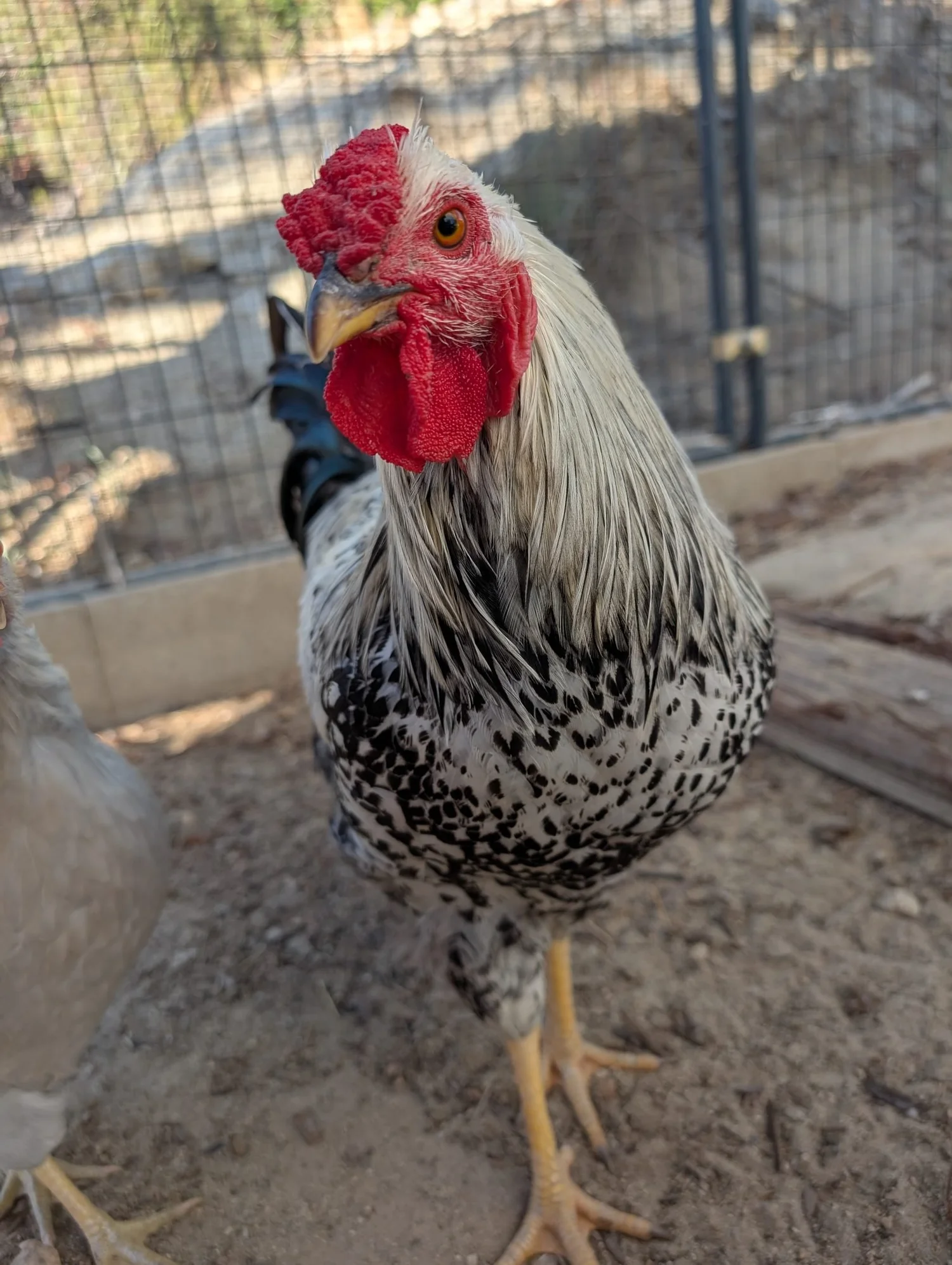
Wyandottes (Silver Laced, Gold Laced, Blue)
Wyandottes are a personal favorite for Santa Cruz gardens. Their rose comb is nearly immune to frostbite, which matters if you keep birds in the Santa Cruz Mountains where winter mornings can dip into the low 30s. They lay 200 to 250 brown eggs per year and have a compact, rounded body shape that conserves heat well in our cool, damp conditions.
Their temperament is calm but independent. They are not as people-oriented as Orpingtons, but they are reliable, consistent birds that take care of themselves. The laced varieties are also strikingly beautiful, which adds visual interest to a garden flock. The Livestock Conservancy lists several Wyandotte varieties as recovering or in need of conservation, so keeping them supports breed preservation.
Orpingtons (Buff, Black, Blue, Lavender)
Orpingtons are the gentle giants of heritage poultry. Developed in England in the 1880s by William Cook, they were bred to thrive in damp, cool English conditions that closely mirror our coastal climate. Hens weigh 7 to 8 pounds and lay 200 to 250 large brown eggs per year.
Their dense, fluffy plumage is both a strength and something to watch. It insulates beautifully in cool weather, but it can hold moisture in persistent fog. During our dampest weeks, you may notice Orpingtons taking longer to dry out than tighter-feathered breeds. Providing covered areas in your run helps. Their extremely docile temperament makes them the easiest heritage breed to integrate with children and gardens, though they are more prone to going broody than most other breeds on this list.
Australorps
Developed in Australia from Orpington stock, Australorps hold the world record for egg production: 364 eggs in 365 days, set during Australian poultry trials in 1922-23 (documented by the Livestock Conservancy and Australian poultry trial records). In practical backyard conditions, expect 250 to 300 light brown eggs per year. Their black plumage with its green sheen dries faster than the fluffy Orpington feathering, making them slightly better suited to our foggiest areas.
Australorps are calm, methodical foragers. In my garden, they work through a bed systematically rather than frantically scratching, which means less plant damage and more effective pest control.
Sussex (Speckled and Light)
Sussex chickens trace their history to Roman-era Britain, making them one of the oldest known breeds. The Speckled Sussex is particularly well suited to Santa Cruz County because its camouflage-like plumage provides some visual protection from aerial predators. They lay 200 to 250 large cream to light brown eggs per year and are active, curious foragers.
Speckled Sussex gain more white speckles with each molt, becoming more beautiful as they age. They are friendly, social birds that integrate well into mixed flocks, and their foraging instincts are among the strongest of any heritage breed.
Welsummers
If you want dark chocolate-brown eggs with distinctive speckles, Welsummers are an excellent heritage choice for our area. Developed in the Netherlands, they are cold-hardy and handle damp conditions well. Egg production is moderate at 180 to 220 eggs per year, but the egg color is unique and prized.
Welsummers are active foragers with good predator awareness. They tend to be more alert and less docile than Orpingtons, which can be an advantage in a free-range garden setting where predator vigilance matters.
Where Can You Find Heritage Breeds Locally in Santa Cruz County?
Finding specific heritage breeds in Santa Cruz County requires knowing where to look. The good news is that our area has a strong poultry community, and heritage breeds are more available here than in many parts of the country.
Local Breeders and Farms
Small-scale breeders in the greater Santa Cruz and Monterey Bay area often raise heritage breeds and sell chicks, pullets, and hatching eggs. Check the Santa Cruz County poultry groups on social media, Craigslist farm and garden section, and local feed stores for breeder listings. Spring is peak chick season (February through May), so start looking in January for the best selection.
When buying from local breeders, you have the advantage of seeing the parent stock, asking about health history, and getting birds already adapted to our specific climate. A chick from a Boulder Creek breeder whose flock has thrived in coastal fog for generations has a genetic advantage over a bird shipped from a large hatchery in the Midwest.
Feed Stores
Local feed stores in the Santa Cruz area typically carry chicks during spring season. Selection varies by year and by store, but common heritage breeds like Plymouth Rocks, Orpingtons, and Rhode Island Reds are usually available. Call ahead in January or February to ask about their ordering schedule and which breeds they plan to carry. Some stores will take special orders if you request specific heritage breeds.
Mail-Order Hatcheries
For rarer heritage breeds that are not available locally, reputable hatcheries ship day-old chicks via USPS Priority Mail. This is a well-established practice, as chicks can survive 72 hours on their absorbed yolk sac. Major hatcheries with good heritage breed selections include Murray McMurray, Cackle Hatchery, and Meyer Hatchery. Minimum orders typically range from 3 to 15 chicks depending on the hatchery and time of year.
The drawback of mail-order chicks is shipping stress and the lack of local genetic adaptation. If you go this route, order early in spring when shipping conditions are mild. Avoid summer orders when heat during transit can cause losses.
The Livestock Conservancy Breeder Directory
The Livestock Conservancy maintains a breeder directory searchable by state and breed. This is the best resource for finding rare heritage breeds like Dorkings, Dominiques, or Buckeyes that local feed stores rarely carry. Breeders listed in this directory are typically committed to breed preservation and maintain higher standards than commercial hatcheries.
How Does the Santa Cruz County Shelter Adoption Process Work for Chickens?
The Santa Cruz County Animal Shelter periodically receives chickens and other poultry through surrender, confiscation, or stray pickup. Adopting rescue birds is a meaningful way to build your flock while giving birds a second chance. Several of my own birds came through the shelter system, and they have been some of the most rewarding members of the flock.
What to Expect from the Shelter
The Santa Cruz County Animal Shelter (on Rodriguez Street in Santa Cruz) handles poultry adoptions similarly to other animal adoptions. They typically ask about your setup, confirm you have appropriate housing, and charge a modest adoption fee. Availability is unpredictable. You might find a dozen birds available one month and none the next.
Shelter birds are usually mixed breeds or production breeds (like ISA Browns or Red Sex-Links) rather than purebred heritage stock. Some may be roosters, which are harder to place and frequently available for adoption. The shelter staff can usually tell you general breed type and approximate age but may not have detailed health histories.
Breed Types Commonly Available Through Rescue
Rescue chickens in Santa Cruz County commonly include production breeds retired from backyard egg operations (ISA Browns, Golden Comets, Red Sex-Links), mixed breeds of uncertain parentage, roosters of various breeds, and occasionally heritage breeds surrendered due to life changes. Production breeds may have reduced egg output since they are often surrendered at 2 to 3 years old, past their peak production. However, they still lay reasonably well and make fine garden companions.
Health Considerations for Rescue Birds
New or rescued birds may arrive with health problems that are not obvious on visual inspection. UC Davis CAHFS lists direct fecal examination and flotation among tests available for backyard flocks; ask a veterinarian or diagnostic laboratory which tests are appropriate for the bird's history and signs.
None of these issues are deal-breakers. Most rescue birds recover fully with proper nutrition, parasite treatment, and a good environment. The key is proper quarantine and a gradual introduction to your existing flock. For the complete quarantine and introduction protocol, see Adopting Rescue Birds: Quarantine, Deworming, and Flock Introduction.
Why Does Supporting Heritage Breed Conservation Matter?
Heritage-breed conservation helps preserve poultry genetic diversity. The Livestock Conservancy explains that its annual Conservation Priority List ranks extinction risk from Critical through Recovering. Check the current list for a breed's current status rather than relying on an undated category.
The concentrated genetics of commercial poultry represent a vulnerability. The vast majority of commercial egg production relies on a handful of hybrid lines maintained by two or three multinational breeding companies. If a disease targets those specific genetics (as avian influenza periodically threatens), heritage breeds represent the fallback genetic library.
Conservation status can improve when breeders maintain and document viable populations. The Livestock Conservancy reports that 14 endangered breeds graduated from its priority list during the preceding 12 years, while many poultry breeds still require conservation work.
Breeds that are currently listed as threatened or watch and that do well in Santa Cruz County include the Buckeye, the Delaware, the Java, the Dominique, and the Chantecler. If you have the space and interest, keeping even a small breeding group of a rare heritage breed contributes to conservation.
How Do You Integrate Heritage and Rescue Birds into an Existing Flock?
Whether you are adding heritage chicks from a local breeder or adult rescue birds from the shelter, the integration process matters enormously for flock harmony and bird health. The basic principle is the same in both cases: slow, gradual introduction with a quarantine period first.
Quarantine Period
University of Minnesota Extension advises separating new or returning birds from the flock for at least 30 days. Use separate equipment where practical, care for the resident flock first, and contact a veterinarian if a new bird develops signs of illness.
During quarantine, handle your existing flock first and the new birds second. Change clothes or at least shoes between the two groups. This biosecurity step sounds excessive until you have experienced a disease introduction that could have been prevented.
The See-But-Not-Touch Phase
After quarantine, move the new birds to an area where the existing flock can see them but not reach them. A temporary pen within the run, or a section divided by hardware cloth, works well. This visual introduction phase should last at least one to two weeks. Birds establish a preliminary pecking order through the barrier, which reduces aggression when they finally share space.
Supervised Integration
First direct contact should happen during supervised free-range time when the birds have plenty of space to get away from each other. Expect some pecking and chasing. This is normal flock behavior. Intervene only if a bird is being cornered and attacked with no escape route, or if you see blood drawn.
Adding new birds to the coop at night, when existing birds are already roosting and drowsy, is a traditional technique that works well. The new birds find a spot on the roost, and by morning the flock wakes up together with less drama than a daytime introduction.
Heritage and Rescue Bird Specific Considerations
Heritage breeds from different backgrounds may vary significantly in size, which can create bullying dynamics. A 5-pound Easter Egger being introduced to a flock of 8-pound Orpingtons will need more protection during integration. Provide multiple feeding and watering stations so lower-ranking birds are not blocked from resources.
Rescue birds may be timid and socially inexperienced, especially if they were kept alone or in small groups. Give them extra time during the visual introduction phase. Some rescue birds take longer to learn flock dynamics, but they almost always adapt with patience.
What Should You Consider Before Adding Heritage or Rescue Birds to Your Garden Flock?
Before expanding your flock, consider a few practical factors that will determine your success.
Space Requirements
Housing should reflect bird size, activity, ventilation, and outdoor access. The Merck Veterinary Manual gives approximate indoor ranges of 1.5 to 2 square feet for laying hens and larger chickens and 3 to 6 square feet for ducks and geese; treat these as starting points and provide more room when crowding, wet litter, or conflict appears.
Local Regulations
Santa Cruz County allows chickens in most residential areas, but specific rules vary by city and zoning. The City of Santa Cruz permits hens on residential lots but restricts roosters, quacking ducks, and geese. The number of birds allowed depends on lot size, so check the current municipal code for your specific property. Unincorporated Santa Cruz County is generally more permissive. Check with your local planning department before adding birds, especially if you plan to keep roosters for heritage breed conservation.
Flock Composition
If you keep a mixed species flock (chickens, ducks, and geese, as I do in Boulder Creek), breed choice affects interspecies dynamics. Calm heritage breeds like Orpingtons and Plymouth Rocks coexist well with ducks and geese. More aggressive or flighty breeds can create stress in a mixed flock. For guidance on mixed species flocks, see Choosing the Right Breeds for Coastal California Gardens.
Long-Term Commitment
The term heritage refers to a defined breeding and production standard, not a guaranteed lifespan for an individual bird. The Livestock Conservancy says heritage breeding hens should be productive for five to seven years. Plan lifelong care regardless of how long a particular bird continues laying.
Frequently Asked Questions
What is the difference between a heritage breed and a production hybrid?
The Livestock Conservancy defines heritage chickens by standard-breed ancestry, natural mating, a long productive outdoor life, and a moderate-to-slow growth rate. Egg output and behavior vary by breed, line, age, and management, so avoid assuming every heritage bird has the same production or disease-resistance advantage.
Can rescue chickens still lay eggs?
Many rescue chickens continue to lay, but age, molt, health, daylight, breed, and previous care all affect output. University of Minnesota Extension notes that hens are most productive in their first two years and that production declines as birds age; there is no universal 10-to-15% annual decline that applies to every hen.
How long should I quarantine new birds before adding them to my flock?
University of Minnesota Extension recommends separating new or returning birds for at least 30 days. Keep equipment separate where practical and seek veterinary advice for illness rather than assuming the time window detects every disease.
Are heritage chickens more expensive than production breeds?
Heritage breed chicks typically cost $5 to $15 each from breeders and hatcheries, compared to $3 to $5 for common production breeds at feed stores. Rarer heritage breeds can cost $15 to $30 per chick. However, heritage breeds generally live and produce longer, which means the cost per year of productive life is often comparable. Rescue birds from shelters typically cost $5 to $20 as an adoption fee regardless of breed.
Which heritage breeds are best for egg production in Santa Cruz County?
Australorps, Plymouth Rocks, and Rhode Island Reds are commonly chosen for backyard egg flocks, but annual output varies by line, age, daylight, nutrition, health, and management. Ask the breeder for records from the actual parent flock instead of treating breed-wide egg numbers as guarantees.
Do I need a rooster to keep heritage breeds?
No. Hens lay eggs without a rooster, so you only need a rooster if you want fertile eggs for hatching. For breed conservation purposes, maintaining a breeding group with a rooster is valuable, but many Santa Cruz County municipalities restrict or prohibit roosters due to noise. Check your local regulations before acquiring a rooster, and be aware that rehoming unwanted roosters is extremely difficult.
Can I mix heritage breeds with production hybrids in the same flock?
Heritage breeds and production hybrids can share a flock when temperaments and sizes are compatible. Provide multiple feeding and watering points, monitor bullying, and adjust space to bird size and activity; Merck emphasizes that space needs depend on size and activity level.
Where can I find heritage breed chickens near Santa Cruz?
Start with local feed stores during spring chick season (February through May), Santa Cruz County poultry groups on social media, and the Livestock Conservancy's online breeder directory filtered by California. For rescue birds, check the Santa Cruz County Animal Shelter on Rodriguez Street and local poultry rehoming posts. Local breeders offer the advantage of stock already adapted to our coastal climate conditions.
