

Drought-Tolerant Cut Flowers for Santa Cruz County
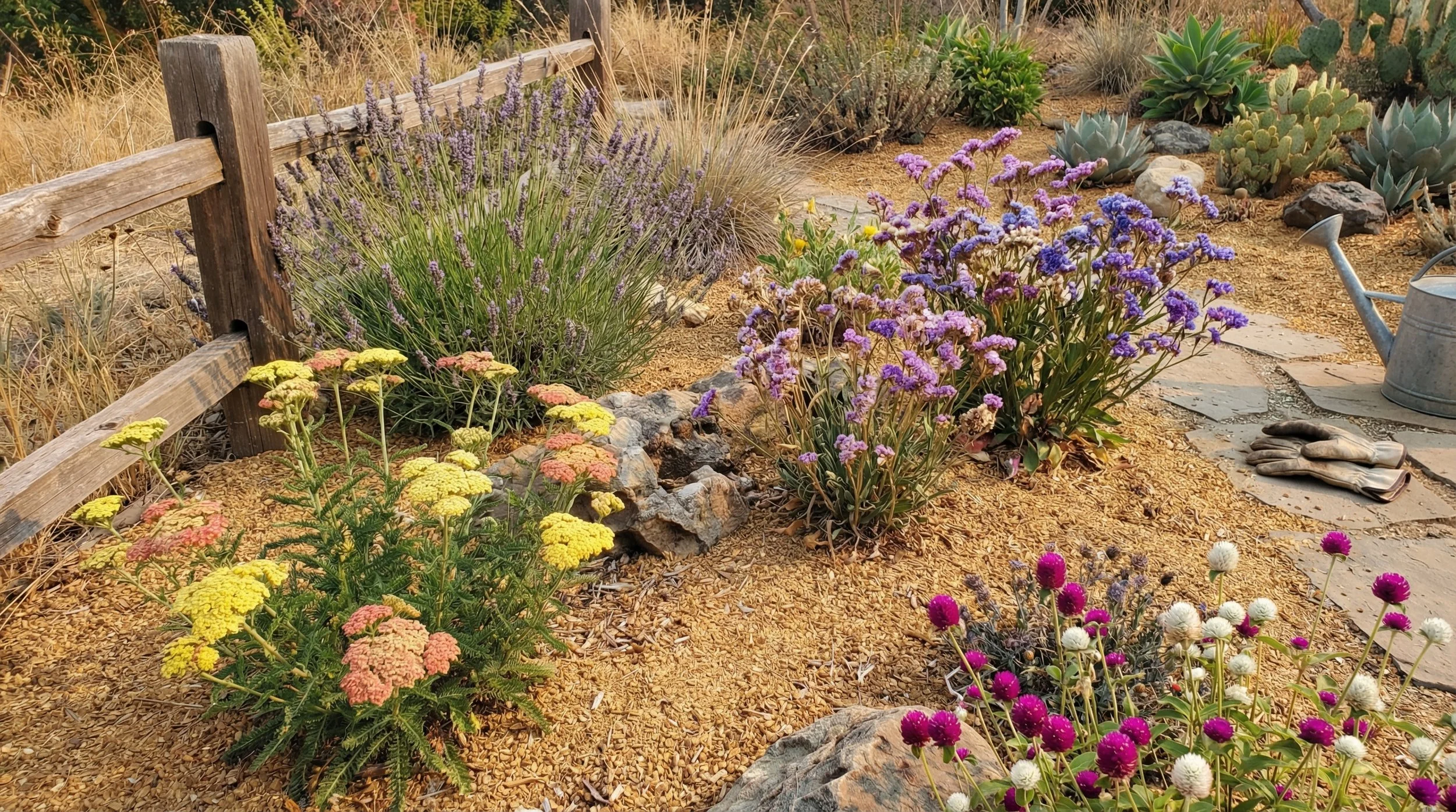
Water consciousness isn't just an occasional concern in California; it's a way of life. Whether facing drought restrictions or simply wanting to garden more sustainably, growing cut flowers that thrive with minimal irrigation makes sense for Santa Cruz County gardeners.
The good news: many beautiful cut flowers are naturally drought-tolerant, having evolved in Mediterranean climates similar to our own. These plants aren't just survivors; they're genuinely spectacular, producing abundant blooms with far less water than thirsty flowers like dahlias and sweet peas.
This guide covers the best drought-tolerant cut flowers for our area, water-wise growing strategies, and how to create a productive cutting garden that uses a fraction of the water you might expect.
Understanding Drought Tolerance in Cut Flowers
"Drought-tolerant" doesn't mean "no water." It means the plant can thrive with significantly less water than typical garden flowers once established. Most drought-tolerant cut flowers:
Have deep root systems that access moisture below the surface
Feature leaves that reduce water loss (silver, waxy, hairy, or narrow)
Evolved in Mediterranean, semi-arid, or seasonally dry climates
Establish with regular water but need much less once mature
Establishment period: Even drought-tolerant flowers need consistent water during their first 3-4 weeks. Once roots are established, you can dramatically reduce irrigation.
The Best Drought-Tolerant Cut Flowers
Strawflowers (Xerochrysum bracteatum)
Australian natives perfectly adapted to our climate. Papery, everlasting blooms last weeks in a vase and dry beautifully.
Water needs: Low once established
Bloom: July-October
Notes: One of the most drought-tolerant cut flowers available
See our complete guide: Growing Strawflowers in Santa Cruz County
Statice (Limonium sinuatum)
Papery flower clusters in purple, blue, pink, white, and yellow. Outstanding for drying. Very drought-tolerant once established.
Water needs: Low once established
Bloom: May-September
Notes: Mediterranean native; excellent in coastal gardens
Yarrow (Achillea spp.)
Flat-topped flower clusters on sturdy stems. Comes in white, yellow, orange, pink, and red. Ferny foliage adds texture.
Water needs: Very low
Bloom: June-September
Notes: Perennial; cut-and-come-again; spreads by roots
Coneflowers (Echinacea spp.)
Classic prairie flowers with prominent central cones. Pink, purple, white, orange, and yellow varieties available.
Water needs: Low once established
Bloom: June-September
Notes: Perennial; native to dry American prairies; attracts butterflies
Gomphrena/Globe Amaranth (Gomphrena globosa)
Round, clover-like flower heads that dry perfectly. Magenta, purple, pink, and white varieties. Heat and drought-loving.
Water needs: Low to moderate
Bloom: July-October
Notes: Excellent for drying; true everlasting
Zinnias (Zinnia elegans)
Yes, zinnias! While not as drought-tolerant as some on this list, established zinnias handle dry conditions surprisingly well.
Water needs: Moderate (less than dahlias, roses)
Bloom: June-October
Notes: Reduce watering once established; some leaf stress in extreme drought is acceptable
Cosmos (Cosmos bipinnatus)
Airy, romantic flowers on tall stems. Cosmos actually bloom better with some drought stress; too much water produces foliage over flowers.
Water needs: Low to moderate
Bloom: June-October
Notes: Overwatering reduces flowering
Sunflowers (Helianthus annuus)
Deep taproots make sunflowers remarkably drought-tolerant once established. They'll wilt dramatically if stressed but recover quickly when watered.
Water needs: Moderate during establishment, low once mature
Bloom: June-October (with succession planting)
Notes: Native to dry American prairies
Blanket Flower (Gaillardia)
Cheerful daisy-like flowers in red, orange, and yellow, often with contrasting rings. Extremely heat and drought-tolerant.
Water needs: Very low
Bloom: June-October
Notes: Perennial; may be short-lived but often self-sows
Sea Holly (Eryngium spp.)
Spiky, metallic-blue flowers with a structural, architectural quality. Unique texture for arrangements.
Water needs: Very low
Bloom: June-August
Notes: Dries beautifully; deep taproot resents transplanting
Lavender (Lavandula spp.)
Fragrant spikes in purple, blue, pink, and white. Classic Mediterranean plant perfectly suited to our climate.
Water needs: Very low (can be killed by overwatering)
Bloom: May-August (varies by species)
Notes: Perennial; excellent dried; Spanish lavender blooms longest
California Native Cut Flowers
Our native wildflowers evolved in our Mediterranean climate and are naturally drought-adapted:
California poppies (Eschscholzia californica): Bright orange, gold, or cream cups
Clarkia/Farewell-to-spring (Clarkia spp.): Pink and purple spikes
Tidy tips (Layia platyglossa): Yellow with white-tipped petals
Globe gilia (Gilia capitata): Blue pom-pom flowers
[INSERT GRAPHIC: Drought-Tolerant Cut Flowers Water Needs Guide]
Water-Wise Growing Strategies
Soil preparation is key.
Drought-tolerant plants perform best in well-prepared soil that absorbs and retains moisture efficiently:
Add organic matter (compost) to improve water retention
Ensure good drainage (most drought-tolerant plants rot in soggy soil)
Break up compacted soil to allow deep root growth
Mulch generously.
Mulch is your most powerful water-saving tool:
Apply 3-4 inches of organic mulch around plants
Keeps soil cooler and reduces evaporation
Suppresses water-competing weeds
Improves soil as it breaks down
Use straw, wood chips, or bark mulch. Keep mulch a few inches away from plant stems.
Water deeply but infrequently.
Encourage deep root growth by watering thoroughly but less often:
Water to a depth of 6-12 inches
Allow soil to partially dry between waterings
Deep roots access moisture unavailable to shallow-rooted plants
Frequent, shallow watering creates shallow roots that are more vulnerable to drought.
Use drip irrigation.
Drip systems deliver water directly to roots with minimal evaporation:
Much more efficient than sprinklers
Keeps foliage dry (reducing disease)
Easy to automate with timers
Allows precise water delivery to each plant
Group plants by water needs.
Don't mix drought-tolerant flowers with water-hungry plants. Create "hydrozones":
Zone 1: Regular water (dahlias, sweet peas)
Zone 2: Moderate water (zinnias, cosmos)
Zone 3: Low water (strawflowers, statice, yarrow)
This prevents overwatering drought-tolerant plants (which can kill them) or underwatering thirsty ones.
Time watering strategically.
Water early morning or evening to reduce evaporation
Avoid midday watering when most water evaporates before reaching roots
Water before heat waves, not during them
Drought-Tolerant Perennial vs. Annual Cut Flowers
Perennial advantages:
Deep, established root systems
No annual replanting (saves water for establishment)
Many are extremely drought-tolerant
Lower long-term maintenance
Perennial options: Yarrow, coneflowers, lavender, sea holly, blanket flower, many California natives
Annual advantages:
More variety and selection
More control over garden layout
Often more productive per plant
Can rotate crops and rest soil
Annual options: Strawflowers, statice, gomphrena, cosmos, sunflowers, zinnias
Best approach: Combine perennial "backbone" plants with annual variety for a balanced, water-wise cutting garden.
Drought-Tolerant Flowers by Microclimate
Coastal fog belt (Westside Santa Cruz, Live Oak, Aptos, Capitola)
Natural advantages:
Fog provides moisture that reduces irrigation needs
Cooler temperatures reduce evaporation
Many "moderate" water plants act as "low" water here
Best performers: Strawflowers, statice, lavender, yarrow, sea holly
San Lorenzo Valley and sunny inland areas (Boulder Creek, Scotts Valley)
More challenging:
Hotter, drier conditions
Greater evaporation rates
Focus on truly drought-tolerant species
Best performers: Yarrow, blanket flower, coneflowers, California natives, gomphrena
Pajaro Valley / Watsonville
Warmest microclimate:
Higher water needs overall
Heat-lovers thrive but need adequate water
Focus on heat + drought tolerance
Best performers: Gomphrena, sunflowers (once established), blanket flower
Creating a Year-Round Drought-Tolerant Cutting Garden
Cool season (November-May):
California poppies (plant fall for spring bloom)
Clarkia/farewell-to-spring
Statice (can bloom cool season in mild areas)
Warm season (June-October):
Strawflowers
Gomphrena
Yarrow
Coneflowers
Cosmos (moderate water)
Zinnias (moderate water)
Year-round perennials:
Lavender (blooms spring-summer)
Yarrow (blooms summer)
Coneflowers (blooms summer-fall)
Common Questions About Drought-Tolerant Cut Flowers
Can I really grow cut flowers with minimal water? Yes. A drought-tolerant cutting garden uses 50-75% less water than a typical flower garden while still producing abundant blooms. The flowers listed here evolved in dry conditions and actually prefer less water.
Will drought-tolerant flowers look stressed? Not if you meet their moderate needs. These plants are adapted to dry conditions; they don't just survive drought, they thrive in it. Overwatering causes more problems than underwatering for most of these species.
Are drought-tolerant flowers as productive as water-loving ones? Some are incredibly productive (strawflowers, yarrow, cosmos). Others produce fewer but equally beautiful stems. The tradeoff is much lower water use for slightly different (not lesser) production.
Can I grow dahlias and sweet peas in a drought? These are water-loving plants that struggle in drought conditions. During water restrictions, focus on drought-tolerant alternatives, or limit water-hungry flowers to a small, carefully managed area.
How do I know if my drought-tolerant plants need water? Most will show signs before serious stress: slight wilting in afternoon heat (they recover by morning), leaves curling or appearing dull. Water when you see these signs, not on a schedule.
Should I fertilize drought-tolerant flowers? Less than water-loving flowers. Most drought-tolerant plants evolved in lean soil and don't need heavy feeding. Over-fertilizing can produce weak, leggy growth that's more susceptible to drought stress.
Free Resources
Download these guides for water-wise flower growing:
Water-Wise Gardening Guide: Complete water-saving strategies
Seasonal Planting Calendar: When to plant drought-tolerant flowers
Visit our Garden Toolkit for more downloadable resources.
