

Growing Limes in Santa Cruz County (and Why It's Tricky)
A few of the product links in this guide are affiliate links. If you buy through one, Ambitious Harvest may earn a small commission at no extra cost to you, which helps keep these guides free. We only point to gear we would use in our own Santa Cruz garden. As an Amazon Associate, we earn from Read our full disclosure.
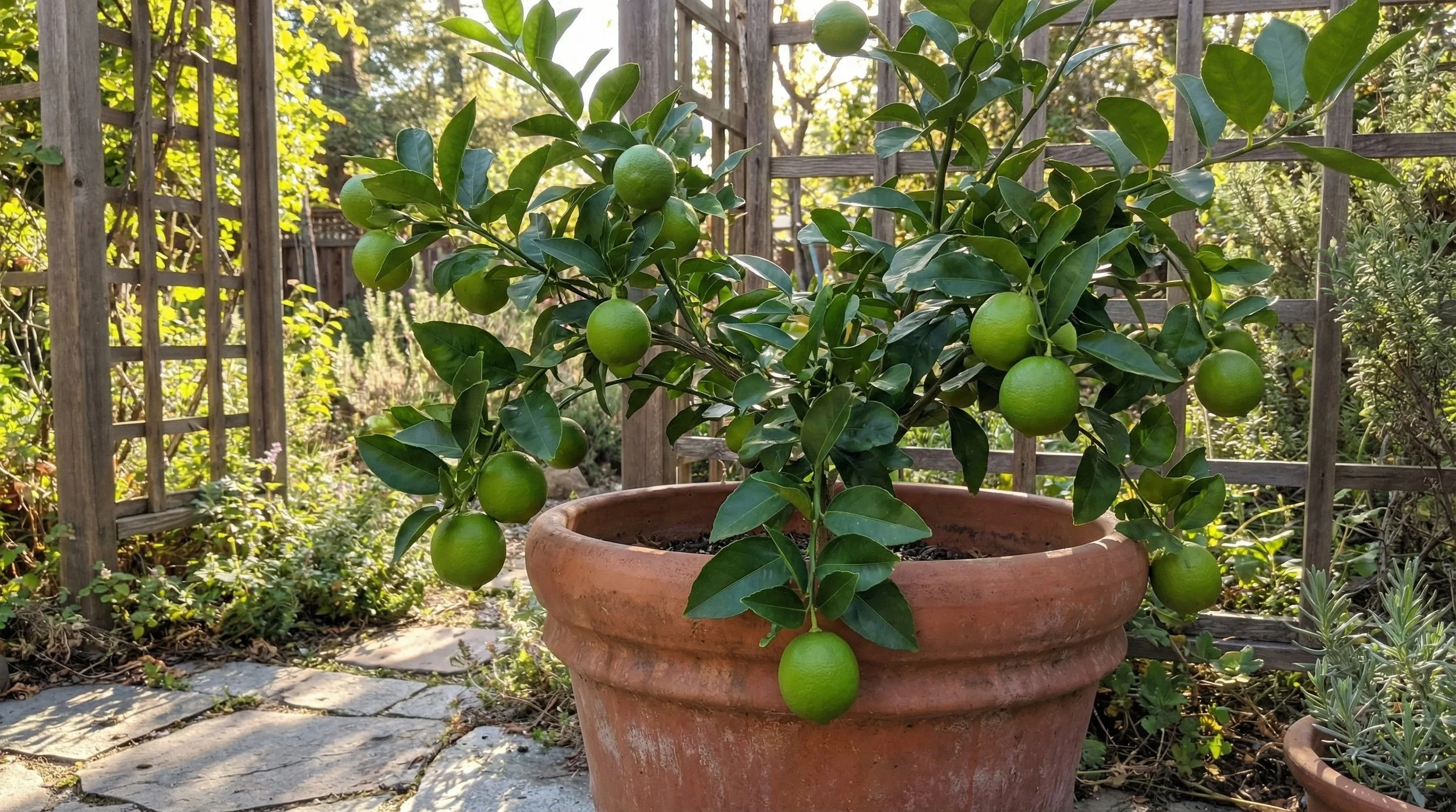
Limes are the citrus most likely to frustrate Santa Cruz County gardeners. While lemons thrive in our cool climate, limes are more cold-sensitive and need more heat to produce prolifically. But with the right variety selection and site placement, growing limes is absolutely possible here. The key is understanding which lime varieties work, which don't, and why.
Why Limes Are More Challenging Than Lemons
Limes evolved in tropical regions and retain more cold sensitivity than other citrus. Mexican limes, also known as Key limes, are very cold sensitive, suffering damage at temperatures that wouldn't faze a lemon tree.
The cold hardiness difference is significant:
Meyer lemon: 22°F
Eureka/Lisbon lemon: 24-26°F
Bearss lime: 28°F
Key/Mexican lime: 32°F
That 6-10 degree difference matters in Santa Cruz County, where overnight temperatures occasionally dip into the mid-20s in frost-prone areas. A lime that handles 28°F is manageable; one that's damaged at 32°F requires constant vigilance.
Bearss Lime: The Variety That Works
Bearss lime (also called Tahitian or Persian lime) is recommended for our area because it's hardier than Mexican/Key lime but not as hardy as lemon. This is the lime variety you should plant in Santa Cruz County.
Bearss lime characteristics:
Cold hardiness: 28°F (manageable with protection)
Fruit: Larger than Key limes, seedless, ripens to yellow
Size: Attractive small tree, suitable for containers
Harvest: August through March, with fruit not holding well on tree once ripe
Where Bearss lime works:
Watsonville area: Most reliable location, with warmth and less frost risk
Inland valleys: Good success with basic frost protection
San Lorenzo Valley: Can work in protected, sunny spots with winter protection
Coastal fog belt: Challenging; only for exceptionally warm microclimates
Key Limes: Why They Usually Fail Here
Key limes (Mexican limes) are what most people think of when they imagine lime trees. Unfortunately, they're very cold sensitive and struggle throughout Santa Cruz County.
The problems:
Damaged at 32°F, meaning any frost threatens them
Need consistent warmth for good production
Even the Watsonville area gets occasional temperatures below their tolerance
If you're determined to try: Grow in a container you can move to frost-free locations (heated greenhouse, indoors) during winter. In-ground Key limes are not recommended anywhere in Santa Cruz County.
Site Selection for Limes
Because limes are less cold-hardy than other citrus, site selection is even more critical.
Maximize heat:
South or west-facing walls that radiate stored heat
Protected courtyards that trap warmth
Light-colored walls that reflect sunlight onto the tree
Avoid shade from buildings or large trees
Avoid cold air:
Never plant in low spots where cold air pools
Choose elevated areas where cold air drains away
Sites near water (pools, ponds) may moderate temperatures slightly
Wind protection:
Essential for limes, which are sensitive to desiccating winds
Buildings, fences, or hedges on prevailing wind side
Coastal locations need extra wind consideration
Container Growing: The Lime Advantage
Containers make lime growing much more feasible in marginal climates because you can move trees to protection when cold threatens.
Container benefits for limes:
Move to garage or covered patio during frost events
Position in sunniest locations seasonally
Easier to monitor and protect than in-ground trees
Makes lime growing possible in fog belt gardens
Container requirements:
At least 15-20 gallon container with excellent drainage
Quality potting mix (not garden soil)
More frequent watering than in-ground trees (1-2x weekly)
Regular fertilization with citrus fertilizer including micronutrients
Caring for Lime Trees
Lime care follows general citrus principles with extra attention to cold protection.
Watering: Deep, infrequent watering once established. Allow soil to dry somewhat between waterings. Container limes need more frequent watering.
Fertilizing: Apply citrus fertilizer in March, May, and August. Include iron supplements if yellowing occurs. Limes do not need full sun or long periods of heat to ripen fruit, but they do need adequate nutrition.
Pruning: Minimal pruning required. Remove dead or damaged wood. Maintain good air circulation. Avoid late-season pruning that stimulates tender growth before winter.
Frost protection: Essential for limes. Have frost cloth ready. Water thoroughly before cold events. Use incandescent lights for radiant heat when needed. Consider moving container trees to protection proactively rather than waiting until frost is imminent.
When Should You Harvest X?
Lime harvest timing differs from lemons.
When to pick: Bearss limes ripen August through March. Fruit ripens to yellow, but most people pick when still green for the classic lime flavor and acidity. Fruit doesn't hold well on tree once ripe.
Harvest method: Use pruning shears to clip fruit with a short stem rather than pulling, which can damage the tree.
Storage: Fresh limes store for 1-2 weeks at room temperature, longer in the refrigerator. Juice and zest can be frozen.
Frequently Asked Questions
Can I grow Key limes in Santa Cruz?
Key limes are extremely cold-sensitive (damaged at 32°F) and aren't recommended for in-ground planting anywhere in Santa Cruz County. Container growing with winter indoor protection is the only realistic option.
What's the best lime for Santa Cruz County?
Bearss lime (Tahitian/Persian lime) is the only lime variety recommended for our area. It tolerates 28°F, which is manageable with protection in most microclimates except the coldest.
Why isn't my lime tree producing fruit?
Young trees (under 3-5 years) may not produce yet. Established trees that don't fruit may have insufficient light, too much nitrogen fertilizer, or stress from cold or water problems.
Are Bearss limes the same as Persian limes?
Yes. Bearss, Tahitian, and Persian are all names for the same lime variety. It's the common supermarket lime, larger and seedless compared to Key limes.
Can I grow a lime tree in a container?
Yes, and containers are recommended for limes in Santa Cruz because they allow you to move trees to protected locations during cold weather. Use at least a 15-gallon container with good drainage.
When are limes ready to harvest?
Pick Bearss limes when they've reached full size and feel heavy for their size. Most people harvest while still green for classic lime flavor, though fruit eventually ripens to yellow.
