

Fall Garden Cleanup for Fire Safety
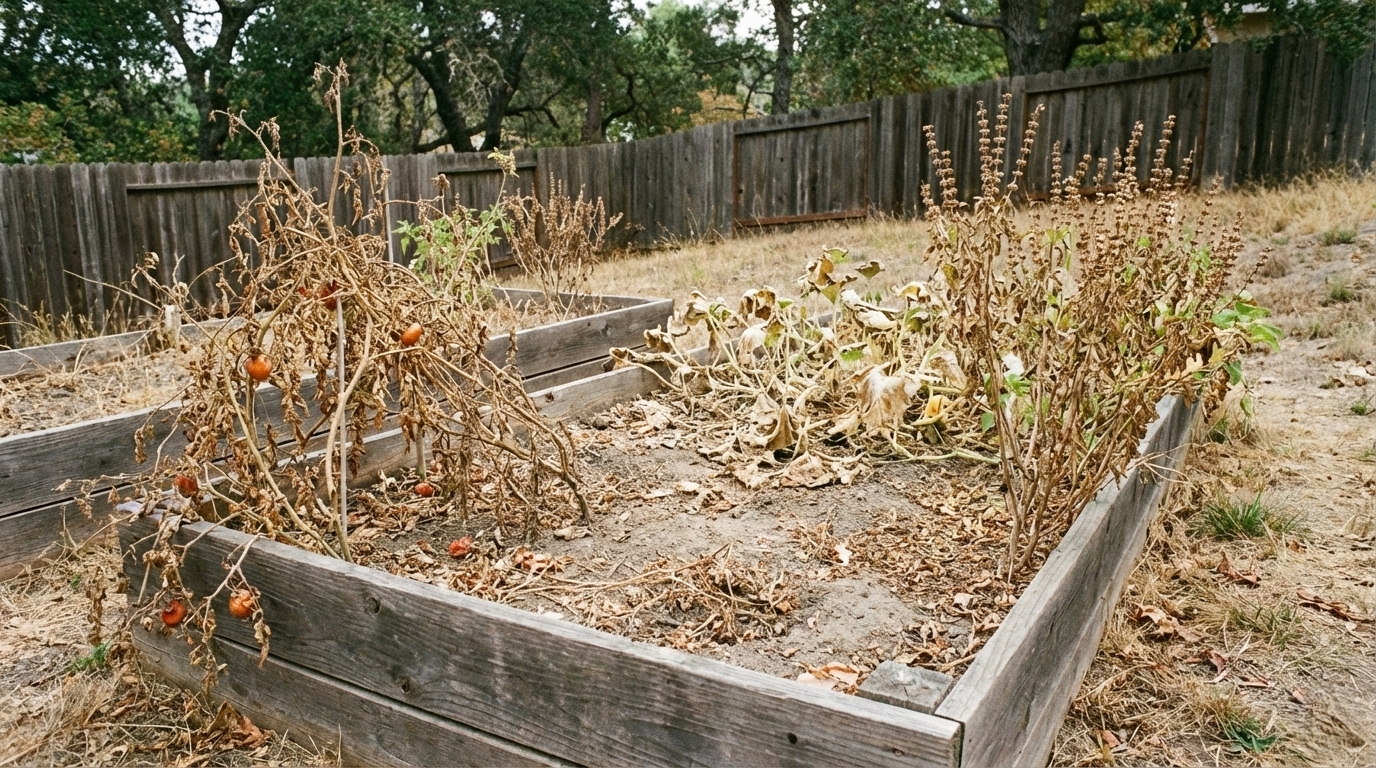
Start fall cleanup beside the house: clear dry leaves and plant debris from the first five feet, decks and gutters, then work outward through the garden. A bed of finished tomatoes can wait behind a gutter full of needles. Neither needs to wait for the first rain.
In Santa Cruz County, putting away the summer garden and preparing for winter often happen while vegetation is still dry. You can keep a productive pepper plant and sow cool-season crops while removing the dead vines, loose leaves and temporary debris piles that deserve attention now. The aim is a maintained garden, with fewer ways for fire to reach the home.
Work from the house outward
A calendar helps organize the job, but the condition of the garden sets the priority. Start when summer plants finish, repeat the close-to-home check as leaves fall, and keep it up through dry spells. Don't treat October, the first shower or damp surface soil as an all-clear.
For broader seasonal context, the Western Fire Chiefs Association's California fire-season overview explains why the timing varies. Follow current local fire restrictions and weather warnings when deciding whether equipment work is appropriate.
- Start at the building. Remove leaves and needles from gutters, roof edges and on or beneath decks where you can do so safely. Arrange qualified help for work that requires unsafe roof or ladder access.
- Clear the first five feet. Keep combustible mulch, dead vegetation and stored debris away from buildings and attached decks. Use noncombustible surfaces such as gravel or pavers, and keep them free of fallen leaves.
- Then check the next 25 feet. Remove dead plants and accumulated dry material, and look for continuous vegetation or stored items that connect planting beds to the house.
- Continue into the outer garden. Reduce fuel farther out, with attention to slope, plant spacing and neighboring structures. Moving a pile beyond 30 feet doesn't make it harmless.
CAL FIRE's defensible-space guidance describes these zones and explains that local requirements may be stricter. Use the zone distances to plan your work, then confirm the requirements for your property with your fire authority. This cleanup guide is not a determination that a particular yard complies.
Clear summer crops as they finish
A dry squash vine can run from one end of a bed to the other. A bean trellis may hold a whole season's worth of brittle stems. These are useful places to start after the immediate area around the house is clear.
Work a bed at a time and have its disposal route ready. Otherwise, a tidy bed can become a new heap beside the fence.
- Tomatoes: remove spent stems and leaves from cages and stakes. Separate twine, clips and other nonplant materials before sending vegetation to a collection service or compost pile.
- Squash and cucumbers: gather the dry vines rather than leaving them spread across paths. Cut bulky material into sections you can handle without dragging it through nearby plants.
- Beans: clear dead vines from trellises and collect loose leaves underneath. Check the supports for dry material caught in corners.
- Peppers: a healthy plant still producing fruit doesn't need to be pulled simply because it's fall. Remove dead portions and clear around it; take the plant out when it is spent or no longer worth maintaining.
- Basil and other finished annual herbs: remove dry tops and accumulated litter. Avoid leaving a dense stand of brittle stems near structures.
There is no need to pull every healthy root or dismantle every metal support as a fire-safety ritual. Focus on the combustible material above ground and anything that connects it to structures. Deal with disease problems according to the crop and suspected disease, rather than assuming every disposal route is suitable.
Give perennials a maintenance pass
Perennials need a different approach from a finished annual bed. Remove dead material while preserving the living plant and choosing pruning methods appropriate to its species. Fall cleanup is not a reason to hard-prune every shrub or tree.
Under fruit trees, collect fallen fruit for garden sanitation and remove dry leaves where they accumulate near structures. Check for dead branches, but use a qualified arborist for large limbs, uncertain tree condition or work near utilities. Keep seasonal fruit-tree pruning separate from urgent hazard work.
For perennial herbs, remove dry flower stalks and dead growth without cutting indiscriminately into old wood. In berry patches, identify spent or dead canes before cutting, since raspberry and blackberry pruning depends on the plant's fruiting habit. Remove dead artichoke leaves and spent stalks, including the debris tucked around the base.
Look beyond the plant itself. Dry leaves caught against a wooden bed, beneath a bench or along the foot of a fence can reconnect areas you meant to keep separated.
Choose the disposal route before making the pile
Use your collection service's accepted-material and container rules. Don't assume bagged vegetation, diseased plants, soil or plant supports belong in a green-waste cart. For a known serious disease or regulated pest, ask UC Cooperative Extension or the county agricultural commissioner how to dispose of affected material.
If you compost, place and manage the pile away from structures and other combustible features. Keep it active rather than allowing dry additions to build into an unattended heap. A moist center does not make dry material on the outside safe, and a small property may be better served by off-site collection than by a poorly placed pile.
For woody prunings, check the RCD of Santa Cruz County and Fire Safe Council before stacking. Availability, enrollment, eligible areas and preparation rules vary. Don't count on a standing fall pickup or reimbursement, and don't stack material where it blocks access while waiting.
Chipping changes the size of the material; it doesn't remove its ability to burn. Decide where chips can be used before arranging the work. A fresh load beside the house is still combustible.
Don't use burning as a shortcut for routine fall cleanup. Santa Cruz County Fire's burn-permit information distinguishes residential and other burning, with seasonal limits, air-district permits and burn-day conditions. A date on a calendar is not permission to burn. Use a nonburning disposal option or confirm all current requirements with the responsible agencies.
Review mulch without adding a new fuel layer
The first five feet beside buildings and attached decks is the place for noncombustible material, not bark, straw or a fresh layer of wood chips. Sweep leaves off the hardscape as they fall.
Farther out, UC Marin's fire-smart maintenance guidance recommends limited, separated areas of suitable organic mulch rather than broad, continuous coverage. It gives a maximum two-inch depth for Zone 1 and warns that even composted wood chips can smolder. Confirm local requirements before treating that recommendation as appropriate for your site.
Don't add straw near the house on the assumption that faster decomposition makes it fire-safe. Don't top up wood chips automatically each fall, either. Check the existing depth, remove accumulated dry debris, and consider the route a burning mulch bed could provide to a fence, deck or wall.
Clear gravel paths of leaves and keep planted areas separated where practical. The Ready for Wildfire defensible-space guide helps explain the purpose of that separation. A garden path can interrupt surface fuel; it cannot guarantee that flames or embers will stop there.
Adjust irrigation to the plants and weather
Cooler days usually change watering needs, but they don't tell you whether the soil around a particular plant is dry. Check before reducing the schedule, especially where trees and established perennials still need irrigation. Our water-wise gardening guide can help with the wider seasonal plan.
Repair leaks, clogged emitters and damaged tubing while you can see how the system is working. Know the shutoff location and follow the equipment manufacturer's winter guidance for exposed components in frost-prone sites.
Keep normal, appropriate irrigation during dry weather. Don't run extra sprinklers to wet down the property during a Red Flag warning: UC Marin advises against this because it can deplete water needed by fire departments. Watering is not a substitute for fuel maintenance or following evacuation instructions.
Make equipment work part of the safety plan
A cleanup job can itself start a fire if equipment strikes a rock or throws sparks into dry vegetation. CAL FIRE advises mowing before 10 a.m. and never on hot or windy days. That time is not a guarantee of safe conditions; check restrictions and postpone work when conditions are unsuitable.
Use the right tool for the job and keep access routes clear. If a warning or evacuation instruction is issued, garden work can wait.
Set up winter beds with spring in mind
A cleared bed gives you a choice: plant a winter crop, establish an appropriate cover crop, or plan a different layout. The next season is easier if you decide now how the bed will be maintained.
Cover crops can protect soil, but their eventual residue needs attention. UC's review of cover-crop residues and fire risk shows how abundant dry material can carry fire through vineyards and orchards. In a home bed, plan termination before the stand becomes dry fuel and manage the cut material too. Mowing alone can leave a combustible layer behind.
For sloping or erosion-prone ground, get site-specific advice before stripping vegetation or disturbing soil. The goal is to manage fuel without creating a winter runoff problem.
Use the cleanup to note longer-term changes: a combustible fence connection, a crowded bed or a shrub that repeatedly collects dead growth. Our guide to fire-wise landscaping on a budget can help order those projects. No plant is fireproof, and moving a shrub beyond a zone boundary does not replace spacing and maintenance.
Questions that come up during fall cleanup
Can I keep seed heads or leaves for wildlife?
Choose habitat areas with the same attention to location as any other garden feature. Keep the immediate area around structures clear of combustible debris. Farther away, balance habitat with local defensible-space requirements, slope and surrounding fuels. A brush pile is not automatically safe just because it is more than 30 feet from the house.
Should I wait until the whole vegetable garden is finished?
No. Remove dry material as each crop finishes. You can keep tending a healthy, productive plant while clearing a spent bed next to it.
What if the rain arrives before I finish?
Continue when it is safe to work. Prioritize the house, decks and gutters, then move outward. Rain may reduce immediate fire danger, but one shower doesn't end the need for maintenance, and later dry weather can change conditions again.
Do I need to remove all mulch?
Remove combustible mulch from the immediate five-foot area around structures. Beyond it, assess material, depth, continuity and nearby combustibles under current local guidance. Replacing old chips with fresh chips is not, by itself, a fire-safety improvement.
Free fire-wise gardening resources
- Seasonal Garden Tasks Checklist: organize recurring cleanup and maintenance.
- Vegetables by Season Chart: plan the beds that will follow your summer crops.
Additional resources
- CAL FIRE Defensible Space
- Ready for Wildfire: Defensible Space
- Fire Safe Council of Santa Cruz County
- RCD of Santa Cruz County Chipping Programs
- UC Marin Fire-Smart Landscape Maintenance
If you have time for one pass today, start beside the house and give the debris a destination. A cleared gutter and a removed pile are useful progress, even while the last peppers are still ripening.
