

Should You Water Your Garden Every Day in Summer?
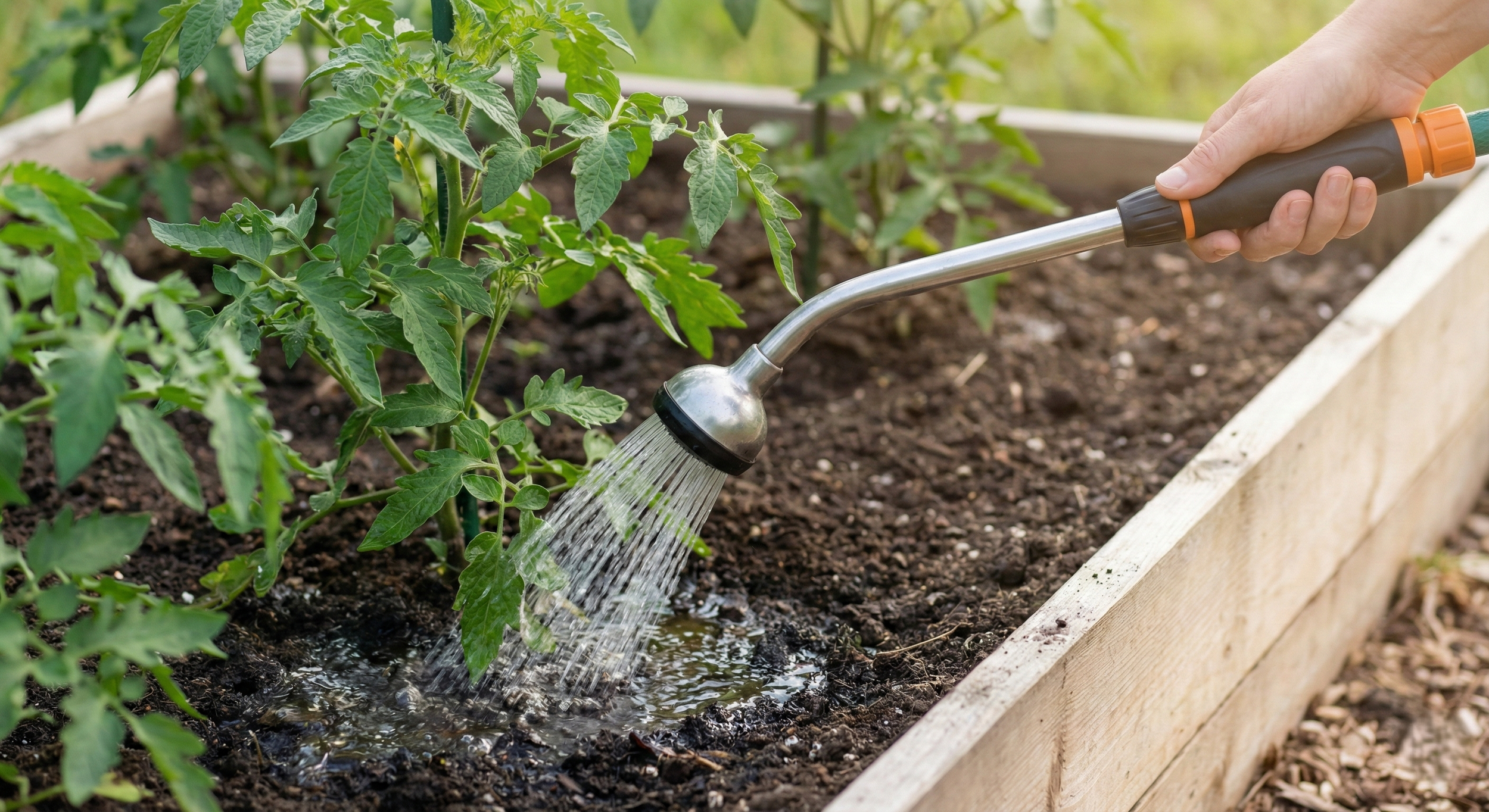
The soil surface is pale and dry, but a little farther down it may still be moist. Your garden needs water when the plants and root zone need it, not automatically every day because it is summer. Some containers and new plantings may need frequent attention; an established bed may follow a different rhythm.
The useful routine is regular checking. That is different from running every irrigation zone each time you walk outside.
Use a schedule as a starting point
UC’s vegetable-irrigation guide gives one to three summer irrigations a week as a general rule, then explains that frequency depends on root depth, soil texture and weather. It also warns against letting vegetable root systems become too dry between irrigations.
A lettuce planting, a large artichoke and a newly filled patio pot do not have the same available root zone. Watering beyond the roots' reach does not automatically make it useful to the plant. Check the actual bed depth and conditions rather than adopting one six-inch target for the whole garden.
Look below the surface
Check moisture in the planted root zone without tearing through roots. Compare a recently watered area with a drier edge and see how far water has reached. A quick touch at the surface is a clue, not a complete irrigation assessment.
If water runs off, pause and adjust the application so it can soak in. If the bed remains wet, check drainage and the delivery system before adding more. A wilted plant can have problems other than dry soil, so read the plant and the soil together.
In Santa Cruz County, shade, coastal cloud cover, wind and inland heat can change demand. Observe your own site through a warm spell and a cooler period. Fog does not guarantee adequate moisture below ground.
Give new plants and containers their own attention
A seedbed needs conditions that allow seeds to germinate, and a new transplant initially depends on a limited root area. Containers have a finite volume of mix. Any of these may need more frequent watering than an established in-ground planting, depending on conditions.
Check them separately instead of extending their schedule to every shrub or vegetable bed. As plants establish or the weather changes, reassess. Daily checking may be useful even when daily watering is not.
Improve delivery before adding time
UC’s home-gardener water-management guide recommends matching water needs, checking leaks and adjusting irrigation with the season. Watch a zone run: is an emitter blocked, has a line moved, or is water landing on a path? Repairing that problem may help more than lengthening every cycle.
Group plants with similar water needs where practical. Use a suitable mulch to reduce surface evaporation, with space around trunks and crowns. At the house edge, follow UC’s combustible-mulch guidance rather than covering every cleared area with straw or wood chips.
Keep a brief record of the setting and the result. A note such as “dry at the far end after the hot afternoon” is useful when deciding whether to change placement, duration or frequency.
Questions at the hose
Should I switch every bed to twice a week?
No. Use crop and root-zone guidance with the actual soil and weather. A general schedule is not a promise that every planting will receive enough water.
Is a moist surface enough reason to skip watering?
Not on its own. Check deeper where the plant's roots are active and consider how the water was applied. Moisture can be uneven across a bed.
Does less frequent watering always save water?
No. An excessively long cycle can run off or move water below the useful root zone. Aim for an appropriate amount and interval together.
This week: watch one irrigation zone, then check the soil where its plants are rooted. Use UC’s water-management advice and Your Garden Toolkit to record a small, informed adjustment.
