

Does Planting Garlic Around Roses Stop Aphids?
This article contains affiliate links. If you buy through one, Ambitious Harvest may earn a commission at no extra cost to you. As an Amazon Associate, we earn from qualifying purchases. Read our full disclosure.
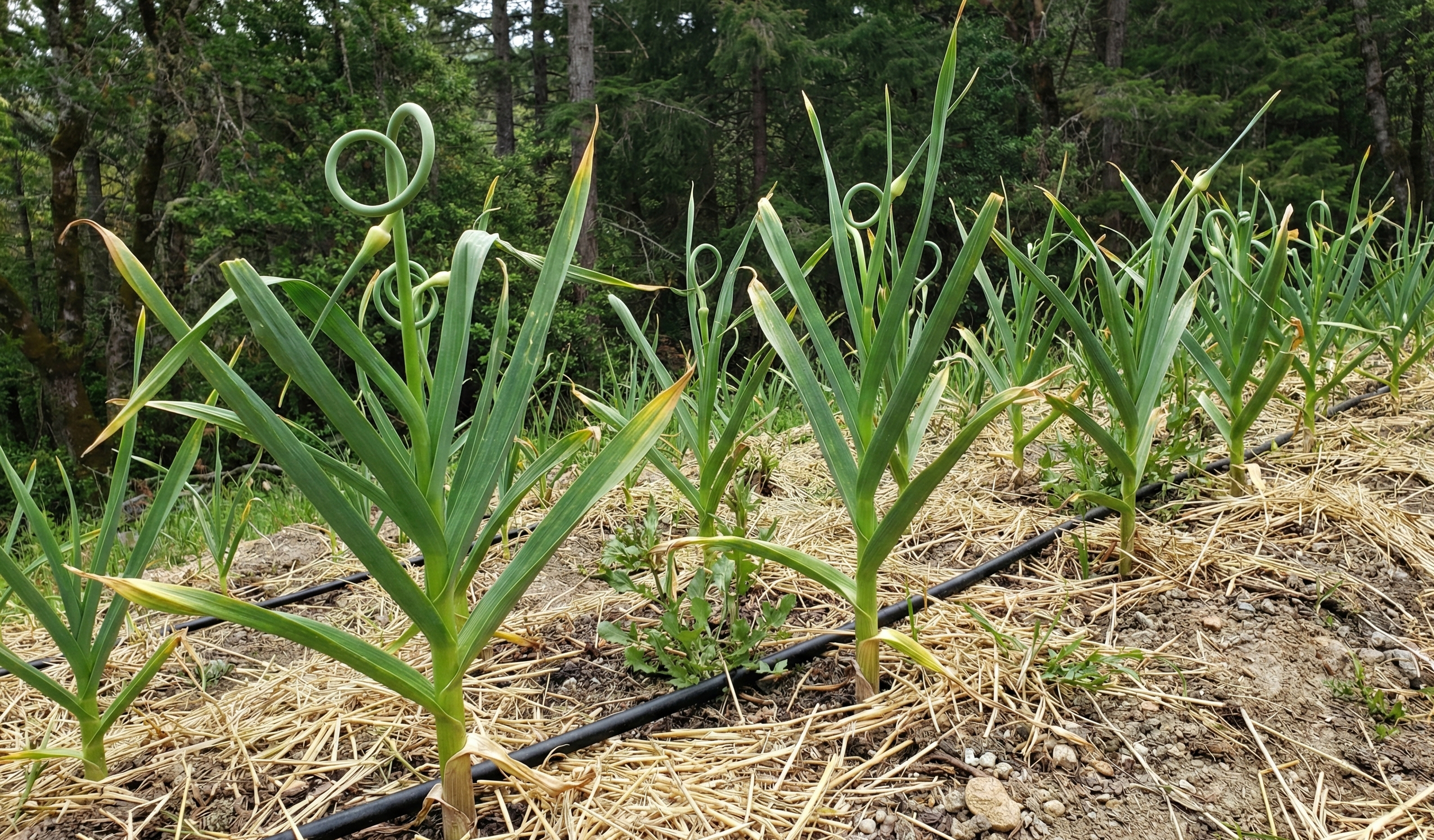
A ring of garlic around a rose sounds like a useful arrangement: flowers above, a crop below, and perhaps fewer aphids on the new buds. Grow the garlic if you want it, but do not rely on that planting to protect the rose from aphids. A strong smell and a dependable garden treatment are different things.
What would the evidence need to show?
For this particular advice to be dependable, evidence would need to show that living garlic plants reduce aphid problems on nearby roses under garden conditions. A test using an extract, an essential oil, or a different crop-and-pest combination does not establish that result.
Washington State University’s Gardening with Companion Plants discusses why laboratory results involving aromatic compounds often do not translate into reliable outdoor pest repellency. It also describes benefits from some mixed plantings. The conclusion is not that plants never affect their neighbors; it is that a specific promise needs evidence for the way you intend to use it.
That distinction matters when reading a companion-planting chart. WSU’s shorter companion-planting review likewise separates documented plant interactions from broad claims about friendly neighbors. Neither source is a reason to assume every pairing works, or that every pairing is useless.
Look at the rose before choosing a remedy
When new shoots start filling out in your Santa Cruz garden, look closely at the buds and undersides of leaves. Aphids gather on tender growth, but a few aphids do not automatically mean the plant needs treatment. Check for damage and for insects already feeding on the colony.
UC IPM’s aphid guidance recommends monitoring and nonchemical methods first. Lady beetles, lacewings, hoverfly larvae, and parasitoid wasps can reduce aphids. Give them a chance where damage is tolerable, without expecting the colony to disappear by a guaranteed deadline.
If aphids are building up, a stream of water can dislodge them from sturdy shoots. Adjust the force so it does not damage tender growth, and check again afterward. Watch for ants, too: they can protect aphids from natural enemies. Avoid excessive fertilizer that encourages an abundance of soft new growth.
Keep soap treatment precise
If numbers remain troublesome and nonchemical steps are not enough, a labeled insecticidal soap can be an option. It must contact the aphids to work; insects sheltered inside curled leaves may escape it. Follow the exact product label, including plant suitability, dilution if required, and application precautions. Do not substitute household detergent. For the linked Safer Brand 5118-6 concentrate, the manufacturer’s instructions also exclude new transplants, newly rooted cuttings and drought-stressed plants, and advise avoiding applications above 90°F. Check the label’s plant-sensitivity list and use-specific directions before spraying.
UC IPM cautions against applying soaps to drought-stressed plants or in very hot conditions. Some plants are sensitive, and direct spray can affect beneficial insects too. Avoid broad-spectrum insecticides that disrupt the natural enemies you are trying to keep in the garden.
Give each plant a useful job
You can still enjoy garlic near a rose if both have enough space and suitable growing conditions. Treat the garlic as a crop, and judge the rose's aphid problem by what you actually observe. If aphids decline after planting, natural enemies, weather, and changes in the rose's growth could also be involved.
This week: inspect one rose for aphids, damaged growth, and natural enemies. Decide whether it needs a water spray or simply another check. For garden-planning resources, visit Your Garden Toolkit.
Frequently asked questions
Does a garlic-extract study prove the planting trick works?
No. An extract applied at a tested concentration is a different treatment from garlic growing in the soil nearby. Look for evidence that matches the plant, pest, and method before relying on a claim.
Should I pull out garlic already growing beside my roses?
There is no need to remove it just because it is not a reliable aphid-control plan. Keep it if the planting suits the space and you want the crop.
Should I spray as soon as I see aphids?
Not automatically. Check how the rose is doing and whether natural enemies are present. Start with monitoring and a suitable nonchemical response when needed, then reassess.
