

Do Compost Bins Really Attract Rats?
This guide contains an affiliate link. Purchases through it may earn Ambitious Harvest a commission at no extra cost to you. As an Amazon Associate, we earn from qualifying purchases. Read our full disclosure.
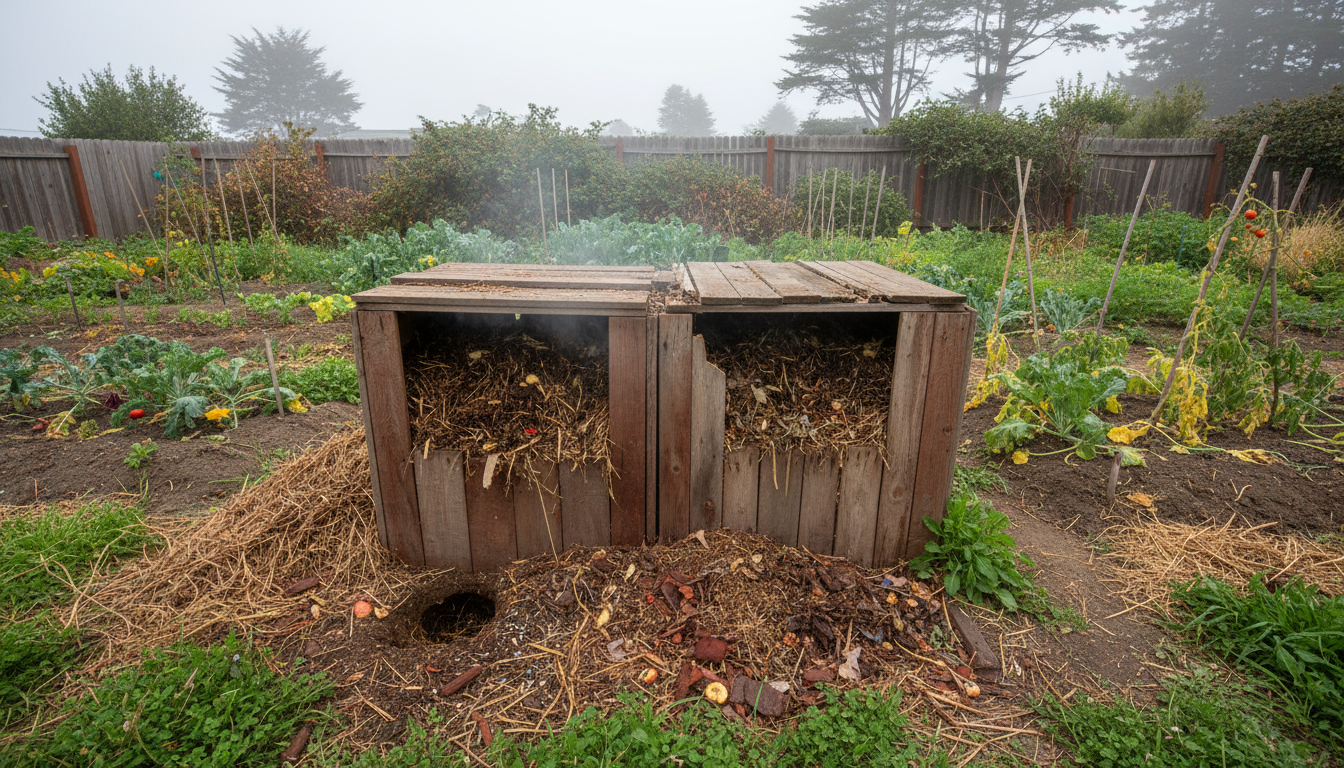
A lid lifted in the morning should reveal yesterday's scraps, not a fresh tunnel underneath the bin. Compost can attract rats when it offers food or shelter. Careful management reduces that risk, but even a tidy bin deserves regular checks. You can keep composting while making the setup harder for rodents to use.
Look beyond the scraps on top
The question isn't simply whether a garden has compost. Look at what a rat can reach and where it can hide. A loose lid, a gap at the base or food spilled beside the bin gives you something concrete to fix.
UC IPM identifies both roof rats and Norway rats as common in California. Their habits differ, but both can use gardens for food. The guide specifically notes burrowing around compost, particularly where meat, fish, eggs or eggshells have been added. Fruit and other available foods can matter too, so removing meat alone isn't a complete solution.
Make food harder to reach
Use a sturdy enclosed bin with a lid that closes securely. For an open-bottom model, UC's backyard composting guidance recommends quarter-inch hardware cloth underneath. The mesh needs to meet the bin securely around the edges; a loose sheet underneath leaves another route in. The linked hardware cloth is quarter-inch mesh. Check its dimensions and how you will attach it before buying.
A tumbler is another enclosed option, but height above the ground doesn't make it rat-proof. Examine its vents, seams and loading door. Plastic can be gnawed, and a damaged panel needs attention regardless of the bin's design.
Santa Cruz County's composting advice recommends keeping meat, dairy and oily foods out and covering food scraps. Mix fruit and vegetable scraps into the material and cover exposed food with dry leaves or other suitable browns. Keep some beside the bin so covering each addition becomes part of the routine. A covering layer helps with exposed scraps; it doesn't replace a sound enclosure.
Check the rest of the garden, too
A repaired bin can sit beside an equally accessible meal. Pick up fallen fruit and spilled feed, secure stored pet food, and reduce clutter around the compost area. Leave yourself enough access to inspect the sides and base.
Turning and monitoring the compost are useful maintenance habits, but don't treat turning as a remedy for an active rat problem. If you see fresh burrows, gnawing or droppings, address the activity promptly. A qualified pest professional can assess an established problem, especially if there are signs near the house. This is a reason to improve the setup, not to blame yourself for having a garden.
This week: Check the lid, base and seams before adding the next bowl of scraps. Then look for spilled food nearby. Fix the access problem you can actually see before shopping for a replacement bin.
Find more gardening resources at Your Garden Toolkit.
Frequently asked questions
Will a compost bin attract rats to my yard?
It can provide food or shelter, even when you're trying to manage it carefully. UC IPM recommends limiting food, shelter and access together. Regular checks tell you more than a promise that a particular bin will never have rats.
How do I keep rats out of my compost bin?
Start with a tight lid and intact enclosure. Secure quarter-inch hardware cloth beneath an open-bottom bin, checking the edges as well as the middle. Cover fresh scraps and inspect for new damage. These measures reduce access without guaranteeing exclusion forever.
What should I avoid composting when rodents are a concern?
Keep meat, fish, dairy, eggs and oily leftovers out of the backyard setup. UC also flags eggshells around rat-affected compost piles. Fruit and vegetable scraps still need containment; a plant-based pile isn't automatically unattractive to rodents.
Is a tumbler the most rodent-resistant option?
There isn't a universal winner. A well-built tumbler may suit your space, but compare the actual lid, openings and materials with other enclosed bins. Ask your local waste service about current composting programs before assuming a discount is available.
