

Can You Grow Blueberries in California?
Some links in this guide are affiliate links. If you buy through one, Ambitious Harvest may earn a small commission at no extra cost to you. As an Amazon Associate, we earn from qualifying purchases. Read our full disclosure.
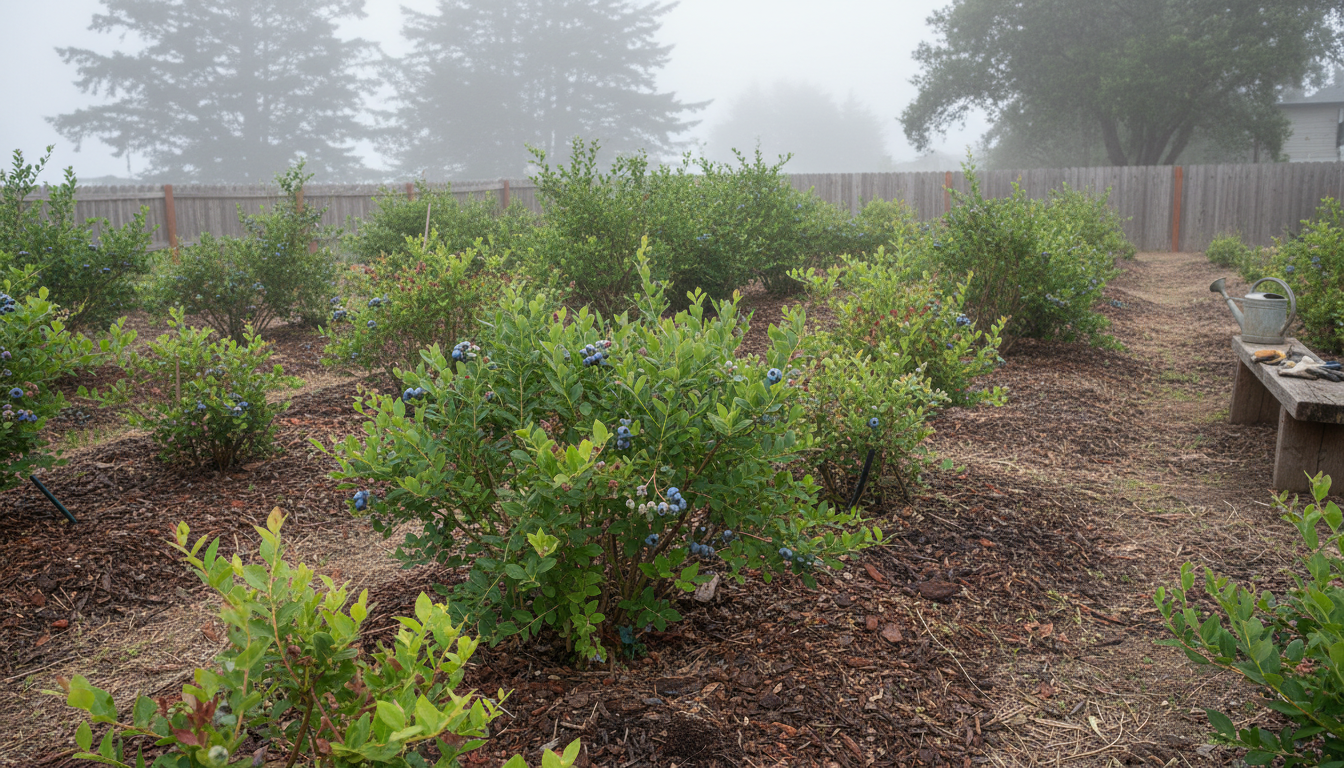
Yes, blueberries can grow in California, including suitable Santa Cruz County gardens. The task is to match the variety to the site and provide an acidic, well-drained root environment with dependable irrigation. A container can make that easier to manage, but it still needs attention.
A blueberry in a nursery pot can make the project look wonderfully simple. The decisions that matter come before you set it into the ground: how much winter chill the plant needs, what your soil is like, and how you'll keep its shallow roots supplied with water through summer.
California isn't one blueberry climate
UC research documented southern highbush blueberry production on the Central Coast. These low-chill types offer options for mild-winter sites where a higher-chill cultivar may struggle. The report describes specific trials, including plants established in 1997 and harvested in 2000; its results aren't a current ranking for every garden.
Winter chill varies by location and year. USDA hardiness zones describe winter cold extremes, so a Zone 9 or 10 label alone doesn't tell you whether a cultivar will receive enough chill. A cool inland pocket and a mild coastal yard deserve separate consideration.
Choose a cultivar before choosing its spot
UC Master Gardeners of San Luis Obispo County list southern highbush options including 'Misty,' 'Sunshine Blue,' and 'O'Neal' for its county. That makes them candidates to research for a similar site, not automatic winners in Santa Cruz. 'Sunshine Blue' is a compact option to consider for containers. Check the named cultivar's expected size, chill needs, and local performance with a knowledgeable nursery.
'Jewel' and 'Emerald' may also appear in low-chill nursery selections. Ask for locally applicable information before choosing them. A general low-chill label doesn't settle bloom timing, fruit quality, or suitability for your particular exposure.
Most blueberries can set fruit with their own pollen, but a second compatible variety can improve results. Choose varieties with overlapping bloom, rather than simply buying two different labels. Our Best Blueberry Varieties for California guide can help you build a shortlist.
Test the root environment
UC's home-garden guidance recommends acidic soil around pH 4.5 to 5.5. Don't assume your soil is alkaline merely because the garden is in California. Test it, assess drainage, and use that information to decide between an in-ground bed and a container.
An acid-loving-plant potting mix can simplify a container planting. Use a container with drainage holes and room for the cultivar to grow. A raised bed also needs an appropriate root zone and drainage; its sides don't automatically correct the soil underneath.
The linked Espoma perlite is an ingredient to evaluate as part of a container mix, not a complete blueberry growing medium or an acidifier. Start with a suitable formulated mix or a tested recipe.
If the soil needs acidification, choose the amendment and rate from test results and product directions. Check the formulation of the linked Espoma Soil Acidifier before using it. Acidifying products are not interchangeable, and changes in soil pH take time. Retest rather than adding more on a fixed schedule.
Plan water and sunlight together
Blueberry roots need moisture without remaining waterlogged. Check the mix and the plant through the dry season, including during berry development. A foggy morning doesn't tell you whether a container has enough water, and a shaded spot isn't automatically suitable for fruit production.
Look for a sunny position, with protection from excessive afternoon heat where needed. UC's SLO guide recommends at least six hours of sun. Evaluate how light and heat change across the day in your proposed location.
Irrigation water can influence the root-zone pH over time. If pH keeps rising, have the water evaluated as well as the soil or mix. Water alkalinity affects how it responds to acid, so don't use a fixed spoonful-of-vinegar recipe. Get a tested plan appropriate to the water and system before attempting treatment.
Let a young plant establish
Resist judging a newly planted blueberry by its first crop. UC's SLO home-garden guidance recommends removing flowers in the first year so the plant can establish. Nursery size, planting time, cultivar, and care affect the path to a useful harvest.
For the next steps, our blueberry growth stages guide explains how the plant develops. Make consistent growth and a healthy root system your early goals.
Common questions about California blueberries
Are southern highbush varieties always the best choice?
They are useful candidates for mild-winter areas, but California also has colder sites where other blueberry types may fit. Match the cultivar to local winter conditions, summer exposure, and the growing space you can provide.
Can I use a half-barrel?
A suitable half-barrel can provide growing space if it drains well and contains an appropriate acidic mix. Consider its weight, condition, and location before filling it. Keep checking moisture and pH as the plant grows; a large container doesn't eliminate those jobs.
Do I need two plants?
One self-fruitful blueberry may produce berries. Two compatible varieties with overlapping flowers can improve pollination, but both still need suitable chill, light, moisture, and growing medium. Choose for your site and available space.
Before bringing one home
Choose the proposed location, check its light, and decide how you'll test and manage the root zone. Then compare cultivars. That little bit of preparation makes the nursery visit more useful than buying first and solving the soil problem afterward.
Use Your Garden Toolkit for garden planning. For related reading in the article library, look for Growing Fruit in Containers and How to Acidify Soil for Blueberries.
