

Do You Need to Add Lime to California Garden Soil?
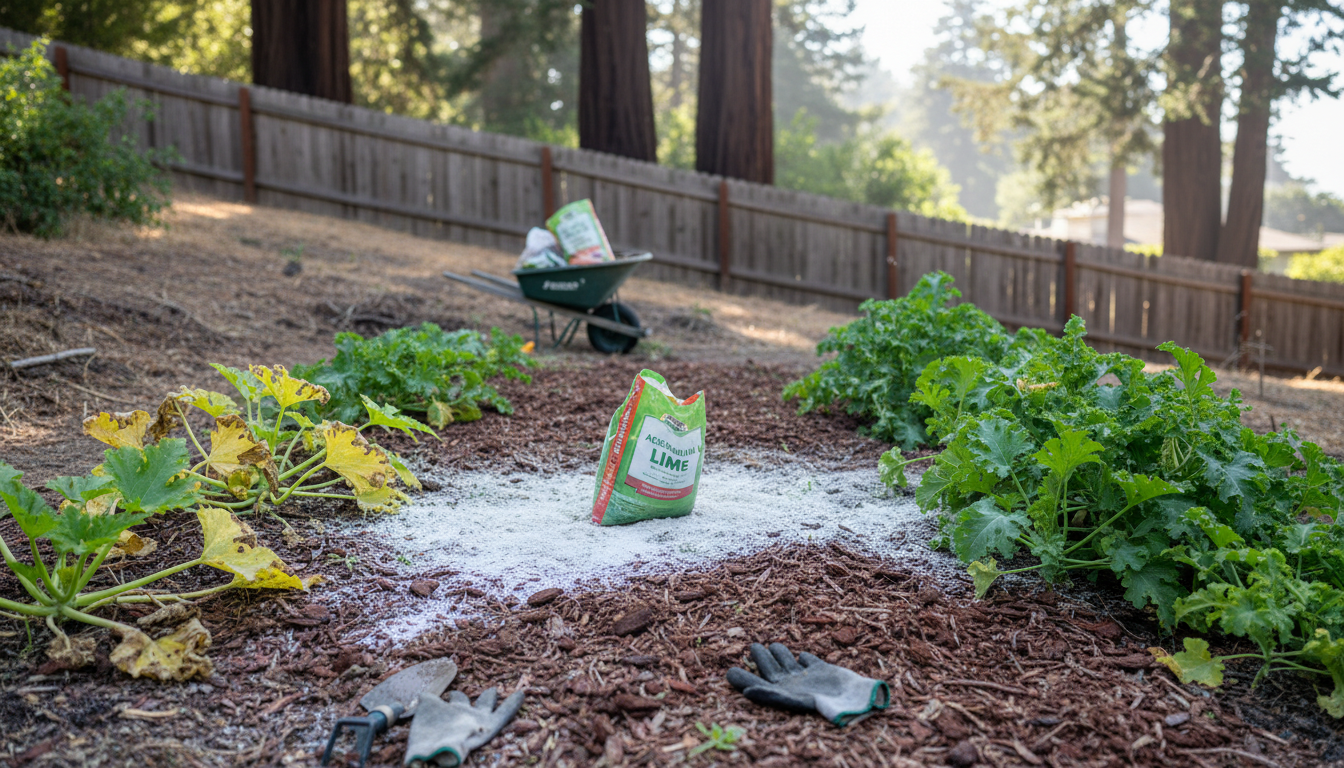
The verdict: skip routine liming. Add lime only when testing and the needs of your plants show a reason to raise soil pH. A bag of garden lime can be useful for an acidic bed, but it is not a spring tonic for every California garden.
It is an easy item to add to the nursery cart: a familiar name, a promise of better soil, and one more job you can finish before planting. First, find out what problem it would solve. The soil in a Santa Cruz raised bed may be quite different from the native ground a few steps away.
Some product links in this guide are affiliate links. If you buy through one, Ambitious Harvest may earn a small commission at no extra cost to you. As an Amazon Associate, we earn from qualifying purchases. Read our full disclosure.
Why the advice needs context
Liming makes sense where soil is too acidic for the intended crop. Trouble starts when a recommendation for one garden becomes an annual task in another. A planting calendar cannot tell you the pH of your own bed.
UC ANR's Adjusting Soil pH in California Gardens describes a wide statewide range and explains that construction, amendments, minerals, and irrigation can affect soil conditions. That is a reason to sample your garden, not to assume a coastal address means neutral soil or a nearby redwood means you need lime.
What lime changes
Garden limestone raises pH, making an acidic soil less acidic. That can help when the current pH is unsuitable for a crop. If the soil is already alkaline, adding lime moves it in the wrong direction.
UC IPM explains how high pH can reduce the availability of iron, manganese, and zinc. Yellowing leaves can be a clue, but they do not prove a pH problem by themselves. Check the root-zone soil and consider other causes of poor growth before reaching for an amendment.
A reading below pH 6 is not an automatic instruction to lime. The target depends on what you grow. Blueberries, for example, need acidic conditions. Do not try to bring their soil up to a vegetable-bed target simply because the number looks low. Our Growing Blueberries in California guide discusses that different set of needs.
Test with a decision in mind
Tell the testing service what you plan to grow and ask whether its results include an appropriate amendment recommendation. Follow its sampling directions, keeping areas with different soil or management separate. A container mix, imported raised-bed soil, and an in-ground bed should not be combined into one sample.
The UC Davis Analytical Laboratory publishes its current testing services and submission instructions. Check fees, sample requirements, and whether interpretation is included before ordering. The linked MySoil soil test kit is a separate retail option, not a UC Davis service; compare what the test measures and the advice it provides.
A home pH test can help you investigate, but it does not establish a lime dose. Oregon State's lime-requirement research illustrates why recommendations account for soil buffering and a chosen pH target. Use a recommendation suited to your soil and crop rather than borrowing an Oregon field rate for a Santa Cruz bed. Our How to Read a Soil Test for California Gardens can help you work through a report.
If the result calls for a change
Ask for the product type, amount, application method, and retesting plan. Agricultural limestone and dolomitic lime are not interchangeable in every situation: dolomite also supplies magnesium. The choice should reflect the soil test rather than whichever bag is on sale.
Lime reacts gradually. Give the recommended treatment time to work and retest before adding more. Do not substitute hydrated lime or wood ash for a garden-lime recommendation.
Compost has a different job. It can improve aspects of soil condition, but ordinary additions do not reliably bring pH to your chosen target. Use it for an identified need instead of treating it as an automatic fix in either direction. See Best Soil Amendments for Coastal California for the broader amendment discussion.
This week: choose the bed you are concerned about, note what is growing there and what has already been added, and arrange the appropriate test. Leave the lime out of the cart until the result gives you a reason to buy it.
Frequently asked questions
Do California gardens usually need lime?
Routine liming is not a sound default. High-pH soils are common, but acidic soils occur too. Your own test, crop, and growing conditions should determine whether raising pH would help.
What happens if I lime soil that is already alkaline?
It can become less suitable for your plants by reducing nutrient availability. More fertilizer may not solve that problem. If you have already applied lime, record the product and amount and get advice based on a soil test before trying another correction.
How do I know whether my soil needs lime?
Compare a reliable test with the needs of the intended plants, then obtain a suitable lime recommendation if a change is warranted. Neither a low reading alone nor a location in the Santa Cruz Mountains is enough to set a dose.
For help organizing the next planting season, visit Your Garden Toolkit. Keep the soil report with your garden notes so next year's decisions begin with what you learned this year.
