

California Gardeners' Guide to Freebies: Save Big and Grow More
Gardening in California can be remarkably affordable once you know where to look. Between public programs, local sharing networks, and free research-backed information, a productive garden has far more to do with resourcefulness than with budget. Here is where savvy local gardeners find seeds, plants, materials, and expert help for little or nothing.
Free expert help from UC Master Gardeners
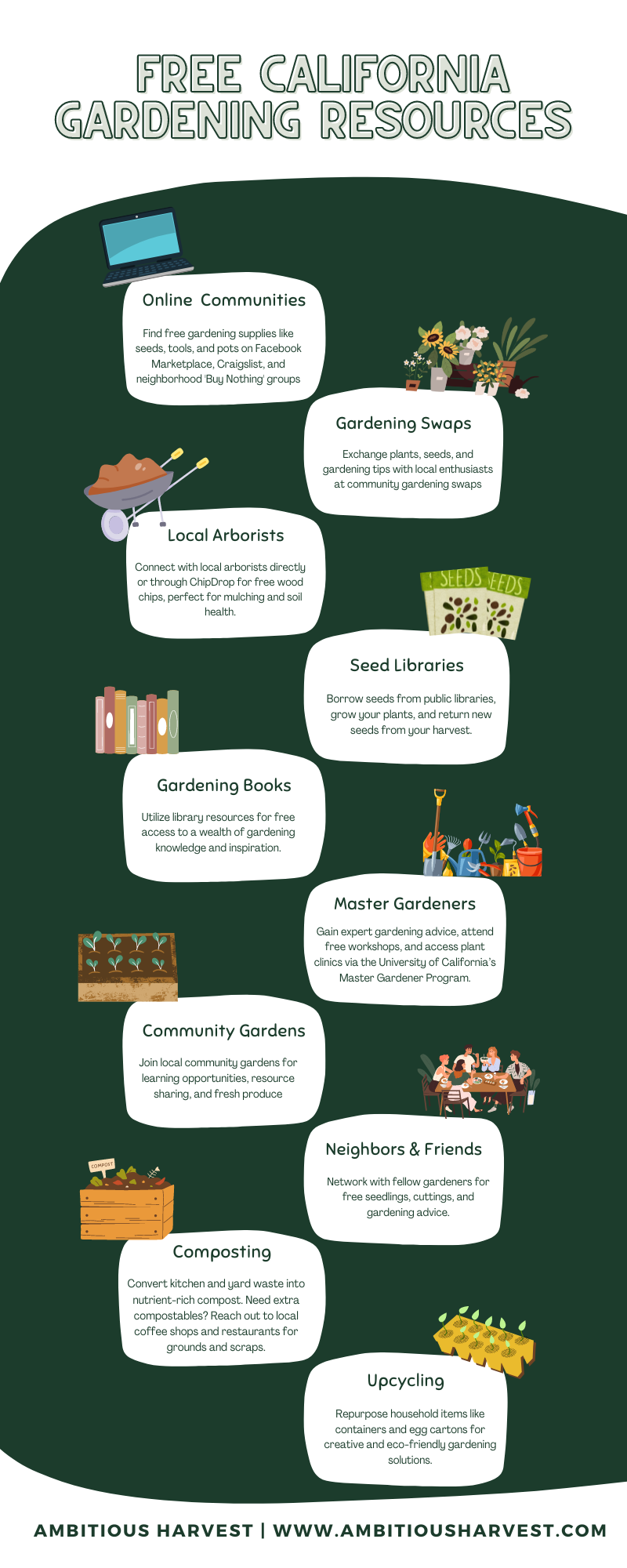
The single most valuable free resource for California gardeners is the University of California Master Gardener Program. Master Gardeners are trained volunteers backed by UC research, and the Santa Cruz County program runs a free help desk where you can send a photo of a struggling plant or an unfamiliar pest and get a science-based answer. They also host free and low-cost workshops through the year on composting, pruning, and water-wise gardening. It is local, unbiased, and free.
Swap and share with other gardeners
The easiest free resources are often the people around you. Community gardening groups on Facebook and neighborhood Buy Nothing groups are full of gardeners giving away surplus seedlings, divided perennials, spare seed, and empty pots. Seed and plant swaps, hosted by garden clubs and some libraries, let you trade your extra lavender starts for a neighbor's tomato seedlings. Bring whatever you have to share and you will rarely leave empty-handed.
Borrow seeds, tools, and know-how
- Seed libraries. Many California library branches now run seed lending libraries: you take a few packets at the start of the season and return saved seed at the end. Ask at your local branch, or watch their calendar for seed swaps.
- Tool lending. Some communities lend garden tools the way a library lends books, which saves buying a broadfork or a chipper you would use twice a year.
- Library cards. Your card also gets you gardening books, magazines, and research databases at no cost, online and on the shelf.
Free soil, mulch, and compost
- Free wood chips. Services like ChipDrop connect you with local tree crews who would rather drop a load of chips nearby than pay to dump them. It is free mulch, often by the truckload, as long as you can use what arrives.
- Municipal compost and mulch. Many California cities and counties give away finished compost or mulch from their green-waste programs, sometimes at seasonal giveaway events. Check your local public works or solid-waste website.
- Coffee grounds and scraps. Cafes will often hand over spent coffee grounds for your compost pile, and your own kitchen scraps are the cheapest soil amendment there is.
Trusted free information online
Skip the guesswork and go straight to research-based sources, all free:
- The UC California Garden Web gathers UC's home-gardening guidance for our state in one place.
- UC IPM (Integrated Pest Management) has clear, photo-rich pages for identifying and managing nearly any California pest or disease without reaching for the strongest spray first.
- Calscape, from the California Native Plant Society, helps you find native plants suited to your exact location, which usually means less water and more pollinators.
Stretch your budget further
A few habits keep costs down all season. Save your own seed from open-pollinated crops, take cuttings from friends' plants, and split perennials to multiply what you already have. Watch for Master Gardener and botanic-garden plant sales, where healthy, locally grown starts cost a fraction of nursery prices. A productive California garden has far more to do with patience and good local information than with how much you spend.
When you do need to buy seed, choosing a California company keeps your varieties suited to our climate. We like Seeds Now for non-GMO, open-pollinated, and heirloom seed. (Affiliate link, see our disclosure.)
Frequently Asked Questions
What is the best free resource for a new California gardener?
The UC Master Gardener Program. It offers free, research-based advice through a local help desk and low-cost workshops, with no sales pitch attached.
Where can I get free plants and seeds locally?
Try seed lending libraries at public library branches, community seed and plant swaps, and Buy Nothing or local gardening groups online, where gardeners regularly give away seedlings, divisions, and saved seed.
How do I get free mulch or compost?
Sign up for a free wood-chip drop from a local tree service through a service like ChipDrop, and check your city or county green-waste program for free or low-cost compost and mulch giveaways.
Are there free, trustworthy gardening guides online?
Yes. The UC Master Gardener Program gardening resources site (formerly the California Garden Web), UC IPM for pest and disease help, and Calscape for native plants are all free, research-based, and tailored to California conditions.
