

Owls as Garden Allies: Installing Owl Boxes for Natural Rodent Control
A few of the product links in this guide are affiliate links. If you buy through one, Ambitious Harvest may earn a small commission at no extra cost to you, which helps keep these guides free. We only point to gear we would use in our own Santa Cruz garden. As an Amazon Associate, we earn from qualifying purchases. Read our full disclosure.
The Night Shift
While you sleep, barn owls are hunting. Silent, efficient, and relentless, a single barn owl family can consume 3,000 or more rodents per year. That's gophers, rats, mice, and voles disappearing from your property night after night, without traps, without poison, without any effort from you.
Owls are the ultimate natural pest control. They've been keeping rodent populations in check for millions of years, and they'll do it for free if you give them a place to live.
For Santa Cruz gardeners battling rodents (and who isn't?) attracting owls is one of the smartest investments you can make. A well-placed owl box can transform your property from rodent buffet to owl hunting ground.
Why Owls Matter Now More Than Ever
Owl populations face serious pressure from habitat loss and, critically, from rodent poisons.
The poisoning crisis:
When rodents eat poison bait, they don't die immediately. They become slow, disoriented, and easy prey, exactly what a hunting owl is looking for. The owl eats the poisoned rodent and ingests the toxin. One poisoned meal might not kill an owl, but the poison accumulates with each contaminated rodent.
Studies of barn owls in California show that 70 to 90 percent test positive for rodenticide exposure. Many die from internal hemorrhaging caused by anticoagulant poisons. We're killing the very animals that would control rodents naturally.
Habitat loss:
Barn owls historically nested in old barns, hollow trees, and abandoned buildings. As we modernize agriculture, remove dead trees, and renovate old structures, owl nesting sites disappear. Owl boxes replace this lost habitat.
The solution is simple:
Stop using rodent poison. Install owl boxes. Let owls do what they've done for millennia.
Owls of Santa Cruz County
Several owl species call our area home:
Barn Owl (Tyto alba): The champion rodent hunter. Barn owls specialize in small mammals and will nest readily in properly designed boxes. A nesting pair with hungry owlets can eliminate staggering numbers of rodents. This is the species most likely to use your owl box.
Identification: Heart-shaped white face, golden-brown back, pale underparts, dark eyes. Doesn't hoot. Makes eerie screeches and hissing sounds.
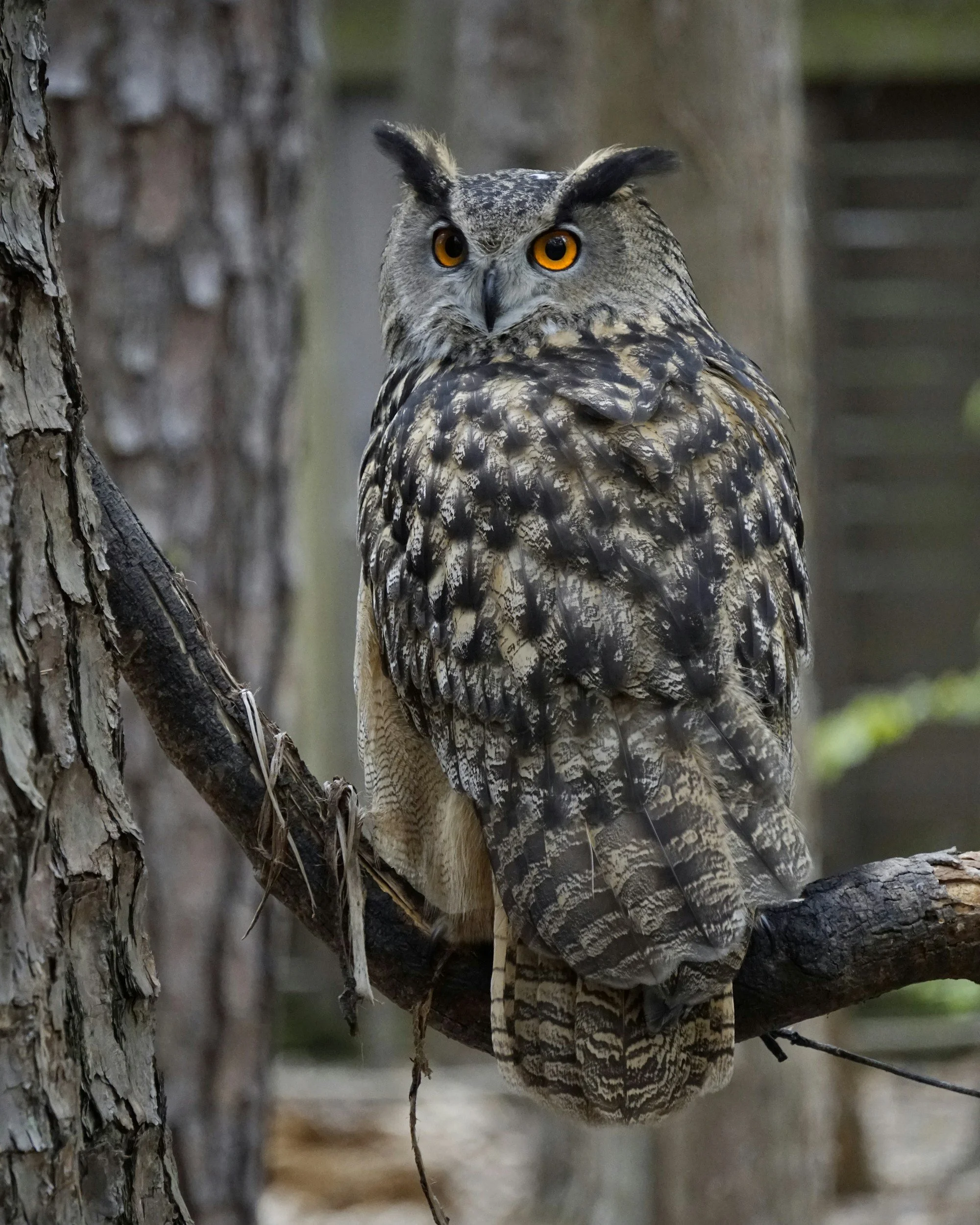
Great Horned Owl (Bubo virginianus): Our largest common owl. Great horned owls eat rodents but also take rabbits, skunks, and even other owls. They don't use nest boxes (they prefer stick nests in trees) but benefit from preserved habitat.
Identification: Large ear tufts, yellow eyes, barred plumage, deep hooting call.
Western Screech-Owl (Megascops kennicottii): A small owl that nests in tree cavities and sometimes nest boxes. Diet includes rodents, large insects, and small birds.
Identification: Small with ear tufts, gray or brown plumage, yellow eyes, trilling call.
Northern Saw-whet Owl (Aegolius acadicus): A tiny owl found in forested areas. Eats mainly mice and voles. May use small nest boxes.
Identification: Very small, no ear tufts, large head, yellow eyes, repetitive tooting call.
For most Santa Cruz gardeners, barn owls offer the greatest pest control benefit and are the easiest to attract with nest boxes.
The Numbers: What Owls Eat
Barn owl diet studies paint an impressive picture:
Per night:
A single barn owl eats 2 to 4 rodents per night
During breeding season, adults hunt even more intensively
Per year:
One barn owl consumes approximately 1,000 to 1,500 rodents annually
A breeding pair: 2,000 to 3,000 rodents
A pair raising a typical brood of 4 to 6 owlets: 3,000 to 4,000+ rodents
What they eat:
Gophers (yes, they catch them at tunnel openings)
Voles and meadow mice
Rats (roof rats and Norway rats)
House mice
Ground squirrels (smaller ones)
Occasionally rabbits, birds, and large insects
The pellet evidence:
Owls swallow prey whole and regurgitate pellets containing bones, fur, and other indigestible parts. Analyzing pellets beneath a roost or nest box reveals exactly what the owls are eating. It's usually an impressive list of garden pests.
Installing a Barn Owl Box
Attracting barn owls starts with providing suitable housing.
Box design:
Barn owls are particular about their homes. Use a proven design:
Dimensions:
Floor: approximately 10 x 18 inches minimum (larger is better)
Height: 15 to 18 inches
Entry hole: 4.5 x 4 inches (elliptical) or 6 inches round
Include a landing platform or perch outside the entrance
Include a predator guard (see below)
Construction:
Use 3/4-inch exterior plywood or solid wood
Cedar or redwood resists rot
Avoid pressure-treated wood (chemicals can harm owls)
Drill drainage holes in the floor
Include ventilation holes near the top
Make one side or top hinged for cleaning
Predator guard: Essential for protecting eggs and owlets. A tunnel entrance (6-8 inches long) prevents raccoons from reaching into the nest. Some designs use a baffle or cone.
Where to get boxes:
Purchase:
Barn Owl Box Company (barnowlbox.com)
Wild Birds Unlimited stores
Various online retailers
Local woodworkers and craftspeople
Build your own:
Free plans available from Hungry Owl Project (hungryowl.org)
Barn Owl Trust (barnowltrust.org.uk) has excellent designs
Santa Clara Valley Audubon Society has proven plans
Search "barn owl box plans" for many options
Local resources:
Santa Cruz Bird Club may know local box builders
Some wildlife organizations hold box-building workshops
Master Gardeners sometimes coordinate group builds
Placement:
Location is critical for success:
Height:
Mount 12 to 20 feet high
Higher placements often attract owls faster
Barn owls prefer elevated nest sites
Orientation:
Face the entrance away from prevailing weather (usually away from west/northwest)
Avoid direct sun on the entrance (overheating kills owlets)
North or east-facing entrances often work well
Location options:
On a pole in an open area
On the side of a barn, garage, or outbuilding
On a large, stable tree (less ideal, predator access)
On a purpose-built mounting structure
Habitat requirements:
Open hunting areas nearby (fields, pastures, orchards, large gardens)
Barn owls prefer to hunt over grassland, not dense forest
Avoid heavily urbanized areas with limited hunting ground
Rural, semi-rural, and edge-of-suburban locations are ideal
Avoid:
Areas with heavy vehicle traffic (owls are hit by cars)
Locations near busy roads
Places with heavy pesticide use
Properties where rodenticides are used (critical!)
Timing:
Install boxes in fall or winter, before breeding season
Barn owls begin prospecting for nest sites as early as January
Boxes installed in spring may not be used until the following year
Patience is required. It may take 1 to 3 years for owls to find your box
Creating Owl-Friendly Habitat
Beyond the nest box, make your property welcoming:
Hunting habitat:
Barn owls hunt over open ground with low vegetation:
Maintain some areas of low grass or meadow
Orchards and vineyards provide good hunting
Field edges and fence lines attract rodents owls hunt
Avoid paving or developing all open space
Perching sites:
Owls hunt from perches, listening and watching for prey:
Preserve dead trees and snags
Fence posts make excellent hunting perches
Install T-perches in open areas (a simple post with a crossbar)
Avoid disturbance:
Don't check occupied boxes frequently (monthly is enough)
Keep pets away from nesting areas
Reduce nighttime lighting near the box
Warn visitors about nest sites during breeding season
No poison - ever:
This cannot be overstated. Using rodent poison on a property with owl boxes is counterproductive and potentially fatal to the owls you're trying to attract. Choose:
Snap traps for rodent control
Habitat modification
Barn cats for outdoor areas
Live trapping and removal
Patience (let the owls do their job)
Other Owl Species
While barn owls provide the most rodent control, other owls contribute too.
Western Screech-Owl boxes:
If you're in a more wooded area where barn owls are less common, screech-owls are an option:
Smaller box (8 x 8 x 15 inches)
3-inch entrance hole
Mount 10 to 15 feet high on a tree
Face away from prevailing weather
Screech-owls eat fewer rodents but also take pest insects
Great Horned Owl habitat:
You can't provide a nest box for great horned owls, but you can support them:
Preserve large trees with sturdy branches
Leave old hawk and crow nests (great horned owls don't build their own)
Maintain habitat connectivity to wildlands
Monitoring and Maintenance
Signs of occupancy:
How do you know if owls are using your box?
Visual signs:
Whitewash (droppings) on the mounting pole or below the box
Owl pellets beneath the box or on the landing platform
Feathers near the entrance
Adult owl visible in the entrance at dusk
Sound signs:
Screeching and hissing calls at night (especially during breeding)
Begging calls from owlets (sounds like snoring)
Activity sounds from inside the box at twilight
Direct observation:
Watch the box at dusk from a distance
Adults emerge to hunt about 30 minutes after sunset
Use binoculars to avoid disturbing them
Annual cleaning:
Clean boxes once per year, after breeding season ends:
Late fall (October to November) is ideal
Remove old nesting material, pellets, and debris
Check for damage and make repairs
Add 2 to 3 inches of wood shavings for next season
Wear gloves and a dust mask (owl pellets can harbor parasites)
Record keeping:
Consider documenting your box:
Date installed
When owls first appeared
Breeding activity observed
Number of owlets fledged
Pellet contents if analyzed
Your observations contribute to citizen science and help track owl populations.
Realistic Expectations
Owl boxes aren't magic, but they work.
What to expect:
Boxes may take 1 to 3 years to attract owls
Not every box will be occupied
Owls may use a box one year and not the next
Rodent populations will decrease but not disappear entirely
You may not see your owls often (they're secretive)
What you'll notice over time:
Fewer fresh gopher mounds
Less evidence of rat activity
Whitewash and pellets indicating owl presence
The incredible sound of barn owls calling at night
The satisfaction of poison-free rodent control
Frequently Asked Questions About Owl Boxes and Rodent Control
How many rodents do barn owls eat?
A single barn owl eats 2-4 rodents per night, consuming 1,000-1,500 rodents per year. A breeding pair takes 2,000-3,000 rodents annually. A pair raising a typical brood of 4-6 owlets can eliminate 3,000-4,000+ rodents per year. Their diet includes gophers (caught at tunnel openings), voles, meadow mice, rats, house mice, and smaller ground squirrels. This is free, ongoing pest control that works while you sleep.
Will barn owls control gophers in my garden?
Yes, barn owls catch gophers at tunnel openings when gophers surface. While owls won't eliminate every gopher, they significantly reduce populations over time. Combine owl boxes with other strategies (hardware cloth barriers, trapping) for best results. Owls are particularly effective because they hunt consistently, night after night, without any effort from you. One owl family can make a noticeable difference in gopher activity.
How high should I mount an owl box?
Mount barn owl boxes 12-20 feet high. Higher placements often attract owls faster since barn owls prefer elevated nest sites. You can mount boxes on poles in open areas, on the side of barns or outbuildings, or on purpose-built mounting structures. Avoid mounting on trees when possible since this gives predators easier access. Face the entrance away from prevailing weather (typically away from west or northwest).
How long does it take for owls to use a box?
Patience is required. Owl boxes may take 1-3 years to attract occupants. Install boxes in fall or winter before breeding season since barn owls begin prospecting for nest sites as early as January. Boxes installed in spring may not be used until the following year. Signs of occupancy include whitewash (droppings) below the box, owl pellets on the landing platform, and screeching calls at night.
Why can't I use rodent poison if I have owl boxes?
Using rodent poison on a property with owl boxes is potentially fatal to the owls you're trying to attract. Poisoned rodents become slow and disoriented, making them easy prey. Owls eat contaminated rodents and accumulate toxins over time. Studies show 70-90% of California barn owls test positive for rodenticide exposure, and many die from internal hemorrhaging. Stop all rodent poison use immediately if you want owls.
What size should a barn owl box be?
A proper barn owl box has a floor of approximately 10x18 inches minimum (larger is better), height of 15-18 inches, and an entry hole of 4.5x4 inches (elliptical) or 6 inches round. Include a landing platform or perch outside the entrance and a predator guard (tunnel entrance 6-8 inches long) to prevent raccoons from reaching into the nest. Use 3/4-inch exterior plywood or solid wood; avoid pressure-treated wood.
Where can I get owl box plans or buy a box?
Purchase ready-made boxes from Barn Owl Box Company (barnowlbox.com), Wild Birds Unlimited stores, or various online retailers. For free building plans, check Hungry Owl Project (hungryowl.org), Barn Owl Trust, or Santa Clara Valley Audubon Society. Santa Cruz Bird Club may know local box builders. Some wildlife organizations hold box-building workshops. Search "barn owl box plans" for many proven designs.
What habitat do barn owls need besides a nest box?
Barn owls hunt over open ground with low vegetation. Maintain some areas of low grass or meadow, and preserve field edges and fence lines that attract the rodents owls hunt. Provide perching sites (dead trees, snags, fence posts, or T-perches in open areas). Avoid paving or developing all open space. Reduce nighttime lighting near the box, keep pets away from nesting areas, and never use rodent poison anywhere on the property.
A Conservation Success Story
When you install an owl box, you're participating in a conservation success story.
Barn owl populations declined for decades as agricultural practices changed and old buildings disappeared. Nest box programs have helped stabilize and recover populations across California. Your box becomes one more link in a chain of habitat that helps barn owls survive and thrive.
And every gopher they catch is one less gopher in your garden.
Research from UC Agriculture and Natural Resources confirms that barn owls are highly effective for biological rodent control, with a family of five owls consuming roughly 1,000 rodents per season at a fraction of the cost of trapping.
For additional non-toxic pest strategies, see our guide to organic pest control in Santa Cruz.
Understanding your local microclimate helps you choose the best owl box placement for your property.
Getting Started
Ready to welcome owls?
Stop using rodent poison immediately. This is non-negotiable.
Assess your property. Do you have open hunting habitat? Space for a properly placed box?
Acquire a quality box. Buy or build a proven design.
Install in fall or early winter. Give owls time to find it before breeding season.
Be patient. It may take time, but owls are worth the wait.
Monitor and maintain. Check for signs of occupancy, clean annually.
Enjoy. Knowing owls are hunting your property every night is deeply satisfying.
Welcome to the world of owl stewardship. Your garden - and our local wildlife - will thank you.
Free Pest Management Resources
Download these free guides for natural pest control in Santa Cruz County:
Gopher Control Guide - While you wait for owls to establish, use these proven methods for immediate gopher management. Covers trapping, exclusion, and what actually works (plus what doesn't).
Garden Troubleshooting Guide - Quick reference for common garden problems including pest damage identification. Helps you determine which critters are causing damage and find solutions.
Beginner Garden Setup Checklist - Setting up your first garden? Plan for wildlife management from the start with raised beds, hardware cloth, and integrated pest strategies.
