

Citrus Problems: Yellow Leaves, Leaf Drop, and No Fruit
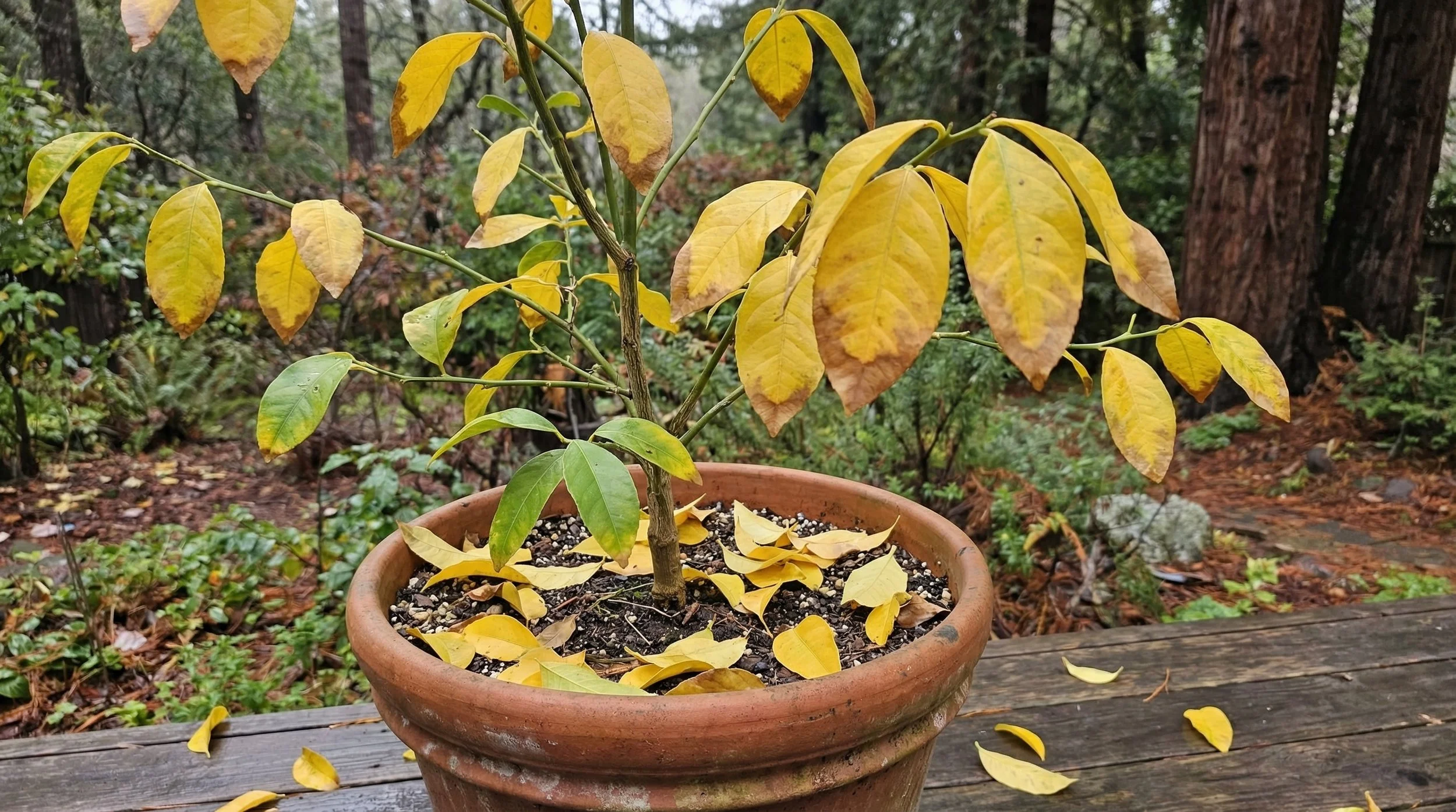
Even well-cared-for citrus trees occasionally develop problems. Yellow leaves, sudden leaf drop, and failure to fruit are the issues that most concern Santa Cruz County citrus growers. The good news is that most problems have identifiable causes and straightforward solutions, and understanding what your tree is telling you helps you respond effectively.
This guide covers the most common citrus problems in our area, how to diagnose them accurately, and what to do about each.
Yellow Leaves: Reading the Patterns
Yellow leaves are the most common citrus complaint, and they can indicate several different problems. The pattern of yellowing tells you what's wrong.
Yellow Leaves with Green Veins (Iron Chlorosis)
What it looks like:Yellow leaves with green veins, symptoms appearing first on new foliage. Young leaves may appear light yellow to white while veins remain darker green. In severe cases, leaves become ivory-colored with only the main veins staying green.
What causes it: Iron deficiency, the most common citrus nutrient problem in our area. Iron chlorosis is usually associated with high soil alkalinity, and Santa Cruz County's often-alkaline soils and alkaline municipal water create chronic iron availability problems. Iron becomes decreasingly available to trees when soil pH is above 6.0 and is mostly unavailable at pH 7.0 and above.
Iron chlorosis can also result from overwatering, poor drainage, or waterlogged soil, which suffocates roots and prevents iron uptake even when iron is present.
Solutions:
Immediate: Apply chelated iron to the soil around the drip line. Iron chelates are the most reliable means of correcting citrus iron chlorosis.
Long-term:Regularly add compost on top of roots. Organic matter helps acidify soil gradually as it decays.
Drainage:Improve cultural practices and the soil environment. Ensure adequate time between waterings for soil to dry. Fix any drainage problems.
What won't help:Foliar application of iron is not recommended for citrus because it produces spotty results at best and can burn leaves.
Uniformly Yellow Older Leaves (Nitrogen Deficiency)
What it looks like:Leaves pale all over (light green or yellow), especially in older leaves near the bottom of the tree. Unlike iron chlorosis, the entire leaf yellows uniformly without the green-vein pattern. Slow growth and uniform yellowing of older leaves are usually the first symptoms.
What causes it: Nitrogen deficiency from insufficient fertilization, leaching in sandy soils, or poor root function. The causes include a true deficiency of nitrogen, adverse soil conditions, or unhealthy roots.
Solutions:
Apply a nitrogen-rich citrus fertilizer. Application of a nitrogen-rich fertilizer like pelletized chicken manure will help correct the problem.
Resume regular fertilization schedule if you've lapsed.
For container plants, increase feeding frequency.
Yellow Veins with Green Leaves
What it looks like: The opposite pattern of iron chlorosis: midribs and lateral veins turn yellow while the rest of the leaf remains green.
What causes it:This chlorosis is frequently attributed to girdling of individual branches or the tree trunk. It can also occur with the onset of cooler weather in fall and winter due to reduced nitrogen uptake.
Solutions:
Check for girdling (wire, ties, or physical damage constricting branches or trunk)
If seasonal, the condition often resolves as temperatures warm in spring
Maintain normal fertilization
Small, Yellow Leaves with Pointed Tips (Zinc Deficiency)
What it looks like:Yellowing of newly produced leaves that may be mottled and smaller than usual. Interveinal chlorosis occurs in moderate cases. Leaves may start to die and brown off at the tips.
Solutions:
Apply zinc as a foliar spray (zinc sulfate) during spring growth flush
Use citrus fertilizers that include micronutrients
Check soil pH; high pH reduces zinc availability
Leaf Drop: Identifying the Cause
Sudden leaf drop alarms gardeners, but understanding the cause guides appropriate response.
Watering Problems (Most Common)
Overwatering symptoms: Yellow leaves followed by drop, soggy soil, possible root rot smell. Container plants are particularly susceptible.
Underwatering symptoms: Leaves become dry and crispy before dropping. Soil pulls away from container edges. Wilting precedes drop.
Solution: Check soil moisture at 2-3 inch depth before watering. Water deeply but allow soil to dry somewhat between waterings. Fix drainage problems if soil stays waterlogged.
Cold Damage
Symptoms:Citrus leaves curl and turn brown or black within a few days of frost, then drop. Damage pattern may follow cold air exposure (more damage on exposed outer canopy).
Solution: Wait until spring to assess full damage. Don't prune immediately. Resume normal care to support recovery.
Environmental Stress
Symptoms: Leaf drop following heat waves, sudden temperature changes, or transplanting. Leaves may drop while still green or after yellowing.
Solution: Maintain consistent watering during stress. Provide shade during extreme heat. Allow recently transplanted trees time to establish (some leaf drop is normal).
Pest Damage
Symptoms: Leaf drop accompanied by visible pests (scale, mites, aphids), sticky honeydew, or sooty mold on leaves.
Solution: Identify the pest and treat appropriately. Horticultural oil controls many citrus pests. Remove heavily infested branches.
No Fruit: Understanding Why Trees Don't Produce
A citrus tree that grows well but doesn't fruit is frustrating. Several factors affect fruit production.
Tree Age
The issue:Fruit of young citrus trees (under 5 years) is typically of inferior quality or absent entirely. Many citrus take 3-5 years to produce meaningful harvests.
Solution: Be patient. Continue good care, and production will come with maturity.
Insufficient Light
The issue: Citrus needs at least 6 hours of direct sunlight for good fruit production. Trees in too much shade may grow but not fruit.
Solution: Evaluate sun exposure throughout the day. Consider relocating container trees or removing shading obstructions for in-ground trees.
Insufficient Heat (Fruit Never Ripens)
The issue: In coastal Santa Cruz, some citrus sets fruit but never develops proper flavor because summer temperatures are too cool to ripen fruit fully.
Solution: Choose varieties suited to your microclimate. Plant against south-facing walls to maximize heat. Consider varieties like Meyer lemon that don't need heat for good flavor.
Over-fertilization with Nitrogen
The issue:High nitrogen applications produce excessive vegetative growth at the expense of fruit production. Trees are lush and green but don't flower well.
Solution: Reduce nitrogen fertilization. Use balanced citrus fertilizers rather than high-nitrogen products.
Poor Pollination (Rare for Most Citrus)
The issue: Most citrus is self-fertile and doesn't need cross-pollination. However, some varieties benefit from pollinators for best fruit set.
Solution: Ensure pollinators can access trees. Avoid pesticides that harm bees. For container trees that spend time indoors, hand-pollinate flowers with a small brush.
Alternate Bearing
The issue:Many varieties of citrus alternate bear, producing heavy crops one year and light crops the next.
Solution: This is normal behavior, not a problem. Thinning fruit during heavy years or picking ripe fruit early can help moderate the cycle.
Recent Stress
The issue: Trees recovering from transplanting, frost damage, or significant pest problems may skip fruiting for a season or more.
Solution: Focus on tree recovery through good care. Fruiting will resume when the tree is healthy.
Other Common Problems
Fruit Drop
Normal drop: Citrus naturally drops some fruit, especially when young fruit is still small. This "June drop" (which happens at various times locally) is the tree self-thinning to match what it can support.
Excessive drop: May indicate water stress (over or under), nutrient deficiency, or pest problems. Check soil moisture and evaluate care practices.
Sooty Mold
What it looks like: Black, sooty coating on leaves and fruit that wipes off.
What causes it:Sooty mold is a fungus that grows on the honeydew excreted by sucking insects like scale, aphids, and mealybugs. It doesn't harm plants directly but reduces photosynthesis if heavy.
Solution: Control the pest producing honeydew. Once pests are controlled, sooty mold gradually weathers away.
Scale Insects
What it looks like:Small bumps on bark, fruit, or leaves. May be brown, black, or white depending on species. Honeydew and sooty mold often accompany scale.
Solution: Apply horticultural oil in winter (dormant season) to smother overwintering scale. Repeat applications may be needed.
Citrus Leafminer
What it looks like: Squiggly lines or tunnels visible within leaves, caused by tiny moth larvae mining between leaf surfaces.
Solution: Damage is primarily cosmetic and doesn't significantly harm established trees. Remove heavily damaged leaves. Spinosad-based products can control severe infestations on young trees.
Frequently Asked Questions
Why are only the new leaves on my citrus yellow?
Yellow new leaves with green veins indicate iron chlorosis, the most common nutrient deficiency in Santa Cruz citrus. Apply chelated iron to the soil and improve drainage if soil stays too wet.
Why are the older leaves on my citrus turning yellow and falling off?
Uniform yellowing of older leaves suggests nitrogen deficiency. Apply citrus fertilizer with adequate nitrogen. If drainage is poor or roots are damaged, address those issues as well.
My citrus has been healthy for years but suddenly lost all its leaves. What happened?
Sudden, complete leaf drop usually indicates severe stress: frost damage, extreme drought, waterlogging, or root disease. Check recent weather and watering history. Examine roots for rot (brown, mushy roots indicate problems).
Why did my Meyer lemon stop producing fruit?
Common causes include insufficient light, over-fertilization with nitrogen, alternate bearing cycle, or recovery from stress. Evaluate sun exposure (needs 6+ hours), reduce nitrogen if growth is lush but fruitless, and be patient if the tree experienced recent stress.
The leaves on my citrus are sticky and covered in black stuff. What is it?
The black coating is sooty mold growing on honeydew excreted by sap-sucking pests like scale or aphids. The mold itself isn't harmful, but you need to control the pest causing it. Check leaf undersides and stems for scale insects.
My citrus fruit stays sour even when it looks ripe. Why?
In our cool coastal climate, some citrus varieties can't develop enough sugar for proper sweetness. This is common with oranges in foggy locations. Choose varieties suited to your microclimate (Meyer lemons and kumquats don't need heat for good flavor).
How do I know if my citrus problem is from overwatering or underwatering?
Check the soil. Overwatered soil stays consistently wet and may smell sour. Underwatered soil is dry, often pulling away from container edges. Yellow leaves from overwatering are often accompanied by soft, dark roots. Yellow leaves from underwatering are preceded by wilting and dry, crispy leaf edges.
Should I remove yellow leaves from my citrus?
Severely damaged leaves can be removed, but don't strip all yellow leaves. The tree is trying to salvage nutrients from yellowing leaves before dropping them naturally. Focus on correcting the underlying cause rather than removing symptoms.
Why won't my young citrus or lemon tree produce fruit yet?
A young citrus tree often needs a few years in the ground before it fruits reliably, even when grafted. Beyond age, the biggest factors in California backyards are light and feeding: citrus wants full sun, ideally eight or more hours, plus steady nutrition without overdoing nitrogen, which pushes leaves over flowers. Be patient and keep watering even. UC's California Backyard Orchard has citrus basics at homeorchard.ucanr.edu.
Why is my citrus tree dropping fruit and curling its leaves?
Some fruit drop is normal, especially the natural early-summer thinning when a tree sheds fruit it cannot support. Heavy drop paired with curling leaves usually points to inconsistent watering, letting soil swing from bone dry to soggy, or to pests like aphids and citrus leafminer that distort new growth. Water deeply and evenly, and check leaf undersides. UC IPM covers citrus pests at ipm.ucanr.edu.
Free Downloadable Resources
Related Articles
Growing Citrus in Santa Cruz County: What Actually Works
Fertilizing Citrus in Santa Cruz County
Growing Meyer Lemons in Santa Cruz County
