

Growing Fruit Trees in Santa Cruz County: Varieties That Actually Thrive Here
A few of the product links in this guide are affiliate links. If you buy through one, Ambitious Harvest may earn a small commission at no extra cost to you, which helps keep these guides free. We only point to gear we would use in our own Santa Cruz garden. As an Amazon Associate, we earn from qualifying purchases. Read our full disclosure.
Few garden pleasures compare to picking ripe fruit from your own tree. A sun-warmed fig in August, a Meyer lemon plucked for winter cooking, or a perfectly ripe peach that would never survive a trip to the grocery store. In Santa Cruz County, our mild winters and Mediterranean climate make homegrown fruit entirely achievable, but success depends on choosing the right varieties for our specific conditions.
The challenge? Most fruit tree advice is written for climates with cold winters, which doesn't apply here. Our coastal fog, mild winters, and diverse microclimates require a different approach. A peach variety that thrives in the Central Valley may never set fruit in foggy Aptos, while a fig that loves Boulder Creek's heat might struggle near the coast.
This guide focuses on fruit trees that actually work in Santa Cruz County, with specific variety recommendations for our different microclimates. You'll learn about chill hours (the key concept most California gardeners need to understand), which trees suit your specific location, and how to give them the care they need to produce abundantly.
What Are Chill Hours and Why Do They Matter for Fruit Trees?
Before choosing any fruit tree, you need to understand chill hours. This single factor determines whether a tree will fruit well, produce poorly, or fail entirely in your location.
What Are Chill Hours?
Chill hours are the cumulative hours between roughly 32°F and 45°F that a fruit tree experiences during winter dormancy. Most deciduous fruit trees (apples, peaches, pears, plums) require a certain number of chill hours to break dormancy properly, set flower buds, and produce fruit.
Trees that don't receive enough chill hours may:
Bloom erratically or not at all
Produce few or no fruit
Leaf out poorly in spring
Show generally weak growth
Santa Cruz County Chill Hours
Santa Cruz County's chill hours vary significantly by location:
| Location | Approximate Chill Hours | Notes |
|---|---|---|
| Coastal (Aptos, Capitola, Santa Cruz beaches) | 200 to 400 hours | Mildest winters; focus on very low-chill fruit and nut varieties |
| San Lorenzo Valley (Boulder Creek, Ben Lomond, Felton) | 400 to 700+ hours | Cooler winter nights in valleys; supports a wider range of varieties |
| Inland (Scotts Valley, Soquel hills) | 300 to 500 hours | Moderate chill; generally a good balance for many low- to mid-chill trees |
| Pajaro Valley (Watsonville) | 300 to 500 hours | Warmer daytime temperatures but adequate winter chill in most years |
These are approximations. Chill hours can vary year to year based on weather patterns, and microclimates within each area create further variation. A sheltered south-facing spot accumulates fewer chill hours than an exposed north-facing slope nearby.
Important: When choosing fruit trees, select varieties with chill requirements at or below your area's typical accumulation. UC's Santa Cruz County guidance puts local accumulation at 500 to 800 hours in an average year, so trees asking for 500 to 800 hours are the dependable ones here, with 700 a reliable upper end. Varieties as low as 300 to 350 hours can be cropped in some years, but they are not the safe default.
Why Is Citrus the Easiest Fruit Tree for Santa Cruz?
Citrus trees are ideal for Santa Cruz County gardeners because they don't require chill hours and thrive in our mild climate. Most of the county can grow citrus successfully, though coastal areas need to choose varieties carefully and provide frost protection during rare cold snaps.


Best Citrus for Santa Cruz County
Lemons (most reliable for our climate):
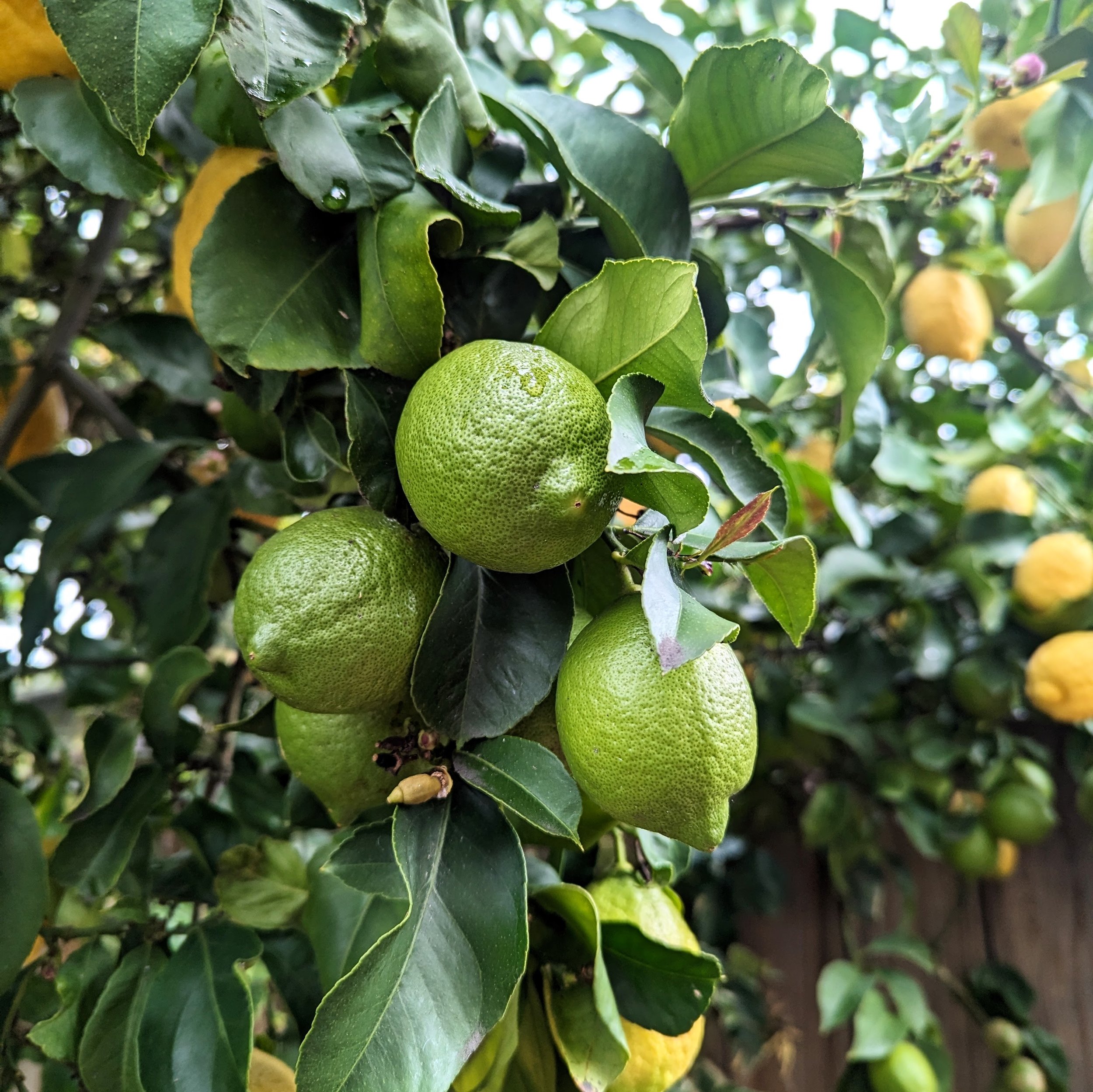
Meyer Lemon: The best choice for Santa Cruz. More cold-tolerant than true lemons, sweeter flavor, and prolific year-round production. Thrives even in coastal gardens.
Improved Dwarf Meyer: Same great fruit on a smaller tree (6 to 8 feet), perfect for containers or small spaces.
Eureka Lemon: Classic grocery-store lemon flavor. Slightly less cold-tolerant than Meyer; best in warmer inland spots.
Oranges:
Washington Navel: Sweet, seedless eating orange. Needs warm summers to develop full sweetness; best in Scotts Valley, Watsonville, or warm protected spots elsewhere.
Cara Cara Navel: Pink-fleshed navel with berry undertones. Same growing requirements as Washington.
Valencia: Juice orange that ripens in summer. Good heat tolerance.
Mandarins and Tangerines:
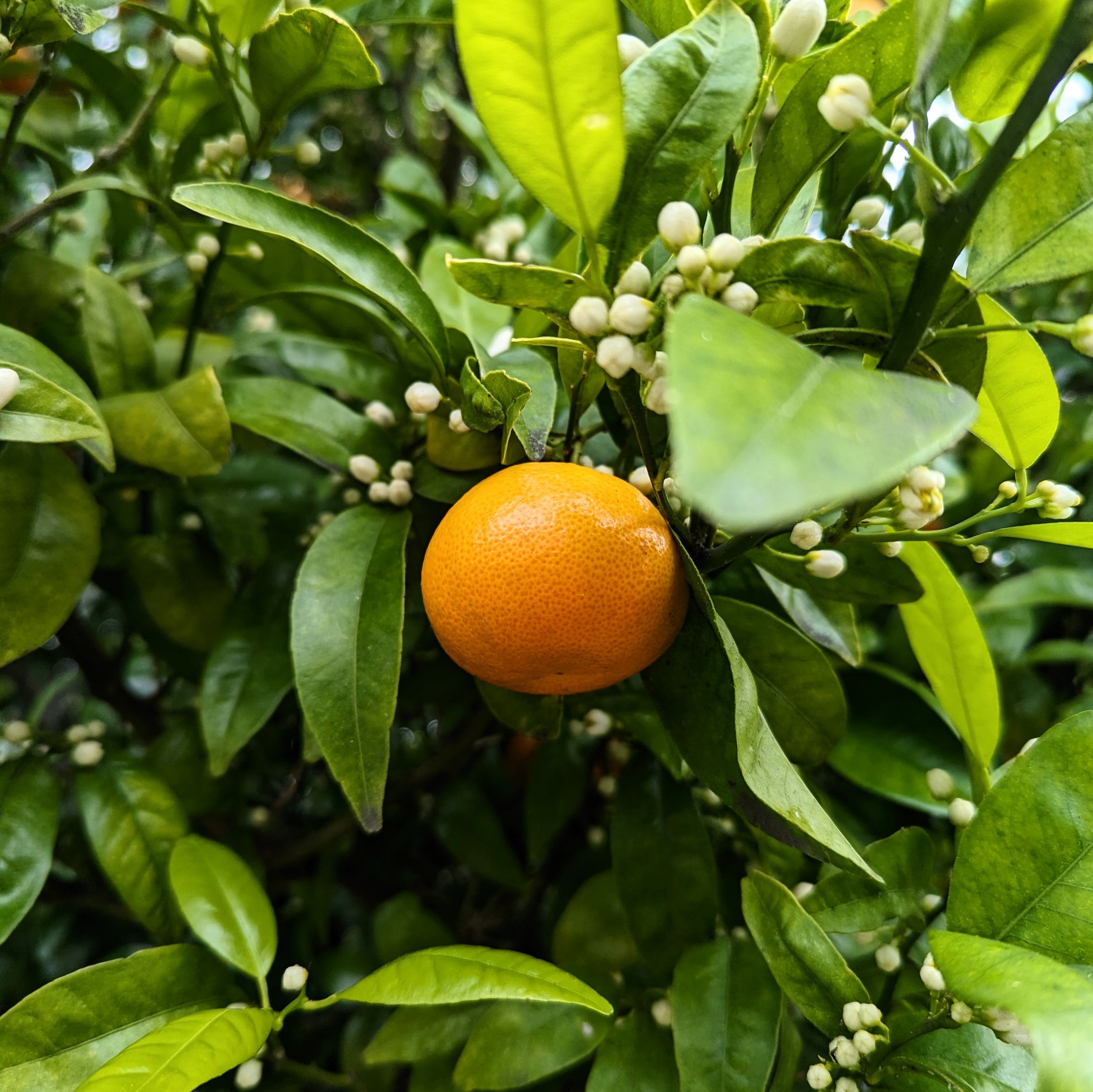
Satsuma: Very cold-tolerant mandarin, easy-peeling, and delicious. One of the best choices for cooler coastal areas.
Kishu: Tiny, seedless mandarins. Cold-tolerant and productive.
Clementine: Sweet and easy-peeling. Needs more warmth than Satsuma.
Other Citrus:
Improved Meyer Lemon x Kumquat crosses (Limequat): Interesting flavors, good cold tolerance.
Kumquats: Very cold-hardy citrus that can handle brief freezes. Eat whole, peel and all.
Bearss Lime: Less cold-tolerant; best in protected spots or containers that can be moved.
| Location | Best Citrus Choices | Notes |
|---|---|---|
| Coastal (foggy, cool) | Meyer lemon, Satsuma mandarin, kumquats | Choose cold-tolerant varieties; provide wind protection and full sun |
| San Lorenzo Valley | Meyer lemon, Satsuma mandarin, navel oranges in sunny spots | Frost protection may be needed on the coldest winter nights |
| Inland (Scotts Valley, Soquel) | Wide range including oranges and grapefruits | Often the best citrus-growing areas in the county |
| Pajaro Valley | Most citrus varieties | Warm valley conditions suit even heat-loving citrus types |
Citrus Care Basics
Planting: Plant citrus in spring or fall when temperatures are mild to reduce transplant stress. Choose the warmest, most protected spot in your garden.
Water: Citrus need consistent moisture but good drainage. Water deeply and regularly, especially during our dry summers. Mulch to retain moisture but keep mulch away from the trunk.
Fertilizer: Feed citrus 3 to 4 times per year with citrus-specific fertilizer. Yellow leaves often indicate nitrogen or iron deficiency.
Frost protection: cold tolerance varies a lot by type. UC puts the damage threshold near 18°F for kumquat, 20°F for Satsuma mandarin, 22°F for Meyer lemon, 24°F for navel orange, 28°F for true lemons like Eureka, and 30°F for lime. Fruit and young shoots are more tender than wood. Cover trees or use frost blankets when hard freezes are forecast. Container citrus can be moved to protected areas.
Why Do Figs Thrive in Our Mediterranean Climate?
Figs are among the easiest and most rewarding fruit trees for Santa Cruz County. They're drought-tolerant once established, self-fertile (no pollination partner needed), and produce abundant fruit with minimal care. Our Mediterranean climate closely matches their native habitat.


Best Fig Varieties for Santa Cruz County
For Coastal Gardens (cooler, more humid):
Desert King: One of the best for cool coastal climates. Large green figs with sweet strawberry-colored flesh. Produces mainly a breba (early summer) crop.
Osborne Prolific: Another excellent coastal choice. Brown-purple figs, very productive in maritime climates.
Violette de Bordeaux: Compact growth (good for small spaces), dark purple figs with rich flavor. Handles coastal conditions well.
For Inland Gardens (warmer, drier):
Black Mission: The classic California fig. Dark purple-black skin, pink flesh, intensely sweet. Thrives in heat.
Brown Turkey: Reliable producer with mild, sweet flavor. Adaptable to various conditions.
Kadota: Green-skinned with amber flesh. Excellent fresh or dried. Loves heat.
Celeste: Small, very sweet figs. Good disease resistance.
For Small Spaces:
Violette de Bordeaux: Naturally compact, can be kept to 6 to 8 feet.
Little Miss Figgy: Dwarf variety bred for containers.
Any variety trained as espalier: Figs respond well to training against walls or fences.
Fig Growing Tips
Planting: Figs prefer full sun and well-drained soil. They tolerate poor soil better than most fruit trees. In Santa Cruz County, plant in spring after frost danger passes.
Water: Water regularly the first year to establish roots. Once established (year 2+), figs are remarkably drought-tolerant. Overwatering can cause fruit splitting, especially in humid coastal areas.
Pruning: Figs fruit on new growth and (for some varieties) on last year's wood. Light annual pruning keeps trees manageable. Can be pruned hard if needed for size control.
Harvest: Figs are ripe when they droop on the stem, feel soft, and may show slight cracks. They don't ripen further after picking, so patience pays off. Most varieties produce one or two crops per year.
Pollination note: Common figs, which is every variety listed above except Desert King, are self-fertile and don't require a pollination partner. Desert King is a San Pedro type, which is why it produces mainly a breba crop. The early breba crop sets without pollination, while the main crop will not set here. Smyrna-type figs require a specific pollinating wasp and are primarily grown commercially. Home gardeners should stick with common fig varieties.
Can You Grow Stone Fruits Like Peaches, Plums, and Apricots Here?
Stone fruits (drupes) are trickier in Santa Cruz County because most require significant chill hours. However, low-chill varieties bred for mild-winter climates can succeed, especially in our warmer inland areas.
| Variety | Type | Chill Hours | Best For |
|---|---|---|---|
| Flordaprince | Peach | ~150 hours | All Santa Cruz microclimates; very early ripening |
| Eva’s Pride | Peach | 100 to 200 hours | All areas; excellent flavor, mid-season |
| Tropic Snow | Peach | 200 hours | White-fleshed, sweet; suitable from coastal to inland areas |
| Babcock | Peach | 250 to 300 hours | White peach with excellent flavor; best for inland areas |
| Panamint | Nectarine | 200 to 250 hours | Very low-chill; freestone with excellent flavor |
| Arctic Star | Nectarine | 300 hours | White-fleshed nectarine; best for inland locations |
| Santa Rosa | Plum | 300 hours | Classic California plum; well-suited to inland gardens |
| Beauty | Plum | 250 hours | Very early ripening; performs well across most areas |
| Burgundy | Plum | 250 to 300 hours | Self-fertile; good tolerance of coastal conditions |
| Gold Kist | Apricot | 300 hours | One of the lowest-chill apricots available |
| Katy | Apricot | 200 to 300 hours | Freestone; very low-chill and reliable in mild winters |


Stone Fruit by Microclimate
Coastal gardens (Aptos, Capitola, Santa Cruz): Peaches and nectarines are the challenge here, and UC's Santa Cruz County guidance names peach leaf curl rather than chill as the culprit. Choose leaf-curl-resistant varieties such as Avalon or Mary Jane (600 hours), Frost or Indian Free (700 hours), and plant in the warmest, sunniest spot available. Success is possible but not guaranteed.
San Lorenzo Valley (Boulder Creek, Ben Lomond, Felton): Better chill accumulation and warm summer days make this better stone fruit territory. Most low-chill varieties should succeed in sunny exposures.
Inland gardens (Scotts Valley, Soquel, Watsonville): Good stone fruit territory. Chill is usually adequate, and summer heat helps develop sweetness. The widest range of varieties will work here.
Stone Fruit Care
Planting: Plant bare-root trees during winter dormancy (December through February) for best establishment. Container trees can be planted in spring.
Pollination: Many stone fruit varieties are self-fertile, but check before purchasing. Some (like many plums) need a compatible pollinator variety nearby.
Pruning: Stone fruits require annual winter pruning to maintain an open vase shape, control size, and encourage fruiting wood. This is especially important for peaches and nectarines, which fruit on one-year-old wood.
Thinning: Remove excess fruit when marble-sized to improve fruit size and prevent branch breakage. This feels wasteful but dramatically improves the remaining fruit.
Disease: Peaches and nectarines are susceptible to peach leaf curl, a fungal disease that causes distorted, reddened leaves. Prevent with dormant-season copper spray (applied before buds swell in late winter). Once symptoms appear, it's too late to treat that year.
Before Planting Apples and Pears
Apples and pears can grow in Santa Cruz County, but variety selection is critical. Most standard varieties require 500 to 1,000 chill hours. UC's own Santa Cruz County list is full of good apples at 600 to 800, which sits inside what this county actually accumulates. Low-chill varieties exist and can produce well in our warmer inland zones.
| Variety | Chill Hours | Flavor Profile | Notes |
|---|---|---|---|
| Dorsett Golden | ~100 hours | Sweet, golden; similar to Golden Delicious | One of the lowest-chill apples available; reliable across Santa Cruz County |
| Anna | ~200 hours | Sweet-tart, crisp | Pollinates well with Dorsett Golden; dependable low-chill choice |
| Ein Shemer | ~100 hours | Sweet; Golden Delicious-type flavor | Israeli variety bred for very low chill requirements |
| Pink Lady (Cripps Pink) | 300 to 400 hours | Sweet-tart; excellent keeping quality | Requires more winter chill; best suited to inland areas with cooler winters |
| Fuji | 300 to 400 hours | Very sweet, crisp | May perform well in cooler inland microclimates with sufficient chill |
Low-Chill Pear Varieties
Pears do well here. UC's Santa Cruz County list puts both European and Asian pears under what grows well. Asian pears do not automatically need less chill: on Dave Wilson's list the Asian varieties mostly sit near 400 to 450 hours, while low-chill European types like Hood come in around 150.
European pears (low-chill types):
Hood: about 150 hours, heat-tolerant, good flavor, needs a pollenizer
Warren: about 600 hours, excellent flavor, some fire blight resistance
Flordahome: 175 to 250 hours, bred for mild-winter areas, needs a pollenizer
Asian pears (generally lower chill):
Shinseiki: about 400 hours, crisp and juicy
20th Century (Nijisseiki): about 450 hours, classic Asian pear
Hosui: about 450 hours, sweet with butterscotch notes, needs a pollenizer
Important Considerations
Pollination: Most apples and pears require a second compatible variety for proper pollination. Exceptions exist (some crabapples can pollinate, and a few varieties are self-fertile), but plan on planting two trees or ensure a neighbor has a compatible variety. Anna and Dorsett Golden can pollinate each other.
Fire blight: This bacterial disease affects apples and pears, causing branches to look burned. It can spread rapidly in warm, wet spring weather. Choose resistant varieties when possible, and prune out infected branches immediately (sterilize tools between cuts).
Summer heat: Apples and pears need warm (but not extremely hot) summers to develop good flavor. Coastal gardens may produce fruit with less sweetness than inland areas.
What Other Fruit Trees Grow Well in Santa Cruz County?
Persimmons
Persimmons are underutilized in Santa Cruz gardens, and UC's county guidance calls them arguably the easiest of all fruits to grow and maintain here. They're beautiful ornamental trees with stunning fall color, require minimal care, and produce abundant fruit.
Fuyu (non-astringent): Can be eaten firm like an apple. Squat, tomato-shaped fruit. The easiest persimmon for fresh eating.
Hachiya (astringent): Must be fully soft (almost translucent) before eating, or it's mouth-puckeringly astringent. Excellent for baking and drying.
Jiro: Another non-astringent type, similar to Fuyu.
Persimmons need relatively low chill (100 to 200 hours) and tolerate a wide range of conditions. They're drought-tolerant once established and have few pest or disease problems.
Pomegranates
Pomegranates love heat and tolerate drought, but UC's Santa Cruz County list puts most pomegranates under what rarely produces a crop here, with Wonderful and Sweet the two exceptions. They may struggle to ripen fruit fully in cool, foggy coastal areas.
Wonderful: The standard red variety. Large fruit, good flavor, needs heat.
Parfianka: Softer seeds and excellent flavor. Chill needs are low, but this is not one of the varieties UC names as reliable for this county.
Pomegranates are self-fertile, pest-resistant, and beautiful in the landscape with orange-red flowers and fall color.
Avocados
Avocados can grow in frost-free parts of Santa Cruz County, but they're finicky about drainage and frost. Success requires:
Frost-free or nearly frost-free location (rare freezes okay with protection)
Excellent drainage (they die in waterlogged soil)
Protection from salt air in coastal locations
Patient years before first fruit (often 3 to 5 years)
Hass: Most popular variety and excellent flavor, but UC calls it very frost tender, with fruit damage when the temperature holds at 30°F for four hours or more.
Fuerte: Green-skinned, good flavor, slightly more cold-tolerant than Hass.
Bacon: One of the most cold-hardy avocados at 24 to 26°F, good for marginal areas. Mexicola is hardier still, staying sound into the low 20s. Bacon is Type B and Mexicola Type A, so the two make a valid pollination pair.
Most avocados produce best with a pollination partner (Type A and Type B varieties cross-pollinate), though single trees will set some fruit.
Tropical and Subtropical (Very Limited Areas)
Mangoes, papayas, and bananas are possible only in the warmest, most protected microclimates, basically frost-free pockets that are rare in Santa Cruz County. If you have such a spot (usually a south-facing slope with thermal mass nearby), these can be attempted, but expect challenges. Most gardeners should focus on more reliable options.
Pineapple guava (Feijoa): The exception. This subtropical fruit is surprisingly cold-hardy and grows well throughout Santa Cruz County. Silvery evergreen foliage, attractive flowers, and unique-flavored fruit make it worthwhile even as an ornamental.
How Should You Choose Fruit Trees for Your Space?
Fruit Tree Size at Maturity
Fruit trees are grafted onto rootstocks that control their size. Choosing the right size is crucial for your space.
| Size Category | Typical Height | Spacing Needed | Best For |
|---|---|---|---|
| Dwarf | 6 to 10 feet | 6 to 8 feet apart | Small yards, containers, espalier |
| Semi-dwarf | 10 to 16 feet | 10 to 14 feet apart | Most home gardens |
| Standard | 18 to 30 feet | 15 to 25 feet apart | Large properties, shade trees |
For most Santa Cruz County gardens, semi-dwarf or dwarf trees are the best choice. They're easier to harvest, prune, and spray; they fit in smaller spaces; and they often begin fruiting sooner than standard trees.
Container Growing
Many fruit trees thrive in containers, expanding options for renters, patio gardeners, and those with limited space.
Best container candidates:
Citrus (especially dwarf varieties)
Fig (naturally adaptable to root restriction)
Dwarf peaches and nectarines
Dwarf apples on M27 or M9 rootstock
Pomegranate
Container requirements:
Large container (minimum 15 gallons, 20 to 25 gallons better for long-term growth)
Excellent drainage
Quality potting mix (not garden soil)
Regular watering (containers dry faster than ground)
More frequent fertilization (nutrients leach with watering)
Root pruning every few years for long-term container trees
Espalier: Maximum Fruit in Minimum Space
Espalier (training trees flat against walls or fences) allows fruit production in narrow spaces and creates beautiful garden features.
Good espalier subjects:
Apples and pears (traditional and responsive)
Figs (vigorous but adaptable)
Citrus (especially in protected spots against warm walls)
Stone fruits (more challenging but possible)
Espalier requires regular pruning during the growing season to maintain shape. The effort rewards you with easy harvesting, better air circulation (fewer disease issues), and fruit production from a 2 to 3 foot depth of garden space.
When and How Should You Plant and Care?
Site Selection
Sun: Fruit trees need at least 6 to 8 hours of direct sunlight daily. More is better for fruit development. In Santa Cruz County's coastal areas, choose the sunniest spot available and consider reflected heat from walls or fences.
Drainage: Most fruit trees die in soggy soil. If your soil stays wet after rain, consider raised beds or mounds. Test drainage by filling a hole with water: if it doesn't drain within 24 hours, you have a drainage problem.
Protection: In exposed coastal areas, protect fruit trees from salt-laden winds. In the San Lorenzo Valley, avoid frost pockets (low-lying areas where cold air collects).
| Step | Key Actions | Why It Matters | Timing |
|---|---|---|---|
| Planting time | Plant bare-root deciduous trees during winter dormancy (December through February); plant citrus and container-grown trees in mild spring or fall | Reduces transplant stress and aligns planting with natural growth cycles | Winter for bare-root trees; spring or fall for citrus and container trees |
| Hole preparation | Dig a hole twice as wide as the root system but no deeper than the root flare; keep the graft union above soil level | Prevents soil settling, poor drainage, and crown or graft rot | At planting |
| Backfilling | Use mostly native soil; a light compost amendment is acceptable | Over-amending can create drainage and root establishment problems | Immediately after setting the tree |
| Water and mulch | Water deeply to settle soil; build a shallow basin for irrigation; apply 3 to 6 inches of mulch, keeping it several inches away from the trunk | Encourages deep root growth, conserves moisture, and protects soil structure | Immediately after planting; maintain mulch year-round |
Ongoing Care
First-year watering: Water frequently to establish roots, generally 1 to 2 times per week depending on weather and soil type.
Established trees: Water deeply but less frequently to encourage deep root growth and drought tolerance. Most fruit trees need deep soaking every 1 to 3 weeks during dry season, depending on soil and tree size.
Fertilizing: Feed fruit trees in early spring as growth begins. Citrus benefit from multiple feedings throughout the year. Avoid over-fertilizing, which produces excessive leafy growth at the expense of fruit.
Pruning: Most deciduous fruit trees are pruned during winter dormancy. Goals include:
Maintaining manageable size (aim for trees you can harvest from the ground or a short ladder)
Creating open structure for light penetration and air circulation
Encouraging companion plantings nearby for pollinator support and pest management
Removing dead, diseased, or crossing branches
Encouraging new fruiting wood
Thinning fruit: When trees set more fruit than they can support, thin to one fruit every 4 to 6 inches along branches. This improves fruit size and quality and prevents branch breakage.
Local Resources
Fruit trees and supplies:
San Lorenzo Garden Center (Santa Cruz): good selection of fruit trees including local favorites
Sierra Azul Nursery (Watsonville): fruit trees, especially good for natives and drought-tolerant options
Mountain Feed & Farm Supply (Ben Lomond): organic supplies and some fruit trees
Bay Laurel Nursery (Atascadero, ships): excellent low-chill variety selection
Dave Wilson Nursery (wholesale, but lists retailers): definitive source for variety information
Bulk amendments and supplies:
Aptos Landscape Supply: mulch, compost, soil amendments
Central Home Supply (Scotts Valley): stakes, ties, sprayers, general supplies
Education and advice:
UC Master Gardeners of Monterey and Santa Cruz Counties: free advice on fruit tree selection and care
UC ANR "The Backyard Orchard": comprehensive guide to California fruit growing
Check our Garden Events Calendar for bare-root fruit tree sales (typically January through March), pruning workshops, and orchard tours.
Figs are one of the easiest fruit trees to get established in a Santa Cruz garden, and our fig growth stages guide walks through what to expect from bud to ripe fruit through the season.
Frequently Asked Questions About Growing Fruit Trees
What fruit trees grow best in coastal Santa Cruz County?
Citrus (especially Meyer lemons and Satsuma mandarins), figs (Desert King and Osborne Prolific for cooler areas), persimmons, and pineapple guava are the most reliable choices for foggy coastal gardens. Stone fruits and apples are challenging due to low chill hours and cool summers. Plant in the warmest, sunniest microclimate you can find, and choose leaf-curl-resistant varieties if attempting peaches.
How many chill hours does my area get?
UC's Santa Cruz County guidance puts local accumulation at 500 to 800 chill hours in an average year, with the warmest coastal pockets at the low end and the San Lorenzo Valley at the high end. These are approximations; actual accumulation varies by year and specific microclimate. When in doubt, choose varieties with chill requirements below your estimated range. Our Garden Conditions Dashboard tracks temperature data that can help you estimate chill accumulation.
Do I need two fruit trees for pollination?
It depends on the fruit. Most apples and pears need a compatible pollinator variety nearby. Most citrus, figs, persimmons, and pomegranates are self-fertile and produce well as single trees. Many stone fruits are self-fertile, but some plums and cherries need pollinators. Always check the specific variety's pollination requirements before purchasing.
When should I plant fruit trees?
Plant bare-root deciduous trees (apples, pears, stone fruits, figs, persimmons) during winter dormancy, typically December through February. For more detail, see our bare-root fruit tree guide in Santa Cruz County. This is also when nurseries have the best selection. Citrus and other evergreens can be planted from container stock in spring or fall when temperatures are mild. Avoid planting during summer heat or during hard freezes.
Why isn't my fruit tree producing fruit?
Common causes include: insufficient chill hours for the variety (choose lower-chill types), lack of a pollination partner (for varieties that need one), tree is still too young (many trees take 3 to 5 years to fruit), over-fertilization with nitrogen (produces leaves instead of fruit), insufficient sun, or improper pruning (some trees fruit on specific wood types).
Can I grow avocados in Santa Cruz County?
Possibly, but it's challenging. Avocados need frost-free or nearly frost-free locations with excellent drainage. A few protected microclimates exist, particularly in urban heat islands or on warm slopes. Cold-hardy varieties like Bacon and Mexicola may survive brief freezes. Most Santa Cruz County locations are marginal; success requires the right spot and some luck with winter weather.
How do I protect citrus from frost?
Cold tolerance varies by type: roughly 18°F for kumquat, 20°F for Satsuma, 22°F for Meyer lemon, 24°F for navel orange, 28°F for true lemons and 30°F for lime. Cover trees with frost blankets when hard freezes are forecast, or use outdoor-rated holiday lights beneath covers for additional warmth. Container citrus can be moved to protected areas (garage, covered porch) during cold snaps. Established, healthy trees recover better from frost damage than stressed or newly planted trees.
What's the best fruit tree for a small space?
For very small spaces, choose dwarf varieties on size-controlling rootstocks, or train trees as espalier. Meyer lemon on dwarf rootstock, Violette de Bordeaux fig, and dwarf peaches like Bonanza are excellent compact options. Container culture allows even more flexibility. Multi-grafted trees (several varieties on one trunk) can provide variety without multiple trees.
How do I know when fruit is ripe?
Signs vary by fruit: citrus can be picked when it reaches full color and tastes good (it doesn't ripen further after picking); figs are ripe when they droop, feel soft, and may show slight cracks; stone fruits should be fragrant and yield slightly to gentle pressure; apples and pears vary by variety. When in doubt, sample one fruit as a test.
Free Fruit Growing Resources
Seasonal Planting Calendar: Month-by-month guide including best times to plant bare-root trees and care tasks.
Know Your Microclimate Worksheet: Identify your garden's specific conditions for better tree selection.
Water-Wise Gardening Guide: Irrigation strategies for fruit trees in our Mediterranean climate.
Garden Troubleshooting Guide: Diagnose common fruit tree problems including pests and diseases.
What Is the Sweet Reward of Patience?
Fruit trees are a long-term investment. Unlike vegetables that produce the same season you plant them, fruit trees ask you to plan ahead, choose wisely, and wait for nature to work. A peach tree planted this winter won't produce a significant crop for two or three years. An apple may take longer.
But that patience pays off. A well-chosen, well-cared-for fruit tree can produce for decades. The Mission fig in your backyard could be the same variety Spanish missionaries brought to California more than 250 years ago. The Meyer lemon on your patio will outlast trends and fads, producing fruit year after year.
Start with one tree. Something proven for your microclimate: a Meyer lemon for a coastal garden, a Black Mission fig for a sunny inland spot. Learn how to care for it. Watch it grow. And when you finally pick that first perfectly ripe fruit, sun-warmed and more delicious than anything you've ever bought at a store, you'll understand why gardeners have been doing this for thousands of years.
