

Best Drip Irrigation Kits for California Raised Beds
Some links below are affiliate links. If you buy through them, Ambitious Harvest may earn a small commission at no extra cost to you. We only recommend gear we would use in our own beds. See our full disclosure.
In a California garden, drip irrigation is not a luxury, it is the difference between thriving beds and a July water bill you dread. It delivers water straight to the roots, wastes almost none to evaporation, keeps foliage dry (which means less disease in our foggy mornings), and it is the single best fire-season habit for a food garden. Here is what a raised-bed drip system actually needs, and the kit and parts we would buy.
Why drip is worth it on the Central Coast
- It saves water. Drip uses far less than hand watering or sprinklers because it targets the root zone, which matters through our long dry summers.
- It grows healthier plants. Deep, consistent moisture builds deep roots and helps prevent blossom end rot, cracking, and the stress that invites pests.
- It keeps leaves dry. Overhead watering in our humid coastal mornings spreads powdery mildew and other diseases. Drip avoids that.
- It is fire-smart. A well-watered, well-maintained garden on a timer is part of keeping the area around your home green through fire season.
What a raised-bed drip system needs
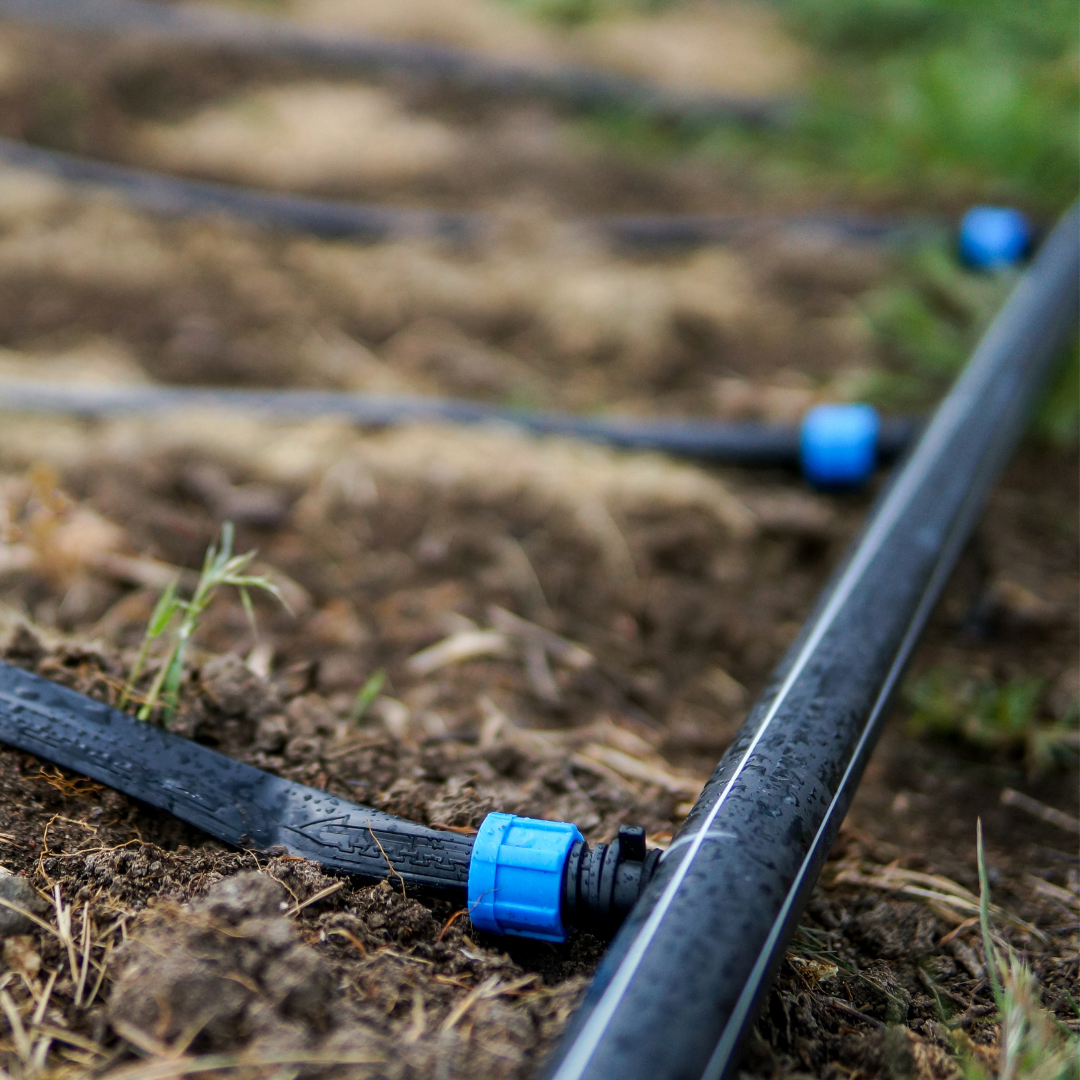
A complete setup is just a few parts in order from the spigot: a timer, then a backflow preventer, filter, and pressure regulator (drip runs at low pressure, around 25 psi), then mainline tubing into the beds with emitter line or drip tape along the rows. A kit bundles most of this so you are not sourcing fittings one at a time.
Our picks
Best all-in-one kit: DIG raised-bed drip kit
For most home gardeners, a kit built for raised beds is the easiest start. We point people to the DIG drip irrigation kit for raised beds, which includes the tubing, emitters, and fittings to get one or several beds running in an afternoon, with room to expand.
Best timer: Orbit B-hyve
A timer is what makes drip truly hands-off. The Orbit B-hyve smart hose faucet timer runs from your phone and can adjust to local weather, so your beds get watered before dawn (the ideal time here) whether or not you are home.
Do not skip the regulator and backflow
If your kit does not already include them, add a fittings kit with a pressure regulator and backflow preventer. Skipping the regulator is the most common reason a drip system blows apart at the connections, and the backflow preventer protects your drinking water.
Low-tech alternatives
If you would rather not run tubing, ollas (buried clay watering pots) are a beautiful, ancient option for small beds, and a rain barrel can feed a gravity drip line off the winter rain.
Setting it up and dialing in the schedule
Run the lines before you plant and walk every emitter once to catch clogs and kinks. As a starting point, most coastal beds need about 20 to 30 minutes every other day in summer, while sandy inland soils in the Pajaro Valley may want a daily run. For the full walk-through, see our beginner's guide to drip irrigation.
Frequently Asked Questions
Do I really need a pressure regulator for drip?
Yes. Household water pressure is far higher than drip components are built for, and without a regulator (around 25 psi) the fittings pop apart and emitters fail. It is a small part that protects the whole system.
How often should drip run on a raised bed in summer?
Start around 20 to 30 minutes every other day for coastal beds, and adjust from there. Sandy soils and hot inland gardens may need a daily run, while moisture-retentive soils can go longer between cycles. Water before 7 a.m. to limit evaporation.
Can I put a drip system on a timer and forget it?
Mostly, but check it monthly. Timers handle the schedule, but emitters clog and tubing shifts, so a quick walk of the lines once a month keeps everything flowing.
Is drip worth it for just two or three beds?
Yes. Even a small kit pays for itself in water saved and plants kept alive through the dry months, and it frees you from daily hand watering all summer.
