

Fire-Wise Planting in Santa Cruz: 10 Plants to Assess
A few of the product links in this guide are affiliate links. If you buy through one, Ambitious Harvest may earn a small commission at no extra cost to you, which helps keep these guides free. As an Amazon Associate, we earn from qualifying purchases. Read our full disclosure.
How Do You Build a Fire-Wise Garden?
Start at the house, not the nursery shelf. Keep the immediate five feet free of vegetation and combustible material, following current fire-agency guidance for your property. A plant labeled fire-resistant can still burn; its position and upkeep matter. Before choosing species, look at the route dry leaves, branches, fences, and shrubs could give fire toward the building.
Use fire-smart landscaping guidance to assess a plant rather than accept its label. Drought-tolerant planting and water-wise gardening strategies have their own benefits, but neither automatically means low fire risk. UC ANR's Fire Network cautions that native or drought-tolerant labels do not establish fire resistance.
1. Toyon (Heteromeles arbutifolia)
Toyon brings red winter berries and a substantial evergreen shape to a garden. Give this large shrub room rather than squeezing it into a narrow strip beside the house. Nature Hills' native-plant collection is a place to check availability, not a fire-safety certification. Toyon appears on regional fire-resistant plant lists, but read any listing together with its watering, spacing, and maintenance qualifications.
Maintenance note: Inspect for dead material and allow room for mature growth. Assess any pruning for the plant and site; avoid dense hedges next to structures.
2. Rockrose (Cistus species)
Rockrose earns its place in many gardens through spring flowers and tolerance of dry summers. Do not let that drought tolerance stand in for a fire assessment. An older rockrose listing is a starting point for questions, especially about oils and dead wood inside a mature plant.
Maintenance note: Remove dead or damaged growth carefully. Do not try to keep an oversized rockrose small through hard pruning: RHS guidance notes that established cistus recover poorly from cuts into old wood. Replacement may be more appropriate when a plant has outgrown its space.
3. California Fuchsia (Epilobium canum)
California fuchsia brings orange-red tubular flowers late in the season. Its low growth can fit a rock garden or border, but seasonal dieback still leaves stems to clear. Look beneath the fresh growth as well as at the flowers.
Maintenance note: Cut back dormant stems; prevent thatch buildup.
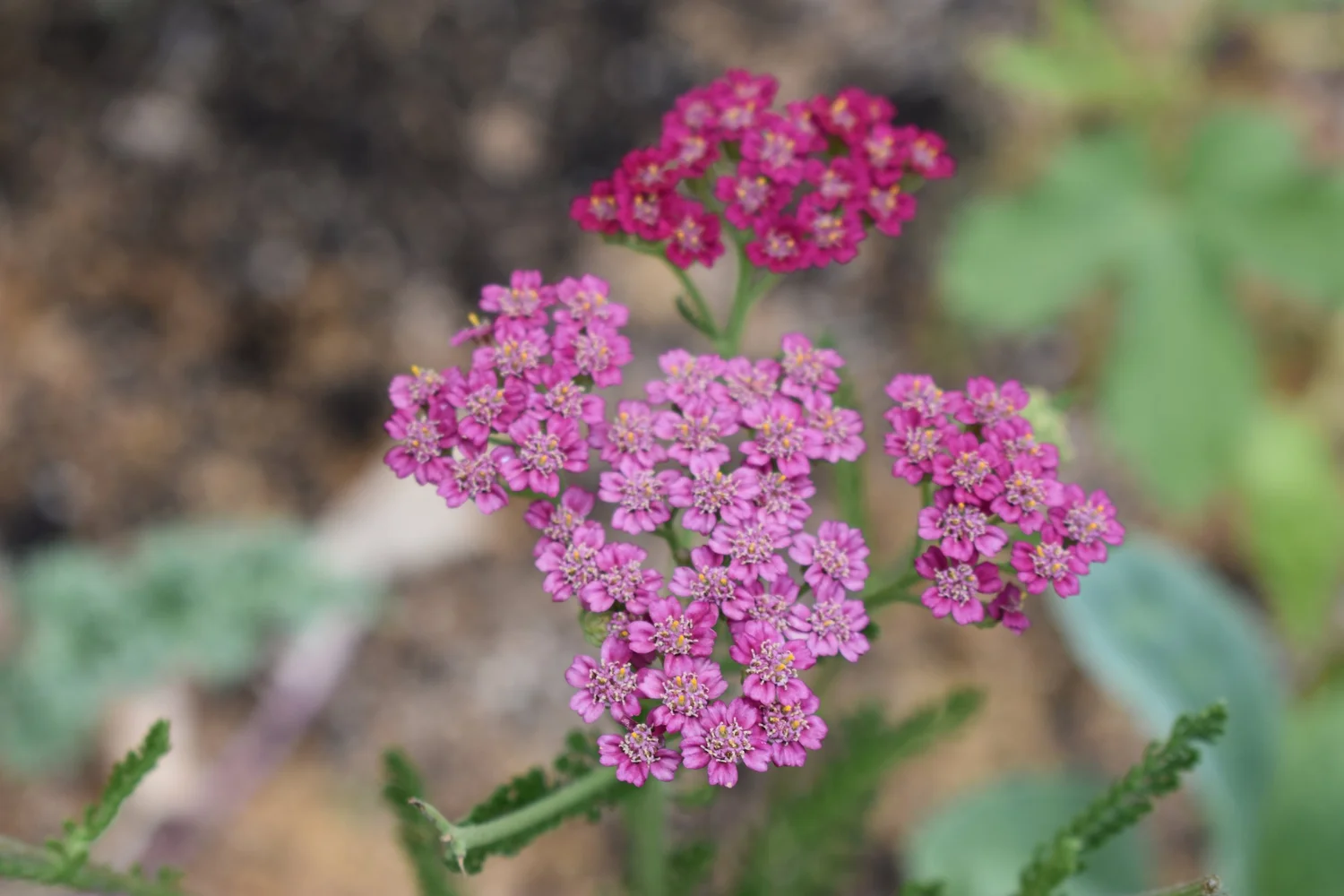
4. Yarrow (Achillea species)
Yarrow appears in regional plant guidance. Beyond the label, look at the clump in front of you: feathery foliage, spent flower stalks, and any dry material trapped at the base. Deadheading and thinning belong in the plan.
Maintenance note: Deadhead and thin clumps to limit dry flower stalks.
5. Lavender (Lavandula species)
Lavender needs a careful look as it ages. Inspect beneath the flowering tips for woody stems and trapped dead material before treating it as a low-fuel planting.
CAL FIRE notes that as lavender ages, stems can get woody and more flammable. Assess whether old plants can be maintained or need replacement, and keep them out of Zone 0.
Maintenance note: Remove dead material and follow pruning guidance for the particular lavender. Do not rely on cutting an old woody plant back hard to restore it; consider replacement when it can no longer be maintained appropriately.
6. Stonecrop (Sedum species)
Stonecrops appear in extension plant lists. Their fleshy foliage is a useful characteristic to consider, but do not overlook dry debris in an established mat. Choose a form you can inspect and maintain.
Placement to assess: rock gardens and beds outside the immediate five-foot area around structures.
Maintenance note: Keep mats thinned; remove dead foliage as needed.
7. Coyote Brush (Baccharis pilularis)
Coyote brush can fill a slope, which also means it needs room for maintenance. The low-growing cultivar Pigeon Point is one option to assess. Inspect inside the plant for dead stems rather than judging only the green surface.
Maintenance note: Choose a form with enough space to reach its mature size. Inspect for dead stems and accumulated material, and use pruning appropriate to the plant rather than relying on repeated shearing to force it into a small space.
8. Coast Live Oak (Quercus agrifolia)
A mature coast live oak is a major feature of the site, not a small plant to reposition. Consider the canopy, nearby structures, and vegetation beneath it together. Get site-specific advice before making large pruning changes to a valuable tree.
Maintenance note: assess lower branches, accumulated debris, and understory fuels with a qualified professional; avoid a blanket pruning height for every tree.
9. Sage (Salvia species)
Salvias bring a wide range of sizes and habits to a pollinator garden. Black sage, creeping sage, and Cleveland sage are different plants, so check the actual species and mature form. Avoid treating the whole genus as one fire-resistance rating.
Maintenance note: Prune after bloom; avoid planting dense aromatic masses near the house. Keep out of Zone 0.
10. Ice Plant (Delosperma or Carpobrotus species)
Check which ice plant you are considering. Cal-IPC rates Carpobrotus edulis as highly invasive, so it is not a suitable new planting recommendation for this coastal guide. Do not confuse it with every plant sold under the same common name.
Placement decision: avoid new Carpobrotus edulis plantings; assess another clearly identified species for the site.
Maintenance note: inspect existing mats for dead material and unwanted spread. Plan removal near sensitive habitat with appropriate local guidance.
How Do You Put It All Together?
For the first five feet around the home, CAL FIRE guidance recommends an ember-resistant area. Keep vegetation and combustible material away from the building rather than using succulent containers as a general exception. This is risk-reduction advice; confirm the legal requirements that apply to your property.
In Zone 1 (5-30 feet), assess spacing and remove accumulated dead material. Match watering to the species and soil; irrigation cannot make a planting fireproof. Zone 2 (30-100 feet) extends to 100 feet or the property line. Use current guidance for horizontal and vertical separation, with adjustments for slope and the vegetation on the site.
The gaps between plants deserve as much attention as the plants themselves. Our fire-wise landscaping guide considers ways to organize that work. Include paths and access so maintenance remains practical as the garden grows.
Where Can You Find These Plants?
When contacting a nursery, have your site conditions and defensible-space plan ready. Local businesses to check include:
Sierra Azul Nursery (Watsonville)
Dig Gardens (Santa Cruz and Aptos)
San Lorenzo Garden Center
Scarborough Gardens
Ask about the exact species, mature size, and ongoing care, and confirm current stock before making a trip. Use nursery advice alongside current fire-agency guidance for the property.
Frequently Asked Questions About Fire-Resistant Plants in Santa Cruz
What makes a plant fire-resistant?
Treat the phrase fire-resistant cautiously. A label cannot account for every site, season, or level of maintenance. Ask what the plant will be like at maturity and whether you can keep dead material from building up.
Can I plant lavender near my house in a fire zone?
Keep lavender away from the immediate area around the home. Its woody growth and accumulated dead material need attention; a fire-wise label does not make that maintenance optional.
Are succulents fire-resistant?
Water-storing leaves are only part of the picture. Dead material can collect beneath succulent mats, and all plants can burn. Do not use succulents as an exception to a vegetation-free area immediately beside the home.
Where can I buy fire-resistant plants in Santa Cruz County?
Check current stock with local nurseries such as Sierra Azul, Dig Gardens, San Lorenzo Garden Center, and Scarborough Gardens. Bring the site conditions and plant names you are considering; a general fire-wise label is not enough to choose a plant.
What's the difference between Zone 0, Zone 1, and Zone 2 for fire-wise planting?
CAL FIRE defines defensible space zones: the immediate five-foot area, the area out to 30 feet, and the area out to 100 feet have different treatment needs. Use the current guidance and local assessment rather than assigning every plant a zone by name.
Are California native plants fire-resistant?
Native status alone does not establish fire resistance. Choose for the site, then consider spacing, accumulated dead material, and the care you can maintain.
What fire-resistant plants attract pollinators and wildlife?
Toyon berries, California fuchsia flowers, and the flowers of yarrow and salvias can make a garden interesting to wildlife as well as people. Decide where those plants fit only after you have considered the site's fuel arrangement and maintenance needs.
Should I remove all plants near my house for fire safety?
For the area immediately beside the home, start with current guidance to remove vegetation and other combustible material. Beyond that area, the treatment depends on the site. Ask the local fire agency or Fire Safe Council for help with a property-specific plan, especially on slopes.
What are the best fire-resistant plants for defensible space?
Start with placement and upkeep, then choose plants that suit the space you have left. Use Ready for Wildfire for the defensible-space framework and assess each plant's mature form. A species list is not a substitute for that work.
Free Fire-Wise Gardening Resources
Fire-Wise Gardening Guide: A planning resource for garden layout and maintenance. Check its suggestions against current fire-agency guidance and local requirements; a garden guide is not proof of the rules that apply to your property.
Water-Wise Gardening Guide: Water-saving ideas for Santa Cruz gardens, including drip irrigation. Consider water needs alongside the separate questions of plant placement, accumulated fuel, and care.
Know Your Microclimate Worksheet: Record sunlight, soil, and moisture at the proposed planting spot. Use those observations to judge growing conditions alongside your defensible-space plan.
