

Timer vs. Moisture-Sensor Irrigation Compared
A few of the product links in this guide are affiliate links. If you buy through one, Ambitious Harvest may earn a small commission at no extra cost to you, which helps keep these guides free. We only point to gear we would use in our own Santa Cruz garden. As an Amazon Associate, we earn from qualifying purchases. Read our full disclosure.
Moisture-sensor irrigation saves more water, often cutting application by about 50%, with measured savings ranging from 5% to 88% according to a University of Florida IFAS Extension study on residential irrigation efficiency. In Santa Cruz, where summer water rates climb and drought restrictions can arrive any year, that savings matters. However, a well-programmed timer still outperforms hand watering by a wide margin, and it costs far less to set up. The right answer depends on how much time and money you want to invest.
When to Choose Timer-Based Irrigation
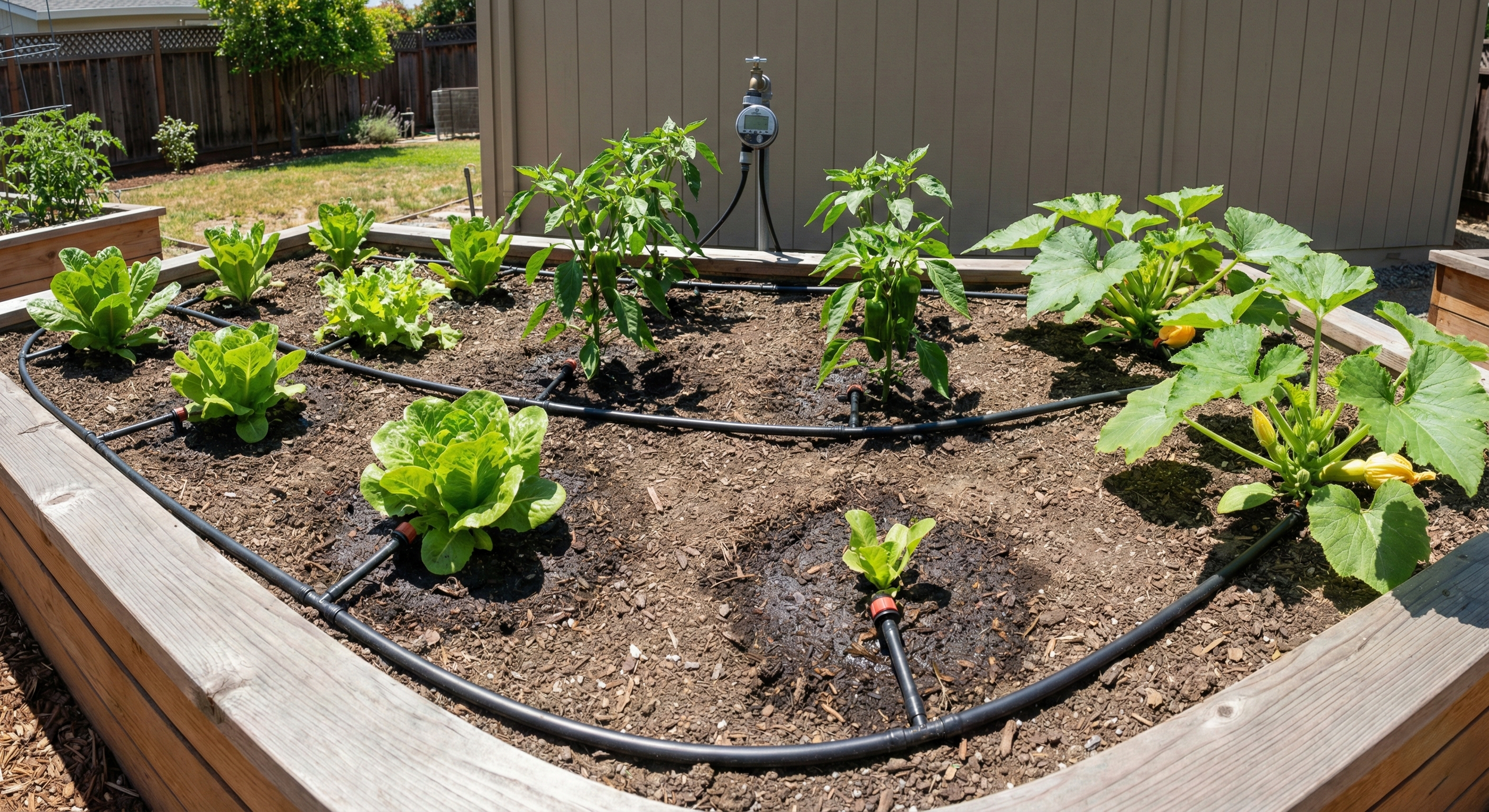
A simple hose-end timer (Orbit, Melnor, or similar) is all most small garden setups need. Set it to run your drip system for 20 to 30 minutes every other day during summer, adjust once in spring and once in fall, and you are covered. If you travel or just forget to water, a $25 timer pays for itself in saved plants within the first week of a Santa Cruz heat wave.
Timer-based systems work especially well in the coastal fog belt, where summer watering needs are more predictable. When you know your beds dry out on roughly the same schedule each week, a timer keeps things consistent without overthinking it.
When to Choose Moisture-Sensor Irrigation
Moisture sensors shine in gardens with diverse watering needs or inconsistent microclimates. If you have both clay and sandy soil areas, beds in full sun and partial shade, or a hillside property where drainage varies dramatically, sensors prevent both overwatering and underwatering by responding to actual conditions.
In Santa Cruz, where a foggy week can cut watering needs by half and a rare heat wave can double them, sensors automatically adapt. Products like the Rachio 3 controller with wireless soil sensors or a simple inline moisture sensor (like the Blumat system) eliminate the guesswork. They are particularly valuable in inland areas like Watsonville, where summer temperatures swing more widely than on the coast.
The Bottom Line for Santa Cruz Gardeners
Start with a basic timer on your drip system. It is cheap, simple, and a massive improvement over hand watering. If you find yourself constantly adjusting the timer for weather changes, or if your water bill tells you something is off, upgrade to a moisture-sensor setup. For most coastal Santa Cruz gardens with drip irrigation, a timer set to water deeply and less frequently is perfectly adequate.
This week: If you are still hand watering, buy a two-zone hose timer ($30 to $40) and connect it to your drip lines today. Set it for early morning watering, three times per week in summer.
For more on saving water in your garden, check out our free Water-Wise Gardening Guide at [/your-garden-toolkit].
Frequently Asked Questions
Does a timer or a moisture sensor save more water?
Moisture-sensor irrigation saves more than a timer. University of Florida IFAS Extension reports sensor savings of 35 to 54 percent in dry weather field plots, up to 70 to 90 percent under normal rainfall, and 44 percent at homes retrofitted with sensors. However, a well-programmed timer still beats hand watering by a wide margin and costs far less to set up.
How much do these irrigation systems cost to set up?
A basic hose timer runs about $20 to $50, while a moisture-sensor setup with sensors and a controller costs $80 to $200 or more.
When is a moisture sensor worth the extra cost?
Sensors shine in gardens with diverse watering needs or inconsistent microclimates, such as mixed clay and sandy soil, beds in both full sun and shade, or hillside drainage that varies. In Santa Cruz, where a foggy week can cut watering needs by half and a heat wave can double them, they adapt automatically, which is especially useful inland in Watsonville.
What is a good starting point for most Santa Cruz gardens?
Start with a basic timer on your drip system. For most coastal Santa Cruz gardens, a timer set to water deeply and less frequently, such as 20 to 30 minutes every other day in summer, is perfectly adequate. Upgrade to sensors only if you find yourself constantly adjusting for weather.
