

The Hidden Danger of Rodent Poison: Protecting Santa Cruz Wildlife
A few of the product links in this guide are affiliate links. If you buy through one, Ambitious Harvest may earn a small commission at no extra cost to you, which helps keep these guides free. We only point to gear we would use in our own Santa Cruz garden. As an Amazon Associate, we earn from qualifying purchases. Read our full disclosure.
A Silent Crisis in Our Community
In recent years, Santa Cruz County has seen heartbreaking losses of wildlife to rodenticide poisoning. Barn owls found dead beneath the boxes we installed to encourage them. A gray fox discovered lifeless in a Felton backyard. Bobcats dying slow, painful deaths from internal bleeding in the hills above Bonny Doon. The culprit wasn't direct poisoning. It was secondary poisoning from eating rodents that had consumed common rat and mouse baits.
When you put out rodent poison, you're not just killing rats. You're potentially killing the owls, hawks, foxes, bobcats, and other predators that naturally control rodent populations. It's a tragic irony: the poison eliminates the very animals that would solve your rodent problem for free.
This isn't a distant problem. It's happening in our neighborhoods right now.
How Secondary Poisoning Works
Modern rodenticides, particularly second-generation anticoagulants, don't kill rodents immediately. That's by design. If rats died instantly after eating bait, other rats would learn to avoid it. Instead, these poisons work slowly, taking 3 to 7 days to kill.
During that time, poisoned rodents become easy prey. They're disoriented, sluggish, and often emerge from hiding in broad daylight. To a hungry owl or bobcat, they look like an easy meal. And they are, but a deadly one.
The Poison Accumulates
A single poisoned mouse might not contain enough toxin to kill a predator. But predators eat many rodents over days and weeks. The poison builds up in their systems with each meal, eventually reaching lethal levels. This process is called bioaccumulation. Second-generation anticoagulant rodenticides are highly persistent in animal tissues and accumulate with repeated exposures.
An owl eating one poisoned rat might be fine. An owl eating poisoned rats all winter accumulates enough toxin to kill it by spring.
The Effects Are Gruesome
Anticoagulant rodenticides prevent blood from clotting. Animals die from internal hemorrhaging, bleeding from their organs, joints, and body cavities. It's a slow, painful death that can take weeks. Wildlife rehabilitation centers describe finding animals too weak to move, bleeding from their mouths and noses, dying with no external wounds.
Recent Local Losses
The statistics are alarming, but the individual stories hit harder. In a statewide review by CDFW, anticoagulant rodenticides were detected in 95% of mountain lions and 69% of the other nontarget wildlife tested across California.
Barn Owls
Studies in California have found 70 to 90 percent of tested raptors show rodenticide exposure. California data show anticoagulant exposure in 72% of Red-tailed Hawks, 82% of Cooper's Hawks, and 59% of Barn Owls in some sampling, with rates reaching 92% in certain broader composites. Many barn owls found dead or dying in Santa Cruz County have lethal levels in their systems. These are the same owls we install boxes for, hoping they'll control our rodents naturally.
The cruelty of the situation is stark: we put up owl boxes, attract owls to our properties, and then poison them through our rodent control choices.
Gray Foxes
Gray foxes are common in our hills and increasingly visible in suburban neighborhoods from Scotts Valley to Aptos. Local wildlife rescues have documented multiple fox deaths from secondary poisoning in recent years. A healthy family of foxes can eat dozens of rodents weekly, providing significant pest control, but only when they're alive to do so.
Bobcats
Our local bobcat population, already stressed by habitat loss and vehicle strikes, faces another threat from rodenticides. Studies of bobcats across several California regions show very high exposure rates to anticoagulant rodenticides, with many individuals carrying multiple compounds in their livers. The Santa Cruz Mountains population is small enough that every poisoned bobcat is a loss our ecosystem can't easily absorb.
Particularly concerning: three bobcats found dead near UC Santa Cruz tested positive for multiple anticoagulant rodenticides, with at least one confirmed to have three times the typical lethal concentration of brodifacoum in its liver.
Bobcats are particularly vulnerable because they actively hunt rodents as a significant portion of their diet. Every rat or mouse they catch could be carrying a lethal dose. Research has also linked rodenticide exposure to immune system changes and mange outbreaks in bobcats.
Mountain Lions
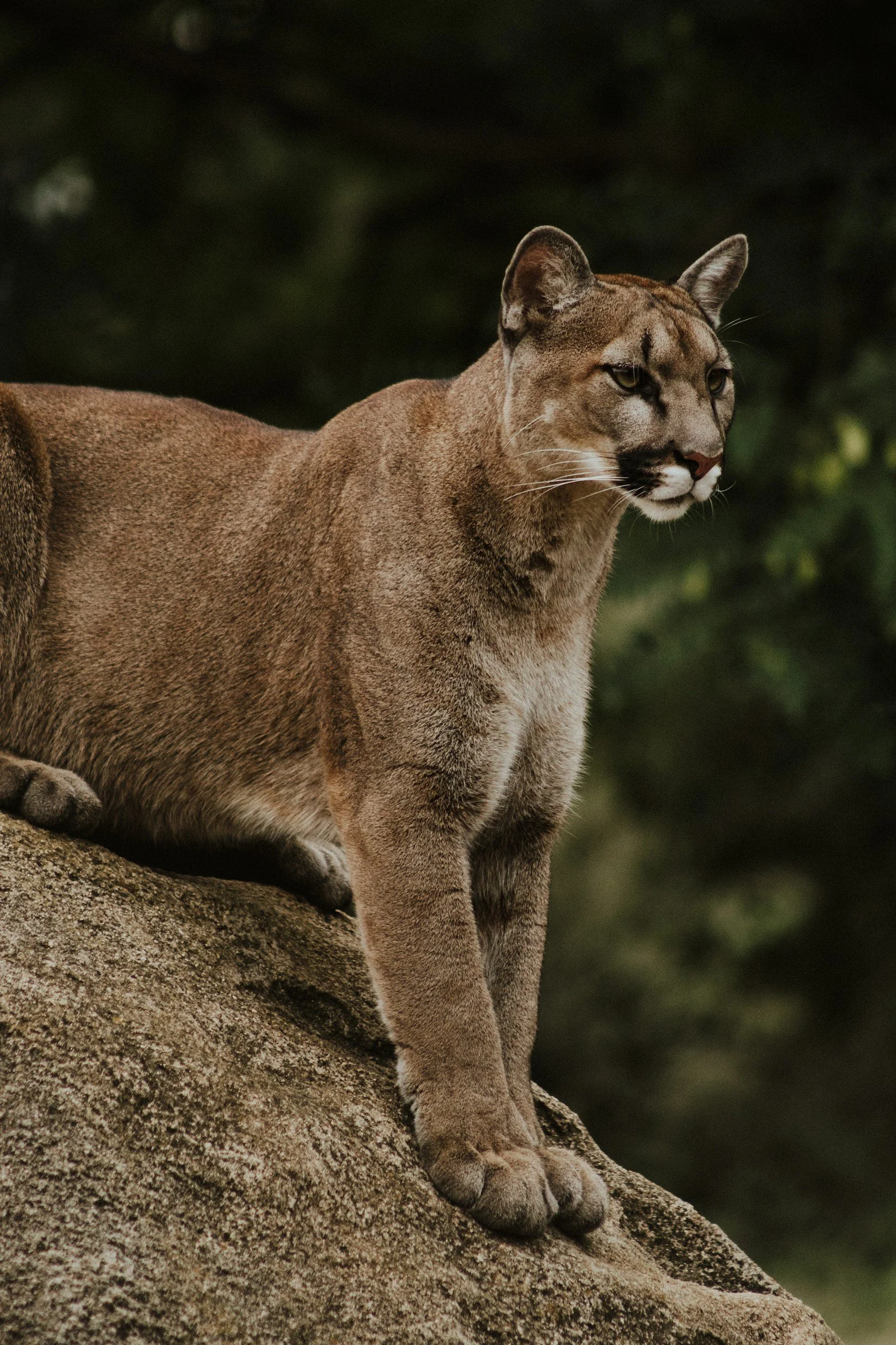
Even apex predators aren't immune. Mountain lions in California frequently test positive for rodenticide exposure; one statewide review detected anticoagulant compounds in about 95% of tested cats. A Southern California study found anticoagulant compounds in 26 of 27 tested mountain lions. They're eating rodents and prey that consumed poisoned rodents lower on the food chain. The poison moves up through the entire ecosystem.
Hawks and Other Raptors
Red-tailed hawks, Cooper's hawks, red-shouldered hawks, and other raptors common in Santa Cruz County all show high rates of rodenticide exposure in testing. These birds provide valuable rodent control across agricultural areas, suburban neighborhoods, and wild lands.
The Poisons to Avoid
Not all rodenticides are equally dangerous to wildlife, but the most common consumer products contain the worst ones.
Second-Generation Anticoagulants (Most Dangerous)
These are extremely potent, persist in animal tissues for months, and are the primary cause of secondary poisoning:
Brodifacoum
Bromadiolone
Difethialone
Difenacoum
Second-generation anticoagulants were designed to kill rodents that had developed resistance to older poisons. They're far more toxic and persistent than first-generation products. They're found in many common consumer products, though EPA restrictions have reduced their availability in some formats.
First-Generation Anticoagulants (Less Persistent but Still Harmful)
These require multiple feedings to be lethal to rodents but still cause secondary poisoning:
Warfarin
Chlorophacinone
Diphacinone
First-generation anticoagulants break down faster in animal tissues but still accumulate in predators that eat multiple poisoned rodents.
Other Rodenticides
Bromethalin: A neurotoxin with less bioaccumulation potential but still dangerous to wildlife that consumes poisoned rodents
Zinc phosphide: Lower secondary poisoning risk but highly toxic if consumed directly by non-target animals
The Bottom Line
No rodent poison is truly safe for wildlife. Even products marketed as "safer" or "lower risk" can harm non-target animals. The most wildlife-friendly choice is no poison at all.
California Law and Ongoing Advocacy
California has taken significant steps to restrict rodenticide use, though enforcement and compliance remain imperfect.
AB 1788 (2020)
AB 1788 (the California Ecosystems Protection Act) severely restricts second-generation anticoagulant rodenticide use statewide, banning nearly all consumer and structural uses. The law allows only a narrow set of exemptions (such as certain government infrastructure and vector-control work). However:
Some exempt uses remain (licensed vector control districts, specific government infrastructure)
Enforcement is limited
Old stock remains in many garages and sheds
Some products are still purchased through various channels
Local Efforts
Santa Cruz County advocates continue pushing for stronger protections. Several Bay Area cities have passed resolutions against rodenticide use on public property and in city operations. The conversation is ongoing, and community pressure has made a difference.
What You Can Do
Contact your city council about rodenticide policies on public property
Ask your HOA or property management company about their pest control practices
Support local wildlife organizations advocating for stronger protections
Talk to neighbors about alternatives (sharing information helps)
What Actually Works: Safer Alternatives
If poison doesn't work sustainably and harms wildlife, what does work? The good news is that effective alternatives exist, and many work better long-term than poison.
Snap Traps
Old-fashioned but effective. Snap traps kill instantly and humanely when properly set, with no secondary poisoning risk.
How to use them effectively:
Place along walls and in travel routes (rodents prefer edges)
Set perpendicular to walls with the trigger end toward the wall
Bait with peanut butter, chocolate, or dried fruit
Use enough traps (rodent populations can be larger than you think)
Check and reset daily
Be patient and persistent
Electronic Traps
These deliver a lethal electric shock, providing a quick, humane kill with no poison.
Advantages:
Reusable for years
Enclosed design (you don't see the kill)
Effective for both rats and mice (different trap sizes)
Battery or plug-in options
Considerations:
Higher upfront cost than snap traps
Requires batteries or power source
Still need proper placement for effectiveness
Exclusion (The Most Permanent Solution)
Keeping rodents out is more effective than killing them after they're in. Seal entry points to stop the problem at its source.
How to do it:
Seal holes larger than 1/4 inch (mice can squeeze through surprisingly small gaps)
Use hardware cloth over vents, pipe entries, and foundation gaps
Install door sweeps on exterior doors
Seal around utility entries (electrical, plumbing, HVAC)
Check roof lines, eaves, and attic vents
Exclusion is more work upfront but provides long-term results without ongoing killing.
Habitat Modification
Make your property less attractive to rodents in the first place.
Remove food sources:
Clean up fallen fruit daily
Secure pet food in sealed containers (don't leave it outside)
Use rodent-proof garbage cans
Manage compost carefully (enclosed bins, balanced ratios)
Secure bird feeders or use designs that reduce spillage. If deer are also a concern, see our deer-resistant gardening guide
Remove shelter:
Clear dense vegetation near buildings
Store firewood and lumber off the ground on racks
Keep areas under decks and porches clear or enclosed
Remove debris piles and clutter against structures
Remove water:
Fix leaky faucets and irrigation
Don't leave standing water in containers
Address drainage issues near buildings
Natural Predators
Let wildlife do the work for free.
Barn owls: One owl family can consume 2,000 to 4,000 rodents per year. Install an owl box on your property and maintain it. The Native Animal Rescue owl nest box program and other local organizations offer guidance on owl box installation and placement.
Encourage other predators:
Tolerate beneficial snakes (gopher snakes, king snakes are excellent rodent hunters)
Don't discourage foxes, bobcats, or coyotes from moving through your property
Hawks and other raptors also help
Barn cats: For rural properties, outbuildings, and agricultural areas, barn cats can provide effective ongoing rodent control. Local rescue organizations sometimes have semi-feral cats suitable for barn cat placement.
Making the Switch
If you've been using rodenticides, here's how to transition to safer methods.
1. Stop Using Poison Immediately
Don't wait until you run out. The sooner you stop, the sooner your local wildlife stops being exposed.
2. Remove Existing Bait Stations
Dispose of unused poison as hazardous waste. Santa Cruz County has household hazardous waste disposal options; check the county website for locations and schedules. Don't throw poison in regular trash.
3. Switch to Snap Traps or Electronic Traps
Learn proper placement and baiting for effectiveness. You may need more traps than you think, especially if you've had a significant rodent population. Be persistent.
4. Address the Source
Why do you have rodents? Fix the underlying attractants and entry points. This is the most important long-term step. Killing rodents without addressing why they're there means new rodents will simply replace the ones you've killed.
5. Invest in Natural Predators
Install an owl box. Tolerate snakes. Consider a barn cat for rural properties. If gophers are your main concern, our gopher control guide covers what actually works. Build a relationship with the predators that will control rodents sustainably.
Talking to Your Pest Control Company
If you hire pest control services, ask questions before they treat your property.
Questions to ask:
What products do you use for rodent control?
Do you use anticoagulant rodenticides?
What alternatives do you offer?
Are you willing to use trapping and exclusion instead of poison?
Can you focus on sealing entry points rather than just killing rodents?
Many pest control companies are willing to accommodate requests for poison-free service. Some specialize in wildlife-friendly integrated pest management. Don't assume poison is the only option, and don't be shy about asking for alternatives.
If your current company won't work with you, look for one that will. Search for "wildlife-friendly pest control" or "IPM pest control" in our area. For broader pest management strategies, see our guide to common garden pests in Santa Cruz County.
Frequently Asked Questions About Rodenticides and Wildlife
If I use bait stations with poison inside, doesn't that protect wildlife from eating the poison directly?
Bait stations prevent non-target animals from eating the poison directly, but they don't prevent secondary poisoning. The rodent eats the poison from the station, wanders off, becomes sluggish and easy to catch, and gets eaten by an owl or fox. The predator is poisoned through the rodent, not by eating the bait directly. Bait stations are designed to protect children and pets from the poison, not to protect wildlife from secondary poisoning.
Won't the rodent population explode if I stop using poison?
Usually not. If you address the underlying attractants (food, water, shelter) and use trapping and exclusion, populations stabilize. Also, when you stop poisoning predators, they become more effective at natural rodent control. Many people find rodent problems actually decrease over time after switching away from poison because they're finally addressing the root causes.
Are there any rodenticides that are safe for wildlife?
No rodenticide is completely safe for wildlife. Second-generation anticoagulants are the worst, but all rodenticides carry some risk. Even bromethalin, once thought to have lower secondary poisoning potential, has now been detected in non-target wildlife. The safest approach is physical control methods (trapping, exclusion) combined with habitat modification and natural predators.
My neighbor uses poison. Can that affect the wildlife on my property?
Yes. Rodents travel between properties, and poisoned rodents can die anywhere. Wildlife hunting across your neighborhood may be eating poisoned rodents from multiple sources. Talking to neighbors about alternatives can help, and community-wide awareness makes a real difference.
I have a serious rodent infestation. Can trapping really handle it?
Yes, but it requires commitment. Use multiple traps (more than you think you need), check and reset them daily, and be persistent. Address entry points and attractants simultaneously. For severe infestations, a professional using integrated pest management (IPM) methods can help get the situation under control without poison.
What should I do if I find a sick or dying wild animal that might be poisoned?
Contact a local wildlife rehabilitation center immediately. In Santa Cruz County, Native Animal Rescue (831-462-0726) handles injured and sick wildlife. Don't try to treat the animal yourself. If an animal is suffering and no help is available, your local animal control may be able to assist.
How do I know if an owl box will work on my property?
Barn owls need relatively open hunting habitat (fields, pastures, orchards, large yards with lawns or open ground). They avoid dense forest. If you have open land and rodent issues, an owl box is worth trying. Mount it 10 to 15 feet high on a pole or building, facing away from prevailing weather. Local owl box programs can provide guidance specific to our area.
Is there a way to know if rodent poison has been used in my area?
There's no easy way to test for it. Assume that some level of rodenticide is present in our environment. Focus on not adding to the problem on your own property and encouraging neighbors to do the same.
Free Resources
Download these guides to help manage rodents safely:
Garden Troubleshooting Guide - Solutions for common garden problems including pest management.
Gopher Control Guide - Comprehensive strategies for dealing with gophers without poison.
Companion Planting Guide - Building a healthy garden ecosystem.
Water-Wise Gardening Guide - Managing water to reduce pest-attractive conditions.
A Community Responsibility
Every choice we make ripples through the ecosystem. When we poison rodents, we poison the food chain. When we protect predators, we get natural, sustainable rodent control.
Santa Cruz County is home to remarkable wildlife. Barn owls hunting at dusk over Pajaro Valley fields. Gray foxes trotting through San Lorenzo Valley neighborhoods. Bobcats patrolling the hills above Soquel. Hawks circling over Bonny Doon. We can keep these animals and benefit from their rodent control, or we can poison them and lose both the wildlife and the pest management they provide.
The alternatives work. Trapping catches rodents. Exclusion keeps them out. Habitat modification removes what attracts them. And owls, foxes, hawks, and bobcats kill thousands of rodents every year for free, if we let them live.
The choice is ours to make.
