

Sungold vs. Sweet 100: Best Cherry Tomato Compared
A few of the product links in this guide are affiliate links. If you buy through one, Ambitious Harvest may earn a small commission at no extra cost to you, which helps keep these guides free. We only point to gear we would use in our own Santa Cruz garden. As an Amazon Associate, we earn from qualifying purchases. Read our full disclosure.
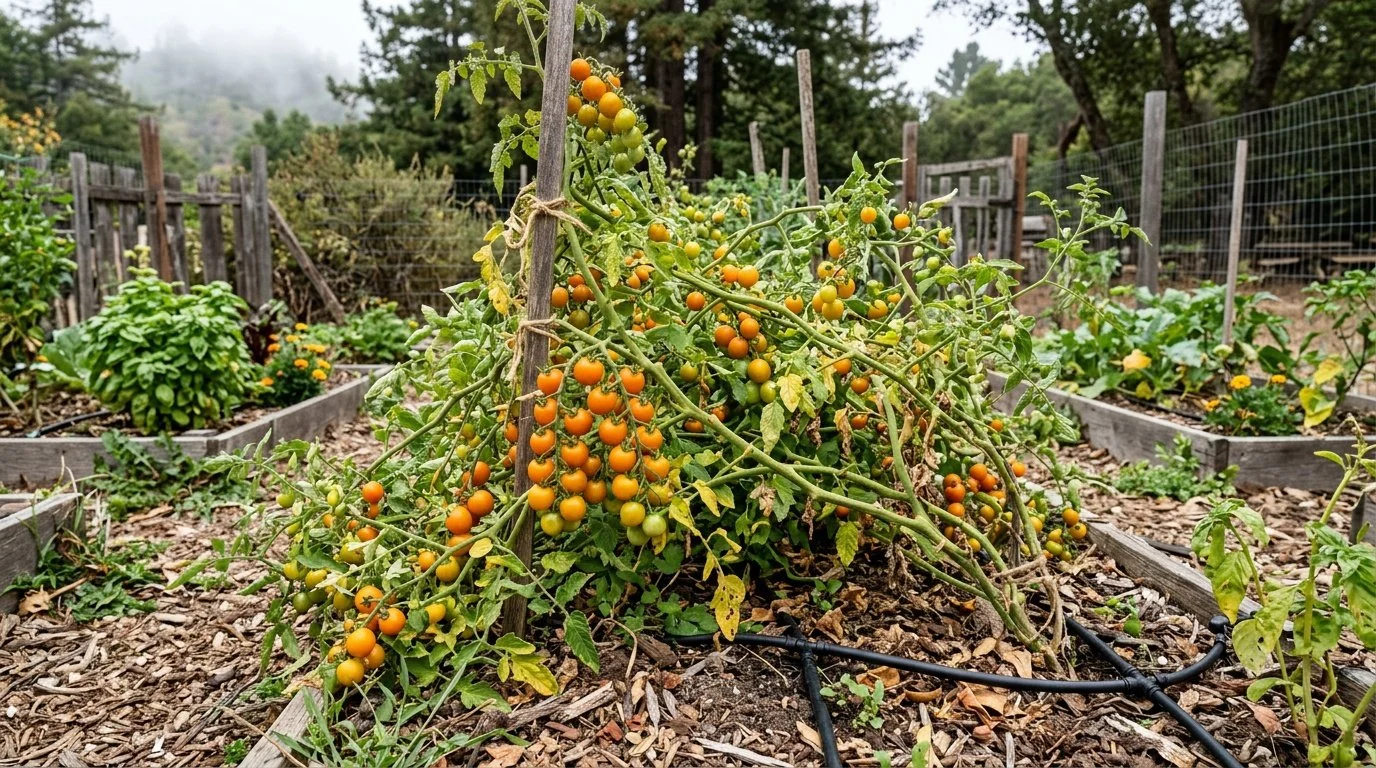
Sungold wins this matchup for most coastal California gardeners. Its flavor is in a league of its own: intensely sweet with a tropical, almost apricot-like taste that makes it the most popular cherry tomato at farmers markets from Santa Cruz to San Francisco. According to Cornell University's vegetable breeding program, Sungold consistently ranks at the top of cherry tomato taste tests nationwide. Sweet 100 is a fine cherry tomato and produces enormous quantities of fruit, but in a head-to-head taste test, Sungold takes it almost every time.
When to Choose Sungold
Choose Sungold when flavor is everything. These golden-orange cherry tomatoes have a sweetness that borders on candy, with a tropical undertone you will not find in any red variety. Kids devour them straight off the vine, and they disappear at potlucks before anything else on the table.
Sungold is an F1 hybrid from the Japanese seed company Tokita, so you cannot save true seed from it. The trade-off is worth it. It sets fruit reliably in Santa Cruz's cool coastal summers and produces heavily from midsummer into fall. The one downside: the thin skin cracks easily, especially with irregular watering. Pick frequently and water consistently to minimize splitting. If you grow one tomato plant this year, make it a Sungold.
When to Choose Sweet 100
Sweet 100 earns its name with genuinely sweet fruit in long, cascading clusters. It is a slightly better choice when you want sheer volume. A single plant can produce hundreds of cherry tomatoes over a season, and the fruit holds up a bit better than Sungold after picking thanks to its thicker skin.
Sweet 100 also works well in slightly less-than-ideal conditions. If your garden gets partial shade or you are growing in a container, Sweet 100's vigorous growth habit pushes through. It also comes in an improved version called Super Sweet 100, which adds nematode resistance (look for the VFN designation). For gardeners in the Watsonville area where nematodes are common in sandy soils, this is a meaningful advantage.
The Bottom Line for Santa Cruz Gardeners
Plant a Sungold. It is the single most crowd-pleasing tomato you can grow on the Central Coast, and it handles our foggy summers better than almost any other variety. If you have room for a second cherry tomato plant, add a Sweet 100 for volume and a classic red color on the plate. Both are indeterminate and will need tall stakes or sturdy cages. Water them consistently (drip irrigation is ideal) to keep Sungold's cracking under control.
This week: Order Sungold starts from a local nursery like Sierra Azul in Watsonville or Dig Gardens in Santa Cruz. They sell out fast once spring arrives.
For more on growing great tomatoes in California, check out our free Tomato Growing MasterKit at [/your-garden-toolkit].
Frequently Asked Questions
Which cherry tomato is better, Sungold or Sweet 100?
For most coastal California gardeners, Sungold wins on flavor. Its intensely sweet, almost tropical taste tops cherry tomato taste tests, and it sets fruit reliably in our cool, foggy summers.
Why does Sungold crack, and how do I prevent it?
Sungold has thin skin that splits with irregular watering. Pick frequently and water consistently, ideally with drip irrigation, to keep cracking under control.
What are the advantages of Sweet 100?
Sweet 100 produces enormous volume in long clusters, has thicker skin that holds up better after picking, and tolerates partial shade or containers. The Super Sweet 100 version adds nematode resistance, shown by the VFN designation.
Can I save seed from Sungold?
No. Sungold is an F1 hybrid, so its seed will not grow true to type. You will need to buy new starts or seed each year.
Keep Reading
- Heirloom vs. Hybrid Tomatoes: Which Should You Grow?
- Best Cherry Tomato Varieties for the California Coast
- How to Prevent Tomato Cracking and Splitting
- Determinate vs. Indeterminate Tomatoes Explained
