

Squash Vine Borer Prevention in Santa Cruz County
A few of the product links in this guide are affiliate links. If you buy through one, Ambitious Harvest may earn a small commission at no extra cost to you, which helps keep these guides free. We only point to gear we would use in our own Santa Cruz garden. As an Amazon Associate, we earn from qualifying purchases. Read our full disclosure.
Few pests strike as dramatically as the squash vine borer. One day your squash plants look healthy and productive; the next day they are wilting despite adequate water, and within a week they can be completely dead. The larvae tunnel through squash stems, blocking water and nutrient transport and introducing bacterial infections.
The good news for Santa Cruz County gardeners is that squash vine borers are less prevalent in coastal California than in the eastern United States, Midwest, and hot California valleys. Our cooler coastal climate does not favor these heat-loving moths. However, they do occur, especially in warmer inland areas, and knowing how to prevent and manage them can save your squash harvest.
What Are Squash Vine Borers?
The squash vine borer (Melittia cucurbitae) is actually a moth, though it looks more like a wasp with its orange and black coloring and clear wings. Understanding its life cycle helps with prevention.
Life Cycle
Adult moths emerge from soil in late spring and early summer (typically May through July in our area). They fly during the day (unlike most moths) and lay small, flat, brown eggs at the base of squash stems.
Eggs hatch after about one week. The tiny larvae immediately bore into the stem and begin feeding on the plant's vascular tissue.
Larvae feed inside stems for 4-6 weeks, growing to about an inch long. They are white or cream-colored with brown heads.
Mature larvae exit the stem and burrow into the soil to pupate, where they overwinter until the following spring.
In warm areas, there may be two generations per year. In Santa Cruz County's cooler climate, typically only one generation occurs.
Which Plants Are Affected
Squash vine borers prefer summer squash (zucchini, yellow squash, pattypan), winter squash with hollow stems (Hubbard, spaghetti), and pumpkins.
They rarely attack cucumbers (stems too thin), melons (stems too thin), or butternut squash (solid stems are harder to penetrate).
How Common Are Squash Vine Borers in Santa Cruz County?
Our coastal climate provides natural protection against squash vine borers, but they are not absent.
Low Risk Areas
Coastal fog belt (Aptos, Capitola, Live Oak, Westside Santa Cruz): Cool temperatures and fog make this area less hospitable to vine borers. The moths prefer warm, sunny conditions for activity.
Under redwoods and shaded canyons: Cool, shaded conditions are not favorable for vine borer populations.
Higher Risk Areas
Warm inland valleys (Scotts Valley, upper Soquel hills): Warmer, sunnier conditions are more suitable for vine borers.
Pajaro Valley and Watsonville: The warmest parts of the county have the highest vine borer risk, though still lower than hot inland California valleys.
Near established squash-growing areas: Vine borers can build up in locations where squash is grown year after year without rotation.
How Do You Prevent Squash Vine Borers?
Prevention is far more effective than treatment for squash vine borers. Once larvae are inside stems, damage has already begun.
Row Covers
Covering plants with lightweight row cover fabric prevents adult moths from laying eggs on your squash. This is the most effective prevention method.
Install row covers immediately after planting and seal edges by burying in soil or weighing down. Keep covers in place until plants begin flowering, then remove to allow pollination (or hand pollinate while keeping covers in place). Row covers also protect against cucumber beetles.
Stem Wrapping
Wrapping the base of squash stems creates a physical barrier that prevents egg-laying and larval entry.
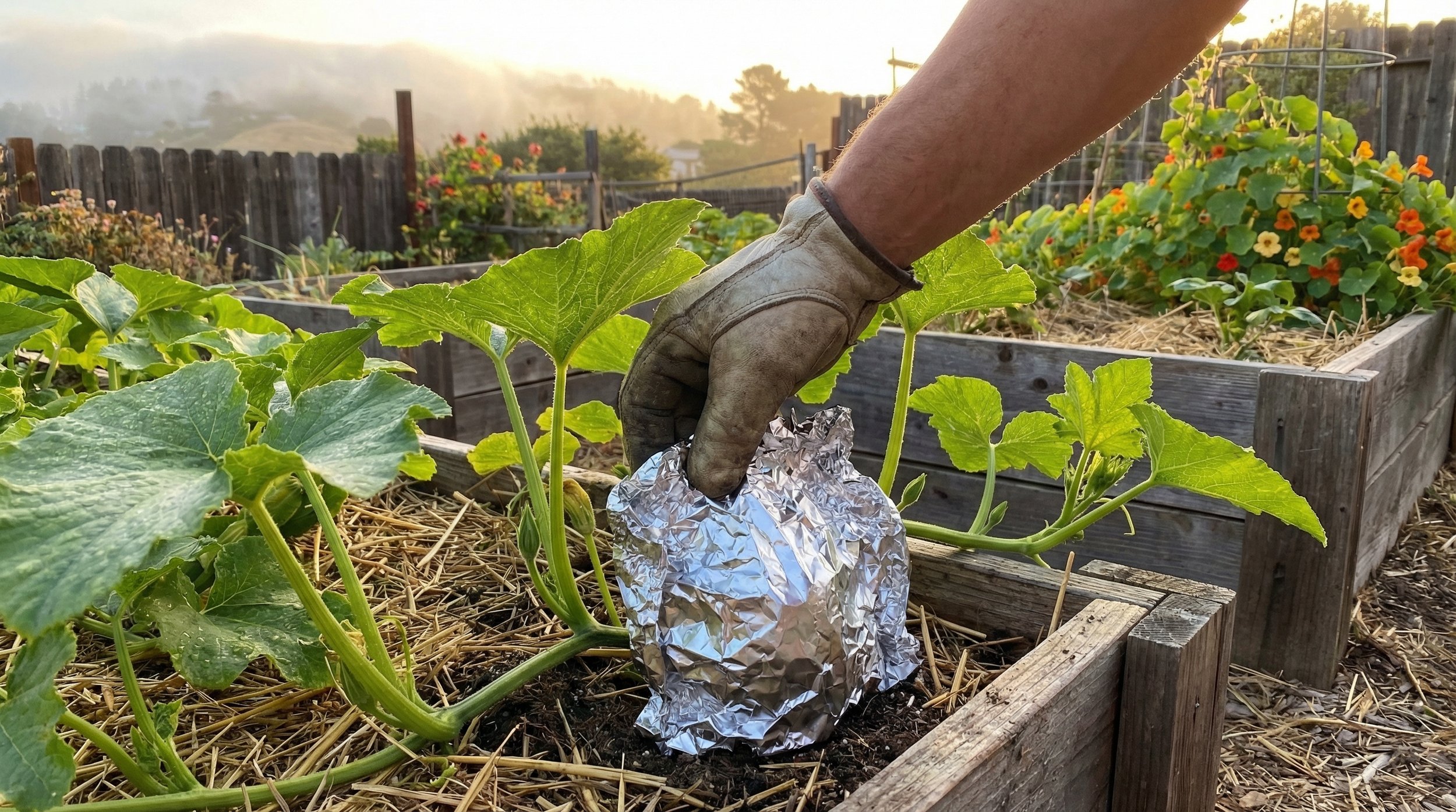
Aluminum foil: Loosely wrap a 4-6 inch section of stem starting at soil level. The foil barrier prevents eggs from being laid directly on the stem and makes it difficult for larvae to bore in.
Nylon stockings: Cut old pantyhose into 6-inch sections and wrap around stem bases. The stretchy material accommodates stem growth.
Collar protectors: Commercial stem protectors or homemade versions from plastic cups (with bottoms cut out) create barriers around stem bases.
Apply stem protection early in the season, before adult moths become active (typically by early May in Santa Cruz County).
Crop Rotation
Do not plant squash in the same location year after year. Vine borer pupae overwinter in soil, so rotating crops breaks their life cycle. Wait at least two years before planting squash family crops in the same bed.
Trap Crops
Some gardeners plant early sacrificial squash plants to attract egg-laying, then destroy those plants (with larvae inside) before the main crop is planted. This works best in areas with significant vine borer pressure.
Timing Adjustments
In areas with vine borer pressure, adjusting planting time can help.
Late planting: Waiting until late June or early July to plant summer squash can allow you to miss the main egg-laying period. The trade-off is a shorter harvest season.
Succession planting: Planting multiple crops 3-4 weeks apart ensures some plants are available even if others succumb to borers.
Resistant Varieties
Butternut squash has solid stems that borers find difficult to penetrate. It is the most resistant common squash.
Tromboncino (Zucchetta) is an Italian squash with solid stems and good borer resistance. It produces long, curved squash that can be harvested young like zucchini.
Cucurbita moschata varieties (butternut, tromboncino, cheese pumpkins) are generally more resistant than Cucurbita pepo varieties (zucchini, acorn, most pumpkins).
How Do You Treat Squash Vine Borer Damage?
If you catch vine borer damage early, you may be able to save affected plants.
Surgical Removal
Find the entry hole (look for frass) and use a sharp knife to carefully slit the stem lengthwise above the hole. Locate and remove the larva (white with brown head, up to 1 inch long). Cover the wound with moist soil and keep the plant well-watered. Bury the wounded section of stem to encourage root development.
This method works best when borers are caught early and only one or two larvae are present.
Bt Injection
Bacillus thuringiensis (Bt) is a biological insecticide effective against caterpillars and larvae. Inject Bt solution into the stem near the entry point using a syringe. The larva must ingest the Bt for it to work, so results are inconsistent.
Encouraging Secondary Rooting
Squash vines can produce roots at leaf nodes. If a plant is damaged at the base, bury several leaf nodes along the vine with moist soil. These new roots can sometimes sustain the plant even if the main stem is compromised.
When to Give Up
If a plant is severely damaged (mushy stem, advanced wilting), it is often better to remove it entirely. Destroy affected plants (do not compost) to prevent larvae from completing their life cycle.
What Should You Do at the End of the Season?
Good fall cleanup helps reduce vine borer populations for the following year.
Remove and destroy all squash plant debris (do not compost). Till or cultivate the soil where squash was grown to expose overwintering pupae to predators and cold. Avoid planting squash in the same location the following year.
The good news for Santa Cruz County gardeners is that squash vine borers pose less of a threat here than in many other regions. Our cooler coastal climate simply does not favor these heat-loving pests. However, if you garden in warmer inland areas or have experienced vine borer damage in the past, prevention is straightforward and effective. Row covers, stem wrapping, and choosing resistant varieties like butternut squash can virtually eliminate the problem. Even if borers do strike, early detection and surgical removal can save plants. Do not let fear of vine borers discourage you from growing squash. With basic awareness and simple preventive measures, you can enjoy abundant squash harvests without losing plants to this dramatic but manageable pest.
Frequently Asked Questions
Are squash vine borers common in Santa Cruz County?
Less common than in the eastern US, Midwest, and hot California valleys. Our cooler coastal climate is not ideal for vine borers. However, they do occur, especially in warmer inland areas like Scotts Valley, Pajaro Valley, and sunny hillsides.
How do I know if my wilting squash has vine borers?
Look for sawdust-like frass (excrement) at the base of stems near soil level. This greenish-yellow material around small holes confirms borer presence. Not all wilting is vine borer; also consider inconsistent watering, bacterial wilt, or gopher damage.
What squash varieties resist vine borers?
Butternut squash and other Cucurbita moschata varieties have solid stems that borers find difficult to penetrate. Tromboncino (zucchetta) is a zucchini alternative with good borer resistance. These are not immune but experience much less damage.
When are adult vine borer moths active?
In Santa Cruz County, adult moths typically fly from late May through July, with peak activity in June. Watching for the distinctive orange and black day-flying moths helps time prevention efforts.
Can I save a squash plant after vine borer damage?
Sometimes, if caught early. Surgical removal of larvae, followed by burying the wounded stem section, can save plants. Once damage is severe (mushy stem, advanced wilting), it is usually better to remove the plant.
Do row covers really work for vine borer prevention?
Yes, row covers are the most effective prevention method because they physically prevent moths from reaching plants to lay eggs. Keep covers sealed and in place until flowering, then remove for pollination or hand pollinate.
Should I apply pesticides for vine borers?
Chemical controls are generally not necessary in Santa Cruz County given our lower pressure. Prevention methods (row covers, stem wrapping, resistant varieties) are more effective and avoid pesticide impacts on beneficial insects. If you choose to spray, applications must target the brief period after eggs hatch and before larvae enter stems.
Will crop rotation help with vine borers?
Yes. Vine borer pupae overwinter in soil, so not planting squash in the same location for 2+ years helps break their life cycle. Rotating to a different part of the garden each year is good practice.
Free Downloadable Resources
Santa Cruz County Seasonal Planting Calendar - Know when vine borers are active in your area. Download PDF
Garden Troubleshooting Guide - Quick reference for pest identification. Download PDF
