

Seasonal Flock Care: Spring and Summer in Coastal CA
A few of the product links in this guide are affiliate links. If you buy through one, Ambitious Harvest may earn a small commission at no extra cost to you, which helps keep these guides free. We only point to gear we would use in our own Santa Cruz garden. As an Amazon Associate, we earn from qualifying purchases. Read our full disclosure.
Seasonal Flock Care Checklist: Spring and Summer in Coastal California
Spring and summer flock care in coastal California should respond to current weather, local predators, bird age, and observed health, not a fixed seasonal-risk ranking. Available veterinary guidance does not establish March through May as the single highest-risk period for backyard flocks.
What Does Your Flock Need in March?
March marks the real beginning of the poultry year in Santa Cruz County. Days are lengthening, hens are ramping up egg production, and the local feed stores are stocking their first shipments of chicks. This is the month to set the foundation for the entire growing season.
Coop Deep Clean
Before chick season begins and before the spring warmth accelerates parasite and bacterial growth, do a thorough coop cleanout. Remove all bedding down to the floor or subfloor. Scrub all surfaces, including roosts, nesting boxes, and walls, with a solution of one part white vinegar to four parts water. Allow everything to dry completely in the air before adding fresh bedding. This spring clean removes the accumulated moisture and waste of winter, reducing the bacterial and parasite load your flock carries into the warmer months.
In Boulder Creek, I find that March is the ideal window for this task. The rains are tapering but the weather is still cool enough that the cleaning process does not create a hot, humid environment inside the coop. Wait until a day with no rain in the forecast so surfaces can dry fully.
Parasite Baseline Check
Early spring is when external parasites (mites and lice) begin their population explosion. Do a hands-on check of every bird. Part the feathers around the vent, under the wings, and at the base of the tail. Look for clusters of eggs (lice nits attached to feather shafts), moving parasites (mites appear as tiny red or dark dots; lice are larger and pale), and skin irritation (redness, scabbing, feather loss).
If birds have compatible signs or exposure risks, ask a veterinarian or diagnostic laboratory about fecal testing. UC Davis CAHFS lists direct fecal examination and flotation using fresh, cooled droppings; testing can help identify parasite eggs, but results and treatment decisions need clinical context.
Egg Production Ramp-Up
As day length increases past 14 hours of light, hens that slowed or stopped laying during winter will resume production. Ensure your birds are getting adequate calcium (provide oyster shell free-choice in a separate container from their feed) and that nesting boxes are clean, dark, and comfortable. Check that each box has fresh bedding and is positioned in a quiet area of the coop. You should have at least one nesting box for every 3 to 4 hens.
What Changes in April as Spring Arrives?
Chick Season Management
April is peak chick season in Santa Cruz County. If you are adding chicks or ducklings to your flock, they need a properly set up brooder. Maintain brooder temperature at 95 degrees Fahrenheit for the first week, reducing by 5 degrees each week until they are fully feathered (typically 5 to 6 weeks for chickens, 7 to 8 weeks for ducks). Use a thermometer rather than guessing, and watch chick behavior: huddling under the heat source means too cold, spreading out and panting means too hot, and active exploration means just right.
Keep chicks and ducklings separate from your adult flock until they are at least 8 weeks old and large enough to hold their own. Integration should follow the gradual process of visual introduction followed by supervised contact. For the full process, see Seasonal Flock Care: Fall and Winter in Coastal California for year-round context.
Garden Integration Begins
April is when supervised free-range time in the garden becomes most productive. Spring weeds are growing rapidly, slug populations are exploding with the rains, and your garden beds need turning before planting. This is when your flock earns its keep.
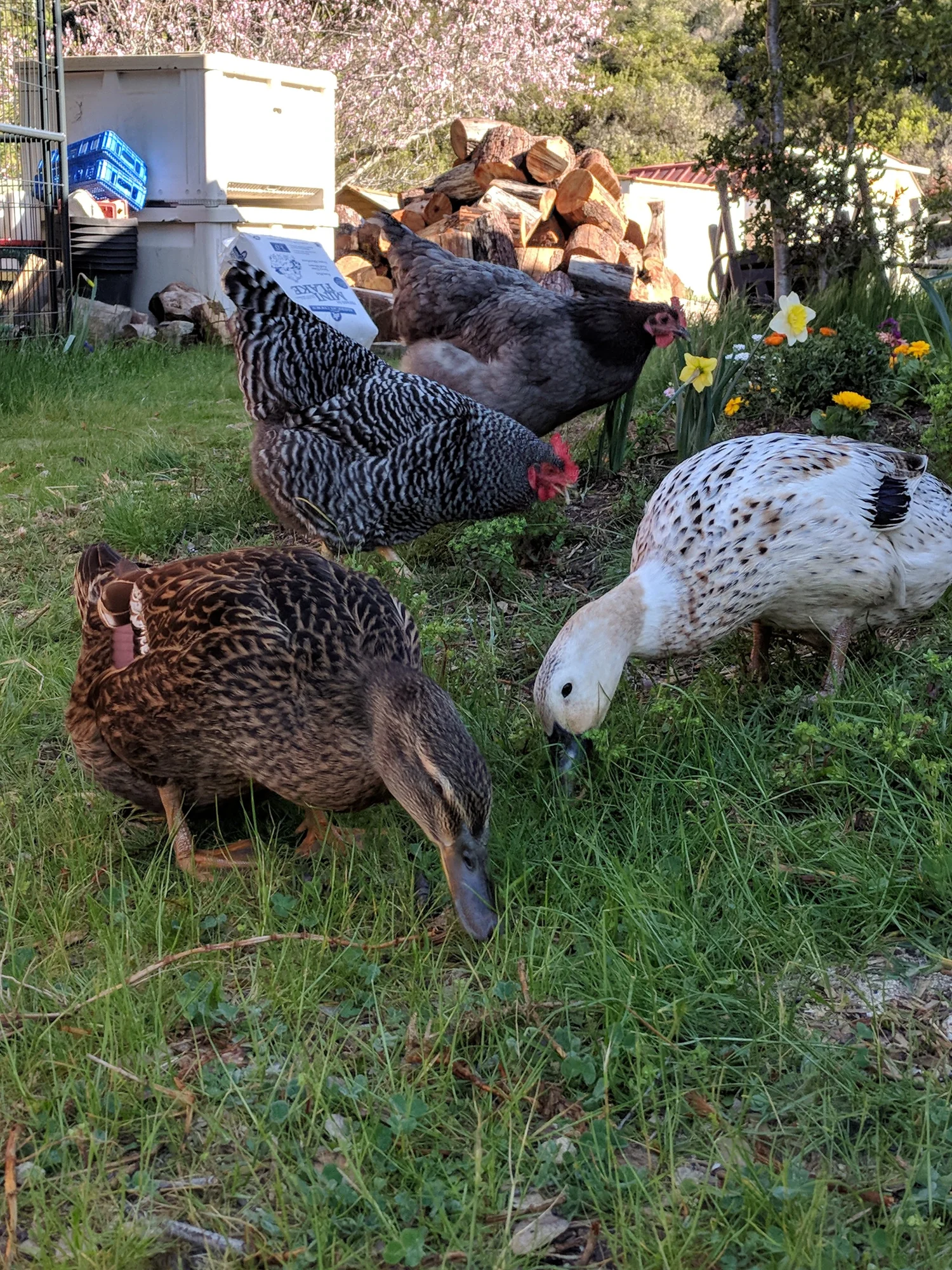
I let my birds work empty beds before planting, and the results are dramatic. Chickens scratch through the top few inches of soil, eating weed seeds, grubs, and slug eggs. The ducks focus on slugs and snails at the surface. My Toulouse goose mows down emerging grass and broadleaf weeds. After a few hours of flock work, a bed is turned, weeded, and fertilized.
The key is managing access. Let birds into beds you want worked and keep them out of beds with emerging seedlings or tender transplants. Temporary fencing, garden netting, or supervised sessions work well. For detailed strategies, see How Your Flock Can Work Your Garden.
Predator Vigilance
Spring brings peak predator pressure as foxes, coyotes, and hawks are feeding young. Tighten your security: check perimeter defenses, ensure automatic doors are functioning, and be extra watchful during supervised free-range time. Cooper's hawks are particularly aggressive during nesting season in April and May.
What Should You Focus on in May?
Parasite Prevention Intensifies
As temperatures warm through May, external parasite populations grow rapidly. Check birds weekly for mites and lice. Treat the coop preventively by applying food-grade diatomaceous earth (DE) to crevices, roost joints, and nesting box areas where mites hide during the day. Note that DE is only effective when dry, so reapply after rain or heavy fog dampens the coop.
Watch for scaly leg mites, which burrow under the scales on chickens' legs and feet, causing raised, crusty scales. Treatment involves coating the legs with petroleum jelly or a commercial scaly leg treatment to suffocate the mites, repeated weekly for at least three weeks.
Fly Management
Warmer weather brings flies, which are both a nuisance and a health concern. Flies lay eggs in moist bedding and manure, creating maggot infestations that can lead to flystrike (myiasis) in birds with soiled vent feathers. Keep bedding dry by adding fresh material regularly, clean up spilled water promptly, and consider fly traps or predatory fly parasites (beneficial wasps that kill fly pupae) as biological control. These parasites are available by mail order from several farm supply companies and are safe to use around poultry.
Transition to Summer Feed Schedule
As foraging increases, continue offering a nutritionally complete ration free-choice and monitor intake and body condition. Merck recommends species- and life-stage-appropriate complete rations and warns that supplements can unbalance the diet. Do not assume that a 10-to-20% drop in feed intake is automatically healthy.
How Do You Manage Your Flock Through the Summer Heat?
Summer in Santa Cruz County is a tale of two climates. Coastal areas stay cool, often foggy, with daytime highs of 65 to 75 degrees. Inland valleys and the San Lorenzo Valley can see sustained temperatures of 85 to 100 degrees during heat events. Your summer management strategy depends entirely on where in the county you keep your flock.
June: Peak Daylight and Production
June brings the longest days and typically the highest egg production of the year. Hens getting 15 to 16 hours of daylight are at maximum laying capacity. Collect eggs at least twice daily in warm weather to prevent spoilage and to discourage broodiness. Eggs left in the nest on warm days deteriorate quickly and can attract predators and pests.
June is also when dust bathing becomes most important for your flock. Dust bathing is the primary method birds use to control external parasites. Provide a dry dust bathing area (a shallow container filled with a mix of sand, wood ash, and food-grade diatomaceous earth works well) that stays dry even during our foggy mornings. If your run gets damp fog daily, a covered dust bath area is essential.
July: Heat Management
Chickens can show heat stress before a day feels extreme. Merck says chickens begin to feel heat stress above about 75°F, while Penn State says heat stress typically begins above 80°F, becomes apparent around 85°F, and heat exhaustion is increasingly likely in the mid-to-upper 90s. Watch the birds and respond early with shade, ventilation, and ample cool water.
For inland flock keepers, July heat management includes providing shade (natural shade from trees is best, supplemented by shade cloth over the run if needed), ensuring unlimited access to cool, fresh water (add ice to waterers on the hottest days and use multiple waterers to prevent one empty container from leaving birds without water), offering frozen fruit treats (watermelon, berries, and grapes frozen into blocks provide hydration and cooling activity), and ventilating the coop (open all vents and windows; add a fan if the coop has electricity).
For coastal flock keepers in Santa Cruz, fog-belt areas rarely reach temperatures that stress poultry. Your July concern is more likely dampness than heat. Keep bedding dry, provide covered areas in the run, and watch for respiratory issues that can develop in persistently damp conditions.
August: Molting Preparation and Late Summer Management
Some birds begin their annual molt in late August, though most Santa Cruz County flocks molt in September through November. As summer winds down, egg production may begin to taper slightly as day length decreases. This is normal.
August is a good month to assess your flock's body condition before the molt begins. Birds in good flesh with good feather quality going into molt will recover faster and return to laying sooner. Provide extra protein (mealworms, scrambled eggs, or a higher-protein feed) in late August to build reserves for feather regrowth.
Continue parasite management through August. The combination of warmth and the stress of early molting makes birds more vulnerable to parasite-related problems. A mid-summer fecal test (especially if you did not do one in spring) helps you catch any internal parasite issues before they compound the stress of molting.
How Should You Integrate Your Flock With Your Garden Through Spring and Summer?
The spring and summer growing season is when garden-flock integration is most valuable and most challenging. Your birds can do genuine work in the garden, but they can also destroy crops in minutes if management lapses.
Spring Garden Work (March through May)
Use your flock only on beds whose next food planting is far enough away to allow the full manure interval. Chickens scratch through weeds and garden debris, but they also deposit raw manure. For home food gardens, UC Master Gardeners of Napa County advise incorporating raw manure at least 120 days before planting crops that grow in or near the soil, or 90 days before planting trellised crops. The federal organic-production standard, 7 CFR 205.203, uses 120 or 90 days before harvest instead. These are different recommendations; this guide follows the UC before-planting intervals for home gardens. Keep birds off spring beds you need to plant soon. Raking manure into a compost pile does not make an already exposed bed safe for immediate planting. Record the last raw-manure incorporation date and plan the next food crop around the full interval.
Once food beds are planted, keep poultry out. Use temporary fencing or suitable row cover to exclude birds. Mature stems may withstand scratching or trampling, but plant size does not protect food crops from fresh manure.
Summer Garden Work (June through August)
As food crops grow, keep flock pest patrols in separate non-food areas. Use fencing to keep birds and their droppings out of planted food beds. Supervision alone cannot prevent manure deposition.
Fallen fruit and overripe vegetables make excellent flock treats and reduce pest habitat in the garden. Tomato hornworms, cabbage worms, and earwigs are all eagerly consumed by chickens. However, protect ripening fruit (especially strawberries, tomatoes, and grapes) from the flock. Birds that discover ripe fruit on the vine will return daily and cause significant crop damage.
Birds can scratch through garden debris and bedding, but they also add fresh manure. Move collected material to a separate composting system and keep birds out during processing. Breakdown or a dark, crumbly appearance does not establish pathogen reduction. Follow the UC composted-manure planting interval as well as composting guidance.
What Water Management Does Your Flock Need in Warm Weather?
Water management becomes critical as temperatures rise, especially for duck and goose keepers. Chickens need approximately one pint of water per bird per day in moderate weather, increasing to a quart or more per day in hot conditions. Ducks and geese require significantly more water, both for drinking and for the bathing and dabbling that keeps their feathers healthy.
Keep waterfowl bathing water clean and use a drain-and-refill arrangement that lets you manage the wastewater separately. Used pond water contains raw droppings; do not use it to irrigate active food beds or splash it onto edible crops. Keep it away from wells, streams and storm drains.
For chickens, use waterers that prevent fouling (nipple waterers or cup-style waterers work better than open troughs in warm weather). Place waterers in shade to keep water cool. In inland areas during heat events, add ice to waterers and check water levels at midday. An empty waterer on a 95-degree day can become an emergency within hours.
What Monthly Task Breakdown Keeps You on Track?
Here is a streamlined month-by-month checklist for spring and summer flock care in Santa Cruz County.
March: Coop deep clean. Parasite baseline check (visual inspection plus fecal test). Restock first aid kit. Check all perimeter defenses. Begin increasing calcium supplementation as laying ramps up. Order chicks if adding to flock.
April: Set up brooder if raising chicks. Begin supervised garden integration for bed preparation. Increase predator vigilance (spring nesting season). Start weekly mite and lice checks. Clean and refresh dust bathing areas.
May: Apply DE to coop crevices. Begin fly management program. Transition to summer watering schedule (check waterers twice daily). Introduce chicks to visual contact with main flock if old enough. Weed and maintain run to remove predator cover.
June: Collect eggs twice daily. Ensure dust bath access. Add shade structures if needed for inland locations. Check automatic door batteries. Begin twice-weekly pond cleaning for waterfowl. Increase fresh bedding frequency.
July: Heat management for inland flocks (shade, extra water, frozen treats). Monitor for heat stress signs (panting, wings held out, lethargy). Mid-summer fecal test. Maintain vigorous fly control. Continue twice-daily egg collection.
August: Begin molt preparation with extra protein. Assess flock body condition. Order supplies for fall coop maintenance. Start planning fall garden integration schedule. Watch for early molters and adjust handling (molting birds are sensitive to touch).
For the fall and winter continuation of this care schedule, see Seasonal Flock Care Checklist: Fall and Winter in Coastal California.
Frequently Asked Questions
When should I do a spring coop deep clean in Santa Cruz County?
March is the ideal month for a spring deep clean in Santa Cruz County. The rains are tapering but temperatures are still cool, preventing the hot, humid conditions that promote bacterial growth during the cleaning process. Choose a day with no rain forecast, remove all bedding, scrub surfaces with a one-to-four vinegar-water solution, and allow everything to dry completely before adding fresh bedding.
How often should I check my flock for parasites in spring and summer?
Inspect birds and housing regularly, and increase checks when you see feather damage, irritation, reduced condition, or visible pests. For internal parasites, CAHFS lists fecal examination and flotation as available diagnostic tests; use testing and treatment when the flock's signs and exposure history justify it, not simply because a calendar month arrived.
At what temperature should I worry about heat stress in my chickens?
Penn State says poultry heat stress typically begins above 80°F, is apparent around 85°F, and can become an emergency in the upper 90s. Individual risk varies with humidity, ventilation, shade, water, breed, age, and health, so act on bird behavior rather than waiting for one universal fatal threshold.
Can I let my chickens free-range in the garden while plants are growing?
Keep chickens and ducks out of active food beds. Both can damage crops and deposit raw manure, even during short supervised visits. Reserve foraging for non-food areas or empty beds whose next planting will meet the full UC raw-manure interval above.
How much water do chickens need in summer?
Chickens need approximately one pint of water per bird per day in moderate weather, increasing to a quart or more per day in hot conditions above 85 degrees. Ducks and geese require significantly more for both drinking and feather maintenance. Always provide water in shade, check levels at least twice daily in warm weather, and use multiple waterers so a single empty container does not leave birds without water during the hottest part of the day.
When do chickens in Santa Cruz County start molting?
Most chickens in coastal California begin their annual molt between September and November, triggered by decreasing day length. Some birds start in late August. Molting typically lasts 8 to 12 weeks, during which egg production drops or stops entirely. Support molting birds with extra protein (mealworms, scrambled eggs, higher-protein feed) to fuel feather regrowth. Avoid handling molting birds more than necessary, as growing pin feathers are sensitive and painful when touched.
Should I add supplemental lighting to the coop in summer?
No. Summer naturally provides 14 to 16 hours of daylight in Santa Cruz County, which is more than the 14 hours needed for maximum egg production. Supplemental lighting is only a consideration in fall and winter when day length drops below 14 hours. Even then, many flock keepers choose not to supplement, allowing birds a natural rest period. See the fall and winter seasonal care guide for that discussion.
How do I manage flies around the coop in summer?
Keep bedding dry by adding fresh material regularly, clean up spilled water promptly, and remove soiled bedding before it becomes saturated. Fly traps (commercial bag traps hung away from the coop work well) reduce adult fly populations. Predatory fly parasites (tiny beneficial wasps that kill fly pupae) provide effective biological control and are safe around poultry. Available by mail order from farm supply companies, they are released around the coop monthly during fly season for best results.
