

Santa Cruz Community Gardens: How to Find and Join a Plot
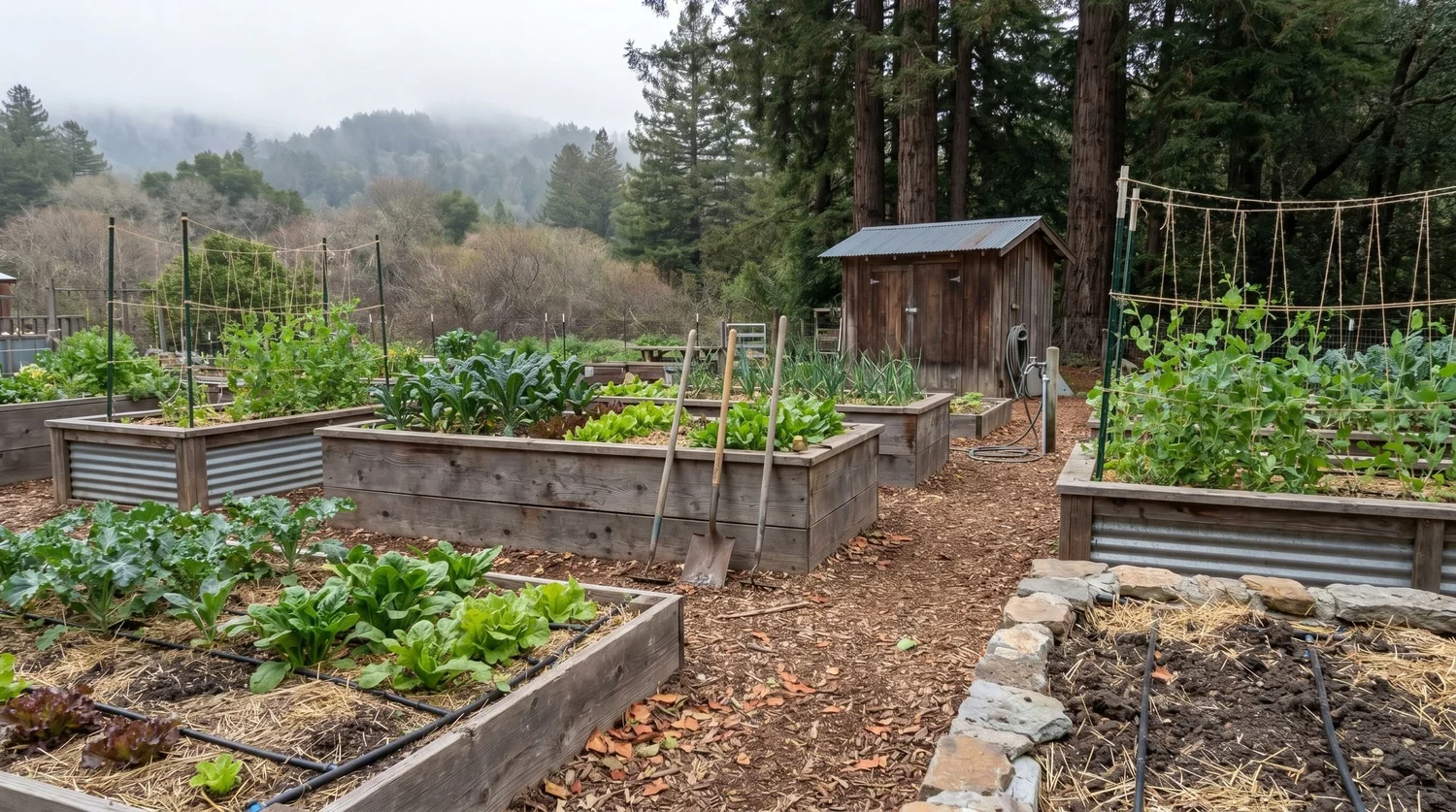
If you rent, live in a condo, garden under heavy redwood shade, or simply have a yard that never gets enough sun, a community garden plot can be the difference between dreaming about tomatoes and actually growing them. Santa Cruz County has a long, deep gardening culture, and that includes a scattering of community gardens where residents rent a bed or a plot and grow their own food alongside their neighbors.
There is no single countywide list, plots are limited, and the best gardens often have waitlists. This guide walks you through the real gardens we know of, how applications generally work, what to do when there is a waitlist, and how to keep growing in the meantime. Because details like fees and availability change, we point you to the organization to confirm rather than quoting numbers that may be out of date.
Why a community garden is worth the effort
A good plot gives you full sun, decent soil, and a water source, which are exactly the three things hardest to come by if you garden in the wrong spot. In a county defined by fog, shade, and wildly different microclimates from one neighborhood to the next, getting access to a sunny, established garden bed can solve problems that no amount of effort in a shady backyard can fix.
There is also the community itself. Experienced gardeners are generous with advice, surplus seedlings, and the kind of local knowledge you cannot get from a national gardening book. You learn what actually ripens in your part of the county, when the slugs show up, and which varieties your neighbors swear by. For many people, the social side is as valuable as the harvest.
Community gardens in Santa Cruz County
Below are gardens and garden programs we have been able to identify across the county. Locations and contacts are accurate to our research, but plot availability, fees, and rules change, so always confirm the current details with the organization before you make plans.
A few notes on these:
Beach Flats Community Garden is a beloved, long-running organic garden tucked into the Beach Flats neighborhood near the Boardwalk. It is cultivated largely by neighborhood families and is community managed rather than run through a city department, so the way plots are assigned tends to be neighborhood centered. It is a wonderful place to visit and learn from, and the best way to ask about getting involved is to connect with the garden directly.
Trescony Community Gardens on the Westside is one of the more established plot-style gardens within the City of Santa Cruz. City-managed garden plots are the most formal option and usually run through Parks & Recreation, which means you register through the city and may join a waitlist. Call Parks & Recreation at (831) 420-5270 to confirm which gardens currently have plots and how the list works.
The Live Oak Grange supports a community garden serving the Mid-County and Live Oak area. Granges are member-driven local organizations, so membership and participation details are best confirmed with the Grange itself.
In the Pajaro Valley, the Community Health Trust of Pajaro Valley manages garden sites in Watsonville parks, and Mesa Verde Gardens runs a network of neighborhood gardens and orchards serving local families. Both are oriented toward food access and community health, and both tend to prioritize residents of the surrounding neighborhoods while welcoming others to participate.
The UCSC Farm and Alan Chadwick Garden are not rental-plot gardens, but they are extraordinary public resources. The sites are generally open to the public during daytime hours, and the Center for Agroecology offers classes, volunteer days, and educational programs. If you want to build skills before you ever get your own plot, this is a great place to start.
Confirm with the org: We have intentionally not listed specific plot fees, waitlist lengths, or current openings, because those change frequently. Reach out to each organization to confirm what is true right now.
How to apply and what to expect
Every garden runs a little differently, but the general process looks similar across most of them.
A typical plot gives you a defined bed or section, access to a shared water source, and use of common pathways and sometimes shared tools or compost. Most gardens are organic only, ask you to keep your plot weeded and planted, and expect you to pull your weight on shared maintenance. Fees in our area tend to be modest and are usually charged per season or per quarter rather than per month, but confirm the current amount with the garden. If a plot sits neglected, many gardens will reassign it, so be honest with yourself about the time you can give.
What to do when there is a waitlist
Demand for plots usually outstrips supply, so a waitlist is the norm rather than the exception. A few things improve your odds and your experience:
Get on more than one list. If you are open to gardening in a few different areas, add your name to several gardens. Mid-County, Westside, and Watsonville gardens are run by different organizations, so being on multiple lists is fair game.
Stay reachable and responsive. City programs often call people in order and give a short window to respond before moving on. Make sure your contact information is current, and reply quickly when they reach out.
Volunteer in the meantime. Show up to work days and community events. You build relationships, learn the garden's rhythms, and are top of mind when a plot opens. Many gardeners found their plot this way.
Consider a shared plot. Ask whether you can split a bed with a friend or neighbor who is already in. Splitting the work and the fee is often welcome, especially for a large plot.
Alternatives if you cannot get a plot right now
A waitlist does not have to stall your season. There is plenty you can grow while you wait, and some of it may convince you that you do not even need a plot.
Grow in containers. A surprising amount of food grows happily in pots on a sunny patio, balcony, or driveway. Tomatoes, peppers, greens, herbs, and even compact berries do well in containers, and the mobility lets you chase the sun. Our guide to growing vegetables, herbs, and flowers in pots is a good place to start.
Share a yard. Plenty of people in Santa Cruz County have sunny yards they are not using. Offer to garden a corner of a friend's, neighbor's, or relative's yard in exchange for a share of the harvest. Yard-sharing arrangements are informal but can be wonderfully productive, and they often turn into lasting friendships.
Build a small bed at home. If you own or have a landlord's blessing, even a single raised bed can produce a remarkable amount of food. Our raised bed basics for Bay Area gardeners covers sizing, materials, and placement for our climate.
Look into school and church gardens. Many schools and faith communities run gardens that welcome volunteers and sometimes offer growing space. These can be a meaningful way to garden in community while you wait for a plot of your own.
Whichever route you take, a little planning goes a long way. If you are brand new to growing here, start with our guide to how to start a vegetable garden in Santa Cruz County and our list of the first five vegetables to grow here. Both are written for our fog, our soil, and our long, gentle season.
Start where you are
The best community garden is the one you can actually get into, and the best time to grow is the season you are in. Get your name on a list or two, show up to a work day, and in the meantime put a few pots on the sunniest spot you have. Every gardener in this county started somewhere, and most of us are still learning.
When you are ready to plan your planting, our Santa Cruz planting calendar and the free tools in your garden toolkit will tell you what to sow and when for your zone. Wherever your plot ends up being, we will help you make the most of it.
Frequently Asked Questions
Why join a community garden instead of growing at home?
Many Santa Cruz yards are foggy or shaded, and a plot offers reliable full sun, good soil, and water access that can be hard to find at home. You also gain neighbors and local growing knowledge that national resources cannot match.
What should I do if there is a waitlist?
Register at more than one garden, keep your contact information current, and respond quickly when a plot opens. Volunteering at work days builds relationships, and offering to share a plot with a friend can move things along.
What can I grow while I wait for a plot?
Containers on a sunny patio handle vegetables, herbs, and berries well, and a yard-sharing arrangement with a neighbor is another option. Raised beds at home (with landlord permission) and school or church garden programs are also worth exploring.
