

How Do I Protect Free-Range Birds From Hawks?
How Do I Protect Free-Range Birds From Hawks?
A few of the product links in this guide are affiliate links. If you buy through one, Ambitious Harvest may earn a small commission at no extra cost to you, which helps keep these guides free. We only point to gear we would use in our own Santa Cruz garden. As an Amazon Associate, we earn from qualifying purchases. Read our full disclosure.
The most effective protection is overhead cover. According to Cornell University's Lab of Ornithology, red-tailed hawks hunt open country, soaring over fields or watching from a high perch with a commanding view, while Cooper's hawks are agile woodland hunters that thread through tree branches at top speed. Both are common in Santa Cruz County, so overhead cover helps against each, though for different reasons. Eliminating that open path is your strongest defense.
If your birds free-range in the open, they are vulnerable. Hawks can strike quickly and from a distance, and a chicken or duck in the middle of a bare lawn is an easy target. The single best thing you can do is provide overhead cover throughout the ranging area. This can be natural (trees, tall shrubs, arbors, pergolas) or constructed (shade cloth, wire panels, or netting strung between posts).
In Boulder Creek, we have the advantage of oak and redwood canopy in parts of our yard, and our birds naturally gravitate toward those shaded areas. But even partial canopy makes a difference. A hawk is far less likely to dive into an area broken up by branches and structures than into a clear, open space.
Shelter stations help too. Place pallets propped on cinder blocks, overturned crates, or low tables in the ranging area so birds have somewhere to duck under quickly. Chickens in particular are surprisingly good at taking cover when they see a shadow overhead, but they need somewhere to go.
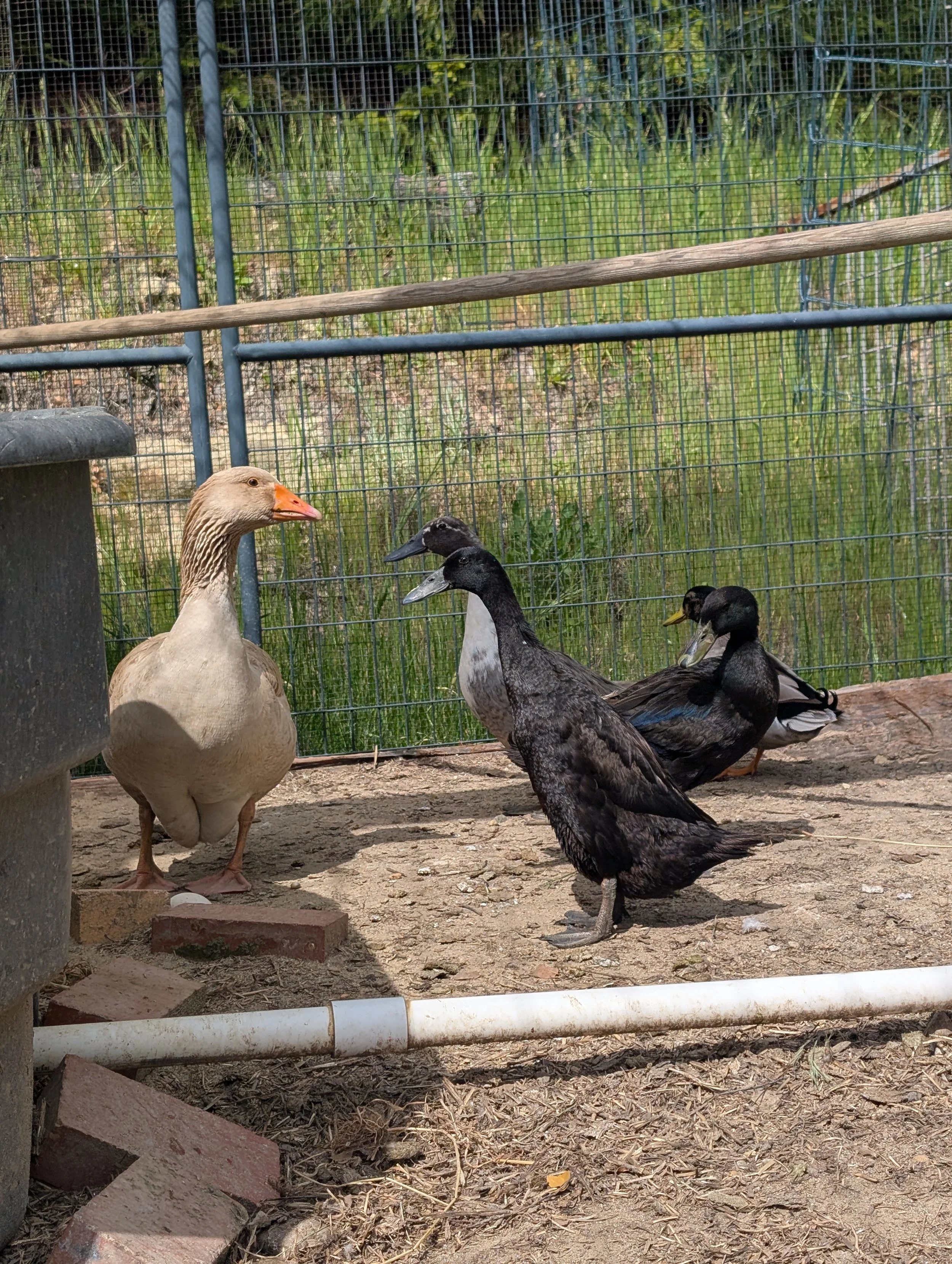
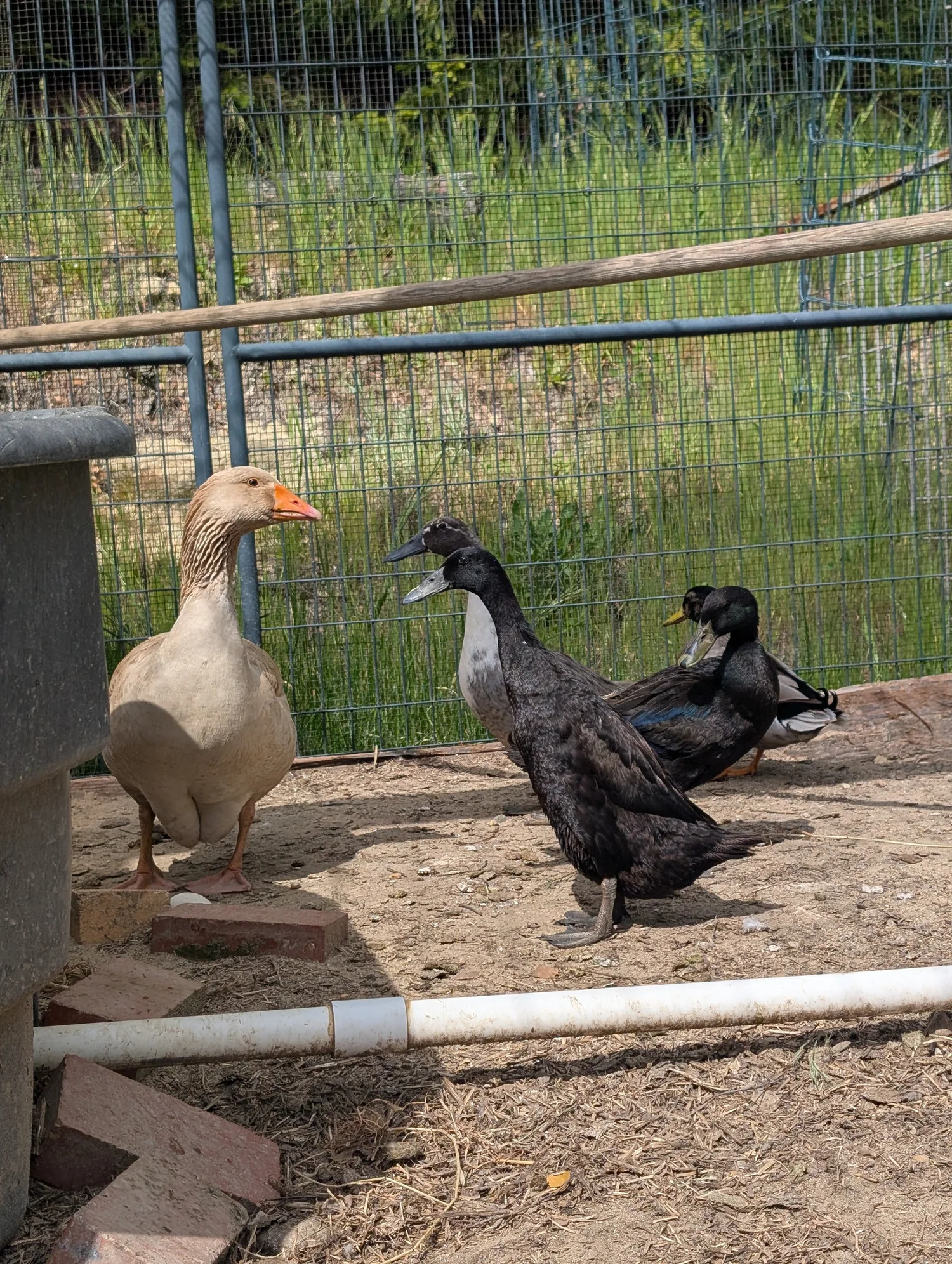
A rooster or a goose can serve as a lookout. Both are naturally alert to aerial threats and will sound an alarm when a hawk appears. Our Toulouse goose alerts the flock reliably. That alarm call is often enough to send everyone scrambling for cover, but only if cover is available. An alarm without shelter nearby just means panicked birds running in the open.
Timing matters. Hawks are most active in the early morning and late afternoon. If you can limit free-range time to midday (roughly 11 a.m. to 3 p.m.), you reduce exposure to peak hunting hours. This is not foolproof, since hawks hunt throughout the day, but it shifts the odds in your favor.
It is important to know that all hawks, eagles, and owls are protected under the federal Migratory Bird Treaty Act. It is illegal to harm, trap, or kill them. The only legal approach is deterrence and prevention.
This week: Walk your free-range area and identify any wide-open stretches with no overhead cover. Add at least one shelter station (a pallet on blocks or a low table) in the most exposed spot, and consider stringing shade cloth over the area your birds use most.
Keep Reading
Frequently Asked Questions
What is the most effective way to protect free-range birds from hawks?
Overhead cover is the single best defense, because hawks need clear sightlines and an open dive path to hunt. Natural canopy from trees and shrubs, or constructed cover like shade cloth, wire panels, or netting, takes that opportunity away.
Can I just trap or remove a hawk that keeps coming back?
No. All hawks are federally protected under the Migratory Bird Treaty Act, so harming, trapping, or killing them is illegal. Deterrence and prevention are the only lawful options.
Are there simple deterrents besides cover?
Yes. Scatter shelter stations like pallets on cinder blocks or overturned crates so birds always have nearby refuge, and a rooster or goose can act as a lookout that sends the flock running for cover. Limiting free-range time to roughly midday hours also reduces exposure during peak morning and late afternoon hunting.
