

Harvesting and Using Mulberries: Recipes, Preservation, and Creative Ideas
A few of the product links in this guide are affiliate links. If you buy through one, Ambitious Harvest may earn a small commission at no extra cost to you, which helps keep these guides free. We only point to gear we would use in our own Santa Cruz garden. As an Amazon Associate, we earn from qualifying purchases. Read our full disclosure.
The most efficient way to harvest mulberries is to spread a light-colored tarp under the tree and shake each branch firmly: ripe fruit drops, unripe fruit stays attached. Pick in the early morning while the berries are cool and firm, refrigerate them for no more than two or three days, and freeze whatever you cannot use within a day or two.
When your tree hits its stride, you'll find yourself with more fruit than you know what to do with. A mature 'Pakistan' or 'Illinois Everbearing' can easily produce dozens of pounds of fruit in a good season, often far more than a typical household can use. And unlike apples or citrus that ripen over weeks, mulberries deliver their bounty in concentrated flushes during a relatively short early-summer period that demand attention.
The challenge isn't growing mulberries. It's keeping up with them.
This guide covers everything you need to know about harvesting mulberries efficiently, storing them for maximum freshness, and transforming your harvest into jams, baked goods, frozen treats, and pantry staples that let you enjoy mulberries year-round. Whether you're facing your first modest harvest or drowning in fruit from an established tree, you'll find practical strategies here.
What Is Mulberry Ripeness?
Knowing when mulberries are ready to pick is the first skill to master. Unlike some fruits that ripen after harvest, mulberries must ripen fully on the tree for best flavor.
Visual Cues by Variety
Different mulberry varieties show ripeness differently:
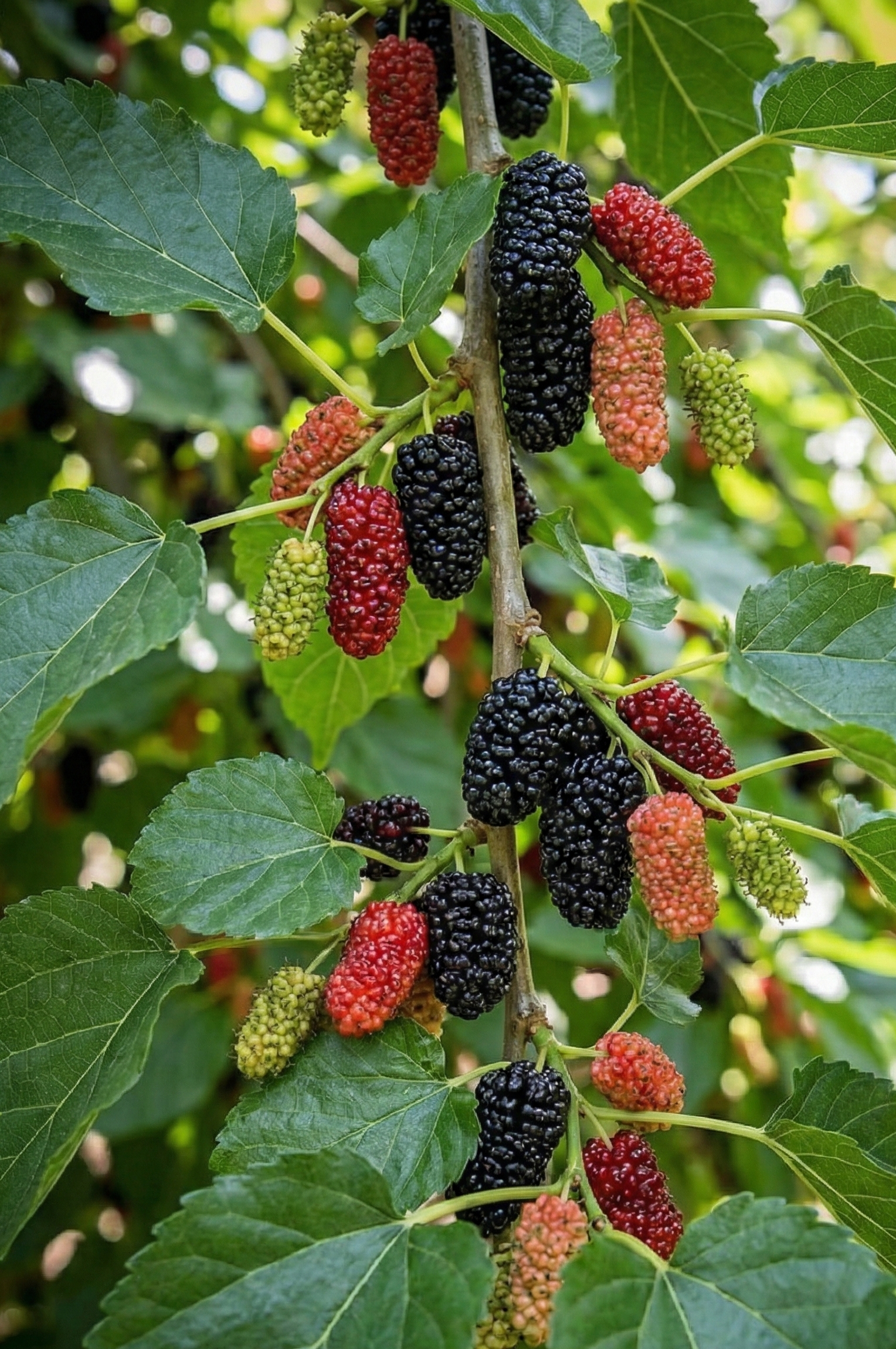
Dark-fruited varieties ('Pakistan,' 'Illinois Everbearing,' black mulberry):
Unripe: Green, then red, then dark purple
Ripe: Deep purple-black, almost black
Overripe: Dull black, very soft, may be starting to shrivel
White and light-fruited varieties:
Unripe: Green, firm
Ripe: Cream to pale pink (depending on variety), slightly translucent
Overripe: Brownish, mushy
The Touch Test
Color alone can mislead, especially as you're learning. The touch test is more reliable:
Unripe: Firm, resists gentle pressure, clings tightly to stem
Ripe: Slightly soft, yields to gentle pressure, releases easily from stem
Overripe: Very soft, mushy, may fall apart when touched
The Taste Test
When in doubt, taste. Ripe mulberries are sweet with balanced flavor. Unripe fruit is tart or bland. There's no substitute for tasting a few berries to calibrate your eye.
The Drop Test
UC ANR notes that ripe mulberries detach easily, and this is your most reliable indicator. If you have to tug, it's not ready. Ripe fruit practically falls into your hand, which is exactly what makes the tarp method so effective.
What Are the Best Methods for Harvesting Mulberries?
Mulberries are too soft and numerous to pick one by one like blueberries. Efficient harvesting requires a different approach.
The Tarp Method (Recommended)
This is how experienced mulberry growers harvest, and it's by far the most efficient technique:
Setup:
Spread a clean tarp, old sheet, or drop cloth under the tree, covering the ground beneath the branches you'll harvest
Use light-colored fabric so you can see the berries
Overlap multiple tarps for large trees
Harvesting:
Grasp a branch and shake it firmly but not violently
Ripe berries fall onto the tarp; unripe berries stay attached
Work systematically around the tree
Gather the tarp edges and funnel berries into a container
Tips:
Harvest in the morning when fruit is cool and firm
Shake branches at different heights to reach the whole canopy
For tall branches, use a long pole with a hook to shake them
Check the tarp for leaves, twigs, and insects before transferring berries
Hand Picking
For small harvests or when you want only the most perfect fruit:
Cup your hand under a cluster of ripe berries
Gently roll ripe berries off the stem with your thumb
They should release easily; if not, they're not ready
Work over a shallow container to catch drops
Hand picking is slower but gives you more control over quality. It's practical for dwarf trees or container mulberries.
Timing Your Harvest
Frequency: During peak season, harvest every one to two days. Ripe mulberries wait for no one; they'll fall and become bird food (or sidewalk stains) if you don't collect them.
Time of day: Early morning is ideal. Fruit is cooler and firmer, and you beat the birds who are also early risers.
Season length: USDA Forest Service notes that mulberry fruits generally ripen June through August, with variation by variety and climate. In Santa Cruz County, expect harvest from roughly late May through July for most varieties, with everbearing types producing intermittently for longer. If you are looking to start new trees from an established producer, our guide to mulberry propagation through cuttings, grafting, and layering covers every method.
How Should You Handle and Store Fresh Mulberries?
Mulberries are notoriously perishable. Understanding their limitations helps you plan your harvest processing.
Why Mulberries Don't Keep
UC Davis notes that mulberries are highly perishable and rarely seen in markets because the fruit is soft and has a very short shelf life. This is why most people have never seen them in grocery stores. It isn't a flaw; it's simply the nature of the fruit. The same soft texture that makes them melt in your mouth makes them unsuitable for storage or shipping.
Fresh Storage
Room temperature: A few hours at most. Mulberries deteriorate rapidly at room temperature.
Refrigerated: Two to three days maximum in a single layer on a paper towel-lined plate or tray. Don't stack them or they'll crush.
Reality check: Plan to eat, freeze, or process mulberries within a day or two of harvest. Fresh storage is for immediate use, not long-term keeping.
Washing
Before storage: Don't wash. Moisture accelerates decay.
Before use: Rinse gently in cool water just before eating or processing. Drain well.
The Staining Reality
Mulberry juice stains everything it touches: hands, clothes, countertops, cutting boards. This is unavoidable.
Protective measures:
Wear dark clothing or an apron when harvesting and processing
Use stainless steel or glass containers (plastic will stain permanently)
Cover work surfaces with newspaper or old towels
Wash hands with lemon juice to reduce staining
Accept that some staining is part of the mulberry experience
Why Is Freezing the Best Way to Preserve Mulberries?
For most home growers, freezing is the simplest and most effective way to preserve mulberries. Frozen berries retain flavor well and work in many ordinary cooking recipes; canning still requires an exact tested procedure.
Basic Freezing Method
1. Sort and clean: Remove any stems, leaves, or damaged berries. Rinse gently and drain thoroughly. Pat dry if needed.
2. Tray freeze: Spread berries in a single layer on a parchment-lined baking sheet. Don't let them touch.
3. Flash freeze: Place tray in freezer for two to four hours until berries are solid.
4. Package: Transfer frozen berries to freezer bags or containers. Remove as much air as possible from bags.
5. Label: Date and label packages. Frozen mulberries keep well for 8 to 12 months.
Why Tray Freezing Matters
Tray freezing (also called IQF or individually quick frozen) prevents berries from clumping into a solid mass. You can pour out exactly what you need without thawing the whole batch.
If you skip this step and freeze berries directly in bags, you'll end up with a frozen block that's difficult to portion.
Using Frozen Mulberries
Frozen mulberries work well for:
Smoothies (use frozen, no need to thaw)
Baking (use frozen or slightly thawed)
Jams and sauces (thaw first, juice and all)
Syrups and drinks (thaw first)
For baking, frozen berries may release more juice than fresh. Toss with a tablespoon of flour before adding to batters to absorb excess moisture.
How Do You Make Mulberry Jam?
The recipe below is an ordinary cooking recipe, not a validated shelf-stable canning procedure. Refrigerate promptly for short-term use or freeze for longer keeping. For canning, follow the complete NCHFP mulberry-jelly recipe or whole-berry recipe, including exact ingredients, preparation, jar size, and elevation table.
Basic Mulberry Jam
Ingredients:
4 cups mulberries (fresh or frozen and thawed)
3 cups granulated sugar
2 tablespoons lemon juice
1 package (1.75 oz) powdered pectin (optional, for firmer set)
Instructions:
Prepare jars: Use clean food-contact containers for this refrigerator/freezer cooking recipe. Do not use it as a canning procedure.
Crush berries: In a large, heavy-bottomed pot, crush mulberries with a potato masher. You want some texture, not a smooth puree.
Add lemon juice: Stir in lemon juice. This brightens flavor and helps the jam set.
Add pectin (if using): Stir pectin into the crushed berries before heating.
Cook: Bring mixture to a rolling boil over medium-high heat, stirring frequently.
Add sugar: Add sugar all at once, stirring constantly until dissolved.
Boil: Return to a rolling boil and boil hard for one minute (with pectin) or 10 to 15 minutes (without pectin), stirring constantly.
Test set: Drop a small amount on a chilled plate. Push with your finger after a minute. If it wrinkles, it's ready. If not, continue boiling and test again.
Fill jars: Ladle hot jam into prepared jars, using suitable refrigerator or freezer containers. Follow the container manufacturer's freezing directions and leave expansion space when freezing.
Refrigerate or freeze: Refrigerate promptly for short-term use, or freeze for longer keeping. This recipe has not been validated here for shelf-stable canning; do not use its cooking time as a canning process.
Yield: About 5 cups
Note: This is a classic high-sugar jam ratio. For lower sugar versions, use a low-sugar pectin product and follow its specific instructions, as standard recipes won't set properly with reduced sugar.
Jam Variations
These variations are for ordinary cooking followed by refrigeration or freezing, not substitutions in a home-canning recipe.
Mulberry-Apple: Replace 1 cup mulberries with 1 cup peeled, chopped apple. Apple adds natural pectin for a firmer set.
Mulberry-Lemon: Add zest of 2 lemons along with the juice. Bright, complex flavor.
Spiced Mulberry: Add 1/2 teaspoon cinnamon and 1/4 teaspoon nutmeg. Warm, autumn-spiced character.
Mulberry-Vanilla: Add 1 split vanilla bean (or 1 teaspoon vanilla extract at the end). Sophisticated flavor for gifts.
Low-Sugar and No-Pectin Options
Mulberries are naturally low in pectin, which is why commercial pectin helps achieve a firm set. Without pectin, you'll get a softer, more spreadable jam that's equally delicious.
For lower sugar jam, use a low-sugar pectin product and follow its specific instructions. Standard recipes won't set properly with reduced sugar.
How Do You Make Mulberry Syrup?
Mulberry syrup is versatile, keeps well, and uses large quantities of fruit efficiently. Use it on pancakes, in cocktails, over ice cream, or as a base for drinks.
Basic Mulberry Syrup
Ingredients:
4 cups mulberries
1 cup water
2 cups granulated sugar
2 tablespoons lemon juice
Instructions:
Cook berries: Combine mulberries and water in a saucepan. Bring to a boil, then reduce heat and simmer for 15 to 20 minutes, mashing occasionally, until berries are completely broken down.
Strain: Pour through a fine-mesh strainer or cheesecloth-lined colander into a clean pot. Press on solids to extract all juice. Discard pulp.
Add sugar: Add sugar and lemon juice to the strained juice. Heat over medium, stirring until sugar dissolves completely.
Simmer: Continue simmering for 5 to 10 minutes until slightly thickened. It will thicken more as it cools.
Bottle: Pour into clean bottles or jars. Cool, then refrigerate.
Yield: About 3 cups
Storage: Refrigerate promptly for short-term use; freeze for longer keeping. The NCHFP generic berry-syrup canning recipe does not list mulberries and must not be used as validation for this syrup.
Adjust to taste: This produces a moderately sweet syrup. Add more or less sugar depending on your preference and intended use.
Using Mulberry Syrup
Pancakes and waffles: The obvious choice
Yogurt and oatmeal: Swirl into breakfast bowls
Ice cream topping: Warm or cold
Cocktails: Substitute for simple syrup in berry cocktails
Mocktails: Mix with sparkling water for homemade soda
Marinades: Adds sweet-tart depth to meat glazes
What Can You Bake with Mulberries?
Mulberries work anywhere you'd use blackberries, blueberries, or mixed berries. Their soft texture and deep color make them ideal for baked goods.
Mulberry Crisp
A crisp is one of the easiest and most forgiving berry desserts.
Filling:
6 cups mulberries (fresh or frozen)
1/2 cup granulated sugar
2 tablespoons cornstarch or flour
1 tablespoon lemon juice
1/2 teaspoon cinnamon (optional)
Topping:
1 cup old-fashioned oats
1/2 cup all-purpose flour
1/2 cup brown sugar, packed
1/4 teaspoon salt
6 tablespoons cold butter, cut into pieces
Instructions:
Preheat oven to 350 degrees F. Butter a 9x13 inch baking dish or equivalent.
Toss mulberries with sugar, cornstarch, lemon juice, and cinnamon. Spread in prepared dish.
Combine oats, flour, brown sugar, and salt. Cut in butter with a pastry blender or your fingers until mixture resembles coarse crumbs.
Scatter topping evenly over berries.
Bake 40 to 50 minutes until topping is golden and filling is bubbling.
Serve warm with vanilla ice cream or whipped cream.
Serves: 8 to 10
Mulberry Muffins
Ingredients:
2 cups all-purpose flour
3/4 cup granulated sugar
2 teaspoons baking powder
1/2 teaspoon salt
1/3 cup vegetable oil
1 egg
1 cup milk
1 teaspoon vanilla extract
1 1/2 cups mulberries (fresh or frozen)
Instructions:
Preheat oven to 375 degrees F. Line a 12-cup muffin tin with paper liners.
Whisk flour, sugar, baking powder, and salt in a large bowl.
Whisk oil, egg, milk, and vanilla in a separate bowl.
Add wet ingredients to dry, stirring just until combined. Don't overmix.
Toss mulberries with 1 tablespoon flour (this helps prevent sinking), then fold into batter.
Divide batter among muffin cups, filling each about 2/3 full.
Bake 20 to 25 minutes until tops are golden and a toothpick comes out clean.
Yield: 12 muffins
Other Baking Ideas
Mulberry pie: Use any standard berry pie recipe, substituting mulberries for the berries called for. Consider adding a tablespoon of cornstarch to account for mulberries' juice.
Mulberry cobbler: Top sweetened mulberries with biscuit dough and bake.
Mulberry galette: Rustic free-form tart that's more forgiving than pie.
Mulberry coffee cake: Scatter berries over batter and top with streusel.
Mulberry scones: Fold berries into scone dough for a breakfast treat.
What Drinks Can You Make with Mulberries?
Mulberries make excellent drinks, from simple smoothies to sophisticated shrubs.
Mulberry Smoothie
Ingredients:
1 cup frozen mulberries
1 banana (fresh or frozen)
1 cup milk or yogurt
1 tablespoon honey (optional)
Instructions: Blend until smooth. Serve immediately.
Variations: Add spinach for a green smoothie, swap banana for mango, or use coconut milk for dairy-free.
Mulberry Shrub (Drinking Vinegar)
Shrubs are an old-fashioned preservation method that creates a tangy, complex syrup perfect for cocktails and mocktails.
Ingredients:
2 cups mulberries
1 cup granulated sugar
1 cup apple cider vinegar
Instructions:
Macerate: Combine mulberries and sugar in a glass jar. Mash lightly. Cover and refrigerate for one to two days, stirring occasionally, until sugar dissolves and berries release their juice.
Strain: Pour through a fine-mesh strainer, pressing on solids. Discard pulp.
Add vinegar: Stir vinegar into the strained syrup.
Age: Transfer to a clean jar and refrigerate promptly. This unvalidated shrub recipe is not a shelf-stable preserve; freeze promptly for longer keeping rather than relying on an extended refrigerated aging period.
Storage: Refrigerate for short-term use or freeze promptly for longer keeping. No six-month refrigerator-storage assurance is established for this recipe.
To serve: Mix 1 to 2 tablespoons shrub with sparkling water, or use in cocktails.
Mulberry Lemonade
Ingredients:
1 cup mulberry syrup (recipe above)
1 cup fresh lemon juice (about 6 lemons)
6 cups cold water
Instructions: Combine all ingredients. Adjust sweetness and tartness to taste. Serve over ice.
How Do You Dry Mulberries for Long-Term Storage?
Dried mulberries are sweet, chewy, and keep well in storage. They're similar to raisins but with their own distinct flavor.
Dehydrator Method (Recommended)
Instructions:
Prepare: Wash and dry mulberries. Remove any stems.
Arrange: Spread in a single layer on dehydrator trays. Don't overlap.
Dry: Dehydrate at 135 degrees F for 12 to 24 hours until berries are leathery with no moisture when squeezed. Time varies by berry size and humidity.
Condition: Transfer to a glass jar, filling 2/3 full. Shake daily for one week. If condensation appears, return to dehydrator.
Store: Keep in airtight containers in a cool, dark place. Dried mulberries maintain quality for up to about a year; flavor and texture gradually decline after that, as with other dried fruits.
Oven Method
If you don't have a dehydrator, an oven works but requires more attention.
Instructions:
Set oven to lowest temperature (ideally 170 degrees F or lower; if your oven doesn't go that low, prop the door open slightly).
Spread mulberries on parchment-lined baking sheets in a single layer.
Dry for 8 to 16 hours, checking frequently and rotating pans. Berries are done when leathery with no moisture.
Condition and store as above.
Using Dried Mulberries
Snacking: Eat like raisins
Trail mix: Combine with nuts and seeds
Oatmeal and cereal: Rehydrate slightly in hot cereal
Baking: Substitute for raisins in cookies, breads, and muffins
Granola: Add to homemade granola
Salads: Toss into grain or green salads
How Can You Use Mulberries in Savory Dishes?
While mulberries are usually treated as a sweet fruit, they have savory potential worth exploring.
Mulberry Balsamic Reduction
Ingredients:
1 cup mulberries
1/2 cup balsamic vinegar
2 tablespoons honey or sugar
Pinch of salt
Instructions:
Combine all ingredients in a small saucepan.
Bring to a simmer over medium heat, mashing berries as they soften.
Simmer 15 to 20 minutes until reduced by about half and slightly syrupy.
Strain if desired, or leave rustic with berry pieces.
Cool and refrigerate. Use within two weeks.
Uses: Drizzle over grilled chicken, pork chops, or duck. Spoon over goat cheese or brie. Dress salads with bitter greens.
Mulberry Salsa
Ingredients:
1 cup mulberries, roughly chopped
1/4 cup red onion, finely diced
1 small jalapeno, seeded and minced
2 tablespoons fresh cilantro, chopped
1 tablespoon lime juice
Salt to taste
Instructions: Combine all ingredients gently. Let stand 15 minutes for flavors to meld. Serve with grilled fish, chicken, or as a dip with chips.
Other Savory Ideas
Cheese pairings: Mulberries complement soft, creamy cheeses like brie, chevre, and burrata
Charcuterie boards: Add fresh mulberries alongside cured meats and cheeses
Salad addition: Toss fresh berries into spinach or arugula salads with goat cheese and walnuts
Meat glaze: Reduce mulberry syrup with a splash of soy sauce for an Asian-inspired glaze
How Do You Manage a Mulberry Glut?
When your tree is in full production, you may find yourself overwhelmed. Here's how to cope.
Triage Your Harvest
Not every berry needs to become a project. Sort your harvest into tiers:
Tier 1 - Best berries: Fully ripe, no damage. Eat fresh, give away, or freeze for later.
Tier 2 - Good berries: Slightly soft or minor blemishes. Process immediately into jam, syrup, or baked goods.
Tier 3 - Usable berries: Overripe or damaged but not spoiled. Cook into syrup or sauce where appearance doesn't matter.
Tier 4 - Spoiled fruit: Keep moldy, fermented, or spoiled berries out of the chicken run. Dispose of them or compost suitable plant material in the compost bin where poultry cannot reach it.
Quick Processing Strategies
When you don't have time for elaborate recipes:
Freeze everything: Tray freeze and bag. Sort out later when you have time.
Make syrup: Syrup uses large quantities and keeps well. Process a big batch and refrigerate.
One-pot jam: A quick refrigerator jam doesn't require canning equipment or precision.
Share generously: Neighbors, coworkers, and friends are usually happy to take fresh mulberries off your hands.
The Chicken and Wildlife Solution
If offering berries to poultry, use only good-quality fruit as a limited treat, not the main ration. Keep moldy, fermented, rotten, or spoiled windfalls out of the chicken run. UC ANR advises against feeding rotten food.
No chickens? Let wildlife have the excess. Mulberry trees pair naturally with other productive plantings, and our guide to using mulberries in a permaculture garden explains how to build a system around your tree. Birds, squirrels, and other creatures will happily handle your overflow, and you're supporting local ecosystem health.
Realistic Expectations
You will not use every mulberry your tree produces. Make peace with this. A mature tree can drop many dozens of pounds of fruit in a season, far more than most households can use.
Harvest what you can, process what you have time for, and let the rest feed the birds. If your tree is producing less fruit than expected, see our guide to troubleshooting common mulberry problems. That's not waste; it's ecosystem participation.
Frequently Asked Questions
How do I know when mulberries are ripe?
Ripe mulberries are deeply colored (purple-black for dark varieties, cream to pale pink for white types), slightly soft to the touch, and release easily from the stem. If you have to tug, they're not ready.
Can I pick mulberries before they're fully ripe?
You can, but they won't ripen further off the tree and will taste tart or bland. Mulberries must tree-ripen for best flavor.
How long do fresh mulberries last?
Two to three days refrigerated, maximum. Plan to eat, freeze, or process them within a day or two of harvest.
Do I need to wash mulberries before freezing?
Yes, but dry them thoroughly before freezing. Excess moisture causes ice crystals and freezer burn.
Can I substitute mulberries for other berries in recipes?
Mulberries can be substituted in ordinary cooking, such as pies and cobblers, with texture adjustments as needed. Do not substitute berries or add ingredients in a home-canning recipe unless the tested procedure expressly allows it.
My jam didn't set. What went wrong?
Mulberries are low in natural pectin. Without added pectin, you'll get a softer, more pourable jam. For firmer set, use commercial pectin and follow the package directions exactly. You can also reboil soft jam with additional pectin.
How do I get mulberry stains off my hands?
Lemon juice helps. Rub cut lemon over stained skin and wash with soap. Some staining is unavoidable and will fade in a day or two.
What's the best way to use a large harvest?
Freeze most of it. Frozen mulberries keep for 8 to 12 months and can be used in ordinary cooking later. Canning still requires an exact tested procedure. Process into jam or syrup as time allows.
Can I can mulberries?
Yes, complete tested options include NCHFP mulberry jelly and whole berries. Follow their exact ingredients, preparation, jar size, and elevation-adjusted table. The article's optional-pectin jam is not that tested jelly formula, and NCHFP's generic berry-syrup recipe excludes mulberries. Do not invent a longer process time to make these cooking recipes shelf-stable. See the National Center for Home Food Preservation for complete tested procedures.
Are mulberry leaves edible?
Young mulberry leaves are used as food in some cuisines and traditionally as livestock fodder. For most home gardeners here, the fruit is the main attraction.
How Do You Make the Most of Your Mulberry Harvest?
A mulberry tree in full production is a gift, even when it feels like too much. The fruit that seems overwhelming in June becomes a treasure in December, when you pull a bag of frozen berries from the freezer for winter smoothies or spread homemade jam on toast.
The key is having systems in place before harvest arrives. Stock up on freezer bags and jars. Clear freezer space. Bookmark a few recipes. When the fruit starts falling, you'll be ready to capture its fleeting abundance.
And remember: you don't have to use it all. Take what you can, preserve what you'll eat, share with neighbors, and let the rest feed the birds. That's the rhythm of abundance, and mulberries teach it well.
Free Gardening Resources
Know Your Microclimate Worksheet: Understand your specific Santa Cruz County growing conditions
Seasonal Planting Calendar: Month-by-month guidance for Santa Cruz County
