

Growing Carrots in Santa Cruz County: From Seed to Sweet, Crunchy Harvest




A few of the product links in this guide are affiliate links. If you buy through one, Ambitious Harvest may earn a small commission at no extra cost to you, which helps keep these guides free. We only point to gear we would use in our own Santa Cruz garden. As an Amazon Associate, we earn from qualifying purchases. Read our full disclosure.
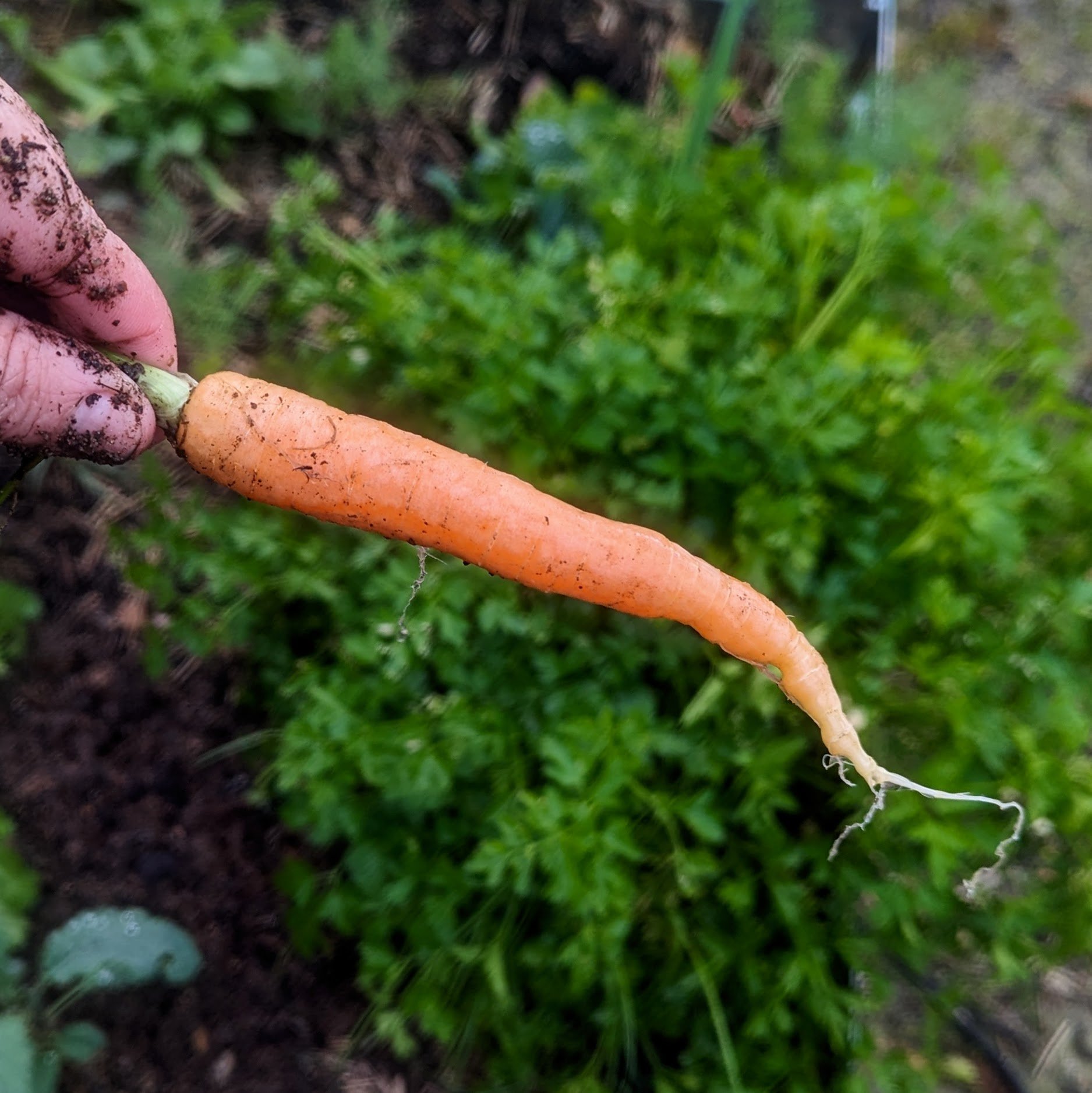
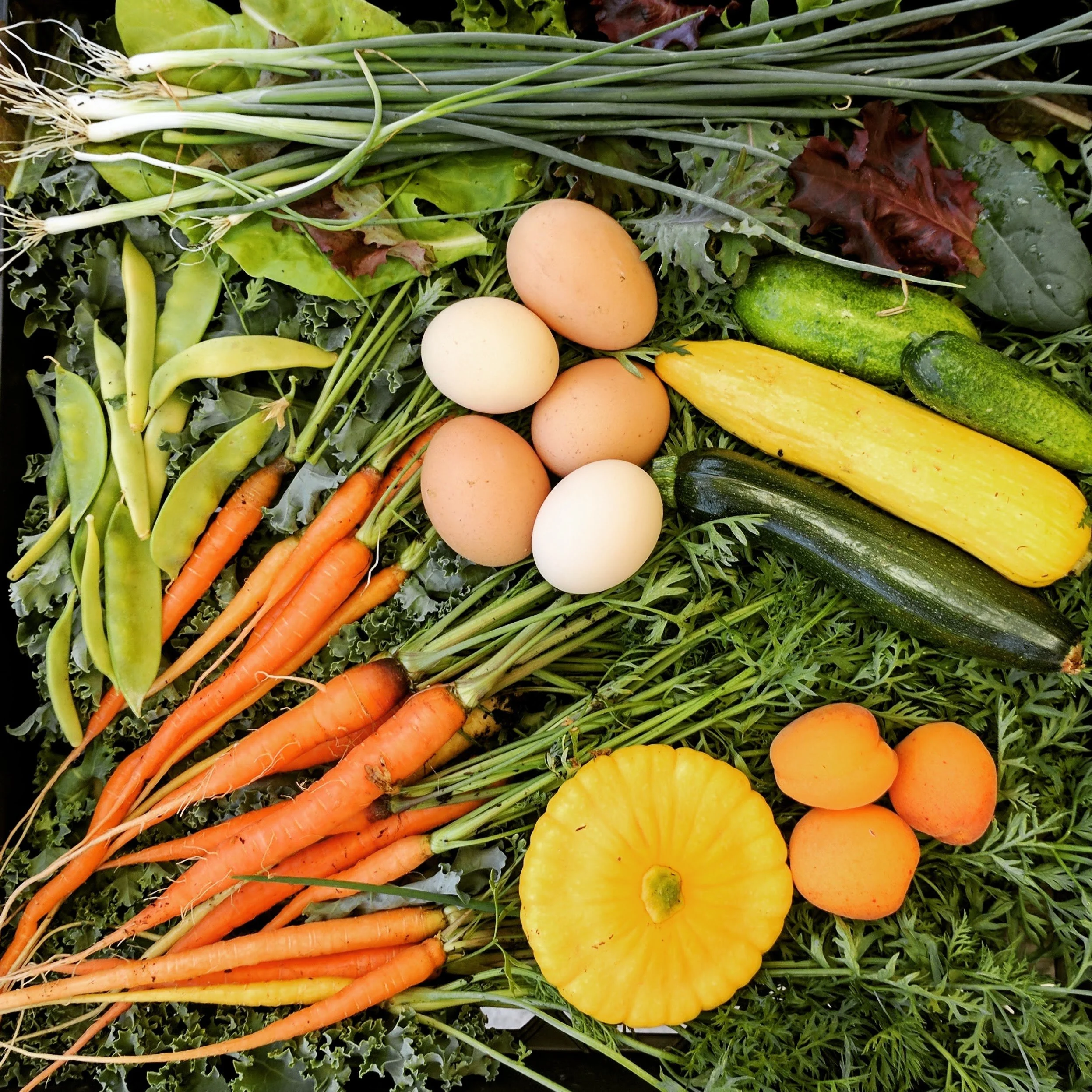
Carrots are one of the most rewarding vegetables to grow. With their bright color, crisp texture, and sweet flavor, they add life to any garden. In Santa Cruz County's diverse microclimates (from cool coastal fog zones to sunny inland valleys) the growing season offers ideal conditions for producing flavorful carrots nearly year-round.
Follow these tips to prepare your soil, choose the right varieties, and nurture your carrots from seed to harvest.
What Is the Perfect Soil for Perfect Carrots?
Carrots are particular about soil. They thrive in loose, well-drained, nutrient-rich soil with a neutral to slightly acidic pH (roughly 5.5 to 7.0).
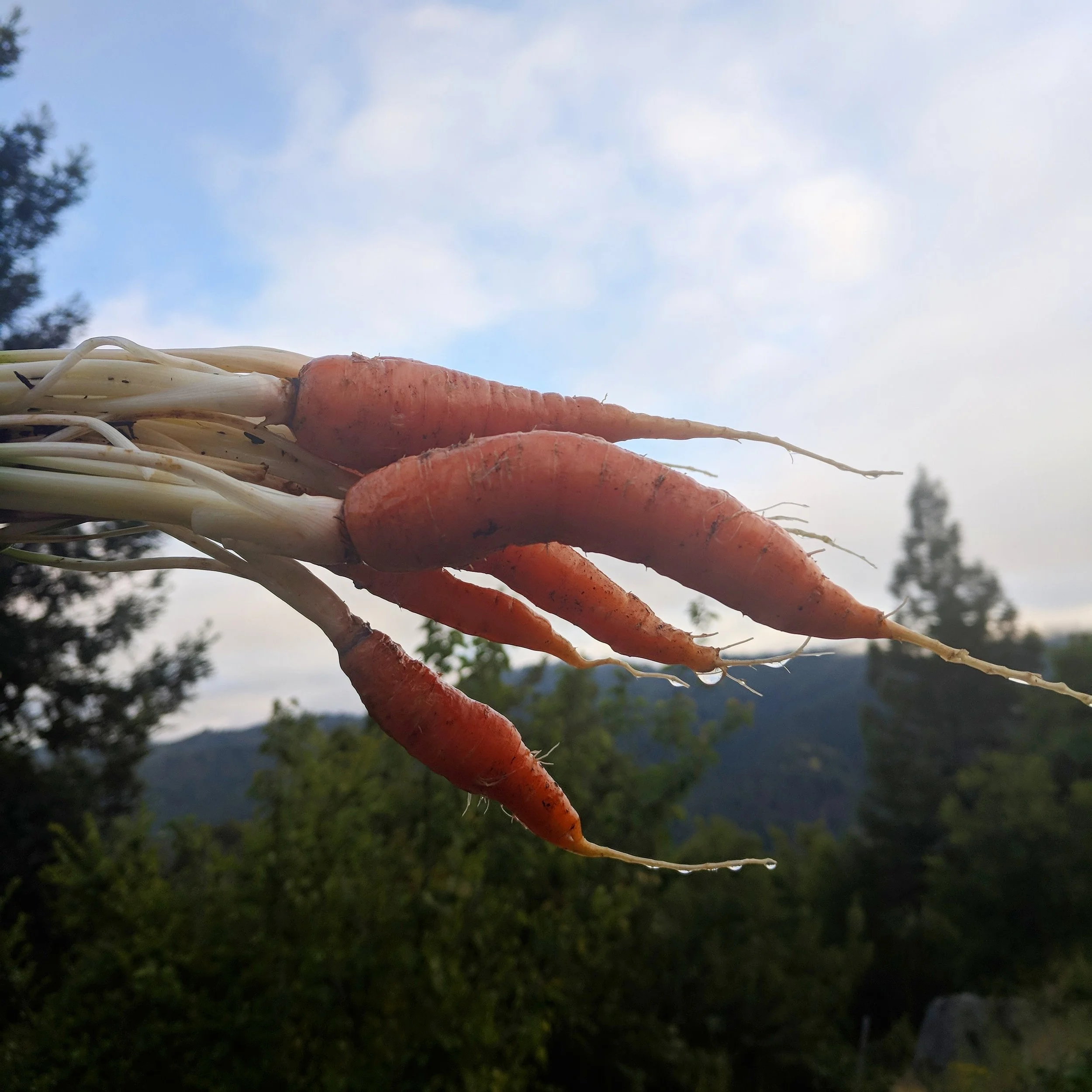
Extension trials show carrots grow best in sandy or fine loam soils; in clay, roots often fork or twist unless soil is deeply loosened or shorter varieties are grown. In many parts of Santa Cruz County (particularly coastal areas and the San Lorenzo Valley), heavier clay soils can restrict root growth and cause misshapen carrots.
To fix this:
Amend the soil. Mix in coarse sand and fine compost to improve texture and drainage.
Loosen deeply. Work the soil 10 to 12 inches deep before planting. Carrots need this depth of loose, friable soil to develop straight roots.
Enrich with organic matter. Add aged compost or well-rotted manure to provide nutrients. Avoid fresh manure, which can cause forking.
Consider raised beds. In heavy clay, raised beds filled with quality soil mix may be easier than amending native soil, especially for longer carrot varieties.
Well-prepared soil encourages strong, straight roots and sweet, tender carrots. Skip this step and you'll end up with stunted, twisted roots (if they develop at all).
How Should You Choose the Right Carrot Varieties?
Santa Cruz County's mild climate allows for a wide range of carrot types. Select varieties based on your soil depth, space, and local conditions.
Compact and Container-Friendly Varieties
These shorter types stay relatively small and do well in containers or beds with just 8 to 10 inches of loosened soil:
Nantes: Sweet, cylindrical, blunt-tipped. Excellent flavor and texture. 6 to 7 inches long.
Little Finger: Miniature Nantes type, only 3 to 4 inches long. Perfect for containers and shallow soil.
Thumbelina: Round, golf-ball shaped. Ideal for heavy soil where longer carrots struggle.
Chantenay: Short and stocky (5 to 6 inches), with broad shoulders. More forgiving of heavy or rocky soil.
Full-Size Garden Bed Varieties
These need deeper, looser beds (10 to 12 inches minimum) to reach full length:
Danvers: Classic American variety, 6 to 8 inches, tapered. Good heat tolerance and storage.
Imperator: The standard supermarket carrot shape, 8 to 10 inches long. Needs deep, loose soil.
Bolero: Nantes type with excellent disease resistance. Good for fall/winter harvest.
Matching Varieties to Santa Cruz Microclimates
Shorter, quick-maturing carrots are more forgiving of the cool temperatures and heavier soils common in coastal Santa Cruz (Aptos, Capitola, Live Oak). They mature before soil compacts or summer fog slows growth.
Longer-rooted varieties thrive in inland areas (Scotts Valley, Watsonville) where warmer temperatures speed growth and sandy loam soil is more common.
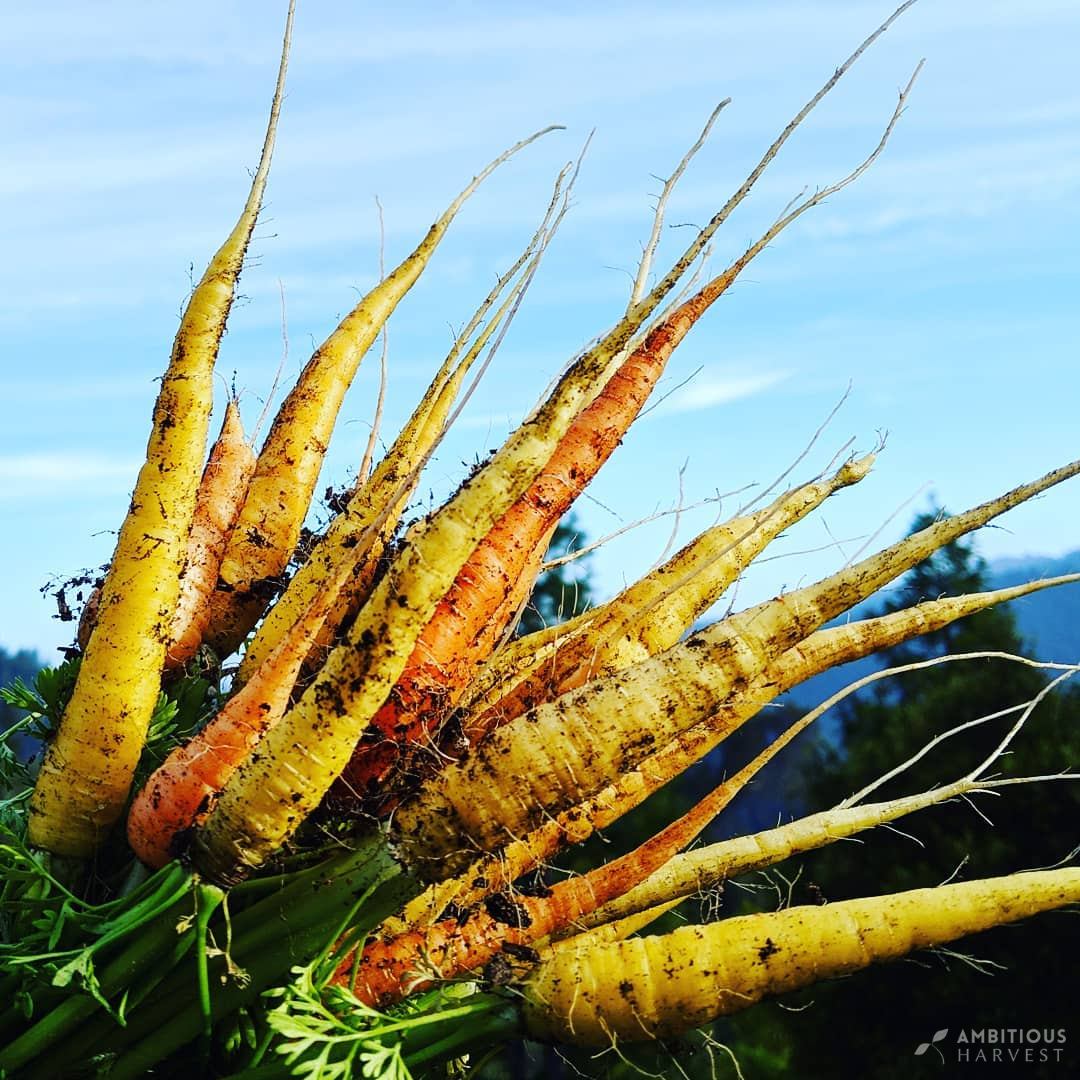
For a colorful harvest, try mixing several varieties in the same row. Each planting brings variety in shapes, colors, and flavors.
When and How to Plant Carrots in Santa Cruz County
Timing Your Planting
The best time to sow carrot seeds is once soil temperatures reach at least 50°F, with ideal germination in the 60 to 70°F range. Carrots will germinate at cooler temperatures, but slowly; warmer soil speeds things up significantly.
For much of Santa Cruz County, you can sow from roughly February through late spring, and often again in late summer for a fall harvest. Our mild climate extends the planting window compared to colder regions.
Coastal areas (Aptos, Santa Cruz, Capitola): February through May for spring crop; August through September for fall crop. Cool summers allow later spring sowings than inland.
Inland areas (Scotts Valley, Watsonville): February through April for spring crop; late August for fall crop. Summer heat can make mid-season sowings challenging.
San Lorenzo Valley: March through May for spring crop; August for fall crop. Watch for late frosts in early plantings.
Planting Technique
Sow seeds shallowly. Plant carrot seeds about ¼ inch deep (up to ½ inch in sandy soil or warm weather). Tiny carrot seeds need light and moisture to germinate; planting too deep is a common cause of failure.
Space appropriately. Sow seeds about 2 inches apart initially. You'll thin later, but starting with some space reduces how much thinning is needed.
Keep rows accessible. Space rows 12 inches apart for easy weeding and airflow.
Water gently. Use a fine spray to avoid washing seeds away or burying them too deep. Keep the surface moist until germination.
Be patient. Carrot germination takes 10 to 21 days depending on soil temperature. Don't give up too soon.
How Often Should You Water and Moisture Management?
Consistent moisture is essential for healthy root development and sweet flavor. In Santa Cruz County's dry summers, this requires attention, but there are effective, water-wise solutions.
During Germination
Keep the soil surface evenly moist during the 10 to 21 day germination period. This is the most critical watering phase. UC Marin Master Gardeners recommend watering once or twice a day until seeds sprout.
Tips for germination success:
Water with a fine mist or spray to avoid disturbing seeds
Cover beds with burlap, row cover, or a thin layer of vermiculite to retain moisture
Check moisture daily; the surface should never dry out completely
After Germination
Once seedlings emerge, gradually shift to less frequent, deeper watering. This encourages roots to grow down into the soil rather than staying shallow. Inconsistent watering causes cracking, bitterness, and forked roots.
Water-Wise Irrigation Options
Drip irrigation works well for carrots by targeting the root zone, minimizing waste and leaf wetness. Set emitters close together (every 6 to 8 inches) since carrot roots are relatively shallow.
Ollas (unglazed clay pots buried in the soil and filled with water) release moisture slowly and directly to the root zone. UC ANR recognizes ollas as an efficient sub-surface irrigation method for water-wise gardening. With shallow-rooted crops like carrots, place ollas close enough (every 12 to 18 inches) that the moist zone reaches the full root area.
Both methods reduce water use while maintaining the consistent moisture carrots need.
Caring for Young Carrots
Once seedlings appear, focus on maintaining balance: consistent moisture, low competition, and gentle soil care.
Weed carefully. Pull weeds by hand to avoid disturbing shallow carrot roots. Weeding is easier when soil is moist.
Add mulch. A light layer of straw or fine compost retains moisture and suppresses weeds. Keep mulch thin (1 inch) initially so it doesn't smother tiny seedlings.
Maintain moisture. Keep soil consistently moist but not waterlogged. Drought stress causes bitter, woody roots.
Be patient. Carrots grow slowly compared to many vegetables. The feathery tops don't look like much for the first few weeks, but roots are developing below.
Thinning: The Secret to Plump Carrots
When carrot seedlings reach 1 to 2 inches tall, thin them to about 2 to 3 inches apart. This is one of the most important steps for growing good carrots, and one that many gardeners skip or do too lightly.
Why thinning matters: Crowded carrots compete for space, water, and nutrients. They stay small, twist around each other, and never develop the plump roots you're hoping for.
How to thin: Snip seedlings at soil level with scissors rather than pulling, which can disturb the roots of neighboring plants. Remove the weakest seedlings, keeping the strongest.
Use the thinnings: Baby carrot thinnings are tender and delicious in salads. This makes the process feel less wasteful.
It might feel like reducing your crop, but proper thinning guarantees better results at harvest. Every experienced carrot grower will tell you: thin more than you think you need to.
How Do You Manage Pests and Diseases?
Carrots can attract pests such as aphids, carrot rust flies, and wildlife like deer and rabbits. A few precautions keep them under control.
Wildlife
Use fencing or netting to deter deer, rabbits, and other larger animals. In Santa Cruz County, deer pressure varies significantly by neighborhood; know your local situation.
Carrot Rust Fly
Carrot rust fly larvae tunnel into roots, leaving rust-colored trails. UC IPM emphasizes rotation, sanitation, and physical barriers as key tactics.
Row covers or fine mesh over carrots prevent adult flies from laying eggs near plants. This is the most reliable control method.
Companion planting with onions, leeks, or chives is a popular tactic that may help mask carrot scent, though evidence is mixed. Consider combining companions with row covers if carrot flies are a known issue in your area.
Rotate crops so carrots aren't planted in the same spot year after year.
Aphids and Other Insects
Encourage beneficial insects like ladybugs and lacewings by planting dill, fennel, yarrow, or alyssum nearby.
Inspect regularly for signs of damage and address problems early before they spread.
Healthy, diverse gardens tend to resist pest problems naturally. A monoculture of carrots is more vulnerable than carrots interplanted with other vegetables and flowers.
When Should You Harvest X?
Carrots are ready to harvest when the top (shoulder) of the root is about ½ to ¾ inch thick where it meets the soil. You can often see the orange shoulder pushing up slightly.
Loosen the soil first. Use a garden fork or hand tool to loosen soil alongside the row before pulling. Pulling carrots straight out of compacted soil often breaks them.
Pull from the base. Grasp the greens right at the soil surface and pull gently while wiggling. If roots resist, loosen the soil more.
Harvest for sweetness. For the sweetest flavor, harvest in the cool morning hours or after a few mild nights. Light frost actually increases sugar content in carrots.
Extended harvest. In Santa Cruz County's mild climate, you can leave mature carrots in the ground and harvest as needed through late summer or fall. Mulch heavily if leaving them through winter.
Enjoy your carrots fresh, roasted, or juiced. Nothing compares to the crisp, earthy flavor of a carrot grown in your own soil.
What Are the Best Tips for Santa Cruz County Growing?
By Microclimate
Coastal gardens (Aptos, Capitola, Santa Cruz, Live Oak): Use raised beds to improve drainage and soil warmth in foggy zones. Choose shorter varieties that mature quickly before summer fog slows growth. You can often harvest later into fall than inland gardeners.
San Lorenzo Valley: Soil varies dramatically by location. Sunny ridges with sandy loam can grow any variety; shaded canyon bottoms with clay may need raised beds and short varieties. Watch for late spring frosts on early plantings.
Inland valleys (Scotts Valley, Soquel hills): Good conditions for most carrot types. Mulch heavily to conserve moisture during warm summer days.
Watsonville area: Excellent carrot-growing conditions with sandy loam soil and warm temperatures. Full-size varieties like Imperator and Danvers do well here.
Succession Planting
In Santa Cruz County's long growing season, you can sow carrots multiple times a year, spacing plantings every 2 to 3 weeks from late winter into late spring to keep roots coming. This provides a continuous harvest rather than one overwhelming crop.
Crop Rotation
Rotate carrots with legumes (beans, peas) or leafy greens to maintain soil health and reduce pest buildup. Don't plant carrots in the same spot more than once every three years.
Frequently Asked Questions
Why are my carrots forked or twisted?
Forked carrots usually result from rocky, compacted, or heavy clay soil that roots can't push through. Fresh manure can also cause forking. Prepare loose soil at least 10 to 12 inches deep, or choose shorter varieties like Chantenay or Thumbelina that are more forgiving of difficult soil.
How long does it take to grow carrots?
Most carrot varieties mature in 60 to 80 days from sowing, though you can harvest "baby" carrots earlier. Germination alone takes 10 to 21 days, so patience is essential in the early weeks.
Can I grow carrots in containers?
Yes! Choose shorter varieties (Nantes, Little Finger, Thumbelina) and use containers at least 10 to 12 inches deep. Keep soil consistently moist since containers dry out faster than garden beds.
Why didn't my carrot seeds germinate?
Carrot seeds need consistent moisture to germinate. If the soil surface dried out during the 10 to 21 day germination period, seeds likely failed. Other causes include planting too deep (keep seeds at ¼ inch), old seed, or soil that crusted over and prevented emergence.
When can I plant carrots in Santa Cruz County?
You can sow carrots from February through late spring for a spring/summer harvest, and again in late summer (August to early September) for a fall harvest. Soil should be at least 50°F for germination.
How do I know when carrots are ready to harvest?
Look for the carrot shoulder (top of the root) pushing up at the soil surface, about ½ to ¾ inch in diameter. You can also gently brush away soil to check size. Most varieties are ready 60 to 80 days after sowing.
Do carrots need full sun?
Carrots grow best with 6 or more hours of direct sun, but they tolerate partial shade better than many vegetables. In partial shade, expect slower growth and smaller roots.
How do I prevent carrot rust fly?
Cover plants with floating row cover or fine mesh to prevent adult flies from laying eggs. Rotate crops yearly, remove crop debris after harvest, and consider companion planting with alliums (onions, garlic, chives) as an additional deterrent.
From Seed to Table
Growing carrots takes patience (they're one of the slower vegetables from seed to harvest) but rewards you with flavor you simply can't buy. A supermarket carrot, harvested weeks ago and shipped across the country, can't compare to one pulled from your own soil minutes before dinner.
Start with good soil preparation, choose varieties suited to your space and microclimate, keep moisture consistent, and thin ruthlessly. These fundamentals matter more than any special trick or technique. Once you've tasted a homegrown carrot (still cool from the earth, rinsed under the hose, eaten standing in the garden) you'll understand why gardeners keep growing them year after year.
For month-by-month guidance on planting carrots alongside other vegetables, see our Seasonal Planting Guides. Check current soil conditions on our Garden Conditions Dashboard, and find quality seeds at our Local Resources page.
