

Hummingbird Sage: A Native for California Dry Shade
A few of the product links in this guide are affiliate links. If you buy through one, Ambitious Harvest may earn a small commission at no extra cost to you, which helps keep these guides free. Read our full disclosure.
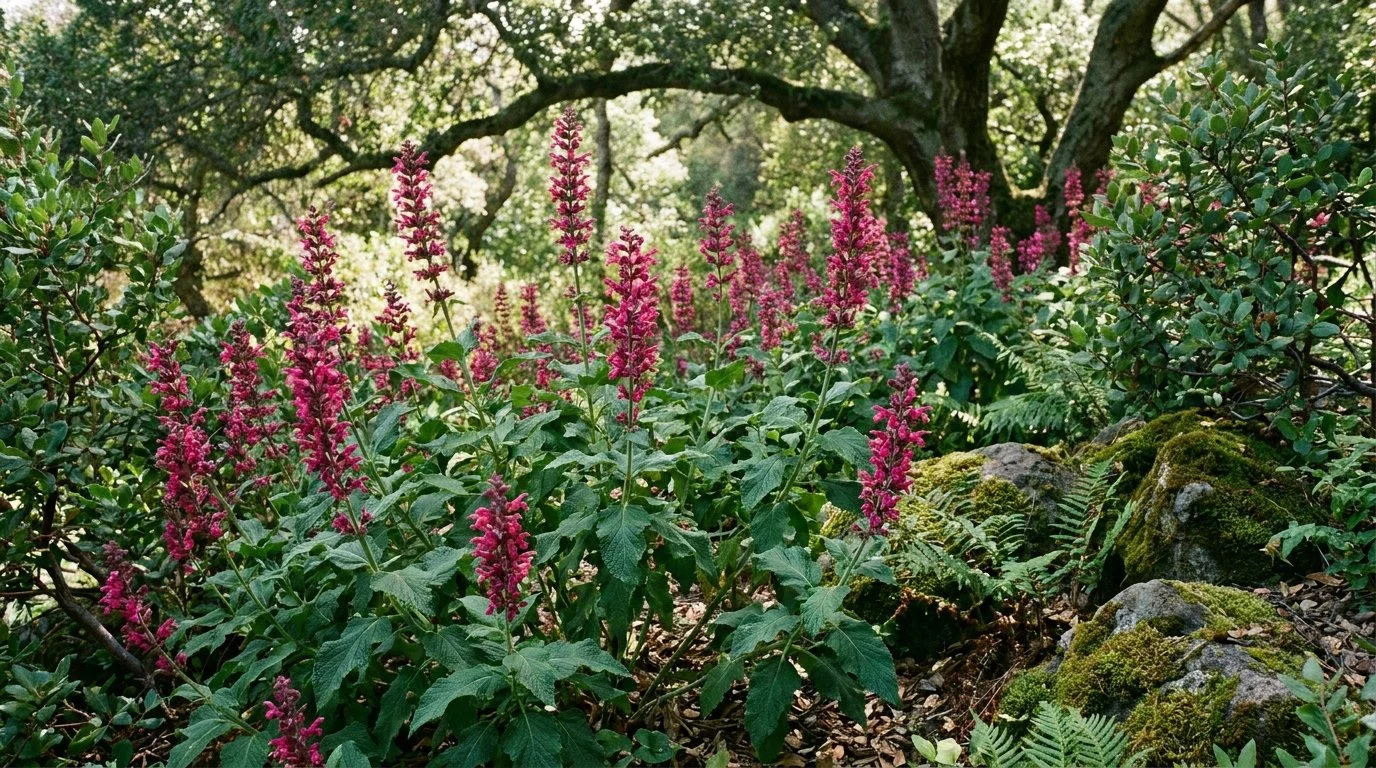
Most of the showy, water-wise sages want a baking, sun-drenched slope. Hummingbird sage is different, and that difference is exactly why it deserves a spot in so many Santa Cruz County gardens. Salvia spathacea is one of the rare native plants that genuinely thrives in dry shade, the difficult spot under an oak or along a north-facing fence where little else will grow. Give it that shady, root-filled ground and it rewards you with deep-green fragrant foliage, tall spikes of magenta flowers, and a steady stream of hummingbirds.
Even better, this is a local plant. Hummingbird sage is endemic to the California Coast Ranges, including Santa Cruz County, so it is already adapted to our soils, our oak woodlands, and our long dry summers. If you have struggled to fill the shade under a tree, or you want a low, spreading native groundcover that asks almost nothing of you, this is one of the most useful plants you can choose.
Why Should I Grow Hummingbird Sage in Santa Cruz County?
The first reason is the niche it fills. Dry shade is one of the hardest situations in any garden. The soil under established trees is shady, root-packed, and often very dry in summer because the tree drinks first. Most ornamental plants sulk there. Hummingbird sage evolved in exactly those conditions, in the dappled shade of California oak woodland, so it does not just survive in dry shade, it spreads and blooms in it. According to Calscape, the California Native Plant Society's plant guide, it grows naturally in shaded canyons and oak woodland throughout the Coast Ranges.
The second reason is the show. From winter into summer, with a strong peak in spring, hummingbird sage sends up upright stems carrying whorls of tubular flowers in vivid magenta and rose-red. They are held well above the foliage, so the color reads from across the garden, and they are unmistakable when a hummingbird is working them. The deep-green, slightly crinkled leaves are fragrant too, releasing a fruity scent when you brush past.
The third reason is wildlife, which we cover in detail below. The fourth is toughness. This is a low, evergreen, very low-water native that, once established, can carry a shady bed through a dry California summer on little or no irrigation while slowly knitting into a colony that shades out weeds.
Where Does Hummingbird Sage Grow Best in Santa Cruz County?
Our county is really several gardens stacked together, and hummingbird sage has clear preferences among them. The short version is that it loves our cooler, shadier, moister microclimates and needs a little protection in our hot, dry, sunny ones.
The coastal fog belt and the San Lorenzo Valley and mountain oak woodlands are ideal. The cool, humid air near the coast and the dappled shade of the redwood and oak country up the valley match the conditions this plant came from. In these areas hummingbird sage can take quite a bit of sun as well as deep shade, and it stays greener and fuller through the summer.
The warmer inland valleys, including the Pajaro Valley and the hotter pockets around Scotts Valley, can also grow it well, but the rule changes: in hot, dry inland sun the plant needs afternoon shade. Planted in full, baking sun inland without that relief, it tends to scorch and look ragged by midsummer. The north or east side of a building, a spot under a deciduous tree, or the dappled edge of an oak are all good homes for it.
The rule of thumb across all our microclimates is simple. The hotter and drier your site, the more shade hummingbird sage wants; the cooler and foggier your site, the more sun it will happily take.
How Do You Plant Hummingbird Sage?
Fall is the ideal planting time in California. Putting plants in the ground from October through early winter lets the roots establish during the rainy season so they are ready for their first dry summer. Spring planting works too, but you will need to water more attentively through that first summer.
Follow these steps for a strong start:
Match the light to your zone. Near the coast and in the fog belt, sun to part shade is fine. Inland and in hot sun, give it afternoon shade or plant it under a tree.
Use it under oaks and trees. This is one of the few natives you can plant in the dry shade beneath established oaks without breaking the rules of oak care. It wants the same lean, unirrigated summer conditions a native oak prefers.
Do not over-amend. Skip heavy compost and fertilizer. Lean native soil produces a tougher, longer-lived plant. Rich soil and feeding encourage soft, floppy growth.
Give the colony room. Hummingbird sage spreads slowly outward by underground rhizomes, so set plants about two to three feet apart and let them fill in. A single plant becomes a patch over a few seasons.
Keep the crown at grade. Set the top of the root ball level with or slightly above the surrounding soil, and backfill with native soil so the crown stays dry.
Water in, then ease off. Soak the root ball at planting, then water deeply but infrequently through the first dry season while the roots and rhizomes extend.
How Do You Care for Hummingbird Sage?
The good news is that an established hummingbird sage barely needs you. Like our other native sages, the most common way to harm one is too much water in summer.
The UC Marin Master Gardeners note that sages need well-drained soil and are susceptible to root rot (UC Marin Master Gardeners). The takeaway for our county is clear: water at the base, let the soil dry between waterings, and resist the urge to keep the bed constantly moist. Calscape rates hummingbird sage as needing very low summer water once established. In our climate, an occasional deep soak during the hottest, driest stretch of the first year or two is plenty, and many shaded gardens can rely on winter rain alone after that.
A note on appearance. In a hot, dry summer, especially inland or in a sunnier spot, hummingbird sage can look a little tired and ragged by late season. This is normal. It is a plant that flushes and blooms in the cool, moist months and then rests through the heat. If the foliage gets shabby, you can cut the spent flower stalks and tidy the worst leaves, and it will rebound with the fall and winter rains. A light gravel or leaf-litter mulch helps keep the roots cool and the crown dry without smothering the colony.
Skip the fertilizer. These plants are adapted to lean native soils, and feeding them does more harm than good.
What Pollinators Does Hummingbird Sage Attract?
This is where the plant earns its name. The tall spikes of red and magenta tubular flowers are practically designed for hummingbirds, whose long bills and hovering flight let them reach the nectar that most insects cannot. Calscape lists hummingbird sage as a strong draw for hummingbirds, and the UC Master Gardeners of Sonoma County highlight ornamental native salvias as outstanding habitat plants for our region (UC Master Gardeners of Sonoma County).
It is not only for hummingbirds, though. Native bees and butterflies visit the flowers, and the plant serves as a larval host, meaning it feeds caterpillars as well as adult pollinators. The low, spreading foliage gives small wildlife cover, and birds will take the seeds later in the season. Plant a patch near a window or a patio and you will have a front-row seat to the hummingbird show, particularly in spring.
What Are Common Problems with Hummingbird Sage?
Hummingbird sage is genuinely easy, and most trouble traces back to a mismatch between the plant and its spot.
Scorched, ragged foliage in hot sun. Planted in full, dry, inland sun, the leaves can burn and the plant looks rough by midsummer. The fix is shade: move it, or plant it under a tree or on the cooler side of the house. In the fog belt this is rarely an issue.
Spreading where you did not plan for it. Hummingbird sage spreads by rhizome into a widening colony. This is a feature when you want a groundcover under trees, but it can surprise you in a small bed. It is important to be clear here: this plant is a native that forms a colony, not an invasive weed. It spreads slowly and pulls easily where you do not want it. The simplest approach is to give it room from the start and let it do its job of covering shady ground.
Root rot from too much summer water. As with all our native sages, soggy summer soil invites rot. Water deeply but rarely, keep the crown dry, and let the soil dry out between waterings. A plant that wilts in moist soil is more likely rotting than thirsty.
There are no toxicity concerns to worry about, which makes hummingbird sage a comfortable choice for gardens with children and pets.
What Plants Grow Well with Hummingbird Sage?
Because it favors shade and lean, unirrigated soil, hummingbird sage pairs best with other natives that share an oak-woodland or dry-shade temperament. Good companions for a low-water, shaded native bed include:
Western sword fern and other native ferns for evergreen texture in the same dappled shade.
Coral bells (Heuchera), a shade-tolerant native with airy flower stems hummingbirds also enjoy.
Douglas iris for spring color in part shade.
Coffeeberry or toyon as taller native shrubs to anchor a woodland-edge planting.
Native bunchgrasses for movement at the sunnier margins of the bed.
The key is matching both light and water. Group hummingbird sage with fellow dry-shade natives and the whole bed thrives on the same low-water, low-fuss schedule.
Where Can You Buy Hummingbird Sage in Santa Cruz County?
Hummingbird sage is widely grown at California native plant nurseries, and locally grown plants tend to establish best. Check independent garden centers and native specialty growers around Santa Cruz, Watsonville, and the San Lorenzo Valley, and watch for the seasonal native plant sales hosted by the local chapter of the California Native Plant Society, usually in fall, which is also the best time to plant.
If you cannot find one locally, mail-order native and water-wise nurseries are a reliable backup. You can often find hummingbird sage plants and other drought-tolerant native shrubs shipped to your door. Buy small plants when you can, since young hummingbird sage establishes quickly and spreads on its own once it settles in.
Frequently Asked Questions About Hummingbird Sage
Does hummingbird sage really grow in dry shade?
Yes, and that is its great strength. Salvia spathacea is one of the few showy California natives that thrives in the dry, shady, root-filled ground beneath oaks and other trees, where most ornamentals fail. Near the coast it also takes sun, but its standout role is filling difficult dry-shade spots with green foliage, magenta bloom, and hummingbirds.
Is hummingbird sage invasive?
No. It is a California native that spreads slowly by underground rhizomes into a colony, which makes it a useful groundcover under trees. It is not an aggressive, hard-to-control invasive. Give it room to fill in, and pull or dig the edges if it wanders past where you want it. Unwanted shoots come up easily.
How much should I water an established hummingbird sage?
Very little. Calscape rates it as needing very low summer water once established. Water deeply but infrequently through the first year or two, then let it rely largely on winter rain, especially in shaded coastal and valley gardens. Keep water off the crown and let the soil dry between waterings to avoid root rot.
Why does my hummingbird sage look ragged in summer?
That is normal, particularly in hotter, sunnier, drier spots. Hummingbird sage flushes and blooms in the cool, moist months and rests through summer heat, so the foliage can look tired by late season. Cut the spent flower stalks, tidy the worst leaves, and it will rebound with the fall and winter rains. More shade prevents most of the scorching inland.
A Native Worth Growing
Hummingbird sage solves one of the hardest problems in the garden: what to plant in dry shade. Give it that difficult ground under a tree or along a shaded fence, water it sparingly while it settles in, and it returns the favor with fragrant foliage, magenta spring spikes, and a garden full of hummingbirds. In a county where water is precious and pollinators need all the help we can offer, a local native that asks for shade and almost nothing else is a generous trade. Plant a few this fall and let them knit into a colony.
