

Does Planting by Moon Phases Improve Yields?
A moon calendar can make planting feel like part of a larger seasonal rhythm. You can enjoy that tradition without asking it to decide whether a cold, wet bed is ready for beans. Lunar planting dates are not an established way to improve your harvest. Give the crop, soil and weather the deciding vote.
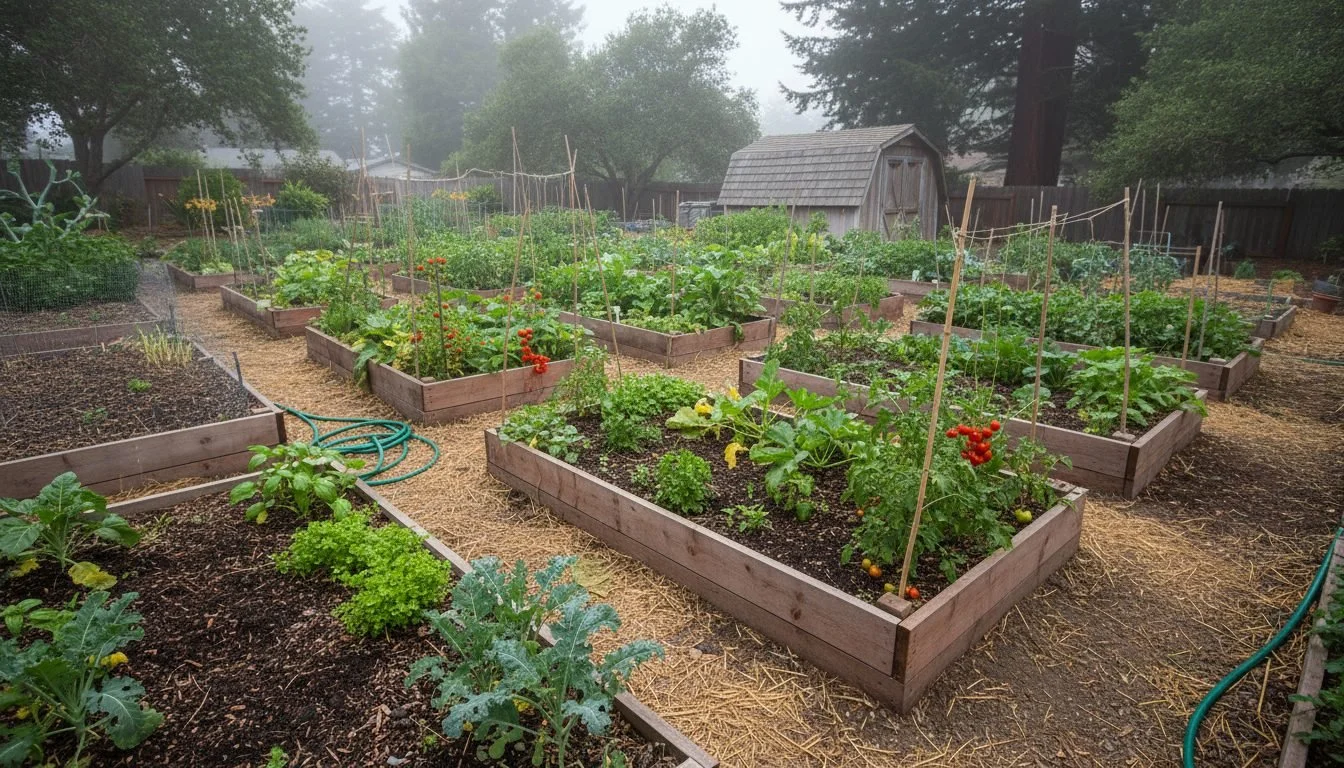
In a foggy coastal garden, that may mean waiting while a warmer inland gardener gets started. Both can make a sensible decision on the same date, under the same moon.
Respect the tradition, separate the claim
The Farmers’ Almanac planting calendar is an example of gardening advice organized around lunar phases. The calendar itself tells readers to consider regional weather and consult local growing guidance. Its existence is evidence of a tradition, not a controlled demonstration of better yields.
If following it helps you remember garden tasks, keep that part. Do not let a listed date overrule a forecast, a waterlogged bed or a plant that is ready for timely care.
What the cited extension advice actually supports
The UC Contra Costa response about moon timing answered a question about cutting weeds. Its author said UC had not published research on lunar phases and plant effects. That statement is not a report of a UC planting trial or a survey proving that no lunar-related plant research exists anywhere.
Illinois Extension’s discussion of lunar influence reviews the issue more broadly. It describes limited scientific support for lunar gardening practices and summarizes a research review that did not establish a consistent relationship supporting the planting advice. It also leaves room for further investigation of particular biological relationships.
The practical conclusion is narrower than saying the moon has no relationship to any living thing: a lunar calendar has not established a reliable advantage for timing your vegetable planting. Ocean tides do not, by themselves, demonstrate that a recommended garden date will improve germination or yield.
Use the conditions at seed depth
A probe thermometer can help you learn how the bed is warming. Use it according to its instructions, measure where you intend to sow and keep readings at comparable times. Combine those observations with soil moisture, the forecast and guidance for the crop.
UC Sacramento’s seed-germination guide separates minimum temperatures from optimum ranges. For tomatoes, it lists a 50°F minimum and a 65–85°F optimum range. Snap beans have a 60°F minimum and 75–85°F optimum range; peppers have a 60°F minimum and 65–75°F optimum range.
Those are germination references, not a command to plant as soon as one reading reaches the minimum. They also are not a transplant calendar. A tomato seedling going outdoors needs a suitable planting window and conditions for that plant, not just a germination-chart number.
Build a calendar that learns from your garden
Choose the crop and whether you will sow seed or use starts. Check local planting guidance, then make a short note of the bed's light, moisture and temperature. Revisit the plan if the weather changes.
A coastal bed shaded through the morning may behave differently from a sheltered, sunny patio. The name “Santa Cruz” and a mid-April date cannot settle every warm-season planting decision. Let the calendar remind you to check conditions rather than substitute for the check.
Record when seedlings emerge, how they grow and what you harvest. If you enjoy noting the moon phase too, include it. Just remember that two sowings on different dates also experienced different weather; that comparison alone cannot isolate a lunar effect.
This week: choose one crop, read its planting guidance and begin a simple record of conditions in the intended bed. You can admire the moon while making the decision on the ground.
Questions about planting dates
Must I abandon a family moon-planting tradition?
No. Keep a tradition you enjoy while giving suitable growing conditions priority. It need not carry a promise of extra yield.
Did UC prove that moon planting does not work?
The linked UC response does not describe such an experiment. Its scope is limited, which is why the distinction between absence of a cited trial and a demonstrated result matters.
Does warm soil mean I should plant immediately?
Consider the crop, seed or transplant stage, moisture and forecast together. A single temperature reading is only part of the decision.
Keep your observations with resources from Your Garden Toolkit.
